Sex Still Very Much for Sale on Craigslist
Editor’s note: This article is part of Civil Beat’s ongoing coverage of human trafficking in Hawaii. Scroll to the bottom of the linked page to find related articles.
Craigslist says it has removed its adults services section, but a Civil Beat review found listings on the service’s Hawaii site – many of which solicit sex for money – have just been shuffled into a more discreet location.
In September, the company removed the adult services category from its U.S. website and on Dec. 18, it removed the section worldwide.
Craigslist has not released a statement regarding the removal of the category. One possible explanation for the silence is the fact that the contested ads haven’t really disappeared. They’ve just moved. Although the millions the company used to make from them has dried up.
Warning: Some content in this article is extremely explicit.
The company has come under exceptional public scrutiny for the section, with anti-human trafficking groups claiming that the ads promote prostitution. Craigslist says it is the 7th most visited English-language website in the world and receives more than 20 billion page views a month. Typically, it is free to post an advertisement, but the company charged $10 for its adult-oriented ads, prior to the removal of adult services.
The criticism of this aspect of the site came to a head in August, when attorneys general from 17 states wrote a letter to Craigslist CEO Jim Buckmaster and founder Craig Newmark, urging the company to make changes.
The letter said in part, “The increasingly sharp public criticism of craigslist’s Adult Services section reflects a
growing recognition that ads for prostitution – including ads trafficking children – are rampant on it. In our view, the company should take immediate action to end the misery for the women and children who may be exploited and victimized by these ads. Because craigslist cannot, or will not, adequately screen these ads, it should stop accepting them altogether and shut down the Adult Services section.”
Craigslist appeared to comply with the demand.
In September, the website removed the adult services category in America. The company’s own terms of use prohibit “unlawful” or pornographic ads.
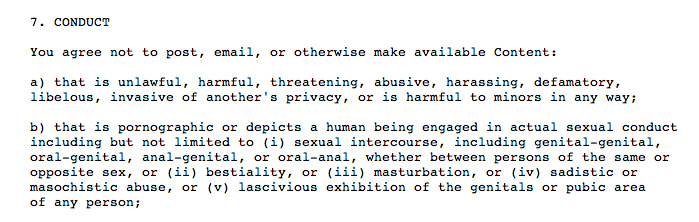
But regardless of the measures taken by Craigslist and regardless of what the company guidelines say cannot be posted to the site – paying for sex is still just a click away.
WARNING: EXTREMELY EXPLICIT.
In place of the adult services category is the more tame-sounding “personals.” Underneath personals, a user may enter into subcategories that list: “Strictly platonic,” “Women seek women,” “Women seeking men,” “Men seeking women,” “Men seeking men,” “Misc. Romance,” “Casual encounters,” “Missed connections” and “Rants and raves.”
Click on any of the above links and you are directed to a daily archive where advertisements date back 45 days in Hawaii.
Not all of the ads are seeking money for sex and not all are explicit, but many are incredibly blunt and obviously promote prostitution and violate Craigslist guidelines, let alone a policy Craigslist says it implemented in May 2009 of having a lawyer review every ad posted to the Adult Services section of the website to make sure they follow posting guidelines.
Civil Beat found several examples of ads seeking sex for money. Some of these appear below.




Using the 1996 federal Communications Decency Act, Craigslist has largely avoided any legal culpability from publishing lewd listings. The act has been interpreted to say that publishers of websites can not be held accountable for material posted to websites by third parties. In the same way AT&T can’t be prosecuted if an illegal deal is bartered over the phone, Craigslist can’t be prosecuted for ads that blatantly solicit prostitution.
Still, Craigslist says it took the initiative and removed its “erotic services” category (it switched the name to “adult services”) in 2009. The website also says it took other measures to ensure that no illegal postings were made.
In an entry from the company blog written in August, Craigslist discussed some of the steps it took.
“Craigslist implemented manual screening of adult services ads in May of 2009. Since that time, before being posted each individual ad is reviewed by an attorney licensed to practice law in the US, trained to enforce craigslist’s posting guidelines, which are stricter than those typically used by yellow pages, newspapers, or any other company that we are aware of.”
It’s not clear whether Craigslist promised to continue this screening in the section where such ads moved after the adult services section was shut down. The company did not respond to interview requests from Civil Beat. But the ads found on the Hawaii site in the personals section certainly indicate that no screening is occurring. Here are some examples of the images that pass muster with Craigslist. WARNING: GRAPHIC NUDITY
Craigslist also said that it would work with local law enforcement to help stop online prostitution.
Another August entry on the company blog said, “We work with law enforcement to bring to justice any criminals foolish enough to incriminate themselves by misusing our site.”
But Michelle Yu, the media liaison for the Honolulu Police Department, says HPD has never been contacted by Craigslist.
“Our investigators use various websites to conduct prostitution investigations,” Yu said. “They received one complaint from the public earlier this year (about Craigslist) and have not been contacted by any of the websites.”
Coming tomorrow, Civil Beat Report-Host Adrienne LaFrance will take a look at backpage.com and its effect on illegal sex in Honolulu.
(Disclosure: Civil Beat’s publisher, Pierre Omidyar, is the chairman of eBay, which is a Craigslist shareholder. However, the companies are at odds over a number of issues, which are before the courts.)