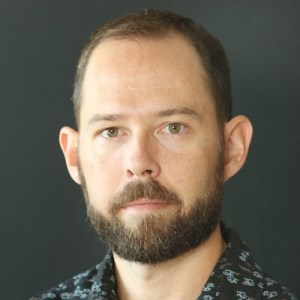
Fishery Chair: ‘Brown People’ Are Being Subjugated By U.S. Govt
The United States government doesn’t care about protecting corals and sea turtles. The feds just want to keep the “brown” man down, so they create marine sanctuaries and list species as endangered to make it harder for local fishermen to feed their families.
At least that’s how Manny Duenas, the outgoing chair of the Western Pacific Regional Fishery Management Council, views some of the actions by agencies that fall under the National Oceanic and Atmospheric Administration.
For the past six years, Duenas, from Guam, has been a key player on the 16-member council that manages fisheries in a 1.5-million-square-mile swath of the Pacific Ocean, covering Hawaii, Guam, American Samoa and the Northern Mariana Islands.
Wespac is a taxpayer-funded federal agency that works closely with NOAA’s National Marine Fisheries Service to make sure fishing stocks aren’t overfished and that commercial fisheries stay strong.
Duenas repeatedly challenged federal scientists as they testified during Wespac meetings this week at the YWCA in Honolulu, accusing them of undermining indigenous rights.
“I don’t understand the hardship you are trying to impose on us,” Duenas said after a presentation from NOAA’s Pacific Islands Fisheries Science Center Deputy Director Michael Seki. “It’s social injustice. It’s selective science. The only people who are going to be impacted by the whole initiative are the brown people.”
Seki was providing a report to the council on the center’s recent work and the latest science publications, including a status review of dozens of species of coral being considered for protection under the Endangered Species Act.
“Are you subjugating me to more demise of my culture?” Duenas said.
Seki did not directly address Duenas’ insinuation that listing the corals as endangered would disproportionately affect poor and minority people who live in U.S. Pacific island territories. Or that plans to expand marine sanctuaries or limit fishing in waters protected as national monuments were somehow racially targeted.
He did defend a seven-member panel’s decision to consider the corals as endangered, noting a host of scientists who provided input.
Wende Goo, a NOAA spokeswoman, fielded Civil Beat’s requests to talk to Seki about his presentation and how he felt about being addressed by Duenas in that manner. She said Wednesday that the chair’s questions were rhetorical. The science center Seki helps direct doesn’t play a role in the establishment or designation of protected areas, so there wasn’t anything to respond to, she said.
Duenas maintained this theme with the next NOAA official to come before him — Pacific Islands Regional Director Allen Tom, who discussed proposed changes to a marine sanctuary in American Samoa.
Duenas said the sanctuary, which was designated in 1986, has “no place in modern society.” He questioned whether the feds consider impacts to low-income and minority people who will be affected if additional fishing restrictions are put in place.
“It is nothing but social injustice,” Duenas said, before pointedly referring to Tom’s race. “You’re the brown-yellow guy that’s all part of this exercise.”
Noting that this was his last meeting with the council because he is term-limited, Duenas said he feels bad for the future of Pacific island nations.
Tom did not respond to Duenas’ comments at the time, retaining his composure and avoiding an argument on the floor.
But in an interview the next day, he told Civil Beat: “I felt like refuting a lot of these things wasn’t going to get me anywhere.”
Tom said he did not take any personal offense to Duenas’ comments about the color of his skin. He said he has known Duenas for years and has heard him say those things to other people in worse ways.
“Yesterday’s meeting, as uncomfortable as it was, came as no surprise,” Tom said, noting the council was running out of time to raise objections over the plans for the sanctuary in American Samoa because the public comment period ends in July.
Tom doesn’t think there was a social injustice issue. He said the management plan is the result of years of discussion with community members in American Samoa and work with the territory’s governor.
The concerns of fishermen were taken into the equation, Tom said, and subsistence fishing will be allowed everywhere except one site. He added that the agency also looked at the impacts on low-income people, and how the local economy might change.
That aside, Tom said he empathizes with the concerns raised during the meeting by a local fisherman from American Samoa. He said that people are worried about what might happen 10 years from now if there are changes in federal leadership and a decision is made to add restrictions not currently being proposed.
“The thing that was lost, or woven through there, is it really is a partnership,” Tom said. “The governor has the final say in all of this, and he does represent his constituents.”
Duenas makes no attempt to hide his disdain for environmental groups and government actions he thinks might restrict residents’ ability to put fish on their table. But he also makes it about racial inequality, even suggesting that he is powerless, too.
Lance Smith, a supervisory biologist who works in the Protected Resources Division at the National Marine Fisheries Service office in Honolulu, updated the council Wednesday on the status of 82 corals as endangered species. He faced the same treatment from Duenas as his colleagues.
Duenas said it would be the fault of “some green revolution group” and the federal government if poor Pacific islanders are hurt by any restrictions that might be imposed to protect the coral.
“It’s unconscionable what’s being done to the brown people,” he said, and a few nods around the table seemed to indicate others agreed. “The only people that’s going to be regulated is the brown people.”
Duenas said people in Florida, for instance, won’t be affected if the corals are listed as endangered because the reef system is deeper and the conditions are different.
“The exercise has nothing to do with coral. The exercise is all about banking,” Duenas said. “The only ones that are going to benefit are all your programs. There’s nothing this brown guy from Guam can do about it.”
In his presentation, Smith said the top three threats to the corals, including global warming, are caused by greenhouse gas emissions. Reef fishing was fourth, although council members rejected this ranking.
Duenas said the U.S. — one of three countries along with India and China that together account for 45 percent of all greenhouse gas emissions — will never sign off on the Kyoto Protocol, an international agreement aimed at combating climate change. So fishermen become the target, he contends.
“My people have depended on fishing for over 3,000 years, and we’ve never wiped out our resource,” Duenas said. “It’s only when western scientists come in that we’re a problem.”
Smith, who has heard objections from the council for some time over the coral-listing controversy, listened to the chair’s concerns but did not respond to the social injustice allegations.
Duenas also used his position as Wespac chair to deliver veiled threats to some of the federal scientists — softening them with a slight smile.
For instance, on the issue of endangered corals he urged the feds “to be very careful.”
“If you wanna be Custer, there’s always Little Big Horn,” Duenas told Smith.
When it comes to expanding a sanctuary in American Samoa, Duenas blustered that if that was happening in Guam, his home turf, he’d “personally look for” the governor and challenge him on it.
Seki, the science center deputy director, might not feel so welcome in Guam. Duenas said he wished him luck if he ever showed up, “because I will be there to greet you at the airport.”
There’s no mistaking his point.
Other council members also repeatedly made comments during the meetings Tuesday and Wednesday in support of indigenous rights and commercial fishing interests. They shot holes in the scientific reports regarding protected animals or marine sanctuaries. They applauded the science that supports removal of the green sea turtle and humpback whale from the endangered species list.
“We want true science in our communities,” Duenas said, referring to the need for scientists to base more of their reports on what local fishermen say about the area or species in question.
The environmental reports that the federal scientists produce for marine sanctuary management plans and endangered species protections include extensive community meetings and involve lengthy public input processes. The proposals are also regularly reviewed to see if any changes are warranted.
This week’s Wespac meetings wrap up Thursday, with discussion and action on an array of issues in the Hawaiian archipelago. Check out a full agenda by clicking here.