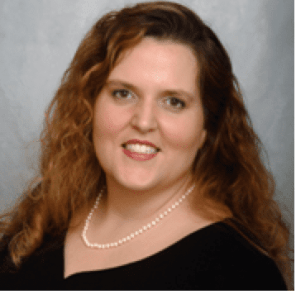
Health Beat: Robin Williams and Parkinson’s Disease in Hawaii
After a lifetime of good health, local resident Gail Hudson is fighting the same relentless condition as the late comedian and Michael J. Fox.
After Robin Williams’ recent suicide, his wife revealed that he suffered from early Parkinson’s disease. We’re unlikely to ever know whether it played a role in his decision to take his own life, but major depression is associated with the beginning stages of Parkinson’s, and many doctors miss that.
But it is worth considering the sort of trajectory that Williams might have faced with Parkinson’s, if he hadn’t committed suicide, and that is where Honolulu resident Gail Hudson comes into play.
An avid fitness enthusiast, Hudson skied, ran and traveled. She was the healthiest and fittest of her friends, after working hard to stay active and in shape her whole life. She encouraged her seventh and eighth grade math students at Punahou, where she taught for 17 years, to get plenty of exercise too.

Phil Olsen and Gail Hudson before Gail was diagnosed with Parkinson’s disease.
Courtesy of the Hudsons
After retirement she kept active, frequently seeing her former students at the symphony, and keeping in touch with former colleagues from the school, attending plays at Diamond Head Theatre, and various community events.
Early in 2011, her moods began to shift and she felt joyless. First she noticed that she couldn’t move her left hand very well, then she felt like she had lost her prized coordination. She came to me deeply concerned. She was depressed, but she didn’t know exactly why.
At age 72, after a visit to the neurologist, it all added up: Gail had Parkinson’s disease.
Parkinson’s disease has a long history. One of the earliest physicians, Galen, from ancient Greece, described it as the “shaking palsy” in 175 A.D.
The movement is described in more modern times as a “pill-rolling, resting tremor” of the hands. British doctor James Parkinson gave the disease its name in 1817.
Parkinson’s is caused by a deficiency in the amount of a brain chemical known as dopamine in a part of the brain called the substantia nigra.
This was discovered in the 1960s and led to the current basis of treatment, a synthetic form of dopamine, levodopa, which is still used today. Scientists don’t know what causes the brain cells that produce natural dopamine to stop working.
By the time the condition is diagnosed, 50-80 percent of the brain cells that used to produce dopamine are gone. This means that diagnosing the disease in its earliest stages, when there might still be hope to protect some of these dying nerve cells, is near impossible.
Hudson’s life has transformed. Every morning when she wakes up, she needs help with basic self-care tasks, like brushing her teeth or combing her hair, let alone getting dressed and making meals.
Once diagnosed, the symptoms are progressive and fairly relentless.
“I am going downhill faster than I expected to,” Hudson said.
“I can’t do the activities that I used to be able to do, like use my hands, or move around.”
But it’s difficult to know if the depression comes from these brain changes, or from just being diagnosed with a chronic neurological illness in the first place, given the patient’s knowledge about her or his own looming decline in muscle function and independence.
And then there is the depressive side of the disease, which can strike before the muscle symptoms of Parkinson’s develop. Up to 40 percent of people diagnosed with Parkinson’s disease also experience a moderate to severe depression during the course of their illness, according to studies done by Dr. Webster Ross, associate chief of staff for research and development at the Veterans Affairs Pacific Islands Health Care System in Honolulu.
Dr. Ross says doctors often fail to notice a fairly common loss of emotional expression — often described as a flat affect. It is sometimes attributed to the neurologic disease, instead of being recognized and treated as depression.
Changes in brain chemistry with Parkinson’s disease may provide a clue about the source of the depression.
Some of the same medication used to treat Parkinson’s can also be used as an antidepressant for other patients. The reverse is also true; some antidepressants increase the amount of dopamine in the brain, and seem to work well for those suffering from Parkinson’s disease.
But it’s difficult to know if the depression comes from these brain changes, or from just being diagnosed with a chronic neurological illness in the first place, given the patient’s knowledge about her or his own looming decline in muscle function and independence.
Gail noticed this change in her mood even before she received her diagnosis. At first she recalls having a very hard time understanding why she felt so depressed, because this had never happened before. Even now, although she feels the symptoms have lessened a bit, she still struggles each day to accept her limitations.
Recognizing the effect on mood is not just important for the person diagnosed with Parkinson’s disease, but also for their caregivers and loved ones.
Hudson’s husband Phil Olsen, a former pilot, described caring for his wife as “the toughest job I’ve ever had.”
“It is an emotional roller coaster for both of us, and sometimes we find it difficult to go out amongst friends because Gail’s decline and loss of independence makes everyone else feel uncomfortable.”
Progressive isolation for Gail and Phil is the end result.
Studies show that social support and a strong sense of community can make all the difference when dealing with such a chronic illness.
The most prominent face of Parkinson’s is actor Michael J. Fox. Diagnosed when he was just 30 years old, Fox continued to work full time in Hollywood for years until his condition worsened to the point where he had step back toward a more limited acting career. He also established the Michael J. Fox Foundation, which has raised more than $90 million to help find a cure for Parkinson’s, but a cure remains elusive.
As Gail soldiers on, Phil keeps looking for new ways to help. “If there was something I could do, anything, I would do it!”
He describes his wife as the same wonderful woman he married, as they both work to make their challenging days together count.
For more information on Parkinson’s disease, you can head to www.pdf.org.