Report Offers Statistical Snapshot of Cancer in Hawaii and Nationwide
The American Cancer Society estimates 2,470 people will die of cancer this year in Hawaii.
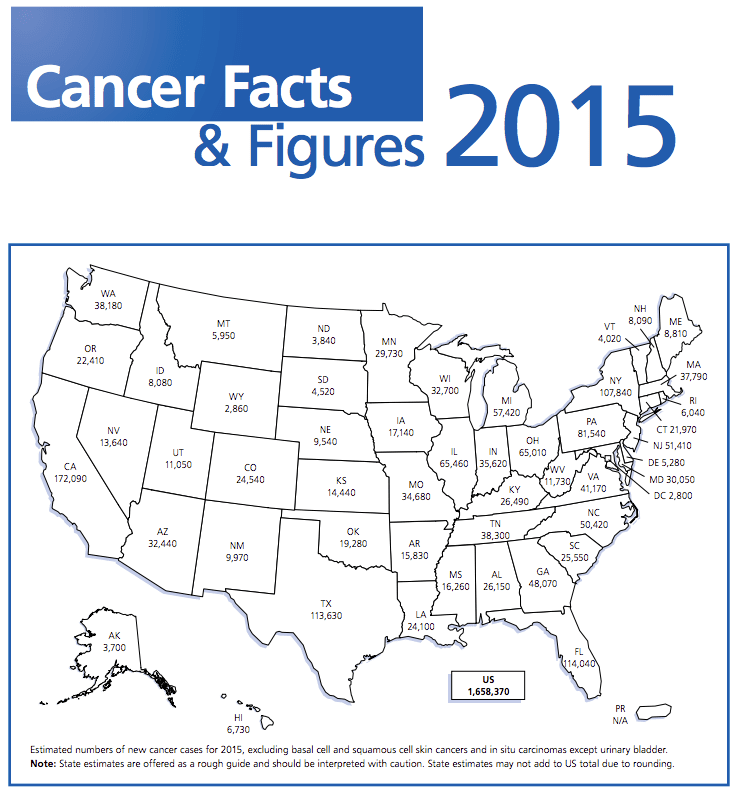
An estimated 6,730 new cancers will be diagnosed this year in Hawaii, according to the American Cancer Society’s annual cancer statistics report.
Of that total, 1,140 will be female breast cancers, 720 will be colorectal cancers, 890 will be lung cancers and 710 will be prostate cancers. It is projected that 2,470 people will lose their lives this year in Hawaii because of cancer, with 580 of those involving lung cancers.
The report includes the incidence rates for cancer per 100,000 people from 2007 to 2011. In Hawaii, those were 477.9 for men and 398.1 for women. For death rates per 100,000 people, the Hawaii totals were 177.8 for men and 115.6 for women.
Nationally, the report notes that a 22 percent drop in cancer mortality over two decades led to the avoidance of more than 1.5 million cancer deaths that would have occurred if peak rates had persisted.
And while cancer death rates have declined in every state, the report finds substantial variation in the magnitude of these declines, generally with the states in the south showing the smallest decline and in the northeast the largest decline.
A press release from the American Cancer Society states:
Largely driven by rapid increases in lung cancer deaths among men as a consequence of the tobacco epidemic, the overall cancer death rate rose during most of the 20th century, peaking in 1991. The subsequent, steady decline in the cancer death rate is the result of fewer Americans smoking, as well as advances in cancer prevention, early detection, and treatment.
Mortality
- During the most recent five years for which data are available (2007-2011), the average annual decline in cancer death rates was slightly larger among men (1.8%) than women (1.4%). These declines are driven by continued decreases in death rates for the four major cancer sites: lung, breast, prostate, and colon.
- Lung cancer death rates declined 36% between 1990 and 2011 among males and 11% between 2002 and 2011 among females due to reduced tobacco use.
- Death rates for breast cancer (among women) are down more than one-third (35%) from peak rates, while prostate and colorectal cancer death rates are each down by nearly half (47%).
- The magnitude of the decline in overall cancer mortality between 1991 and 2011 varied by state. The smallest declines were generally in the South, where drops were about 15%. They were largest in the Northeast. For example, there were declines of 25% to 30% in Maryland, New Jersey, Massachusetts, New York, and Delaware. As a result, a total of 29,000 cancer deaths were averted in 2011 in these states.
Estimates for the current year
- The report estimates there will be 1,658,370 new cancer cases and 589,430 cancer deaths in the United States in 2015.
- Prostate, lung, and colorectal cancers will account for about one-half of all cases in men, with prostate cancer alone accounting for about one-quarter of new diagnoses.
- The three most commonly diagnosed types of cancer among women in 2015 will be breast, lung, and colorectal cancer, accounting for one-half of all cases in women. Breast cancer alone is expected to account for 29% of all new cancers among women in the U.S.
- The report estimates that 589,430 Americans will die from cancer this year, corresponding to about 1,600 deaths per day.
- The most common causes of cancer death are lung, prostate, and colorectal cancer in men and lung, breast, and colorectal cancer in women. These four cancers account for almost one-half of all cancer deaths, with more than one-quarter (27%) of all cancer deaths due to lung cancer.
Additional findings
- During the past five years for which there are data (2007-2011), the overall cancer incidence rate remained stable in women and declined by 1.8% per year in men.
- The decrease in incidence in men is driven by the rapid declines in colorectal (3.6% per year), lung (3.0% per year), and prostate (2.1% per year) cancers.
- While women in the U.S. have seen similar drops in colorectal and lung cancers, breast cancer incidence rates have flattened, and there’s been a dramatic rise in thyroid cancer incidence rates (an average of 4.5% per year from 2007 to 2011).