Neal Milner: Stories of Inequality And Isolation
Two books on race and class help explain the commonness of inequality in America, as well as social and economic segregation here in Hawaii.
Why is inequality the new normal in the United States? Why are there such huge differences among neighborhoods in the same community? Why is the future so bleak at so many levels for people with only a high school education?
Two recent books, Clarissa Rile Hayward’s “How Americans Make Race” and Robert Putman’s “Our Kids: The American Dream in Crisis,” explain how we got to this place.
Hayward’s book is mainly about African-Americans and housing in the continental United States. Hawaii’s experience with African-Americans is very different. Nevertheless, Hayward’s work helps us understand some important things about social and economic segregation in Hawaii.
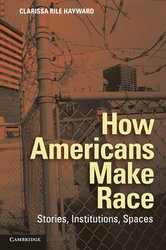
Clarissa Rile Hayward’s “How Americans Make Race.”
Cambridge University Press
Let’s begin by looking at Waianae.
When I taught political science at the University of Hawaii, I used to give my students a newspaper clipping about a fight between two feuding family members who were viciously battling it out in a makeshift ring in a parking lot surrounded by spectators. The police were there but simply acted as spectators enjoying themselves.
Generally, my students, almost none of whom lived or had spent any time on the Leeward Coast, were OK with this.
“Let them fight. It’s their culture—the Waianae Way,” seemed to be their attitude. It was as though Waianae was a foreign country. When I asked whether the police would act the same way if the fight were in Kahala or Kailua, the students laughed. Different rules apply.
In the students’ eyes, Waianae was, in Hayward’s term, a “bad place.” They got these ideas not through direct experience but rather through stories they heard about Waianae — stories of violence, failure and poverty, for the most part.
The actions of the police showed that these were more than just stories. Over time these stories had become institutionalized into the informal rules and norms of police behavior: Because we are in Waianae, let them fight. Rules reinforcing the Waianae Way.
The incident also showed the rules and norms that make these stories stick. Rule: Police behave differently here. Norm: Don’t rely on other ways of solving this kind of problem.
These stories had legs. They moved from narrative to rule. They became institutionalized, simply representing the way things are.
That’s what Hayward is trying to do — show how racist stories become institutionalized.
According to Hayward, in the 19th century, most American cities were quite integrated. There were poor neighborhoods and rich neighborhoods, but, as Putman points out in “Our Kids,” these neighborhoods were close to one another.
Hayward is particularly interested in housing and housing patterns, how ghettos formed and why white suburbs became the unquestioned natural order of things.
For a variety of reasons, some of which were demographic, over time fewer and fewer whites and blacks lived among one another. Cities became black ghettos surrounded by suburbs that were overwhelmingly white and dedicated to keep them that way. Housing integration disappeared.
This process involves a combination of storytelling and politics. Like my students, people form ideas about their identities as well as those of others through stories. But the race stories took on real power as they became institutionalized though rules, norms and laws. The stories became “true” in the sense that they become routine, a part of everyday life.
When Narrative Becomes Policy
Hayward shows how stories about racial inferiority and the natural order of living among your own kind become more than just stories. They become national housing policy that rewards people for living in a white suburb and financially punishes people for trying to maintain old, diverse, inner-city neighborhoods. Neighborhoods that had been integrated for years disappeared under such policy.
Stories about the benefits of homogeneous (read white) neighborhoods became government policy. The Federal Housing Agency refused to approve loans that would bring a black person into a white community and at the same time refused to give money for revitalizing the increasingly African-American inner city. Real estate boards’ codes of ethics stressed the need to avoid disrupting a neighborhood by selling to a black person.
As a result, white communities like the new suburbs become in Hayward’s term “nice places” and “good residential communities.” Inner cities became, like Waianae, “bad places.”
From story to rule to the unquestioned natural order of things. The original race stories no longer even have to be mentioned because they have become engrained in the architecture, like the white fences separating suburban from city neighborhood.
“Our Kids” shows another way to think about good and bad places.
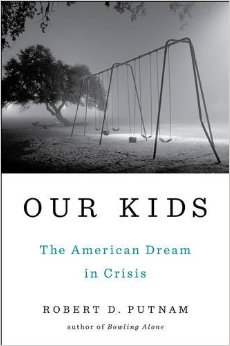
Robert D. Putnam’s “Our Kids: The American Dream in Crisis” shows how much America is now a two-tiered society based more on class than race.
Simon & Schuster
Through an eloquent combination of interviews, reminisces, and statistics, Putman shows how much the United States is now a two-tiered society based more on class (measured by the degree of education) than race. In a perverse way, whites and blacks are becoming more similar. The plight of whites with a high school education increasingly resembles that of African Americans. Social class is a better predictor of college success than race is.
The class gap among children entering kindergarten is now two to three times greater than the racial gap.
Among other differences, top-tier parents make more money, have more stable marriages, spend more quality time with their children, eat more family meals together, send their children to better schools from pre-school on, have more knowledge about colleges and have a much richer network of mentors and neighbors to draw upon.
Compared to the upper tier, lower-tiered families are more likely to headed by a single parent and more likely to have children born out of wedlock.
And of course the lower-tier families have more stress. These stresses can affect a child’s brain in ways that begin very early in infancy and are very difficult to overcome.
What’s more, because there is now so much residential segregation based on income, there is little contact between these two worlds.
‘They Are Our Kids’
It is not a stretch to say that places like Waianae and Kalihi are likely to contain a disproportionate number of these lower-tier families. That means that unless the inequality cycle is broken, the disparity and isolation will increase.
Bad news: In the short run, it is likely that inequality will continue. In fact there is little agreement on how to stop it.
Conservatives stress that the problem is cultural more than economic, but attempts to change the culture of lower-tier families have not been successful.
Here are some things Hawaii can do. They don’t put more money in parents’ pockets, but at least they offer some promise for the children to overcome some of the obstacles they face.
- Adopt a universal, well-designed pre-kindergarten program. These not only approve academic achievement but also have a long-term positive effect on children’s emotional development. Hawaii continues to poke along on this.
- Develop more mentoring programs for lower-tier children. As Putman points out, it does take a village to raise a child. Upper-tier parents are much more likely to have such sources available.
- Increase extracurricular activities for poor children. Upper-tier children have more of these. Studies show that extracurricular activities benefit children.
These seem like baby steps, but they show some commitment, some indication that we acknowledge responsibility for these children. In Putman’s words, “America’s poor kids belong to us, and we to them. They are our kids.”