

Meeting the Needs of the Coming Silver Tsunami
One-third of Hawaii’s population will be over 60 by the year 2035. Meeting the challenges of an aging society requires that young and old join forces.
Executive Director of Jobs with Justice Sarita Gupta was in Honolulu recently to talk about Caring Across Generations, a campaign to empower families and communities to meet the challenges that lie ahead with what has been called the “silver tsunami.”
The statistics Gupta cited should give us all pause. By 2040, nearly 30 million people across the nation will need some form of direct care in their homes to meet their basic daily needs. According to the Hawaii State Plan on Aging, by 2035, one-third of the population here will be over 60 and predominantly female.
“Over the next three years, we must add another 2 million home care jobs to the 3 million we now have just to keep up with this growing need nationally. For that to happen, we must make sure home care jobs are good quality jobs,” she said.
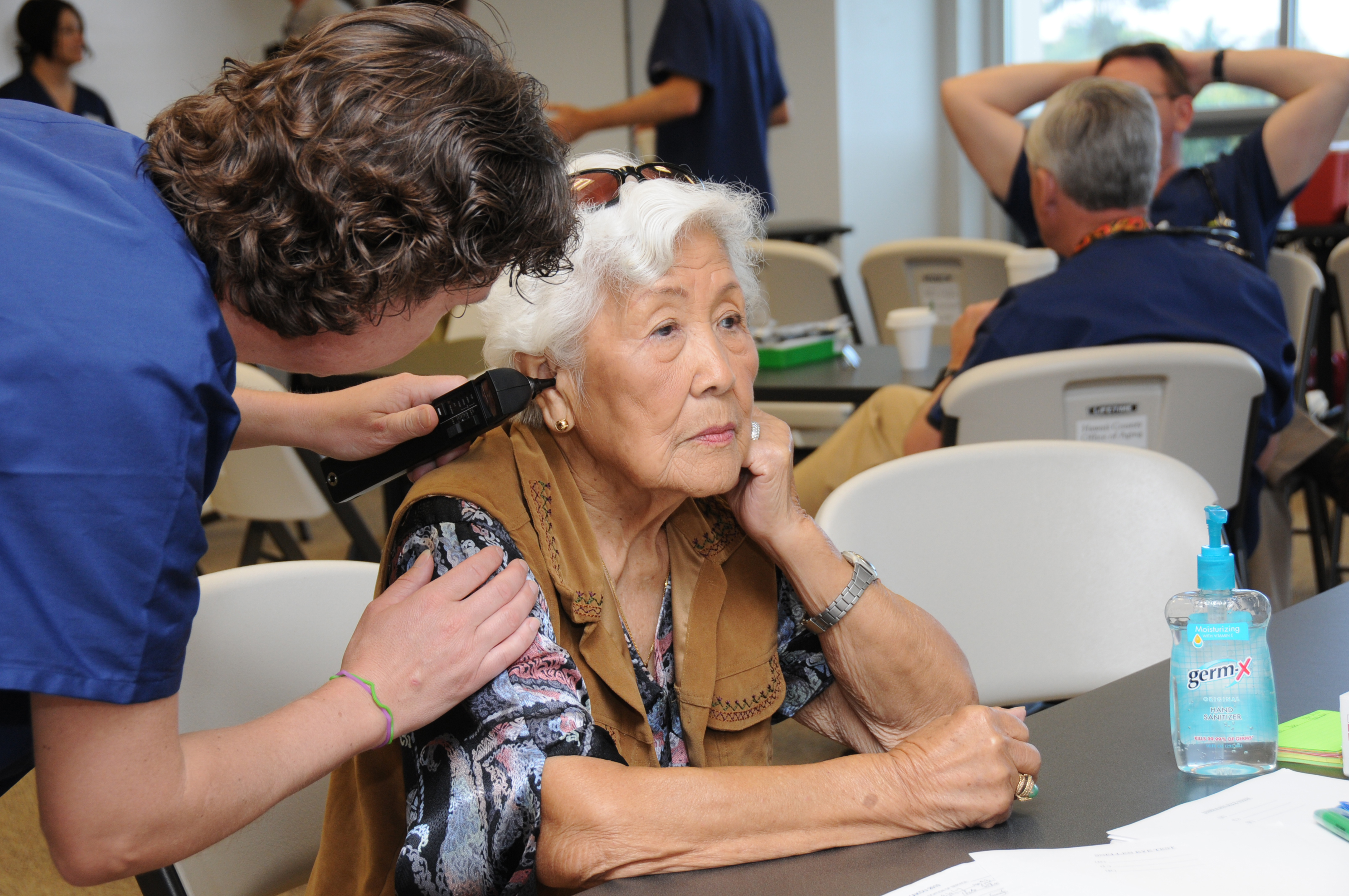
More senior citizens live in the United States than ever before. Seniors make up 13 percent of the U.S. population today, compared to 3 percent 100 years ago.
TSgt Culeen Shaffer
One of the most important things caregivers — and policy-makers — can and should do is listen more attentively to what people say they want and need, whether they are family members or constituents. “We need to have fair wages for home care workers but also give consumers the ability to pay for the care they need,” said Gupta.
The rest of the nation, Gupta said, is watching what Hawaii is doing. This state is apparently ahead of others in proposing legislation that could help address the economic and social challenges of long-term care. Given Hawaii’s demographics, the early death of Senate Bill 727 and House Bill 1253, which would have helped fund long-term care, is especially disappointing.
Clearly, elder care is a multi-generational project. “Baby boomers and millenials, as well as seniors themselves, must join forces to assert publicly that caring for our aging population is a priority. We have more senior citizens than at any other time in America’s history — 13 percent of the population versus 3 percent 100 years ago. Every eight seconds, a person turns 65 in America. That’s 10,000 people a day or 4 million a year!”
Good public policy happened when we made clean water, education, social security — and many other issues — national priorities. It’s time to do it again.
Women Disproportionately Affected as Caregivers
Women are leaving the workforce prematurely to care for aging parents. “They are forfeiting, not just immediate income, but contributions to social security. That raises the specter of millions of women aging into poverty themselves. We cannot let that happen. We have to talk, for instance, about care credits that can be paid into social security for the work they do caring for family members,” said Gupta.
This is not a problem unique to America, and much can be learned by looking abroad. Gupta cited the case of Japan, where people who do volunteer tasks for a neighbor can enter their hours into a system that logs their “care currency.” That can then be tapped by their parents living elsewhere to get the help they need.
The millennial voice was very much present in the discussion with Gupta in the person of April Bautista, co-founder of the Aloha DREAM Team, along with Shingai Misaya and Gabriela Andrade. The Aloha DREAM Team is a mixed status, multicultural, youth-led group determined to educate, engage, empower and organize immigrant youth in Hawaii.
Bautista had learned the value of caring across generations from the example of her parents and grandparents. “My Lola (Tagalog for grandmother) moved across the country to take care of me when I was younger,“ she said. So when she graduated from the University of Hawaii, Manoa, Bautista willingly moved back to California to look after her ailing 90-year-old grandmother. “It was a no-brainer for me,” said Bautista.
“Social media is where we are connecting with young people,” said Gupta, but she noted that innovation is springing up in other projects, too.
She mentioned “Thrift Stories” that try to tap into the love many millennials have for vintage items. Caring Across Generations wants to work with local thrift stores in New York to place a card in each item in their stores that tells the story of the original owner. “We want young people to look beyond the fads of the day to remember the stories of yesterday and the legacy of love of those who went before them.” FACE Hawaii organized a similar effort through its Proverbs from Our Families project in 2014.
“Caring Across Generations is a campaign firmly grounded in values: We nurture the idea that we all have an obligation to do our part to ensure the well-being of those around us. That idea is fundamental to how this country was built,” said Gupta. “We have to keep building.”
As one self-described retiree and FACE Hawaii member at the talk pointed out, it would be both smart and ethical to do as much to protect the public good as we do to protect private wealth.
 GET IN-DEPTH
REPORTING ON HAWAII’S BIGGEST ISSUES
GET IN-DEPTH
REPORTING ON HAWAII’S BIGGEST ISSUES
Community Voices aims to encourage broad discussion on many topics of community interest. It’s kind of a cross between Letters to the Editor and op-eds. This is your space to talk about important issues or interesting people who are making a difference in our world. Column lengths should be no more than 800 words and we need a current photo of the author and a bio. We welcome video commentary and other multimedia formats. Send to news@civilbeat.org. The opinions and information expressed in Community Voices are solely those of the authors and not Civil Beat.
