With Hurricane Hilda’s Path ‘Uncertain,’ Hawaii Authorities Urge Preparation
A tropical storm and flash flood watch are in effect for the Big Island. Got a battery-powered radio? Enough medications, food and water?
The National Weather Service says that as of 5 a.m. Tuesday, the center of Hurricane Hilda was located 290 miles east-southeast of Hilo and continues to move in a northwesterly direction at 7 mph.
“The storm is likely to weaken into a tropical storm on Wednesday,” says the NWS. “A Tropical Storm Watch and Flash Flood Watch are currently in effect for Hawaii Island, which is projected to feel impacts by late Wednesday evening and may see tropical storm force winds early Thursday morning.”
More: “Hawaii Island is already beginning to see advisory level surf along its east facing shores. The Coast Guard is monitoring the situation and boaters should stand by for recommendations from the Coast Guard as the storm approaches. Maui County may also be affected by advisory level surf, and the state should brace itself for potentially heavy rains closer to the center of the system, thunderstorms and gusty winds.”
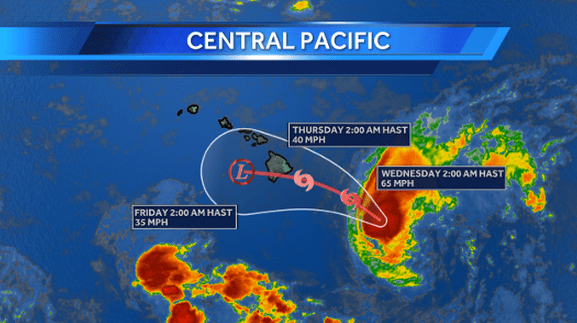
KITV
Hawaii Emergency Management Agency recommends that Hawaii Island residents and visitors follow these precautions to prepare for the storm’s arrival:
- Identify small outdoor items that could be picked up by high winds. Make a plan to bring these items indoors if a hurricane/tropical storm watch or warning is issued.
- High winds may affect your travel plans. Check with your airline prior to any planned flights this week, and avoid traveling during times of increased wind activity if at all possible.
- Set aside an emergency supply of any needed medication and keep a copy of your prescriptions in case you run out of medication after a disaster.
- If you require special medical assistance, make arrangements in advance of the storm’s arrival (i.e. If your medication needs to be chilled, begin building up your ice reserves).
- Visitors should download and read the Hawaii Tourism Authority’s Travel Safety Brochure.
The rest of the state should continue their disaster preparedness efforts with these recommendations:
- Continue to follow reports for the latest information on Hilda by monitoring local broadcasters and/or signing up for local notification systems, especially if you live in a flood prone area.
- Be aware of flood safety recommendations, tips can be found here.
- Gather important documents such as your flood insurance policy. Flood losses are not covered under normal homeowners’ insurance policies.
- Listen to ocean safety officials and exercise caution if entering the water as high surf messages are issued.
- Read the Hawaii Boater’s Hurricane and Tsunami Safety Manual for recommended precautions to protect your boat prior to a storm.
- Download the Homeowners Handbook to Prepare for Natural Disasters, which includes helpful tips to lower your risk of damage to your home from a natural disaster.