

Approach of Another Election Season Offers Opportunity for Change
We need a new paradigm that brings sweeping changes in the electoral process and restores faith in government.
In 1964, Bob Dylan warbled, “the times they are a changin’.” Indeed change was the tone for the decade with the war in Vietnam, civil rights and racial equality, national social programs, and the counter-culture (hippie) movement. Many felt the nation was at the brink of social anarchy and, without a vision for the future nor the leadership to guide deliberation and action, the country was left adrift on a sea of change in which the currents were little understood.
A new state at the time, Hawaii had an excellent opportunity to not only reflect on its historic union with the United States but also plan for its transition from a territory to a state, including strategies for coping with changes to its residents and economy.
Unfortunately, the political leaders failed to look beyond the event and envision the future of the islands situated in the middle of the Pacific, which in the minds of many Americans were significant as a tropical paradise and where the events of Dec. 7, 1941, took place. It was the beginning of a long trip on which island residents remain adrift without a destination or map.
How do we navigate toward a destination that gives us a greater voice in determining the future of Hawaii’s people?
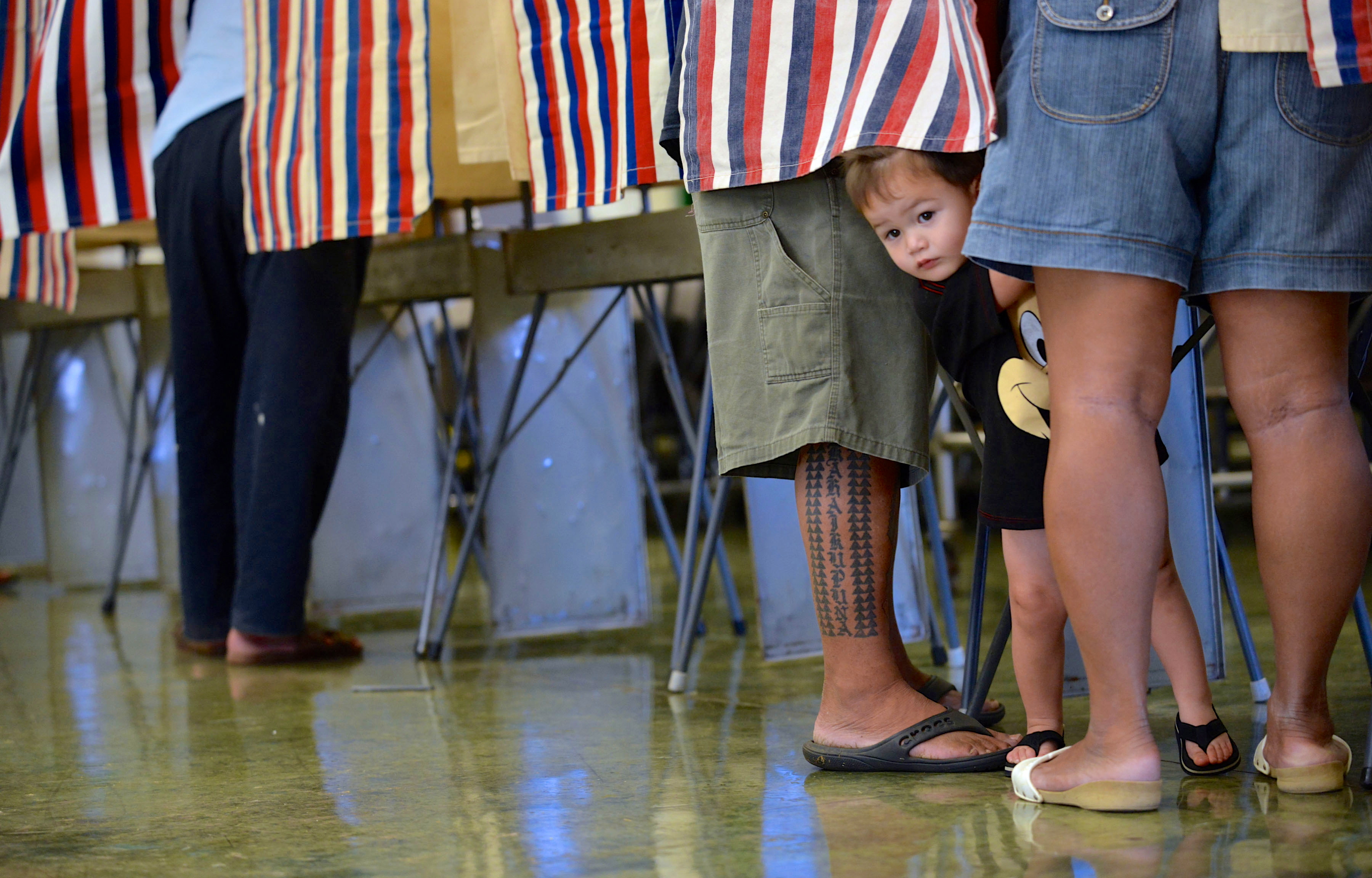
No longer the cultural melting pot we have long prided our islands to be, our island existence continues to be defined by imported standards inconsistent with values and beliefs of Hawaii’s long-time citizens. Reinforced by a growing population from the mainland and abroad, these standards continue to undermine our island lifestyle and perceptions of place. Population increases and the demands for housing and infrastructure are responsible for some of the changes, but they don’t account for the losses suffered to our identity as Pacific islanders.
Who is to blame for the place of our youth being transformed into a strange landscape cultivated by the new culture of rigidity, greed, and apathy? We have met the enemy, and he is us. Auwe!
Our guilt in this tragedy may be rooted in our behavior that still reflects the cultural norms of our ancestors and the places of their national identity or the vestiges of the old plantation system and its class distinctions. Whatever the cause, most of Hawaii’s citizens loathe complaining publicly. Sadly, however, not creating waves only breeds a growing class of self-righteous, highly opinionated, assertive, and vocal self-appointed saviors to save us from ourselves and a local body politic influenced by them.
Orwell’s “1984” was truly visionary! We have become numbered beings whose different values have succumbed to standards and impositions under the banner of “fairness.” Whose sense of fairness, and how can it be logically and appropriately applied in an environment whose richness is historically defined by varying cultural values and practices?
We must shed our reticence, participate actively in civics, and elect candidates with vision and the commitment to work with us to bring the vision about.
Politics are damaging because they subordinate public interests. Rather than influence the selection among policy or legal options, they formulate the policies to preserve power and control. Why we mindlessly elect and re-elect people beholden to political party lines and allow them and their networks to think and act for us is mind-boggling.
Tragically, we allow it to continue. And we wonder why we are unable to exit the circular highway? We are unable to relate the actions of politicians seeking greater power and control, and lessening the burden of accountability at the same time, with safeguarding the public trust and resources.
So, what do we do to bring about needed change? How do we convince others that we need to reclaim ownership of the political system in the true meaning of democracy? How do we fulfill our responsibility to the keiki and hand them back the healthy and productive ocean and land we borrowed from them, together with a more promising socio-economic future?
If we do not abandon our pledge to them, we should aggressively pursue a more respectful partnership concept to replace the vertical government system that does not acknowledge stewardship as residing at the community where the impacts are most palpable and which only perpetuates the conflict between the server and served.
Every election we predicate our choice on perceptions of popularity. Mindful that it will always factor in the way we elect candidates, popularity need not and should not be the primary determinant. We need to know what their beliefs and positions are on the major issues that will mold our islands’ future. Failing to hold them accountable before the first vote is cast, we allow political inertia to kick in and set ourselves up for disappointment.
Campaigning continues to be about everything unimportant and not what a better Hawaii might be, how that destination ought to be reached, and who will best represent our interests on that journey. Hosted debates, public service announcements, and sign waving contribute nothing to rational voting. How can we reasonably assess candidates’ qualifications and suitabilities for the offices they seek? How will we know where the elected will lead us?
Unless we air these questions and obtain honest responses, we cannot rationally assess candidates’ qualifications and suitabilities to make better choices.
What we need if we are to have a political institution that works for us is a new paradigm that brings sweeping changes in the electoral process and restores faith in government as guardian of the public trust and its resources. Common sense tells us that sitting in the bleachers won’t do it. We need to get into the game as a constant reminder to our political leaders who they work for and whose interests they serve. We need to persist in holding them accountable for their actions, beginning with the presentation of a vision for Hawaii’s future and his/her substantive agenda for achieving the goals of the vision.
Although we prefer not to create waves by attacking the system, when we begin to view civics as too idealistic, nonsensical, and a waste of time, we fuel the audacity of our politicians and government institutions to commit egregious acts of malfeasance.
Albert Einstein asserted, “The world is a dangerous place, not because of those who do evil, but because of those who look on and do nothing.” But, figuring this out doesn’t require the mind of a Nobel prize winner.
If we are to exit the circular highway, we must shed our reticence, participate actively in civics, and elect candidates with vision and the commitment to work with us to bring the vision about. We should challenge each and every candidate to articulate his/her vision and the philosophy that will guide his/her thoughts and actions as a public official. We need to challenge all who ask for our trust and vote with a number of questions that together allow one to envision the future as well as provide insight on “how” we might fulfill its promise, among which would include:
• Why are you a candidate for political office? What do you hope to achieve or accomplish on behalf of the public and yourself?
• What is the philosophy or concept that will guide your thoughts, discussions, and actions as an elected official, to which there can and will be public accountability?
• What do you think the roles of the legislative bodies and government ought to be to attain the vision? What about the public’s?
• What do you believe are the fundamental insular values and needs that should influence policy and action?
• Quality of life is predicated substantially on interrelationships among and between people, their values, and their actions; yet statutes, ordinances and rules are mainly functions that subordinate the whole to the part. What would you do to counter the imposition of standards in a society comprising various values and needs?
• Where on the scale between free enterprise and socialism would you describe Hawaii’s position? More importantly, where should it be, and what will you do to adjust the position to where it ought to be?
• What do you believe are the distinguishing attractions for tourism’s vitality? Is government an effective catalyst for sustaining and enhancing tourism’s economic vitality? Why or why not?
• Although not as complex, education in earlier times witnessed more success with parental involvement. Higher levels of learning, respect, and accountability were attained. What do you think about this? What do you think about the present emphasis on what to think instead of how to think?
• Many express dismay about the underlying socialistic premise of taxation and assessment, that is, that everyone pays according to a standard formula regardless of relevance and use. What is your concept of a more relevant and equitable system for generating tax revenue?
Unless we air these questions and obtain honest responses, we cannot rationally assess candidates’ qualifications and suitabilities to make better choices. If the candidates respond candidly, we may have a purposeful and substantive guide to wisely choose our leaders, and if we elect the right people there can be real hope for a more democratic and blissful Hawaii.
As President John F. Kennedy said, “Change is the law of life. And those who look only to the past and present are certain to miss the future.”
If we don’t demand a paradigm shift in our election system, we stand to forego a brighter future.
 GET IN-DEPTH
REPORTING ON HAWAII’S BIGGEST ISSUES
GET IN-DEPTH
REPORTING ON HAWAII’S BIGGEST ISSUES
Community Voices aims to encourage broad discussion on many topics of community interest. It’s kind of a cross between Letters to the Editor and op-eds. This is your space to talk about important issues or interesting people who are making a difference in our world. Column lengths should be no more than 800 words and we need a current photo of the author and a bio. We welcome video commentary and other multimedia formats. Send to news@civilbeat.org. The opinions and information expressed in Community Voices are solely those of the authors and not Civil Beat.
