Bringing Back Waianae’s Floating Classroom
An organization is working to restore E Ala voyaging canoe and create educational opportunities for students on the Leeward Coast.
When Kaina Nakanealoha looks at E Ala voyaging canoe, he sees much more than the two bare 45-foot fiberglass hulls sitting in simple wooden saddles in a giant canoe halau in Waianae.
Nakanealoha, 30, learned to sail as a teenager aboard the legendary Hokulea through a charter school program, after dropping out of Waianae High School in the ninth grade. It was an experience that not only changed his life, Nakanealoha says, but may have saved it.
Now the captain, who recently returned from crewing aboard the Hokulea from Bali to Mauritius, is working full time to restore the 34-year-old E Ala in hopes of creating new water-based learning opportunities for students on the Leeward Coast of Oahu.
Nakanealoha and E Ala’s other captain, Sam Kapoi, envision a voyaging canoe that looks much like it did when it launched in Pokai Bay in 1981, a vessel built using both modern materials and ancient techniques, a combination of fiberglass and wood lashed together without nails or screws.
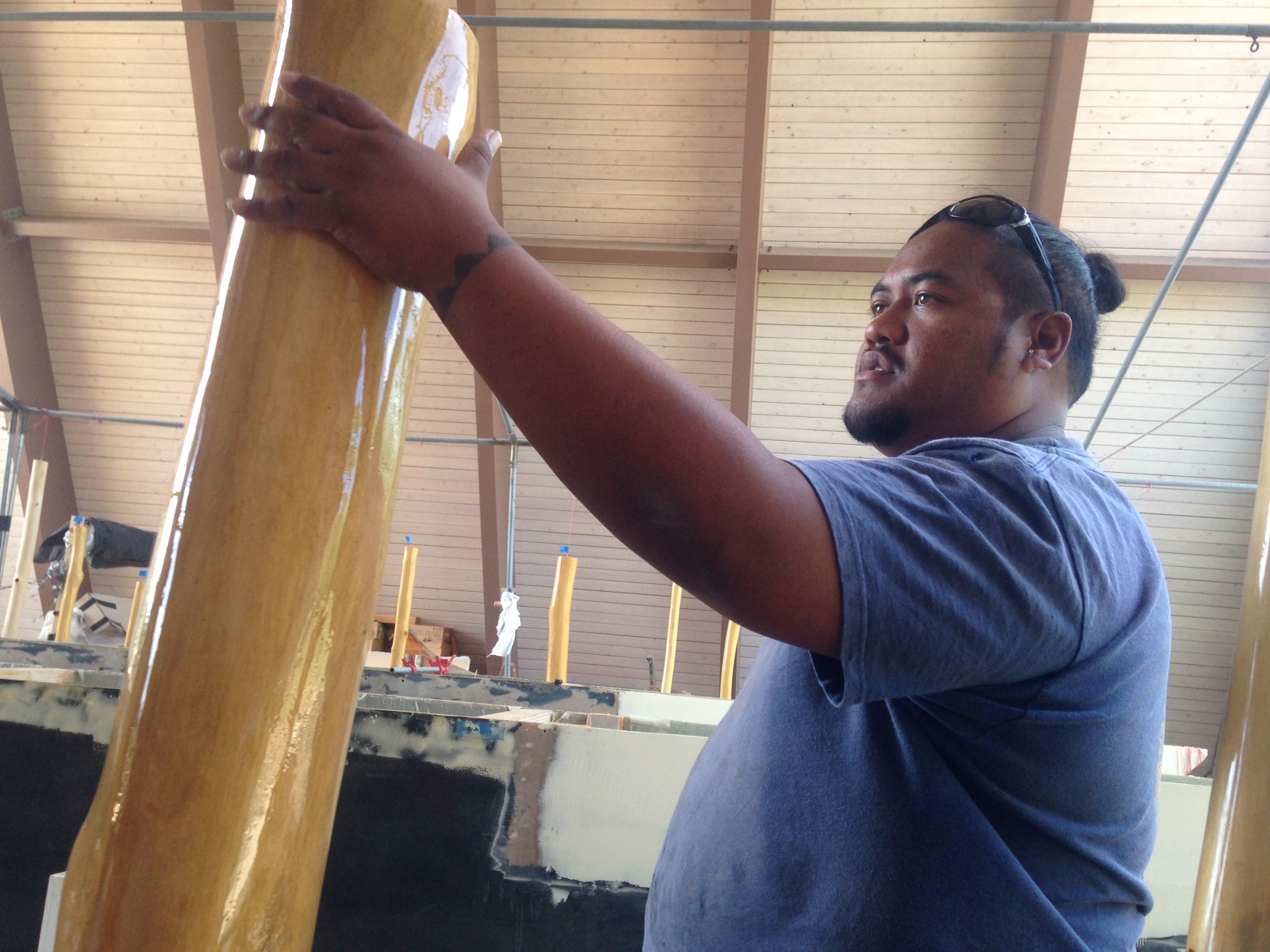
They see a stump from what was the oldest tree in Waianae serving as the mast step — also viewed as the piko, or navel of the canoe. They dream of a robust educational program for high school students and a maritime job-training program for adults. And they see other voyaging canoes docking — and perhaps even being built — in Waianae.
They could use some help making that dream a reality.
E Ala, which means “the awakening” is the state’s third-oldest voyaging canoe, built by members of the Waianae Civic Club just a handful of years after construction of the Hokulea helped launch a renaissance in Hawaiian seafaring. But while the Hokulea voyaged across vast bodies of water and into history books in the last three decades, time has not been as kind to E Ala.
Rescued From Maui
After just a few years in Waianae, the cost of maintaining and insuring the canoe proved difficult for the civic club. The club leased E Ala to a tourism business in Maui that soon went belly-up and abandoned the canoe.
The Polynesian Voyaging Society rescued the partially swamped E Ala from Maui and brought it back to Oahu where the society used it to train crew for Hokulea. Through a partnership between the society and the Department of Education, E Ala also served as a floating classroom for students at Waianae High School.
The DOE’s sailing program ended in the 2000s, “due to safety and insurance concerns,” according to E Ala’s Facebook page. After that, E Ala went to Sand Island, where the canoe sat in dry dock until 2010.
The loss of E Ala was devastating to many in Waianae, said Kapoi, who was one of the last Waianae High School students to sail E Ala.
“It was a super sad time,” Kapoi said. “When the outdoor classroom was taken away from us a lot of my classmates had some issues and challenges at school because it wasn’t interesting anymore.”
Kapoi graduated from film school in California, but returned to Hawaii after a vivid dream about the canoe. He found E Ala at Sand Island and then went to talk to E Ala’s captain, who gave Kapoi his blessing to start looking after the canoe.
Nakanealoha and Kapoi worked together to sail E Ala back to Waianae in 2010, along with a crew of high school students from the area. They soon discovered, however, that the canoe was riddled with termite damage and dry rot after years out of the water.
“The worst thing for a canoe is to be sitting on land,” Nakanealoha said. “We made the decision to bring (the canoe) home and rebuild it.”
More Volunteers Needed
E Ala hasn’t gotten a whole lot of attention in the last few years — from the media or the voyaging community. Still, progress has been slow but steady.
The Waianae Civic Club formed the E Ala Voyaging Academy to help work on the project. The academy has enough grant money and donations to pay Nakanealoha to work full time on the canoe, but reconstruction would go much faster with one or two extra sets of hands.
The organization has been working to develop new partnerships with local schools, and engaged several groups of high school students last year in restoration work.
Nakanealoha plans to install a media center in the halau that would allow him to interact with school groups outside of the area as soon as the academy can raise enough funds to install solar power to the building. Currently Nakanealoha uses a generator if he needs electricity to work.
E Ala could also use more volunteers, especially skilled volunteers or those who are interested in one day crewing the canoe. Nakanealoha holds volunteer events three days a week that are open to the community, but only a few people usually turn up. Nakanealoha and Kapoi are currently the only crew E Ala has, and the best time for future crew members to get involved is during restoration work, Nakanealoha said.
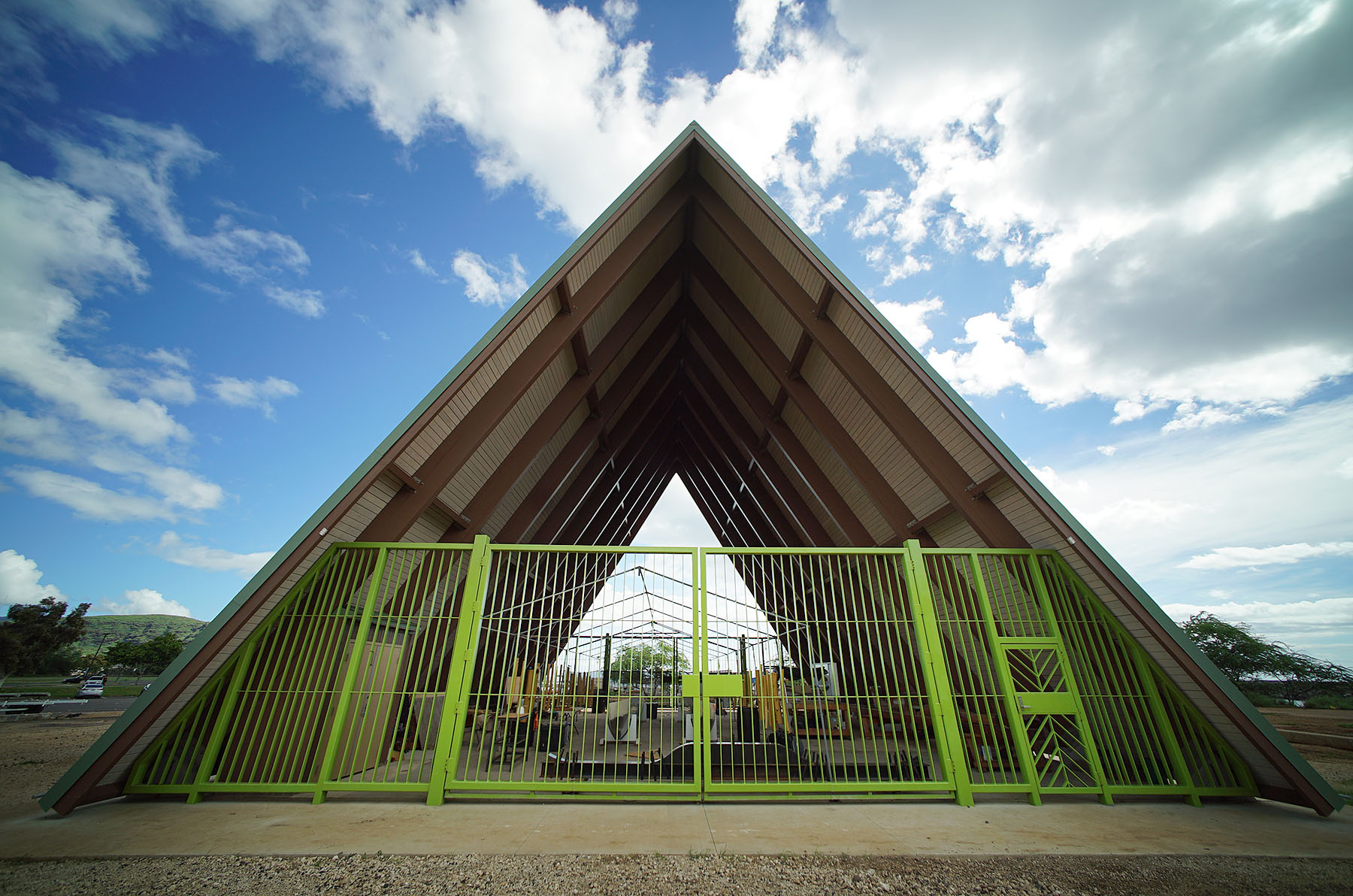
The biggest symbol of the group’s progress is the giant canoe halau constructed last year in Waianae Boat Harbor for E Ala by the state Department of Land and Natural Resources. At five stories high, the open-air A-frame structure is the largest canoe halau in Hawaii, Nakanealoha said.
Open to the north and the south, the halau is meant to serve as a star compass for teaching navigation to students, and as a beacon for the community.
“We made it so big because we needed to have space for hopes and dreams,” Nakanealoha said. “But also because there are a lot of crew members who need to find their way home.”