Schatz Sitting Pretty On $2.3M Campaign War Chest
With just 42 weeks until the 2016 Democratic primary, no U.S. Senate challenger has emerged.
The third quarter of an off-election year can be a difficult time to raise money for a political campaign for the U.S. Senate.
The quarter starts just before the July 4 holiday and includes a long recess between Aug. 4 and Labor Day.
Yet Brian Schatz, the Democrat from Hawaii, managed to haul in more than half a million dollars for the quarter ending Sept. 30, according to filings with the Federal Elections Commission.
He was helped significantly by two political action committees: the J Street PAC, which bills itself as pro-Israel but also pro-peace; and the League of Conservation Voters PAC. The two committees earmarked individual contributions that comprised about 10 percent of Schatz’s total take for the quarter.
Schatz also was helped by dozens of contributors who have kicked in more than $5,000 each this year, including Hawaii lobbyist John Radcliffe, Blue Planet Software head Henk Rogers, Alexander & Baldwin executive Stanley Kuriyama and A&M Records co-founder Jerry Moss.

All told, Schatz has more than $2.3 million in cash on hand. With just 42 weeks to go before the August 2016 Democratic primary, the incumbent has yet to draw a party challenger. Nor has a Republican candidate declared intention to run.
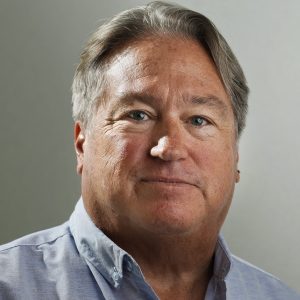
Political analyst John Hart says Schatz is almost untouchable.
“There was obvious speculation that Congresswoman Tulsi Gabbard was interested in more than a House seat, and that Schatz’s is the next one up,” said Hart, chair of Hawaii Pacific University’s Communications Department. “But he is now an incumbent Democrat, and it appears that Gabbard and Schatz have made some sort of peace holding a joint fundraiser. The common opinion is she not going to go for that seat.”
Hart says he doesn’t see a Democratic or GOP opponent for Schatz on the horizon.
“He got on the right committees, made a lot of good decisions, and if someone does challenge him, with Andy Winer he has the best campaign manager on the rock,” he said. “Life is pretty good for Sen. Schatz.”

If, that is, Colleen Hanabusa chooses not to take another shot at him.
In the August 2014 primary, the former U.S. representative came within 1,782 votes of defeating Schatz, who had been appointed to the seat in December 2012 following the death of longtime incumbent Dan Inouye.
Hanabusa was Inouye’s chosen successor, but then-Gov. Neil Abercrombie picked Schatz, his own lieutenant governor. The 2014 race was a special election to complete the last two years of Inouye’s six-year term.
But Hanabusa hasn’t signaled that she is thinking of a rematch. She did not file an October quarterly report with the Federal Elections Commission; and FEC records show her with just $34,000 in cash at the end of June.
“He got on the right committees, made a lot of good decisions… Life is pretty good for Sen. Schatz.” —Hawaii Pacific University Professor John Hart
Clearly, a lot of moneyed interests are banking on Schatz’s re-election, including PACs for Facebook, engineering and construction giant HDR Inc., and America Works PAC, Empire PAC and M-PAC, which focus on Democratic leadership.
The PAC for NextEra Energy, the Florida company seeking to buy Hawaiian Electric, meanwhile, gave Schatz $1,000 this year.
Schatz’s campaign has also kept expenses down, spending $177,000 from July through September.
Much of it went to three District of Columbia-area outfits: Capitol Compliance Associates, a campaign-compliance firm that works with lots of Democrats; New Blue Interactive, an Internet consulting business; and Lori LaFave, a fundraising consultant who also works with lots of Dems.
Despite seeming invulnerable, Schatz’s team is taking no chances and is raising cash in order to be highly competitive. His $2.3 million is a solid campaign war chest 10 months before an election, given that he spent $5.1 million to hold on to his seat last year.
Hirono Under the Radar
Hawaii’s other U.S. senator, Democrat Mazie Hirono, raised just $115,800 in the latest reporting period, and she has just $397,000 in cash on hand.
Her campaign, meanwhile, spent only $35,000 over the past three months. But then, Hirono is not up for re-election until 2018.
“It’s too soon to speculate about Hirono,” said Hart of HPU. “But if you look at our previous senators in office, I don’t think it would be surprising if she decided to run again. It’s far down the road, and it is hard to see if there will be a challenger.”

Hart added, “If Gabbard is still in her House seat, there will be speculation. But I think it is well too early to talk about that one.”
Hirono’s biggest contributors this year include George Pasha IV, president and COO of the Pasha Group, the San Rafael, California, company that has a shipping operation in the islands. A handful of mainland venture capitalists also contributed generously.
The Hirono campaign is also spending money to raise more money. More than $30,000 went to D.C.-based AKM Consulting while about $19,000 went to Trilogy Interactive, an online strategy and hosting operation in Mountain View. Calif.
Hirono crushed former U.S. representative Ed Case in the 2012 Democratic primary and former Republican Gov. Linda Lingle in the general election. To do so, she also spent $5.6 million.