Relief For Hawaii’s Hellish Classrooms
Legislators should combine the best parts of the two air conditioning bills passed by the Senate and the House, to best help students and teachers.
Seven weeks of the Hawaii legislative session have melted away, and with them, scores of bills for which 2016 just wasn’t the year.
One legislative idea that clearly hasn’t met that fate, though, is school air conditioning. If anything, support for a response to the sweltering conditions of Hawaii’s public schools and classrooms seems to be gathering momentum. Two bills have emerged as viable options to deal with a problem everyone agrees has grown into a crisis.
Senate Bill 3126 started out as a vehicle from Gov. David Ige to leverage $100 million in Green Energy Marketing Securitization, or GEMS, funds to put AC into Hawaii’s 1,000 hottest classrooms by year’s end. While the GEMS funding would have been immediately available, there were concerns that using it for schools would stray too far from its intended purpose — that is, to make green, renewable energy more affordable for underserved consumers.
Senators amended the bill to replace the GEMS funding mechanism with monies from $170 million in increased reimbursements from the federal government, primarily for Medicaid expenditures. Those unanticipated funds go back to the state general fund, making them available for the air conditioning work.
As senators pointed out in the bill’s revision, paying for the project with general funds has the decided advantage over GEMS funding of not needing to be repaid. Leaving the GEMS funding where it is, potentially available for future utility-scale projects, is a better bet for taxpayers and the Department of Education.
Senators passed the bill on Tuesday and sent it to the House, where work was underway on House Bill 2569.
Not many measures emanating from the Legislature can truly be described as bipartisan, simply because the number of Republicans is so few — seven in the 51-seat House and one in the 25-member Senate — Democrats rarely need their votes to pass anything.
HB 2569 is that rare bill that counts four Republicans among its introducers, as well as 43 of the House’s 44 Democrats. Brought forward by lead sponsor Rep. Chris Lee, architect of the historic clean energy commitment passed by the Legislature last year, the legislation reaches further than the Senate bill: It would require the Department of Education “to establish a goal of becoming net-zero with regard to energy use by 2035” and set up microgrid pilot projects at numerous public schools.
It also would expedite the cooling of public school classrooms, but would do so with general obligation bonds and funds from the Green Infrastructure Loan Program. This bill cleared the House a few hours after the other measure crossed over and is now before the Senate.
Drawing From The Best Of Both Bills
With two solid measures to choose from, legislators should combine the best parts of each bill into an approach that will allow air conditioning installation to begin later this year, keep lawmakers from having to repay bonds and loaned monies and align this important work with state energy goals.
Simply put, that would mean adopting the general fund payment approach of the Senate bill, which is both immediately available and wouldn’t have to be repaid, and incorporating the energy goals and microgrid pilot project portions of the House legislation.
The latter two pieces aren’t necessary for the fast approach to long-needed school air conditioning, but it’s a good idea to take concrete steps to align state department operations with the ambitious energy goal passed last year. Incorporating microgrid pilot projects into schools campuses is a smart use of those public buildings and can only help in increasing Hawaii’s knowledge and practice base around clean energy solutions.
Meanwhile, though, the biggest beneficiaries in this welcome episode of bipartisan legislating will be the students and teachers who stand to get relief beginning later this year from classroom conditions that are bad and getting worse.
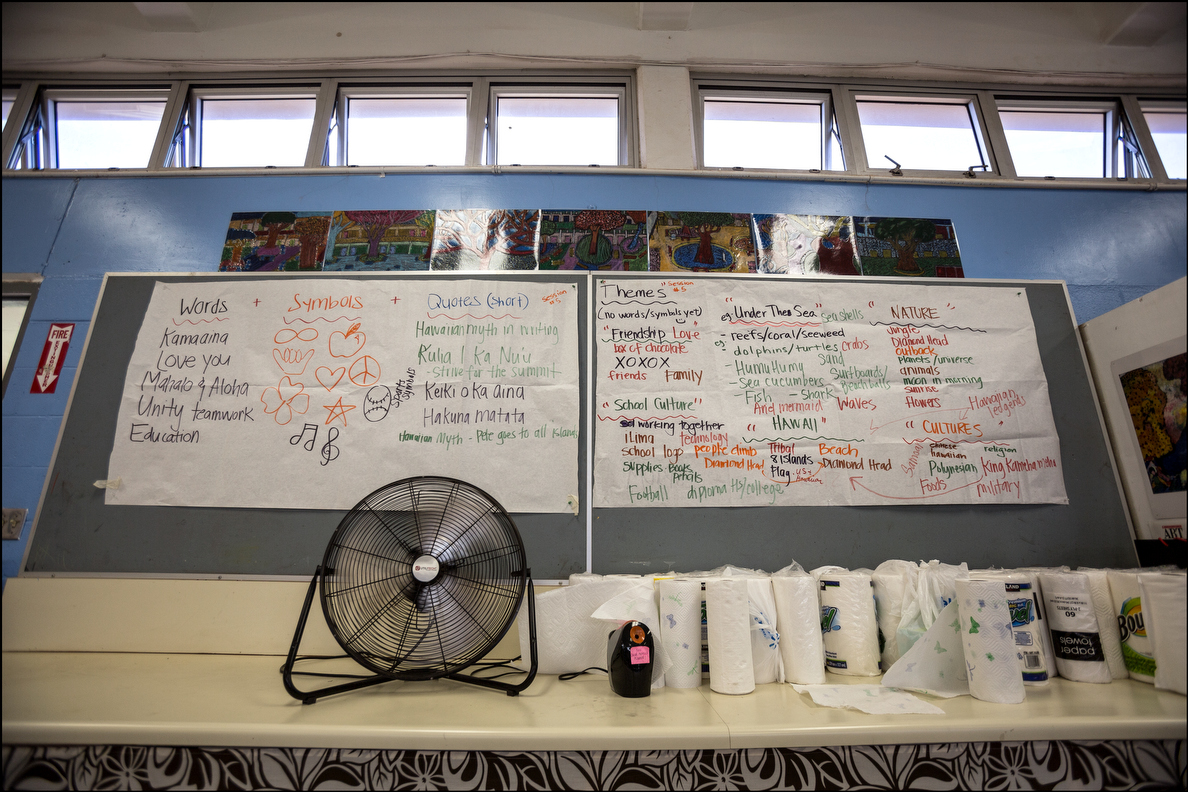
The average age of Hawaii’s schools is about 65, and very few of them or their classrooms have had air conditioning installed over their long lives; temperatures during the warm months routinely exceed 100 degrees in many classrooms, resulting in conditions that make it very difficult for students to learn and taxing for the teachers who work there day in and day out.
With 2015 having earned the dubious distinction of being the warmest year in more than 120 years of record keeping and global warming pushing temperatures ever higher, those classroom conditions only stand to get worse without intervention. Addressing them now will pay dividends for student achievement and well being, faculty satisfaction and the overall success of Hawaii’s education system.
Gov. David Ige and Rep. Chris Lee deserve credit for identifying this area as a top priority this year and organizing early to meet it head on. Plenty of time remains to complete a solution that will bring relief to students and faculty and value to Hawaii taxpayers, while aligning with state green energy goals. We look forward to seeing an already promising approach made even stronger by sine die.