Todd Simmons: Ige Finds It’s Easier Being Green
The governor got off on the wrong foot, nominating a lobbyist to lead on environmental issues. But since then, he’s done better on the environment.
The criticisms were loud and biting last spring, as David Ige, Hawaii’s brand-new governor, sought to recover from his ill-advised nomination of developer lobbyist Carleton Ching to head the state Department of Land and Natural Resources.
Ige’s no friend of the environment, shouted critics. He wants to hand the state over to developers!
After realizing Ching’s nomination was headed for defeat, Ige grudgingly pulled it at the last second and put forward longtime Nature Conservancy of Hawaii leader Suzanne Case. She earned unanimous confirmation and applause from an environmental community that only weeks before had been eviscerating the governor.
What a difference a year makes.
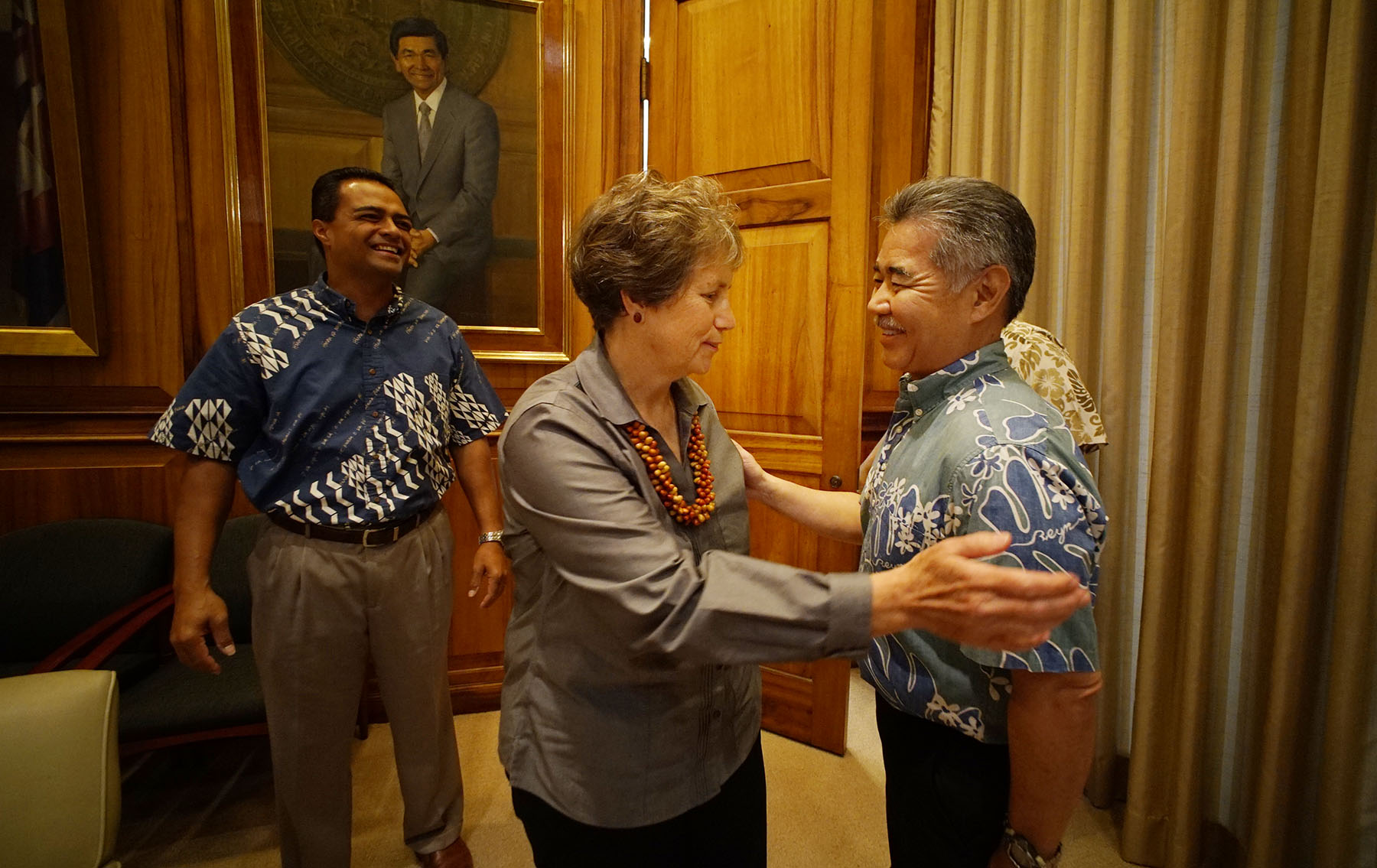
One year to the day after nominating Case, Ige has completed a year-long turnaround on environmental matters. In his opening remarks for a Western Governors’ Association conference in Honolulu on conservation and the federal Endangered Species Act, Ige focused on resolving the tensions between protecting rare species and enrgy development in the Hawaii islands.
A year ago, when the Senate Committee on Water and Land’s voted against Ching’s confirmation, Ige dismissed the committee as “usually filled with people who are conservationists and protectors of the environment.”
One assumes that’s a verbal gaffe he wouldn’t commit again.
From Grudging To Engaged
But there are other signs that Ige is taking a stronger interest in and showing more leadership on the environment:
- His budget for fiscal year 2017 requests $138.3 million for the state Department of Land and Natural Resources, a proposed increase of nearly $15 million over FY2016 for the chronically underfunded agency. Among the beneficiaries: State recreational and natural resources ($3 million), sustainability projects in the Aloha+Challenge ($2 million), six new full-time staff lines for the state Historic Preservation Division and increased acquisition funding for the Legacy Land Conservation Program ($1.7 million).
- Ige nominated seven new members to the state Environmental Council early this year, ensuring the body’s ability to meet quorum and to fulfill its responsibility to help the state make sound environmental policy. Earlier in Ige’s term, the group had so few members it had to cancel meetings for an embarrassing lack of quorum. All seven new nominees were confirmed unanimously by the Senate on March 14. Ige will have more vacancies to fill when three more members’ terms expire at the end of June.
- Last October, Ige named former Sierra Club Hawaii Chairman Scott Glenn to head the Office of Environmental Quality Control. Responsible for implementing laws and rules relating to environmental impact statements, the office has major authority over the environmental, social, economic and cultural impacts of construction projects on lands within conservation districts, shoreline areas and historic sites. Ige personally vetted Glenn for the position, earning points by those familiar with the process as much for the depth of his questions as for his selection of Glenn.
- Ige’s DLNR budget request included $4 million to host the huge World Conservation Congress this September in Honolulu. Held every four years, this massive gathering of the International Union for Conservation of Nature’s 1,300 member organizations had 10,000 participants from 157 countries when it was last held in Jeju, Korea. Its Hawaii meetings are expected to draw even more people and shine a global spotlight on conservation issues in the Aloha State.
- By hosting the Western Governors’ Association’s conservation conference, Ige put Hawaii environmental perspectives and concerns in front of the representatives of 19 Western states and three U.S. territories: Fourteen Hawaii speakers, including Ige, took part in roundtable discussions and overviews on issues such as marine protected areas and integrating climate change considerations into the Endangered Species Act framework. The association’s report, based in part on the conference, will guide its lobbying work in Washington, D.C.
In an editorial board meeting last week with Civil Beat, WGA senior leaders noted the governor’s engagement on the environmental workshop. When they recently went to the Capitol for a pre-conference meeting, expecting to meet with a few aides, they were surprised at their reception.

“He had his entire Cabinet there. He wanted to make sure they all knew, ‘You need to engage, we need to get involved with this,’” said WGA Communications Director Joe Rassenfoss. Ige also pushed the group to “reach out aggressively” to encourage other coastal states to participate in the event. “He’s been really terrific on this.”
Cynics might wonder whether such an approach is motivated by political considerations. In a state where environmental concerns are widely shared and deeply felt, it would be a bad idea to go into a possible re-election campaign in two years trailed by lingering doubts regarding commitment and values.
Others contend Ige’s moves over the past year simply show his true colors, which always included a healthy stripe of green.
Either way, the environmental community seems to be learning to like Ige on the merits, swayed by a consistent pattern of actions since last spring’s appointment of Case.
Ulalia Woodside, who replaced Case at the Nature Conservancy last December, noted that while the criticisms of Ige have quieted, that could change if the governor’s changes course. But she’s among a growing number who are increasingly hopeful they can work with the Ige administration on matters of environmental importance to Hawaii.
“It does seem a much more inclusive approach,” said Woodside. “It’s not about conservation versus development, but of inclusion, voices being heard and what it means for Hawaii.”