Zika Findings Require Immediate Federal, State Response
Congress must act on the president’s $1.9 billion emergency funding request and Hawaii must beef up its efforts quickly.
Federal officials typically can be counted on to voice concern over outbreaks of infectious diseases, but to fall well short of panic. Yet the comments coming from top officials this week regarding troubling new findings on the Zika virus have bordered on exactly that.
“Never in humans have we seen illness spread by mosquitoes linked to birth defect,” Tom Frieden, director of the U.S. Centers for Disease Control, tweeted Wednesday to his nearly 95,000 Twitter followers. Added CDC Principal Deputy Director Anne Schuchat, “While we absolutely hope we don’t see widespread local transmission in the continental U.S., we need the states to be ready for that.”
The findings confirm what many have suspected for months: In newborn babies, Zika causes microcephaly — abnormally small heads — debilitating brain damage, and a range of related disabilities, CDC officials confirmed Wednesday in a special publication rushed into the New England Journal of Medicine.
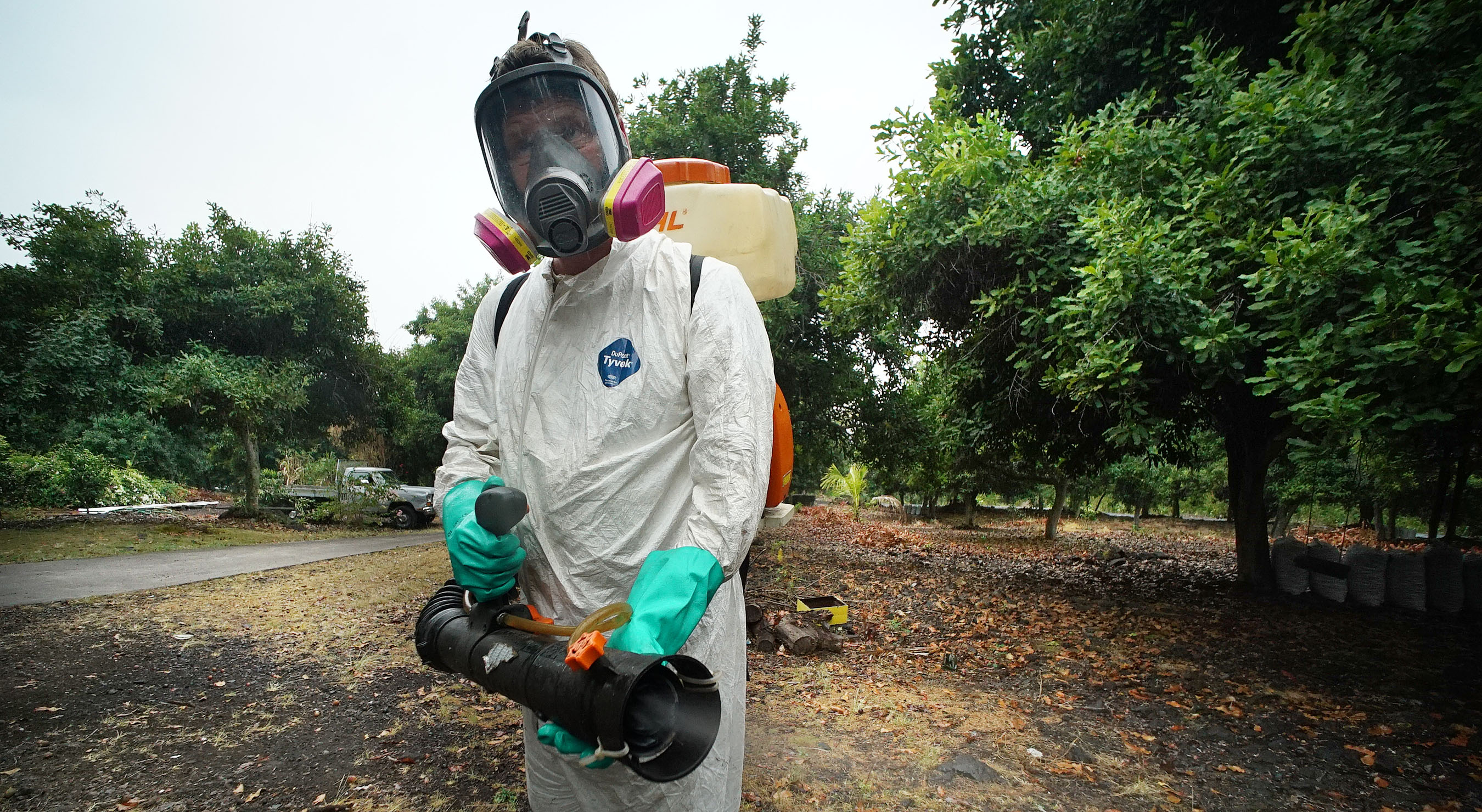
Hawaii is one of several states at heightened risk for Zika infections: Zika and dengue fever are carried by the same type of mosquito. Hawaii Island was the site of a dengue fever outbreak that began last fall and has resulted in 263 cases through early 2016 — the largest in Hawaii since the 1940s.
Over the same period, Hawaii experienced four confirmed cases of Zika. That includes one in a baby born on Oahu with microcephaly to a mother likely infected in 2015 while living in Brazil, where the global Zika outbreak began and has caused thousands of such cases.
Hawaii’s federal delegation began reacting to the new information even before it became public. U.S. Sen. Brian Schatz met with CDC officials on Monday to push for stronger “vector control” programs — a critical piece of any effort to fight diseases spread by mosquitoes. That followed a call last month from Schatz and seven Senate colleagues for the Senate Appropriations Committee to increase funding for mosquito control programs.
In the House of Representatives, Tulsi Gabbard and Mark Takai were part of a rare unanimous vote on Wednesday directing the Food and Drug Administration to add Zika to its Priority Review Voucher Program. That enables the FDA to prioritize development of treatments and vaccines for Zika.
The bipartisan moment drew praise from Takai, who conceded in a recent Civil Beat Editorial Board meeting that partisan gridlock has halted virtually all significant action. President Obama has requested nearly $1.9 billion to fund an aggressive Zika response, and Takai and Gabbard said Congress now must take up that matter immediately.
Gabbard noted that the CDC has classified Zika a Level 1 emergency — a declaration the agency has only used three times previously.
“Still, we have yet to adequately respond to this rapidly rising threat,” she said. “At a practical level, we must bring together federal, state, and local governments, private sector partners, and other key stakeholders to get rid of this mosquito and contain the outbreaks we already have, and prevent future spread.”
But there is already some indication that congressional Republicans may slow the federal response with their usual gamesmanship with the White House. On Wednesday, Appropriations Committee Chairman Harold Rogers said Congress may only grant a portion of Obama’s request, and perhaps not until September.
Until then, the response will be funded by $600 million diverted from monies appropriated to fight the Ebola threat in Africa that took shape in 2014.
The National And State Responses That Are Needed
That hardly sounds like an emergency response worthy of the United States. Perhaps Rogers and Appropriations Committee members haven’t seen the heartbreaking photographs of infants who died before birth or babies born with horribly undersized craniums. If they survive infancy, these children face a lifetime of profound physical challenges and mental disabilities and a need for constant care, due to the range of birth defects the virus can cause.
Few people would argue against making sure the level of funding is appropriate to the need. But stalling for five months as the deadly virus gains a stronger foothold during the summer mosquito season not only is unacceptable, it’s morally reprehensible. As many as 200 million people live in areas across the United States where Zika might easily spread during warmer months — including Rogers’ home state of Kentucky.
In our state, Hawaii Island remains under an emergency declared in February over the dengue outbreak, though no new cases have been disclosed in a little more than three weeks. At the height of the outbreak, the CDC praised the state’s coordinated response on dengue, but warned of critical staffing deficiencies that could cause problems if the outbreak were to spread to other islands.

While that hasn’t happened, the rest of the state remains seriously vulnerable to Zika and dengue. Following the economic downturn of 2008, the state cut the number of vector control workers and entomologists by more than half and reduced the number of Health Department communications staff members to one.
Most of those resources have been focused on Hawaii Island to combat dengue, leaving Oahu and the other inhabited islands without help on hand, should cases of locally acquired Zika or dengue materialize.
Hawaii’s legislative and executive branches have been working to beef up vector control funding and to bring back key staff positions that were trimmed eight years ago. Gov. David Ige’s proposed budget includes $1.8 million for dengue funding and provides for 33 new vector control positions, enough to replace all of the staff eliminated eight years ago.
Those requests are included in the Senate’s proposed budget, Sen. Roz Baker, chair of Commerce, Consumer Protection and Health, told Civil Beat on Thursday. Legislators also are moving a bill that would task the Department of Commerce and Consumer Affairs, which is responsible for licensing health care professionals, to develop an e-mail communication system to facilitate a rapid response, should an outbreak of Zika or dengue manifest somewhere on our islands, Baker said.
Those provisions aren’t included in the House budget, but Baker said the Senate and the governor’s office are committed to ensuring they are included in the final fiscal 2017 budget, along with $200,000 for a health education and media campaign.
With no current prevention or treatment for the disease, and thousands of babies already born with microcephaly in Brazil, the Zika threat requires a coordinated and adequately funded response in the United States, if we don’t want to see Brazil’s tragedy replicated here.
Congress must act on the president’s emergency funding request now — not five months from now or whenever House GOP leaders decide it’s politically expedient.
Hawaii legislators must complete their work on the governor’s dengue/Zika mitigation request and on the legislation creating a rapid-response communications network for health professionals. And the state Department of Health must prepare now so that when the fiscal 2017 budget goes live July 1, the vector control positions can be filled as quickly as possible.
Until they are, the only protections available to individuals where mosquitoes are present are to cover exposed skin, use mosquito repellent and tend to standing water breeding grounds. With rapid governmental response and personal attention to individual risks, Hawaii and the rest of the nation may avoid Brazil’s tragedies, but time and diligence are of the essence.