Finding Common Ground Between Oahu And Pakistan
Nearly half a world away from Honolulu, the capital city of Pakistan’s Punjab province has more in common with Hawaii than this writer expected.
The air was warm, humid, and strangely familiar when I stepped off the plane in Pakistan. I could smell flowers as I made my way through crowds of people. Rose petals scattered the floor, evidence of an earlier celebration welcoming pilgrims back from the hajj, and group of young children gathered them into a pile, tossing them into the air to form a brief, bright pink cloud.
It felt almost like the Honolulu airport.
I visited my friend in Lahore this April in the hopes of learning more about Pakistan, especially its arts and culture. I had never been to South Asia before and expected many new experiences; I braced myself for a bit of culture shock. But during my week-long stay, I found that Hawaii and Pakistan — or, at the very least, Oahu and Lahore — are more similar than I could have predicted.
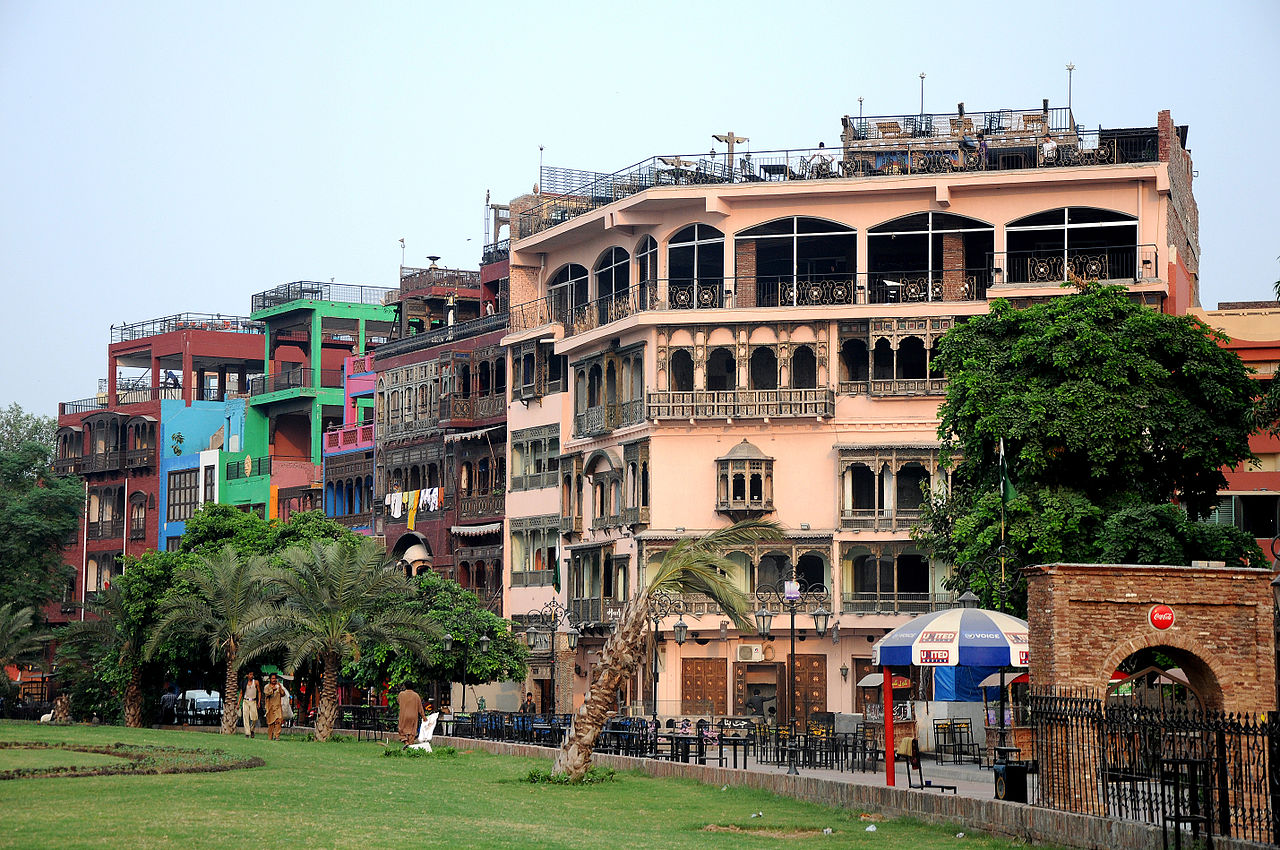
Growing up in Kailua, I lived just a block away from my auntie and uncle and less than a mile from my maternal grandparents. In Lahore, my friend lives minutes away from her parents, grandparents, aunties, uncles and cousins; she, her husband and her children also share a home with her husband’s parents. This is common in Pakistan, where extended family is as valued and important as in Hawaii. People in Pakistan and throughout South Asia also fondly address elders as “auntie” and “uncle,” regardless of whether they’re actually related, just as we do in Hawaii.
You won’t find spam or kalua pig in Pakistan (pork is haram, or forbidden, in Islam), but you can eat your fill of delicious locally grown mango, guava and bananas. In fact, you are sure to eat your fill, period, when you visit Lahore, where hospitality is as strong as our aloha spirit, and where social life revolves around food. My hosts refused to let me pay for a single meal during my visit, and their generosity made me feel even more at home.
So, too, did the hibiscus bushes and plumeria trees in the city’s many gardens and the population’s Hawaii-like mix of cultures and languages. Despite containing almost four times as many people as the entire state of Hawaii, Lahore somehow has a similar “two degrees of separation” (rather than the normal six), and any two people who meet randomly in a shop, a class or on the street, will almost always know someone in common, just as we do on the islands.
Oahu and Lahore also share some less positive similarities. Both places are currently experiencing the construction of highly controversial rail systems, for instance. Both are also criticized (by neighbor islands and non-Punjab provinces, respectively) for receiving disproportionate attention from their governments.
Hawaii and Pakistan are also both severely overlooked in terms of arts and culture, albeit in different ways. While our state is too often written off as a “paradise” that exists only for tourists, Pakistan has a very different media reputation.
But just as Hawaii is much more than the beaches of Waikiki, so is Pakistan much more than the violence and extremism shown on the news. I never once felt unsafe during my visit to Lahore, which is a predominantly peaceful city known as the cultural capital of Pakistan. Visiting the Lahore Museum, the National College of Arts, and various cultural and historic landmarks, I often found myself thinking how these beautiful sites go unacknowledged by the rest of the world, just like so many of Hawaii’s fly under the radar.
Colonialism’s Legacy At Home And Abroad
Misconceptions about Hawaii and Pakistan, and problems shared by both places, can often be traced back to the same origin: colonialism. Pakistan achieved independence from the British and separation from India in 1947, just over 10 years before Hawaii earned its still-controversial statehood within the United States. Although Pakistan is now a sovereign nation, as Hawaii once was, it has a similarly complicated (and often fraught) relationship with America’s federal government and military.
Both Pakistanis and Native Hawaiians feel the impact of imperialism on their cultures; one Pakistani Muslim scholar spoke to me about the “colonization of the mind,” explaining how “we’ve been taught to think that the old ways are inferior, when really they are what is best for us.” She cited examples such as how sitting cross-legged on the floor was seen by the British as uncivilized, but actually grounds the sitter and promotes better posture; and how eating with one’s hands was declared unsanitary by colonizers, but in fact is the easiest and best way to eat South Asian food, and makes meals a more tactile and immersive experience.
Her stories recalled for me the history of American missionaries in Hawaii, who tried to stamp out the native language and stop the passing down of Hawaiian history by banning chants and hula. Despite this adversity, both Hawaii and Pakistan continue to reclaim and celebrate their native cultures, often through the very practices and traditions that were once declared “inferior” by colonizers.
Of course, Hawaii and Pakistan also have many differences. Most obvious to me was the extreme contrast in driving etiquette. In Hawaii, people get into arguments at four-way stops because each person stubbornly refuses to go, politely waving the other person to proceed first. When I described this to people in Lahore, they laughed incredulously: drivers there have no such mercy. Lane divisions mean nothing, and cars, motorcycles (often with as many as five passengers) and rickshaws alike completely disregard such niceties as turn signals as they weave in and out of traffic at high speeds, coming dangerously close to one another and honking loudly all the while.
This difference is perhaps indicative of another major distinction between the cultures of Hawaii and Pakistan: Our East Asian-influenced culture is much more reserved and encourages modesty to the point of self-deprecation; meanwhile, in South Asian culture it is normal and accepted to be much more loud and emotionally expressive.
Ultimately, though, both cultures highly value kindness, generosity, family and hospitality more so than Western cultures. When a friend and I got lost on our way to an event on the campus of the Lahore University of Management Sciences, no fewer than seven people took time to help us find our way, debating with each other on the fastest route, chatting happily with us while they walked us to our destination, and making sure we arrived at the right place. Then there is the ubiquitous call-and-response of “salaam alaikum” (peace be upon you) and “wa-alaikum salaam” (and upon you, peace), which reminded me of our enthusiastic “aloha kakou” greetings.
I think the saying is true, to an extent: People are the same wherever you go. But the people of Hawaii and Pakistan may be more similar than most, certainly more so than I expected. I highly encourage my fellow Hawaii folks to visit Pakistan and see for yourselves how much we all have in common.
 GET IN-DEPTH
REPORTING ON HAWAII’S BIGGEST ISSUES
GET IN-DEPTH
REPORTING ON HAWAII’S BIGGEST ISSUES
Community Voices aims to encourage broad discussion on many topics of community interest. It’s kind of a cross between Letters to the Editor and op-eds. This is your space to talk about important issues or interesting people who are making a difference in our world. Column lengths should be no more than 800 words and we need a current photo of the author and a bio. We welcome video commentary and other multimedia formats. Send to news@civilbeat.org. The opinions and information expressed in Community Voices are solely those of the authors and not Civil Beat.