Luke Evslin: Bernie Already Has Won, And So Have We
The legacy of Bernie Sanders is that it’s OK to embrace big-government solutions, and that capitalism needs a bridle.
The ancient Romans entertained themselves with gladiators, chariot races, and representative democracy — but history has only left us with one of those blood sports. No rules, one winner, anything goes.
We choose a hero, we fight for them, we give them our money, we belittle our friends and argue with our family — and then with the pounding hangover of democracy, we wake up on the first Wednesday of November with a new president elect. The loser gets a paragraph in the history books, the winner goes on to the halls of power and we all carry on with our lives. That’s how it works.
But this election is different.
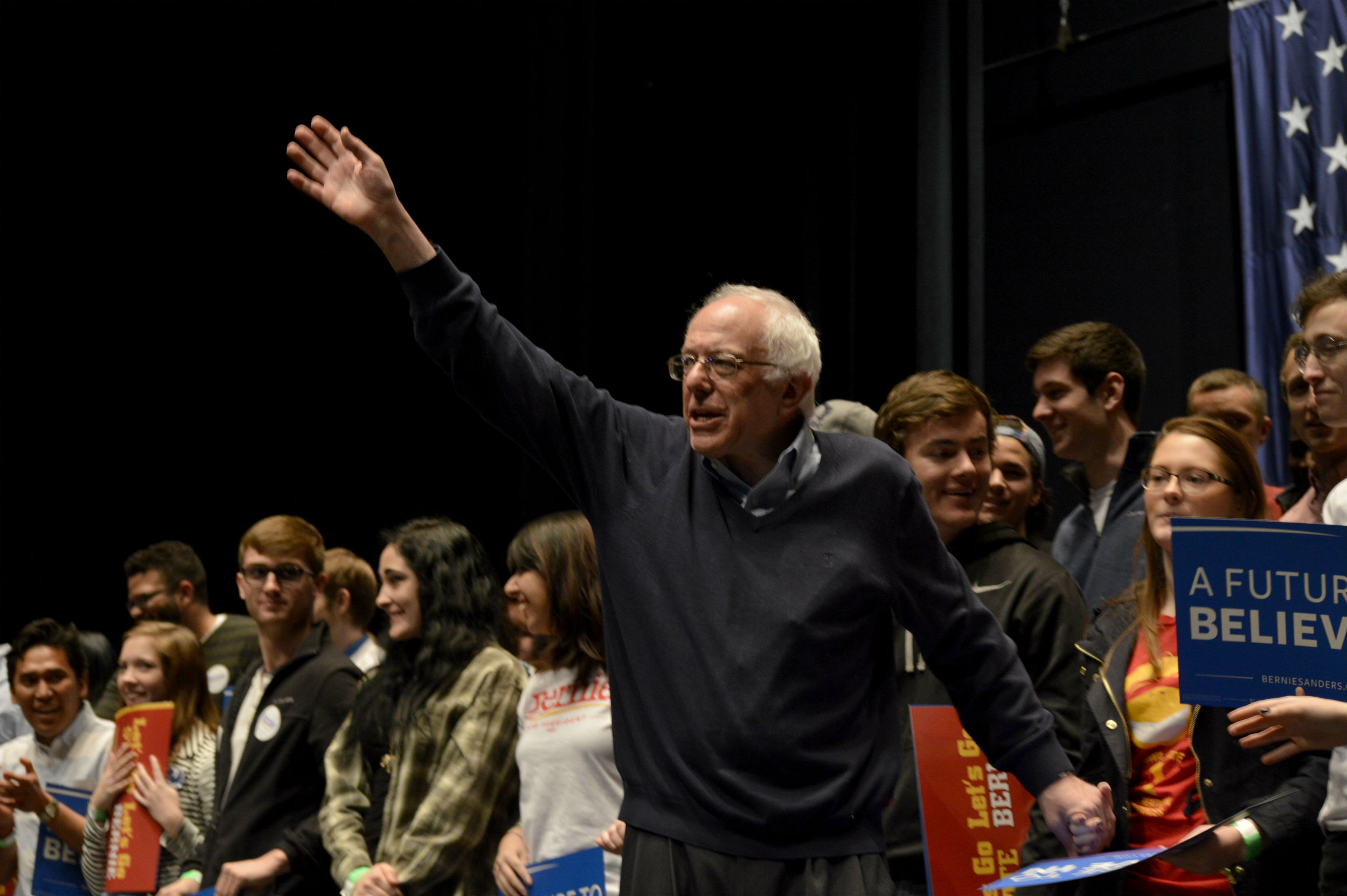
A year ago Friday, Bernie Sanders announced that he was running for president. The New York Times buried the story on page 21 and the media continued to refer to Clinton as the presumptive Democratic nominee.
It wasn’t within the realm of possibility that the Clinton machine could be taken on by a candidate calling for a carbon tax, single payer universal health care, free community college and political revolution. And so the frumpy 74-year-old Democratic socialist from Vermont was completely written off by everyone who paid attention to politics.
Even he probably couldn’t have predicted what was about to come. In front of the National Press Club last year, Sanders laughingly said that three million contributions would mean that he “was really, enormously successful.”
He’s now received seven million contributions (more than any candidate in history), pulled up even with Clinton in total campaign fundraising, and in four months he’s brought a 25-point polling deficit to nearly within the margin of error.
Alas, in the blood sport of politics, that’s not what matters. Hillary Clinton has received 3 million more votes, 300 more pledged delegates, and as Tuesday’s primary results made clear, she will likely be moving into the White House next January. If this were a normal year and Bernie Sanders were a normal candidate, that would be the end of his story.
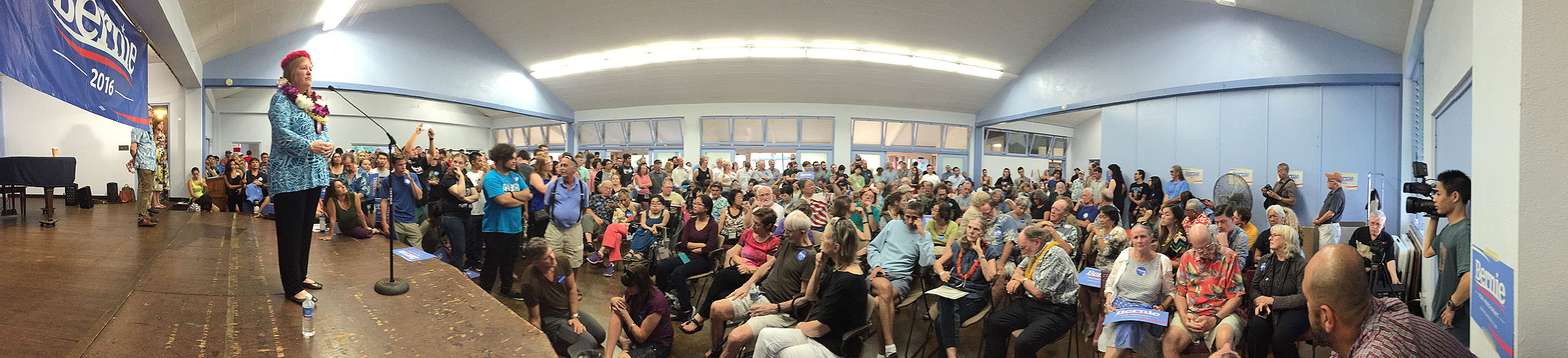
Yet nobody is writing the eulogy for the Sanders campaign. Why? Because our long and confusing primary process is about more than just choosing a candidate — it’s about defining the future of the party. And while failing to earn the nomination, the senator from Vermont has succeeded in changing an entire generation.
After 50 years of repeating the same message, the old socialist has finally found his audience.
A Harvard Institute of Politics poll released Monday showed Bernie Sanders as the only candidate with a net-positive rating among millennials. While 54 percent viewed Sanders favorably, only 37 percent had a favorable view of Clinton, and Trump came in at a dismal 17 percent.
“He’s not moving a party to the left. He’s moving a generation to the left,” polling director John Della Volpe told the Washington Post. “Whether or not he’s winning or losing, it’s really that he’s impacting the way in which a generation — the largest generation in the history of America — thinks about politics.”
This year’s poll results showed large increases in millennial support for every progressive cause included in the survey: such as support for immigration, government spending as an effective way to increase economic growth, and the idea that government should provide food and shelter to those unable to afford them. Notably, support for action on climate change increased by 8 percent, the idea that the government should provide health care as a basic right increased by 6 percent, and the notion that government should spend more to reduce poverty increased by 10 percent. Those are huge and unprecedented gains.
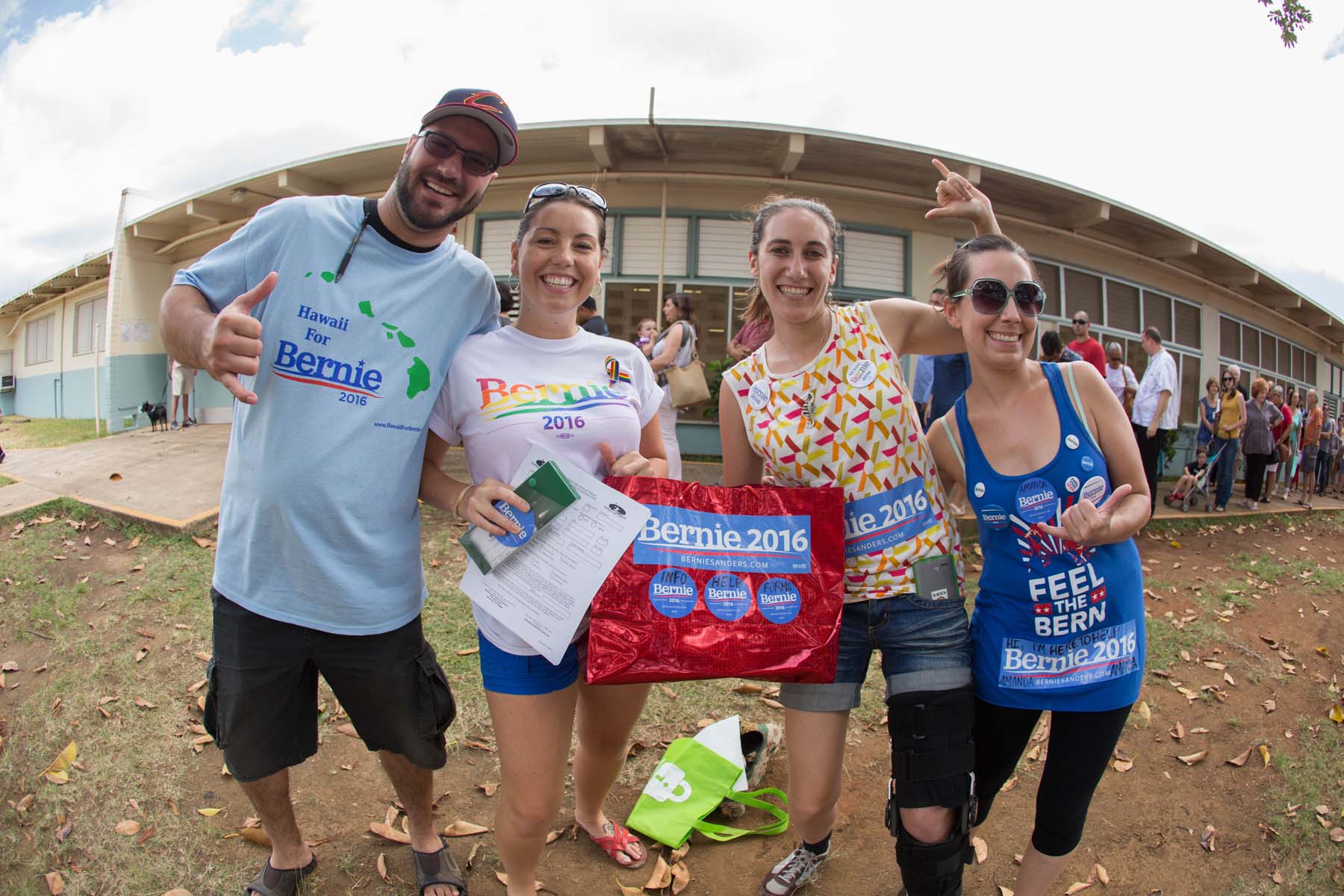
And the poll highlighted that among young Americans, “more than three in five prefer that a Democrat win the White House, while 33 percent prefer a Republican. The divide of 28 points is nearly double what it was in Spring 2015.”
Della Volpe told the Washington Post that it is “remarkable for so many measures to shift in the same direction at the same time.”
But what speaks most strongly to the success of the Sanders message is that a majority of respondents reject capitalism and “nearly half say politics of today are not able to meet the Nation’s challenges.”
This millennial frustration with the status-quo isn’t likely to change anytime soon. As the New York Times reported, we largely form our political opinions between the ages of 18 and 30, and then we hold them for the rest of our lives. The generation that came of age under the successful presidency of Eisenhower remained predominantly Republican, and the baby boomers who came of age under the successful presidencies of Kennedy and Johnson mostly remained Democrats.
Now the millennials are coming of age with the inspiring figure of President Obama surrounded by the ruins of political dysfunction. And, we’re faced with a choice. We can turn to the right, heeding the siren call of the Republican Party to reject government intervention. Or we can turn to the left.
And at a rate of nearly two to one, we are choosing the Democratic Party.
The legacy of Bernie Sanders is that it’s OK to embrace big government solutions. It’s that socialism doesn’t have to be a bad word. And that unbridled capitalism is inherently flawed. Most importantly, the senator from Vermont teaches us that if combating climate change and reducing inequality are extremist views — then it’s OK to be an extremist.
As Benjamin Franklin (the original king of 140 characters) tweeted in 1760, “The waves do not rise but when the winds blow.” Bernie Sanders has created a storm of millennials. And Hillary Clinton, who has spent her entire career trimming her sails to the political winds, has no choice but to run with it.
While he has failed in the race for president, he has succeeded in giving direction to the Democratic Party.