

Exit The King
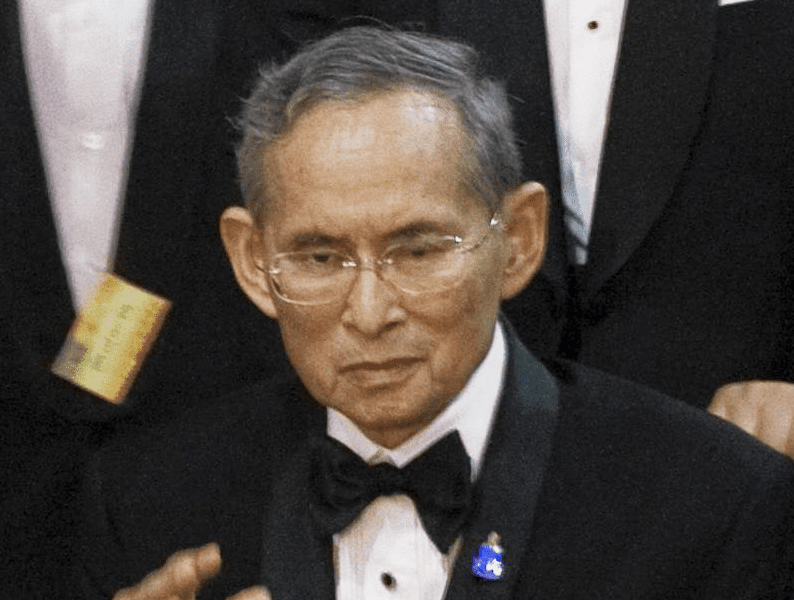
The late King Bhumibol Adulyadej was the glue that held Thailand’s society together.
An era has passed. The person whom many academic observers and most of our Thai friends saw as the very glue that held Thai society together throughout the tumultuous history of that country for the past 70-plus years passed away earlier this week in Bangkok.
King Bhumibol Adulyadej’s death, after a very long illness and nearly a year of seclusion, was not unexpected, but it nevertheless has likely come as a shock to much of the Thai public all the same. “What will be the future?” is the question on everyone’s lips from Chieng Rai in the north down to Pattani at the Malaysian border.
The question of royal succession has long been quietly discussed among members of the Thai political class, but draconian national laws of lèse majesté have effectively limited much open comment inside the country itself.
King Bhumibol was held in highest affection, largely genuine, but perhaps faut de mieux, given widespread questions about the suitability of his designated successor, Prince Vajiralongkorn. Indeed, there is a considerable swath of sub rosa opinion that, the 1924 Palace Law of Succession notwithstanding, his widely appreciated spinster sister, Princess Sirindhorn, would be more suitable, but that notion was effectively put to rest by Bhumibol’s own re-confirmation of male succession, meaning that her brother, Vajiralongkorn, the king’s only son, was going to take the throne, come what may.
However, the putative new sovereign has a very checkered reputation as a playboy who frequently seems to prefer living in Europe (shades of Egypt’s un-regretted King Farouk) and among whose publicly embarrassing peccadillos was a widely viewed video of a royal birthday party for his dog during which his wife (and future queen?) wandered about the premises topless for all to see.
In addition, the Thai political scene for the past several years, with riots and a coup d’état, have been anything but tranquil. Red shirts, yellow shirts, military intervention, death of protesters in the streets, occupation of BKK international airport and the like have undermined domestic stability and eventually led to the ouster of Thailand’s first democratically elected female Primer Minister, Yingluck Shinawatra, and her lot, on charges of abuse of power.
It would now appear that the Thai military leadership, in actual day-to-day control of matters and keen on making sure that an earlier Prime Minister, Thaksin Shinawatra (elder brother of Yingluck), a sleazy populist (former policeman and business mogul, said to be the Donald Trump of Thailand) now hiding out in Dubai, cannot return to power. The generals are making every effort, via burnishing the Prince’s public reputation (not an easy sell) while quietly turning a blind eye to his less endearing qualities, to see to it that Vajiralongkorn comes to the throne without incident and that he will be able to continue in kingship under their watchful eyes. But that he will continue to behave as a monarch should remains to be seen.
Events yet to play out will prove to be very interesting to observe, if not to participate in.
 GET IN-DEPTH
REPORTING ON HAWAII’S BIGGEST ISSUES
GET IN-DEPTH
REPORTING ON HAWAII’S BIGGEST ISSUES
Community Voices aims to encourage broad discussion on many topics of community interest. It’s kind of a cross between Letters to the Editor and op-eds. This is your space to talk about important issues or interesting people who are making a difference in our world. Column lengths should be no more than 800 words and we need a current photo of the author and a bio. We welcome video commentary and other multimedia formats. Send to news@civilbeat.org. The opinions and information expressed in Community Voices are solely those of the authors and not Civil Beat.
