Hawaii Must Move On Oral Health Programs For Keiki
It would be irresponsible not to intervene on behalf of Hawaii’s children, who are suffering from a lack of fluoride.
There is no doubt that fluoridated water would dramatically decrease tooth decay among children in Hawaii. Evidence-based studies from other states that have adopted fluoridation support this claim.
However, as Denby Fawcett’s article noted and reader comments showed, there are mixed feelings about fluoridation in our community.
Past attempts to introduce fluoridation in selected areas were vehemently opposed. We recognize fluoridation is an emotionally charged issue.
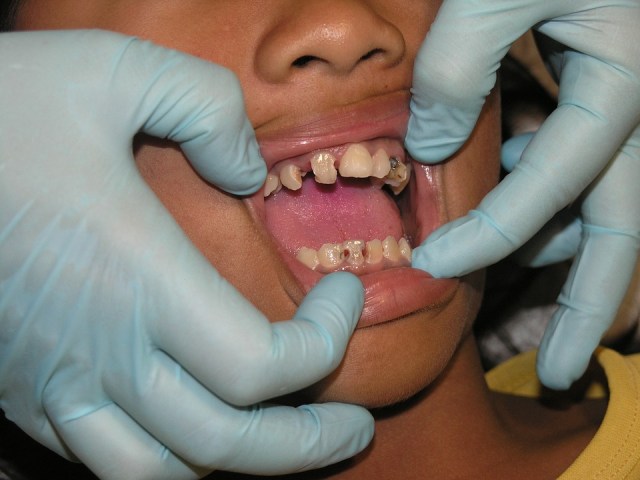
Unfortunately, as the state Department of Health’s Hawaii Smiles survey documented, it is children from low-income families in rural areas on the neighbor islands who are most affected by our state’s decision.
We respect differing opinions and feelings, but it would be irresponsible not to intervene on behalf of Hawaii’s keiki. We cannot let the high rate of tooth decay among children continue.
We are turning to other evidence-based programs to reverse these trends and give all keiki a chance to have a healthy smile.
Encouraging parents to take their children to the dentist before their first birthday, deploying a molar sealant program for children across our state and a supporting a pilot teledentistry program on Hawaii Island to improve access to oral health care for vulnerable families are all worthy ideas.
Fortunately, they are among the initiatives the Hawaii Department of Health, HDS Foundation, Hawaii Department of Education, federally qualified community health centers, family and pediatric dentists, pediatricians and others are collaboratively working on to make sure keiki know there are adults who care about them.
 GET IN-DEPTH
REPORTING ON HAWAII’S BIGGEST ISSUES
GET IN-DEPTH
REPORTING ON HAWAII’S BIGGEST ISSUES
Community Voices aims to encourage broad discussion on many topics of community interest. It’s kind of a cross between Letters to the Editor and op-eds. This is your space to talk about important issues or interesting people who are making a difference in our world. Column lengths should be no more than 800 words and we need a current photo of the author and a bio. We welcome video commentary and other multimedia formats. Send to news@civilbeat.org. The opinions and information expressed in Community Voices are solely those of the authors and not Civil Beat.