Denby Fawcett: Frustrated Businesses Say It's Time For Action In Chinatown
If Honolulu Mayor Rick Blangiardi wants to show he’s an agent of change, Chinatown is the perfect place to do it.
April 20, 2021 · 8 min read

About the Author

The column you are going to read here is not the one I started out to write.
Initially I intended to criticize a website called chinatownwatch.com for its nasty and hateful comments about the most vulnerable homeless people living on the streets in Chinatown.

But after spending time in Chinatown this weekend, including a walk with the website’s co-founder, I decided to amplify my scope and write about the larger issue of Chinatown’s dystopian decline during the pandemic.
I see this small historic area as the perfect place for Mayor Rick Blangiardi to use as a visible symbol that he means business when he promises to improve life in Honolulu.
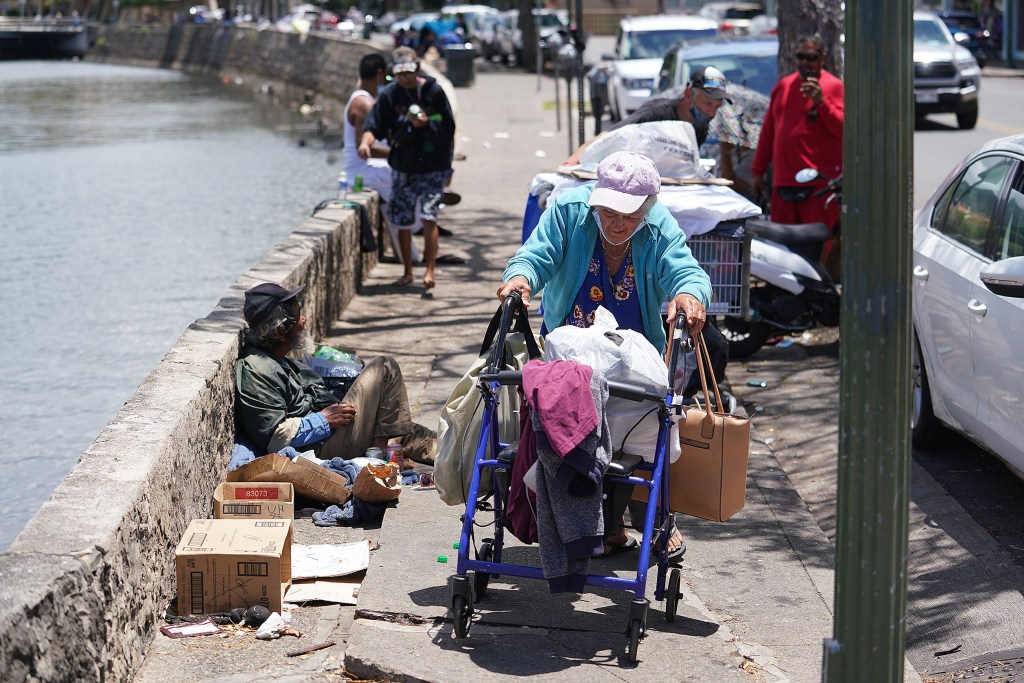
With fewer people going to Chinatown during the pandemic to dine out and visit the bars, the graffiti, drug dealing, filth on the streets and anguish of the homeless community are in-your-face more than before when there was the distraction of crowds of visitors.
In his State of the City address on March 15, Blangiardi said he wants to make a “new Chinatown” of which we all can be proud.
“We believe Chinatown is a hidden gem with so much potential that has been terribly neglected,” he said.
Interestingly, Honolulu mayors like the “gem” analogy: his predecessor Kirk Caldwell called Chinatown “a cultural gem.”
And every recent Honolulu mayor from Jeremy Harris, to Peter Carlisle to Mufi Hannemann to Caldwell has promised to make the “gem” of Chinatown better.
A campaign sign still up in a Chinatown windows says “Mufi Will Improve Chinatown- Mayor Mufi- A Strong Tested Leader in Tough Times.”
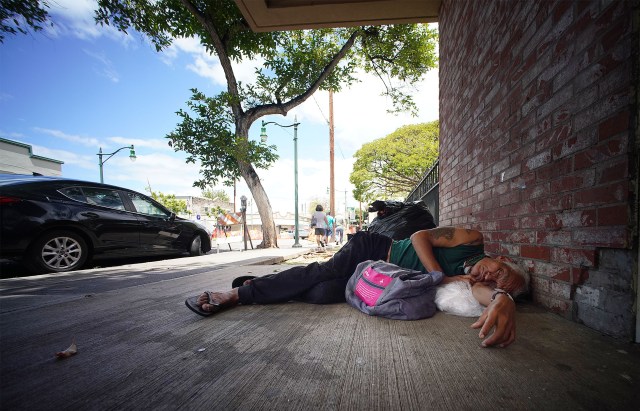
For Blangiardi to be different he will have to make permanent systemic changes in Chinatown, not just hold occasional news conferences to announce superficial changes like new street lights in what’s become a crime corridor — an increasingly difficult place to live and work.
But first I want to say more about the chinatownwatch.com website that reflects growing exasperation from Chinatown residents and business owners.
Anonymous contributors post videos and photos of homeless people on chinatownwatch.com with captions calling them names like “disgusting mahu” or “homeless idiot.”
They also show people at their most vulnerable moments such as having psychotic meltdowns, wandering around naked, flashing their buttocks while sleeping on the sidewalk or sitting in urine with their genitals exposed.
I showed the website to Dr. Chad Koyanagi, a street psychiatrist who has been working for the past six years to bring mental health treatment to homeless people in Chinatown.
“I can understand the business peoples’ frustrations with the homeless when they have been going through their own struggles during the pandemic, but it is disturbing. So morally questionable, so hateful to dehumanize the most disenfranchised, mentally ill and incapacitated people in our society. I can’t see any good coming out of it,” Koyanagi said.
Oren Schlieman and his wife Fran Butera created the website three years ago, he said, “initially to make politicians and the Honolulu police uncomfortable with what is going on here. The good side is it has also unified Chinatown neighbors into pushing harder for change.”
He said comments on the website were not as mean-spirited in the beginning but grew snarkier as people became more frustrated.

Schlieman, who grew up in Honolulu, has been doing business in Chinatown for more than 30 years. He owns the black lava rock building at 1152 Maunakea St. from which he and Butera run a graphics company called Info Grafik Inc.
Butera defends the captions on the chinatownwatch.com site: “If you walked out of your store every morning and found excrement on the threshold and were confronted with people screaming the F word at you 30 times or dealing drugs in front of you, you might write such comments yourself. We are past being polite.”
Butera said she manages the website but doesn’t contribute to the collection of photos that are posted and captioned by anonymous donors.
But after we talked, she said she would put a banner at the top of the website to remind contributors to be more civil.
Community advocate and founder of the Chinatown Business and Community Association Chu Lan Shubert-Kwock said she regularly contributes photos to chinatownwatch.com, calling it “our plea for help.”
“It has been a terrible time. People are afraid to come to Chinatown for good reason,” she said.
Part of the reason for more aggressive and sometimes violent behavior on the streets recently was because of the Hawaii Supreme Court’s mandate that kept many misdemeanor offenders out of jail to help prevent the spread of COVID-19 during the pandemic — a mandate that was lifted on Friday.
Another reason for more dangerous and psychotic behavior on the streets is that care providers for homeless people are having a difficult time getting courts to mandate involuntary treatment for the most seriously mentally ill among them under the state’s Assisted Community Treatment law.
When I walked through Chinatown with Schlieman on Friday, we stopped on Maunakea Street to talk to lei seller Tina Nguyen.
Nguyen showed us shards of glass from a broken vase she said a homeless person grabbed and purposefully smashed in front of her store in the morning.
“The homeless are more hostile. They are not scared anymore because they know the police can’t do anything. It is making life miserable for all of us. We are afraid to say anything for fear they might retaliate,” she said.
Across the street, lei seller Mei Mei Say told us about a woman who grabs flowers from vases in the store, then throws them out on the street.
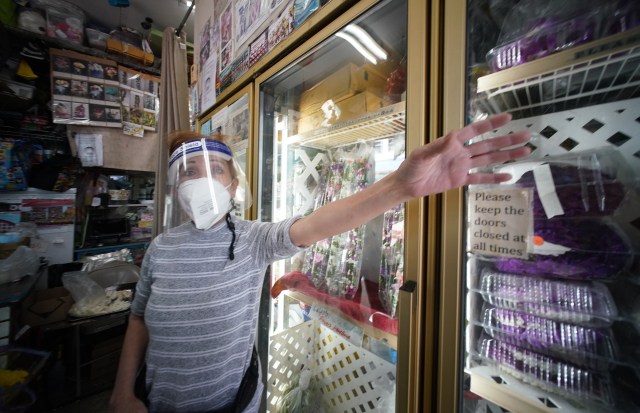
She said another homeless person came in the store, shoved her and had to be chased out by her husband, who waved a broom at him.
“Some of my customers are afraid to come here,” she said.
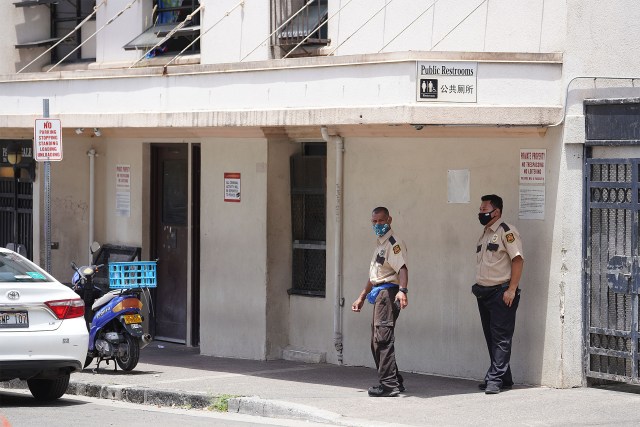
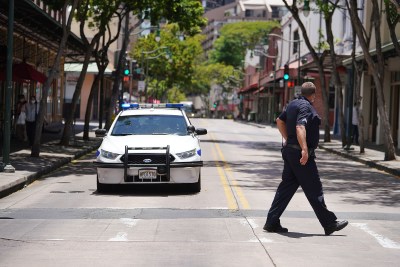
One of the goals of the chinatownwatch website is to urge the Honolulu Police Department to start patrols on foot 24/7. As I walked around the area on Friday and Saturday, the only signs of police were patrol cars circling through the streets.
“The officers are missing most of what is going on,” said Schlieman.
HPD spokeswoman Michelle Yu said in a emailed statement that Chinatown has four to six officers patrolling on foot from 5 a.m. to 9 p.m., seven days a week, depending on availability and that HPD is working with the community to address challenges in the area.
She did not specify what the challenges are or answer why officers don’t patrol on foot from 9 p.m. until 5 a.m. or why, if HPD officers are walking around, we did not see them.
New Honolulu Prosecutor Steven Alm said he is dedicated to making Chinatown and the Kalihi area safer by reinstating the successful Weed and Seed program he initiated when he was U.S. Attorney for Hawaii in 1994-2001.
“I am confident we are going to make a big difference in Chinatown,” Alm said in a phone interview Saturday.
His initial Weed and Seed program reduced crime in the Kalihi-Chinatown area by 70% over three years by having police officers weed out criminals by arresting them, then having prosecutors seek geographic restrictions as pretrial release and probation conditions to keep the suspects from returning to the areas of their alleged crimes.
Alm said Chinatown with its bars, restaurants and dark corners “creates a dynamic that allows crimes to happen,” and that many of the perpetrators from outside frequent the area for the criminal opportunities it offers.
“Seed” is the part of the program that is created by community members who come up with ideas for programs and activities to keep young people in the area from being attracted to lives of crime.
Alm said his goal is to roll out the new version of the Weed and Seed program by the end of May.
The area covered in the new version will stretch from the Kokea Canal near Honolulu Community College in Kalihi to Bishop Street downtown, and will cover the Fort Street Mall, which he said has become increasingly dangerous since Hawaii Pacific University moved its primary operation to the Aloha Tower.
“A lot of people don’t think government can get anything done. It absolutely can when you bring everyone together, the residents, the police, the businesses. When we work together, there is very little we can’t do. There is a lot of pent up support to help clean up Chinatown,” Alm said.
Butera said that would be her dream, the day when she can close down chinatownwatch.com because it isn’t needed anymore.
 Sign up for our FREE morning newsletter and face each day more informed.
Read this next:

Local reporting when you need it most
Support timely, accurate, independent journalism.
Honolulu Civil Beat is a nonprofit organization, and your donation helps us produce local reporting that serves all of Hawaii.
ContributeAbout the Author