AgTech Is Hawaii’s Ticket To Diversification
Our farmers need better tools to make agriculture an industry that is financially realistic.
October 9, 2022 · 5 min read

About the Author

Our reliance on tourism is unsustainable. Most Hawaii residents would wholeheartedly agree.

Now that we are seeing a post-pandemic economic comeback, this is the perfect time to aggressively work towards economic diversification.
The challenge we face is figuring out how to diversify. Recently, entrepreneurs have begun a discussion about agricultural technology — AgTech — an industry that makes agriculture more efficient, modern, and environmentally friendly.
If we look into this industry and our leaders shift their focus to the technology that helps our farmers, we have a clear path to diversification.
In his June 6 article, Civil Beat’s Thomas Heaton highlights the new AgTech discussion taking place amongst local entrepreneurs. This discussion is all about innovation and curiosity.
Can we further develop technologies that allow farmers to reduce insecticide use? Can digital technology integrate energy and crop data?
Does the future lie in drone technology? Can we develop hybrid indoor/outdoor farms on limited lands?
These are the types of questions and technologies that drive the industry. While the industry in theory has idealism and potential, the question we should be asking is: Does it make sense for Hawaii?
Here are three reasons to support AgTech and three solutions to get there, from the perspective of a young citizen.
Argument No. 1: Local Demand For AgTech
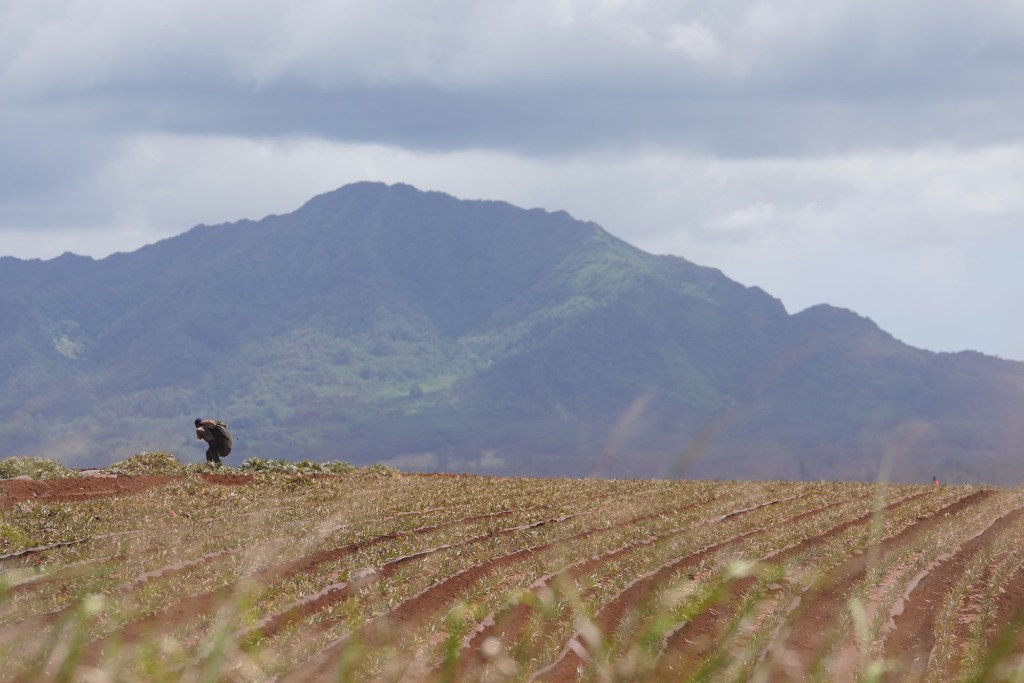
The agricultural industry needs help. The USDA Economic Research Service reports that the average farm in Hawaii is only 155 acres. When we compare this to a national average of 445 acres, it becomes clear that our farmers are at a disadvantage.
Additionally, most of Hawaii’s farms generate less than $10,000 in sales annually, according to the ERS. Farmers struggle with labor costs, climate change, and mental health issues. Is this characteristic of sustainable agriculture?
Far from it. Our farmers need better tools to make agriculture an industry that is financially realistic. Innovation in agriculture is not only an idea, it is a necessity.
Argument No. 2: Supporting The State’s Sustainability Goals
AgTech supports the state’s goals to create a balanced future for Hawaii. AgTech works to integrate clean energy into agriculture, supporting the state’s goal of 100% clean energy by 2045. Imagine this: a farm that supports local food production and generates clean energy for the community.
Possible? With AgTech it can be.
Furthermore, the future of agriculture should not rely on chemicals produced by large companies. The future of agriculture achieves the same efficiency without the use of harmful chemicals that cause disease in our communities. Possible? With AgTech it can be.
Argument No. 3: Leveraging Global Momentum
There is already momentum towards AgTech. In the period between 2010 and 2015, global investment in AgTech increased by 82% to $3 billion.
The Food and Agriculture Organization of the United Nations has supported “Agriculture 4.0” as the future of global food sustainability. We can use this momentum to make Hawaii a research hub.
Solution No. 1: Create An Active Research Network
Farmers currently have limited access to developing technology and researchers are limited by the availability of test plots — physical plots of land where innovators can conduct research and development. This proposal creates a state program that turns existing farms into active research sites, developing a research network not limited by location.

The idea is that the state would provide a tax incentive/subsidy for farms that apply to participate in a program. The program would partner farmers with tech startups and UH researchers.
These researchers will be able to travel to farms to collect data and conduct research, at the same time including farmers in the research process.
The state should not just provide subsidies — it should tie these incentives into innovation. Create a network and innovators will lead the way.
Solution No. 2: HTDC And Extension Partnership
The Cooperative Extension Service serves as a component of the College of Tropical Agriculture and Human Resources. Extension provides educational resources for local farmers.
Another entity, the Hawaii Technology Development Corporation, supports the development of technology firms in the state. These two entities operate independently. This proposal creates an initiative that connects tech startups with extension experts.
Specifically, the state can support a tech/extension co-working initiative, where tech experts and agriculture experts work together on new projects. Ideas should not be isolated by industry; change occurs when professions overlap.
Solution No. 3: Energy Development On Unused ADC Lands
The Agribusiness Development Corporation currently owns land that is not best suited for agriculture, thus the land should be repurposed.
Instead of using state funds to develop traditional agriculture, the state should convert that land into hybrid AgTech/energy development sites. Hybrid sites would integrate solar energy generation with agriculture.
Essentially, can we create a future where farms are not only energy self-sustaining but also support the communities around them? The outlook is bright.
To the Future
These ideas are only brief beginnings, but our future has to begin somewhere.
For this vision to become a reality, it requires us to recognize that progress and sustainability are not zero-sum.
Visionaries must start the discussion and innovators must take us to the future.
 Sign up for our FREE morning newsletter and face each day more informed.

Local reporting when you need it most
Support timely, accurate, independent journalism.
Honolulu Civil Beat is a nonprofit organization, and your donation helps us produce local reporting that serves all of Hawaii.
ContributeAbout the Author