Danny De Gracia: It's Time To Have Uncomfortable Conversations About Homelessness
We need to look at structures, systems and big pictures in approaching our solutions to Hawaii.
November 28, 2022 · 5 min read

About the Author
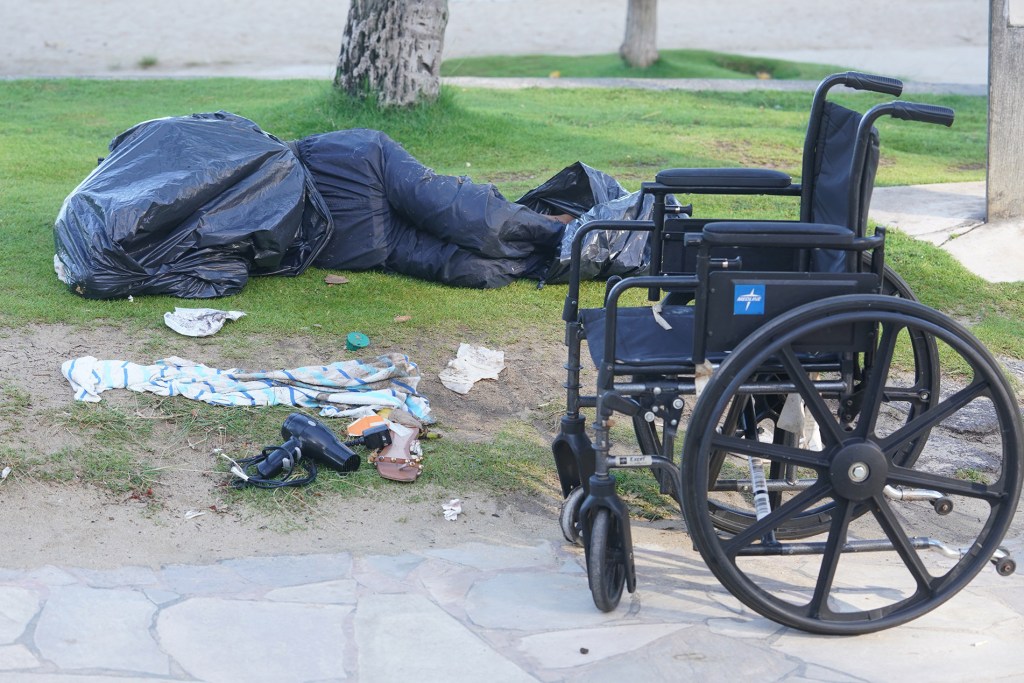
Beyond the superficial opulence that is Hawaii’s visitor industry, the epidemic of homelessness is a problem that local politicians have ignored or put out of view for decades.

It is quite revealing how, when global representatives descended upon Oahu for the 2011 Asia-Pacific Economic Cooperation conference, Hawaii leaders opted to beautify only the places between the airport and resort areas, so as to give the impression our state was better off than it really was.
This “Potemkin village” approach to governance is the same way we treat homeless people with indifference, acting as if so long as we don’t “see” them encamping in Waikiki or Downtown Honolulu, the problem is solved.
Incoming Democratic Gov. Josh Green is the latest in a string of leaders to promise to do something about the homelessness crisis. Among former Hawaii governors and Honolulu mayors, promising to fix homelessness is something we all say, but somehow never seem to accomplish.
The situation is becoming so intolerable that now homeless people can be found overflowing everywhere, be it the streets of Chinatown or even in suburban areas like Royal Kunia where I live.
If things persist, the time will come when Hawaii government will no longer be able to play a shell game of shuffling homeless from place to place or attempting to put them out of view of affluent tourists or distinguished visitors. We need to stop kicking the can down the road and pretending this is something we don’t see.
To begin, our community needs to have courageous, uncomfortable conversations about homelessness that allow us to discuss the actual problem. People like to dismiss homelessness by saying specious things like “the real issue is substance abuse” or “this is actually a mental health issue” which, much like the gun control debate, relieves policymakers from having to ever address systemic problems and makes it seem like the only people to blame for homelessness are homeless individuals themselves.
One of the things that concerns me is the fact that we can never solve homelessness while people want housing to be unaffordable. “Uh, wait a minute Danny, what do you mean people want housing to be unaffordable?” I’m talking about the fact that in our bubble economy, there are people who view houses as stores of wealth, and resist any policy that would cause the value of their properties to decrease or lower the market rate for rent.
That’s the demon that torments us. On one side, we say we want more affordable housing, on another side, we get all NIMBY and say affordable housing is fine, so long as it doesn’t affect my property values. And what would happen to property taxes if housing were suddenly much cheaper?
Is there more to the housing supply bottleneck than we know? This is something we need to discuss and get to the bottom of.
And then there’s the giant elephant in the room that no one wants to discuss: Inflation. You can’t convince me that rising prices of food, clothing, energy, health care and everything else don’t have a role in putting people out on the streets. But how much of “inflation” is made worse by our own self-inflicted policies?

Hawaii was already a pricey place to live when the economy was good – and that’s a subjective assessment of prosperity. Today, Hawaii’s cost of living is something that crushes people and forces everyone to make tough decisions that sometimes put vital needs in competition with each other. If we want to help homeless people, we have to remedy the conditions that put people out on the streets.
For example, how many people can afford their Hawaii vehicle registration fees? How many people can afford to pay skyrocketing electricity bills because we’ve bottlenecked energy production to virtue signal on the environment? How many people are paying more than they should on goods and services because the General Excise Tax has a snowball effect on prices? All of these things put pressures on people and squeeze a population into poverty.
I’m so glad we will now have a medical doctor as our governor to address the homelessness problem, because he should naturally be able to understand the public health risks and humanity at stake. Then again, we have an engineer as our outgoing governor, and you see how well he handled infrastructure and big construction projects, so maybe I shouldn’t get my expectations too high.
But, seeing as how Green won his election in a massive landslide, we have every right to remind him that to whom much is given, much is required. Talk is cheap, but life in Hawaii is very expensive. Times are tough. I fear the day that Oahu starts to look like the Philippines where poverty is rampant and people are packed into shantytowns with no hope, no future, and no way of escape.
We need to look at structures, systems and big pictures in approaching our solutions to Hawaii. We need to start valuing the lives of the people who are most vulnerable and change the trajectory of our community.
We need to stop treating the homeless as invisible, stop making them invisible, and start alleviating the economic pressures for the ordinary person here in the Aloha State.
 Sign up for our FREE morning newsletter and face each day more informed.
Read this next:

Local reporting when you need it most
Support timely, accurate, independent journalism.
Honolulu Civil Beat is a nonprofit organization, and your donation helps us produce local reporting that serves all of Hawaii.
ContributeAbout the Author