Naka Nathaniel: Is Las Vegas The End Of The Trail For Native Hawaiians?
The upcoming CNHA conference may be the moment when Native Hawaiians conceded that the future for Native Hawaiians isn’t going to be in Hawaii.
June 18, 2023 · 5 min read

About the Author

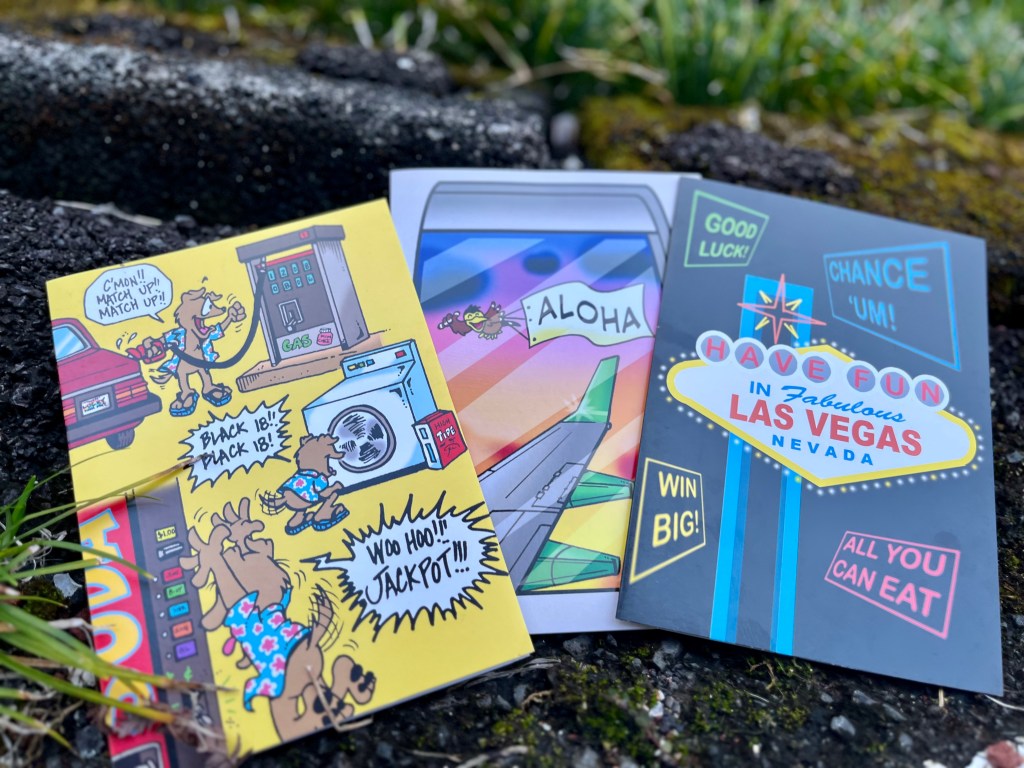
I was looking for a Father’s Day card in KTA and the “local/pidgin” rack had multiple cards wishing people well in Las Vegas. Ostensibly, the cards are meant for a short-term casino getaway in Las Vegas, and not a full-on relocation.

It’s well-known that we import most everything to Hawaii. What’s being better understood is how good Hawaii has gotten at exporting Native Hawaiians.
That’s why the Council for Native Hawaiian Advancement is holding its conference in Las Vegas starting on Monday.
“It’s a real issue for many Native Hawaiians who, not by their choice, are being forced out of their homes,” said Vicky Holt Takamine, executive director of the Pa‘i Foundation, and presenter on the first day. “They’re making the really tough choices to move away. But it comes with challenges: Being alienated and isolated away from your ancestral homeland.”
I admire CNHA’s CEO Kuhio Lewis for his wiwo‘ole (courage). His pragmatic vision led the CNHA to hold the conference on the continental U.S., where the majority of Native Hawaiians are. According to the 2021 American Community Survey, 310,000 Native Hawaiians live in Hawaii; 370,000 live in other states.
“We don’t want to lose our people, so I’m taking the bull by the horns to be the first Native Hawaiian organization out the door,” Lewis said.
Honolulu, last year’s host, is no longer the city with the largest Native Hawaiian population. It’s Los Angeles, followed by Honolulu and then Las Vegas.
“The bottom line is we need to keep this community connected to Hawaii or we’re going to lose them,” Lewis said in a phone interview. “The collective concern amongst the Hawaiian leadership has been that we’re losing our people. We’re losing our culture because when they go over (to the mainland) and the next generation comes, they don’t know who they are. They don’t know the culture, they don’t have the spirit, and they don’t have the value system.”

On its website for the conference, the CNHA says “It’s only fitting that we take convention to the continental United States now that the amount of Native Hawaiians living there has surpassed the number residing in our ancestral homeland.”
That it’s “fitting” is a sad reflection on the leadership in Hawaii.
As Jonathan Okamura wrote last weekend for Civil Beat, there’s no political incentive to keep Native Hawaiians in Hawaii.
“Unfortunately, (indigeneity) is not as significant, although an argument could be made that it should be. Indigeneity differentiates between Native Hawaiians as the aboriginal people of Hawaii and everyone else, who are immigrants or settlers in the islands,” Okamura said.
“The relations between them are also highly unequal to the disadvantage of Native Hawaiians. From the perspective of indigeneity, kanaka are a colonized people in their ancestral nation and not an ethnic or racial minority in America’s 50th state like other groups are. While they are officially recognized by the state as the native people of the islands, that doesn’t necessarily mean they have been accorded a higher legal and political status, particularly in terms of their land rights, over other groups.”
I’ve now been on both sides as a Native Hawaiian living outside of Hawaii and living here. And regardless of location, Native Hawaiians are having a hard time holding on to their culture.
Jasmin ‘Iolani Hakes writes about “a war between Hawai’i our home and Hawai’i the destination” in her new novel, “Hula.”
She writes: “To protect a bay from a tidal wave, you build a break wall. To protect a species, you put a kapu on killing it. But there is only one way to protect a place. You sit your ‘ōkole down and stay there. You stand guard. You learn from the kūpuna the old chants, the hulas from their memories, before those kūpuna are no more.”
I’m afraid that future historians might point to this conference as the moment when Native Hawaiians yielded and acknowledged that the future for Native Hawaiians isn’t going to be in Hawaii.

“At the end of the day, the struggle is here at home in Hawaii, but there’s also the reality that people in their individual lives are also struggling,” said Lewis. “And when I say there’s a struggle in Hawaii, it’s a struggle over land. It’s a struggle over equity and justice. This is the homeland, this is the mainland of Hawaiians. And so while there’s that sentiment, there’s also an individual struggle going on within households. So it’s important that they don’t lose their connection to Hawaii.”
Native Hawaiians have been looking for a glimmer of hope for the future and that hope isn’t found here in Hawaii for most of them. The status quo for Native Hawaiians in Hawaii is status squashed.
In a speech years ago, Billy Kenoi, the former mayor of Hawaii County said, “You can not be Hawaiian, know your history, and not be angry.”
Outreach to the Native Hawaiian community living outside of Hawaii has been happening for decades. Takamine will soon host the 21st annual “Four Days of Aloha” in Vancouver, Washington.
“I’m hoping that CNHA‘s conference, and other conferences, will bring our people together in person, he alo ā he alo, so that seed will be planted and that they’re going to come home,” she said.
 Sign up for our FREE morning newsletter and face each day more informed.
Read this next:

Local reporting when you need it most
Support timely, accurate, independent journalism.
Honolulu Civil Beat is a nonprofit organization, and your donation helps us produce local reporting that serves all of Hawaii.
ContributeAbout the Author