John Hill: State Resorts To Absurd Excuses To Stonewall In Infamous Child Abuse Case
The obvious conclusion: It’s covering its bureaucratic ass.
October 18, 2023 · 6 min read


About the Author


Welcome back to the ongoing saga of how the state of Hawaii is doing everything in its power to avoid releasing any information about its actions in the most notorious child abuse case in recent Hawaii history.
When we last left this very sad story, the state had refused to provide information about the Ariel Sellers case despite a federal law calling for public disclosure when child abuse results in a “fatality or near fatality.”
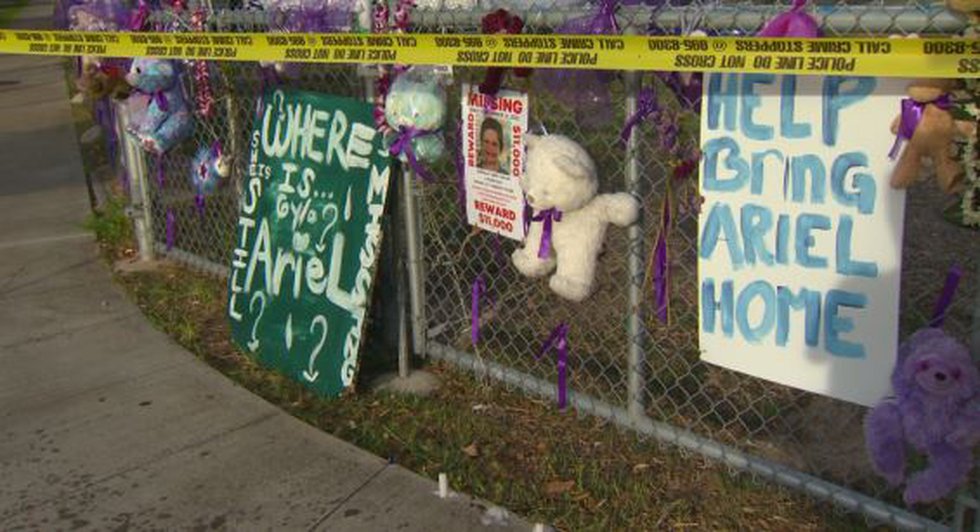
The reason? Even though 6-year-old Ariel had been missing from her Waimanalo home for almost two years at that time, her death was not official.
A judge declared her dead in July. But the Department of Human Services still would not provide the information. It said it had not yet received the declaration from the court.
So I took it upon myself to mount the many hurdles to obtaining a readily available public court document and emailed it to them.
Problem solved? Far from it.
Now DHS has another excuse – though the court had certified her death, it still has not officially declared that Ariel’s death was the result of abuse or neglect.
Let’s take a second to review the circumstances of Ariel’s death. Her adoptive parents, Isaac and Lehua Kalua, reported her missing more than two years ago, setting off a massive search by authorities and residents of her Waimanalo neighborhood.
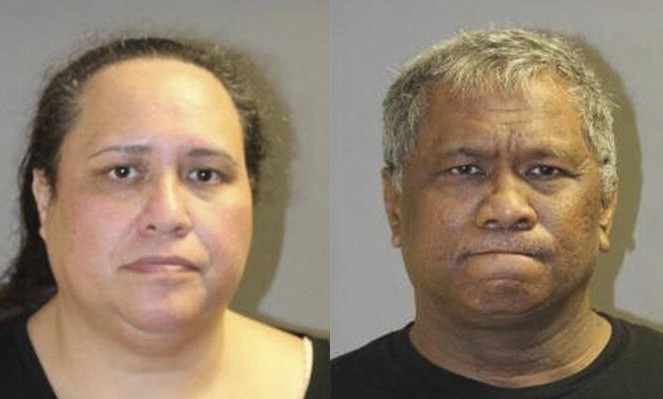
One of her sisters then told police that the Kaluas kept the girl they had renamed Isabella in a dog cage in a bathroom, covering her mouth and nose with duct tape, to keep her from roaming the house at night searching for food. The sister reported that she and Lehua found Ariel/Isabella dead there.
A lawsuit alleges that, before her disappearance, several people had reported to the state that the Kaluas were abusing the 6-year-old girl. The Kaluas are now facing murder charges.
To understand the absurdity of the state’s position, let’s delve into the legal fine points.
To get grants from the federal government, states must create child welfare plans that address the confidentiality of records – and exceptions to that secrecy. The plan must include provisions that allow for “public disclosure of the findings or information about the case of child abuse or neglect which has resulted in a child fatality or near fatality.”
Hawaii, meanwhile, has its own administrative rule, put in place in 2004, addressing the same subject. It may have been the state’s implementation of the federal requirement.
It says that disclosure of child welfare records “shall be authorized” when the subject of the report has been charged with committing a crime “relating to the child abuse or neglect report.”
Another provision authorizes disclosure when “the child named in the report is missing, has suffered a near fatality, been critically injured, or has died.”
The Kaluas have certainly been charged with a crime relating to reports of child abuse. And Ariel, tragically, has certainly died.
So what does DHS say?
Daisy Hartsfield, social services division administrator, points not to federal law or the state regulation. Instead, she cites DHS’s policy manual, which specifies the information that should be released when child abuse leads to a fatality or near fatality.
This information would be of great interest to members of the public in assessing the state’s actions in this case and the child welfare operation in general. It includes earlier investigations of abuse or neglect involving the child. It also would reveal what services the state provided and actions it took in the case.
But Hartsfield says the state is not obligated to release it.
Even though a court certified Ariel’s death, she said in an email, “there is no court finding, or death certificate, confirming that the death was the result of child abuse or neglect. Thus, until DHS receives a copy of the death certificate, DHS cannot ascertain whether information that can be shared under CAPTA (the federal law) is applicable.”
Where to begin?
For one, why is DHS relying on its policy manual instead of the administrative rule, which carries more legal weight? The rule authorizes public disclosure when the subject of an abuse report has been charged with a crime, as the Kaluas have. In the same vein, how can DHS ignore the provision calling for release of information when the abuse has led to a child’s death?
I asked and got no answer

It’s routine for DHS social workers to determine, after minimal investigation, that a parent has been “confirmed” as an abuser. It’s based on the preponderance of evidence, the lowest possible standard requiring only that something is more likely to have happened than not.
Does DHS seriously believe that it’s more likely that Ariel died of something other than abuse? That, despite the earlier accusations of abuse, she merely walked away from home and never came back? Or that she was kidnapped and killed by a stranger, despite the fact that no shred of evidence for this has ever been made public?
That she died of natural causes that her parents, for some reason, failed to tell anyone about? If the latter, what happened to her body?
DHS says it is waiting for a death certificate that states Ariel’s death was caused by abuse. The state Department of Health says that, in the absence of a body, Ariel’s next-of-kin could file a death certificate. This next-of-kin presumably would be the court-appointed representative of her estate, since her parents are accused of killing her. The cause of death could be listed based on a judge’s finding of what happened.
Perhaps the department is waiting for the Kaluas to be convicted in court or lose a civil suit in which they are defendants. Then, a court presumably would have confirmed the abuse.
Leaving aside the fact that that could take years – and the public has an interest in knowing now – the Kaluas could plead to a lesser charge. Perhaps DHS would then say there had been no determination that abuse occurred. In the civil case, the Kaluas could settle, again leaving DHS the wiggle room to deny access to the records.
The federal law is clearly designed to make the child welfare system accountable when things go wrong.
It’s hard to conclude anything other than the obvious – DHS is simply covering its bureaucratic ass. Given the gravity of what happened and the public interest in knowing how, that’s inexcusable.
 Sign up for our FREE morning newsletter and face each day more informed.
Read this next:

Local reporting when you need it most
Support timely, accurate, independent journalism.
Honolulu Civil Beat is a nonprofit organization, and your donation helps us produce local reporting that serves all of Hawaii.
ContributeAbout the Author