The Fire: A Poem About The 1900 Chinatown Fire
The poem is reprinted with permission of the author.
January 24, 2025 · 2 min read

About the Author

The Fire
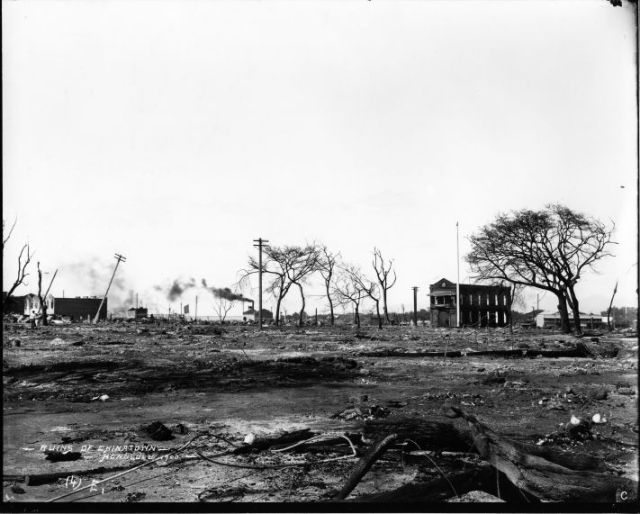
based on the 1900 quarantine for bubonic plague
and subsequent fire in Honolulu Chinatown,
as detailed in James C. Mohr, Plague and Fire
The health board condemns the shanties
as someone inside has died from the plague.
Other inhabitants are summarily evicted
gathering whatever they can, but with nowhere to go.
The fire department surrounds the perimeter
poised with their hoses for the start of the burn.
A crowd converges, curious, angry, and resigned,
and worried that they themselves will be next.
The fire is ignited as rehearsed
but unexpected gusts come down from the valley.
Firemen vainly try to contain its spread.
People are stunned, immobile, uncertain about what to do.
Before long embers billow up, wafted by the wind,
and jump from rooftop to rooftop.
Residents rush to stamp out spot fires
tearing down even their own houses to form firebreaks.
Narrow alleyways turn into gauntlets of flame.
A fireball scours the street, combusting all in its path.
Faces are blistered, hair singed, eyes wide from fear.
Everyone is shouting, drowning out the chaos.
A store selling fireworks for the new year explodes.
A lumberyard blazes.
A few run home to retrieve gold or papers.
Most, though, just flee with the clothes on their backs.
Inexorably, the inferno marches toward the wharves.
It melts electric coils and a hastily abandoned fire engine.
Volunteers carry on their backs women with bound feet.
Opium addicts, delirious, are rescued from their den.
The refugees try to escape the conflagration
wanting to cross the bridge over the stream.
But quarantine militia, pick handles ready, block their way,
leaving them to huddle in a no man’s land to wait.
Sparks fly into the steeple of the church.
Soon it becomes a furnace consuming its beams.
Unsupported, its bells crash into the sanctuary below.
All of Chinatown hears this dirge.
 Sign up for our FREE morning newsletter and face each day more informed.

Local reporting when you need it most
Support timely, accurate, independent journalism.
Honolulu Civil Beat is a nonprofit organization, and your donation helps us produce local reporting that serves all of Hawaii.
ContributeAbout the Author