Alyssa Salcedo: Why Do Civic Engagement Bills Keep Failing At The Legislature?
Every student deserves an education in how they can participate in our government. That’s more important now than ever.
April 6, 2025 · 6 min read

About the Author

As a high school sophomore, I learned about one of the famous muckrakers of journalism – Upton Sinclair.

Through his work, he was able to push the U.S. government to regulate meat production plants to better promote food safety. He disguised himself as a plant worker to learn about the exploitative and unsanitary conditions.
It was investigative journalism, but he delivered the information through a fictional novel, “The Jungle”
At the same time, I was exposed to social movements like Black Lives Matter and Stop Asian Hate, whose messages were amplified through social media platforms.
This all contributed to a major shift in how I saw my role as a journalist: not just informing but using my platform to push for solutions to key problems in our society. That was the start of my civic engagement journey.
Civic engagement is how we citizens can use our voices to advocate on key issues and hold the government accountable.
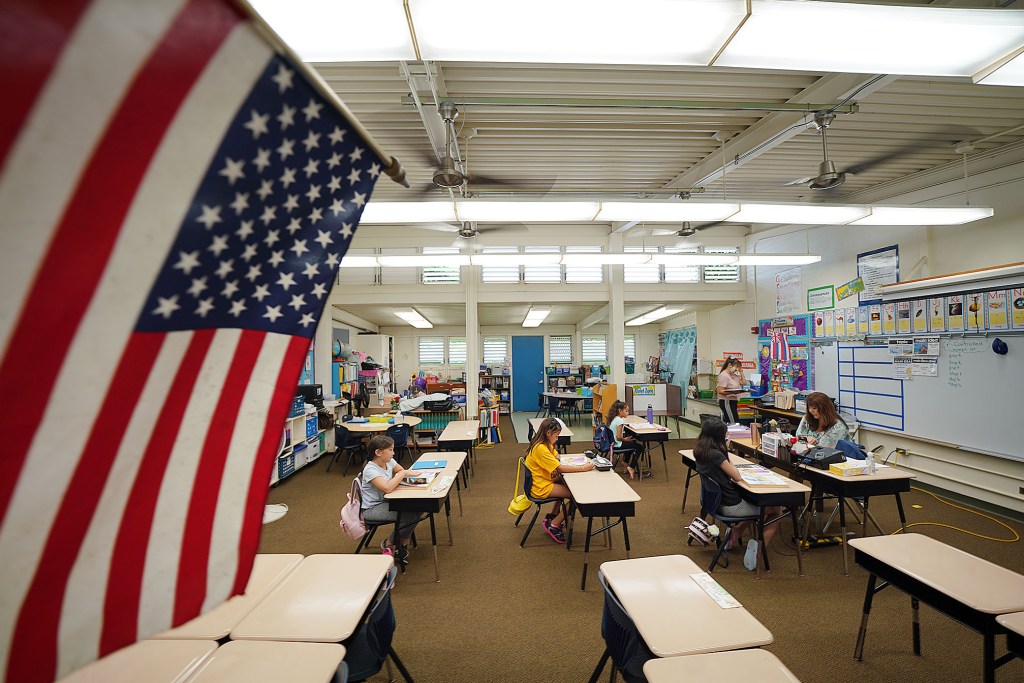
Unfortunately, my Participation in Democracy class — a requirement for all high school juniors — did not inspire the same kind of drive for civic engagement. It was centered around American values. We were left with a legal understanding of our rights and their philosophical evolution via key legal documents like the Constitution and the Bill of Rights.
Sure, it did include some media literacy and noted the importance of citizen obligations and responsibilities. But it was just another social studies requirement, on top of World History in Grade 9, U.S. History in Grade 10, and Modern History of Hawaiʻi in another semester of Grade 11.
Also, I don’t remember the Public Access Room at the Legislature doing any sort of active outreach to public high schools — something that has been proposed repeatedly by legislators.
Participating in government and life-long learning go hand-in-hand. House Bill 763, introduced by Rep. Amy Perruso, proposed to establish two positions to oversee civic engagement in the state Department of Education curriculum.
The bill also would have created a trust fund allowing organizations or individuals to privately donate toward funding civic education, a measure to secure money when cuts are likely to happen after President Donald Trump signed an executive order to begin dismantling the federal Department of Education.
Despite bipartisan support in the House, the bill did not receive a hearing in the Senate Education Committee and is now dead. That’s the same fate suffered by similar measures in recent sessions.
For many students, this measure would have filled a crucial gap in the curriculum.

‘A More Place-Based Approach’
Throughout the process of advocating via written testimony for the Hawaiʻi Student Journalism Protection Act in the 2022 legislative session, I remember being told by journalism advisors how lawmakers valued student voices.
It was here that I learned more about how to actively engage with our state government. It even compelled me to write an article about how to write testimony. I knew that students wanted to engage; they just did not know where to start.
In a new report, the Commission to Promote and Advance Civic Education puts it this way: “While some students are well-equipped to lead and engage, others may feel less confident in their ability to create meaningful change within their communities.”
If we want to keep Hawaiʻi residents contributing to Hawaiʻi, we should start by grounding them in citizens’ roles and responsibilities.
“We’re really trying to develop a more place-based approach to civic education, and I just think for me, that’s what students responded to,” Perruso, a former social studies teacher, said in a telephone interview. “That’s what resonated with them, if we connected with their cultural background, the place in which they find themselves.”
Place-based learning can extend to the history of our communities, how different groups interact and how we can change the world around us. It’s why students are often incentivized to participate in community service projects as part of clubs and organizations.
“I also think that it helps us, helps kids navigate the very unique history of this place in a way that’s honest but also kind of complicates it,” Perruso said. “I don’t think we do young people any justice when we oversimplify things or treat them as though they can’t handle the tough conversations.”

Why We Need To Engage
Hawaiʻi history can often appear whitewashed because its cultural nuances are removed. But classroom discussions can foster a better understanding of how Hawaiʻi got to where it is today.
When we care about the places where we’ve grown up, when we see ourselves in the people we talk to daily, that is where we find the answers to why we need to civically engage. Introducing civic education gives younger learners a way to engage in discussions about our islands’ future.
Instilling this sense of kuleana runs counter to the message we often get when high schools prepare us for college, like the perception that weʻve made it when we succeed outside of our islands. That just accelerates the ongoing brain drain created by hostile economic conditions.
No one can stay in a place for long when our access to necessities is insecure, when we are priced out of a decent house, and when tourists are given more privileges than residents.
Civic engagement, at its core, is a labor of love. You don’t make a profit when you stand in solidarity with workers on the picket line who are advocating for fairer working conditions and higher wages. You do it because you see the effects that their struggles have on the families they support.
Once we see our interdependence within the community as a strength rather than a weakness, we can work together to create futures in Hawaiʻi that are abundant and sustainable.
 Sign up for our FREE morning newsletter and face each day more informed.
Read this next:

Local reporting when you need it most
Support timely, accurate, independent journalism.
Honolulu Civil Beat is a nonprofit organization, and your donation helps us produce local reporting that serves all of Hawaii.
ContributeAbout the Author