Neal Milner: Peeling Back The Tapestry That Explains The Legislature
What just happened at the Capitol is one more chapter in the story of how our lawmakers roll.
May 8, 2025 · 7 min read

About the Author

We can better understand Hawaiʻi’s 2025 legislative session by stepping back from that long list of bills that passed or failed.

Get a fuller picture instead by thinking of our Legislature’s work in terms of five T’s: tropes, traps, triumphs, trudges and finally trends.
Taken together, they form a tapestry of legislators’ work.
Tropes
A trope is a figure of speech. The most common legislative figure of speech is “it needs more study” and its first cousin, “it needs more time.”
Some things do need more study. But our legislators too often use time tropes as buzz phrases that conceal or obfuscate.
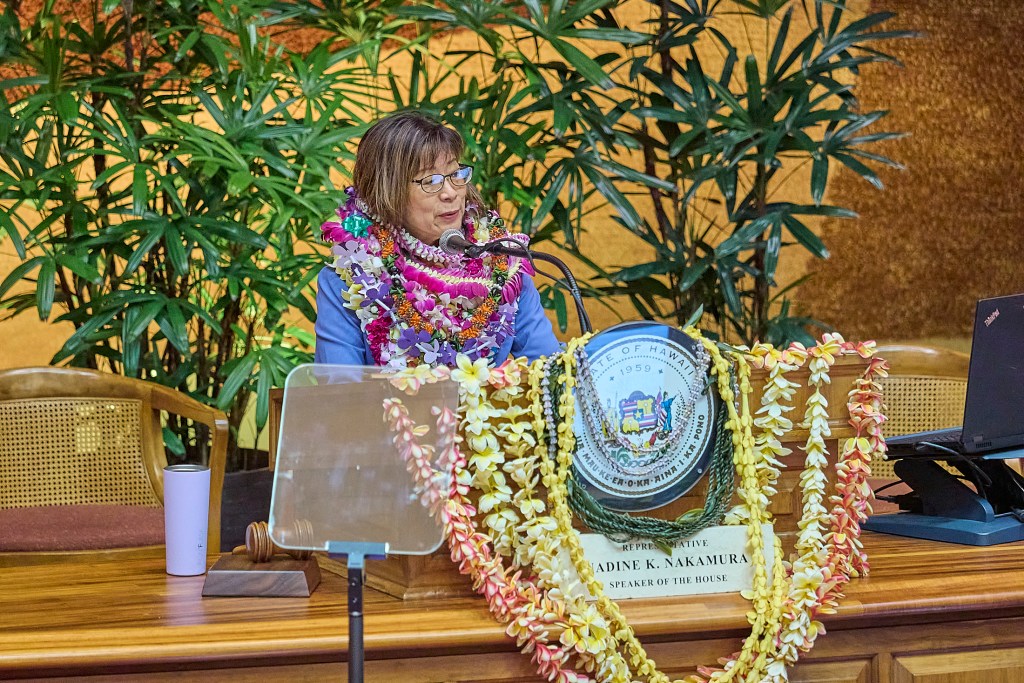
A good example: House Speaker Nadine Nakamura’s response about the Legislature’s failure to pass the most important good government bills this session, which in one form or another have been around for a long time and have already been considered and advocated by committees, commissions and the public.
Don’t worry, she assured. Patience is a virtue.
“I would just tell the advocates for these bills to continue to work on them,” she said. “It takes time for bills to get through the process, and I would just encourage them to stick by it and reintroduce the bills next year. Let’s have further discussion, refine the bills and see where it goes from there.”
We’re not talking about picking a state bird here. Wordsmithing, refining or the need for more info aren’t the reasons for the delay.
The reason is this: Legislators don’t want reform. It works against their interests, their ability to run an incumbency campaign and win again.
But they aren’t going to say that. Instead of candor, we get candy, a Trope Bar wrapped in platitudes.
Traps
Legislators sometimes use tropes to avoid traps, like cesspools and landfills.
Hundreds of cesspools are still operating in this state. They are in fact illegal pollutants with the legal promise, at least on paper, that they have to be gone by 2050. (I’ll be 109 that year. How about you?)
The trouble is that homeowners have to pay a ton of money to replace them with real plumbing.
So, there’s the trap. Think adding sprinklers to condos. Something that absolutely needs to be fixed; along with existing laws with a timeline; but the average person can’t afford to fix them. Neither, it appears, can the Legislature.
What do you do? Well, the Legislature could bite the bullet, but instead it’s taken just a safe baby-teeth nibble of the bullet and offered grants to homeowners. They’ve now disappeared. Anyway, it was not all that much money given the need.
That money is gone. The Legislature did not renew the grant.
So, money is out. Instead, further study is right back in. Much to the delight and relief of legislators, the University of Hawaiʻi has been researching alternatives to the usual cesspool gut-and-replace technology. But three years is the earliest we’ll know anything.
You don’t have to be a recently fired, eminent, prize-winning environmental scientist to know that this research comes with no guarantees.
But for the trapped-between-a rock-and-a-hard-place legislators, that’s like a three-year reprieve from walking the long green mile to unpopular solutions and political death. For now, taking the cess out of cesspools.

Speaking of environmental traps, the Legislature took action that tightened the already impossibly squeezed trap Honolulu faces with its landfill location challenge.
With much rectitude about preserving our drinking water, legislators passed a law making it harder for the city to build a new landfill for garbage, as if that wasn’t difficult enough already.
It’s a high-minded, protect-our-drinking-water policy, sure. No more Red Hills. At the same time, though, it’s also a NIMBY. No one wants the dump near them.
But someone is going to get it, like maybe the people on the Westside who were promised that yes, finally! Waimānalo Gulch will be closed forever.
Maybe not.
While our other neighborhoods stay safe from a landfill’s din and stigma, it could be that, in Donald Trump’s terms, the rest of the island will get its 30 dolls for Christmas while the Waiʻanae Coast children will get only two.
Ach, what the heck, those Leeward kids would just smash those extra dolls anyway, and the good news is the place to dump them is close by.
Right now, the issue is, drum roll please, under further study when in fact there are available studies going back years.
Triumphs
The 2025 legislature’s passing of the “green fee” law is an actual triumph.
Thanks to this law, tourists will now pay an additional tax, the revenues of which will go to protecting Hawaiʻi’s environment.
It’s historical, but the main reason it’s such a triumph is because of the process that made it happen. Consideration has gone on for a number of years. There was a lot of back and forth, data analysis and compromise. There were significant differences, including between the governor and the legislators. They worked them out.
The state has a good reputation when it comes to resilience as well as climate change. Keeping it going has been a tough, gradual process with some big victories and many small ones that most people don’t even know about.
In this case, actions spoke louder than vacuous appeals to be patient.
Trudges
What makes this such an important triumph is that it was — in fact the whole environmental policy field is — such a trudge: Constant challenges, long-term objectives that seem so far away and so easy to go off track for “further study.”
Trudges take skills, patience and openness.
Triumphs aren’t just big-ticket items. They are often the culmination, the continuation really, of a bunch of small stuff.
Good legislation is often about sweating the small stuff — not losing track and disappearing into windy obfuscation when an issue gets tough.
Trends (And Tsuris)
These days those two go together like a horse and carriage, which we may all be driving, considering the tariffs.
“Tsuris” is the Yiddish word for trouble. My parents and upstairs grandparents used it all the time. “Oy, the Silverman family has such tsuris.”
It’s more than just a word though. It’s the sound. The sound of that word itself creates special overtones of pathos and agony.
“The Silverman’s’ tsuris! Oy, only God knows what’s gonna happen to them.”
It’s going to take a lot of guts and a load of bravery and a no-platitude, no-BS work ethic to triumph without any luxury of time that allows the Legislature to put things off.
The troubling trend the Legislature faces starting today and ending who knows when is just that: “Only God knows.”
Lahaina’s rebuilding for sure. But let’s focus on the money the state is going to need to make up for the Trump/DOGE onslaught. Will the reduction in state income hold up, considering this fiscal pressure?
But, hey, who the hell knows what things are going to be like later this year? Are the feds going to slash Medicaid? If so, then what? How much can the state do to save it?
The Legislature already put aside some funds to cushion these blows. Likely that’s a drop in the bucket. It agreed in advance to come back in special session later.
It’s going to take a lot of guts and a load of bravery and a no-platitude, no-BS work ethic to triumph without any luxury of time that allows the Legislature to put things off.
It requires grace under pressure, not a term you or I probably ever use to describe this gang at the Capitol. Let’s hope they prove us wrong.
 Sign up for our FREE morning newsletter and face each day more informed.
Read this next:
Local reporting when you need it most
Support timely, accurate, independent journalism.
Honolulu Civil Beat is a nonprofit organization, and your donation helps us produce local reporting that serves all of Hawaii.
ContributeAbout the Author