The Sad State Of The Arts In Hawaiʻi
This election year, policymakers must be pushed to defend and invest in the arts rather than gut them.
February 11, 2026 · 6 min read


About the Author
In 2025, the Trump administration slashed funding for science and higher education across America, threatening local institutions like the University of Hawaiʻi and National Oceanic and Atmospheric Administration. These policy changes stifled climate change research and Native Hawaiian education, undermining decades of collective progress.
Here at home, our Legislature enacted a policy that curtailed the growth of Hawaiʻi’s art scene. This state-level shift has weakened the creative community and hindered efforts to preserve Hawaiian history, betraying the islands’ long-standing commitment to arts and culture.
Hawaiʻi has long championed innovation and the arts, from ʻIolani Palace’s early adoption of electricity to the 1967 Art in State Buildings Law, which dedicates 1% of new building construction costs to public art — a model later copied by 27 other states.

Ideas showcases stories, opinion and analysis about Hawaiʻi, from the state’s sharpest thinkers, to stretch our collective thinking about a problem or an issue. Email news@civilbeat.org to submit an idea or an essay.
In 1989, the Works of Art Special Fund was created to provide vital support for art programs and museums such as the State Foundation on Culture and the Arts and Capitol Modern, as well as for the maintenance of public artworks and initiatives that nurture artists and cultural practitioners.
That changed in 2025.
Last year, House Bill 1378 was introduced by then Finance Chair Kyle Yamashita. While it appeared pro-arts, allocating funds for new programs and grants, the bill actually restricted how the Works of Art Special Fund could be used. Flexible spending was prohibited under the bill, limiting funds to the acquisition, exhibition, and maintenance of art objects.
HB 1378 passed on April 30 and was signed into law by Gov. Josh Green on May 29. Its passage represents the most disruptive policy shift in 2025 for the arts, with ripple effects far beyond mere dollars.
HB 1378 disguised itself as pro-arts by creating the Performing Arts Grants Special Fund, which allocated $1 million to performing arts programs for the 2026–2027 fiscal year.
But the new funding comes with significant caveats.
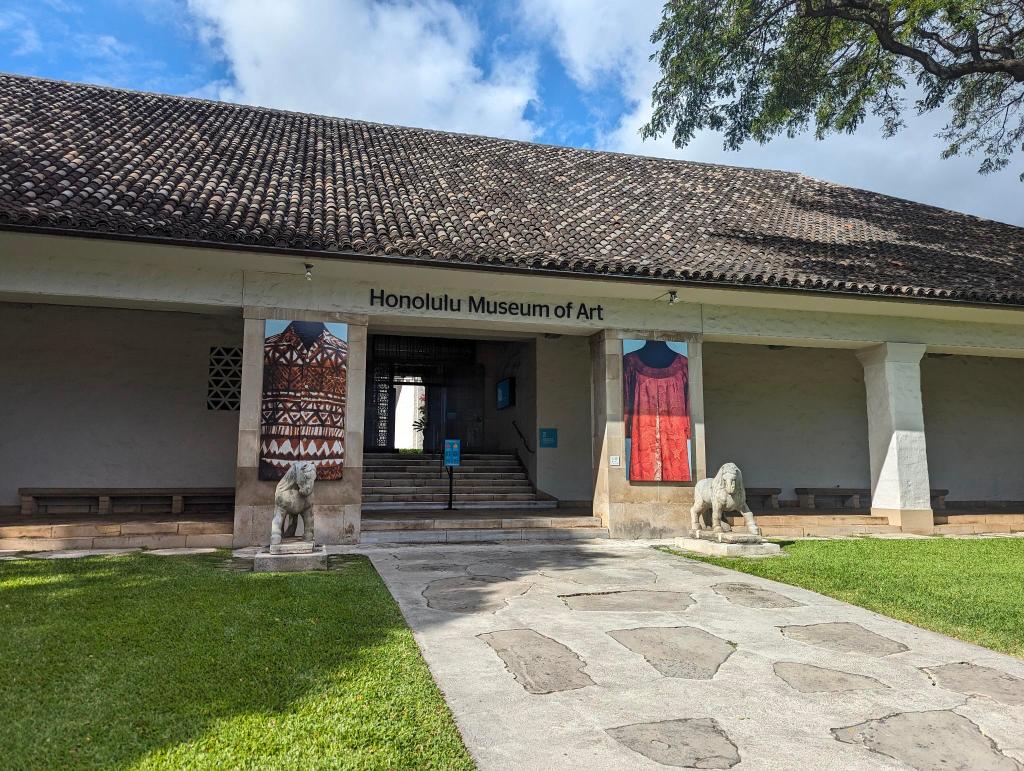
Unlike the Works of Art Special Fund before its amendment, funding under this grant must be tied to a specific performance, covering only planning, promotion, and execution. It does not support broader infrastructure like arts education, artist residencies, or cultural preservation. By narrowing permissible uses, HB 1378 replaced a reliable funding source with a one-time appropriation, subject to annual legislative approval.
Undermining The Arts
Established in 1965 by the Legislature, SFCA was created to promote and preserve the arts statewide and has since served as the backbone of Hawaiʻi’s cultural infrastructure, distributing public funds to nonprofit organizations that foster the islands’ creative ecosystem.
SFCA grants have helped beloved institutions — including Downtown Art Center, Bishop Museum, and The Friends of ʻIolani Palace — bring arts and culture directly to communities.
New restrictions on the Works of Art Special Fund, which sustains cultural lei draping on Kamehameha statues, now force SFCA to lean on general fund appropriations and federal grants. With budget priorities shifting every year amid federal uncertainties, funding is no longer guaranteed, placing SFCA’s future — and the programs that depend on it — at risk.
If SFCA cannot fund the arts, it cannot fulfill the mission originally set by its founders. Gaye Humphrey, executive director of the Hawaiʻi Arts Alliance, notes that the arts and culture sector generates $3.3 billion annually, supporting more than 20,000 residents statewide.
HB 1378 threatens this economic engine.
Even the deceptively beneficial Performing Arts Grants Special Fund limits opportunities for small arts organizations. Applicants must hold specific licenses and permits and contend with increased administrative burdens, including detailed reporting to justify grant outcomes — requirements that favor larger institutions with more resources to navigate the process.
The bill also did not include provisions to protect funding for Native Hawaiian or community-based practitioners, leaving grassroots artists at a disadvantage.
Trump’s cuts in 2025 were felt acutely by cultural institutions, particularly Bishop Museum, which depends on federal funding for staffing, preservation, and community programs.
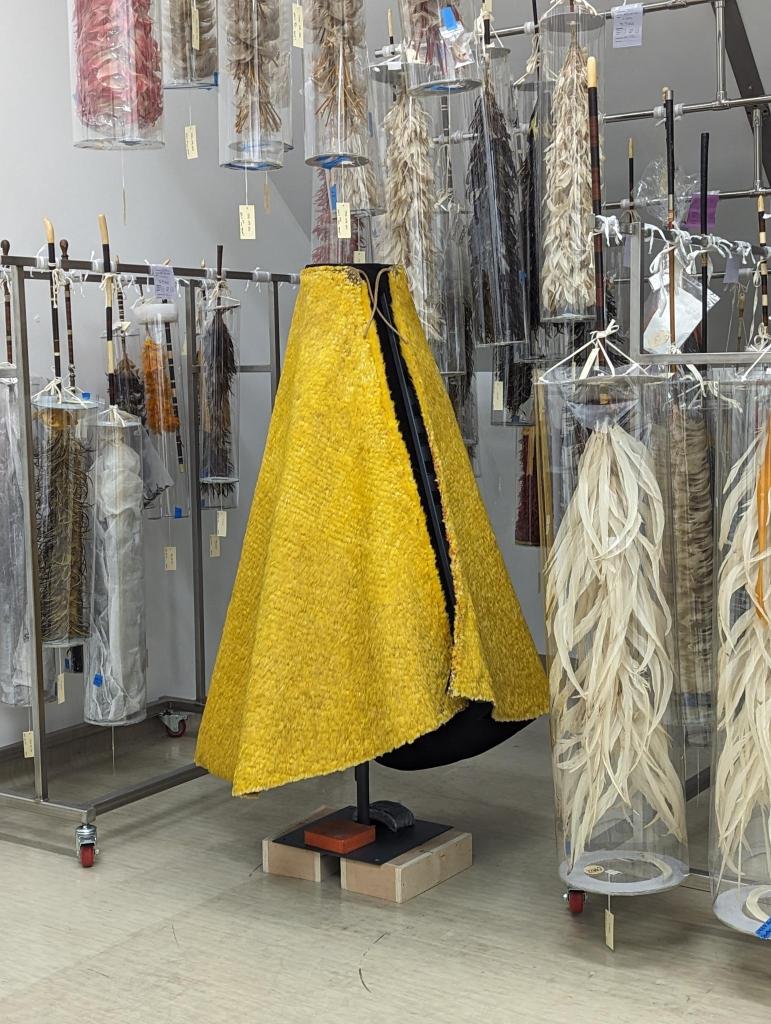
A cornerstone of Hawaiʻi’s cultural landscape, Bishop Museum houses priceless ʻahu ʻula (feather cloaks), including one belonging to Kamehameha I. Its collection informed the costume design of Apple TV+’s “Chief of War,” ensuring accurate representation of Hawaiian culture in mainstream media.
In the past, the museum also relied on SFCA grants to support core operations.
Similarly, ʻIolani Palace, the historic residence of the Hawaiian monarchy, depends on SFCA support. Leaders from both institutions testified before the House Culture and the Arts Committee in early May last year, urging lawmakers to preserve state funding essential to their missions.
HB 1378 was signed into law weeks later.
According to Chair Chris Lee, the passage of HB 1378 was strategic. Because the Works of Art Special Fund is sourced from federally regulated construction bond money, lawmakers feared the IRS might interpret its use as a misuse of federal dollars. Concerned that the Trump administration would eliminate state funding entirely, the Legislature moved to “clean it up” through the bill.
But dismantling a stable funding source without replacing it with a reliable alternative is negligent, and Hawaiʻi residents have an opportunity to address these policy impacts in 2026.
How Voters Can Defend The Arts
Although HB 1378 cannot be easily reversed, new legislation can prevent further erosion of arts funding. Introduced in 2025, House Bill 450 proposes reorganizing Hawaiʻi’s arts governance by moving the SFCA from the Department of Accounting and General Services to the Department of Business, Economic Development, and Tourism.
Under DAGS, SFCA’s needs have been consistently deprioritized. Placing SFCA within DBEDT would better align arts initiatives with tourism, one of the state’s biggest economic drivers.
Oversight of the Works of Art Special Fund would also shift from the Comptroller, whose focus is fiscal compliance, to the DBEDT director, allowing decisions to reflect cultural and economic impact — not just budgets.
In 2025, HB 450 did not complete the legislative process and was carried over to the 2026 regular session. It currently sits with the Senate Ways and Means Committee, which has the authority to advance (or effectively stall) the bill.
Measures that become stagnant can quietly die, making public advocacy critical.
Passing HB 450 would help protect SFCA and the Works of Art Special Fund from continued harm. It is a practical step toward stabilizing Hawaiʻi’s arts infrastructure in 2026. Contact WAM Chair Donovan Dela Cruz and Vice Chair Sharon Moriwaki and urge them to revitalize the bill. Without momentum, it could fail before gaining traction.
Those running for office this year cannot ignore how Hawaiʻi’s arts funding was gutted in 2025 at both the federal and state levels. Voters now have a chance to redirect the ship and hold policymakers accountable to defend and invest in Hawaiʻi’s creative future.
The harm of 2025 is real, but 2026 is when the repair begins.
 Sign up for our FREE morning newsletter and face each day more informed.
Community Voices aims to encourage broad discussion on many topics of community interest. It’s kind of a cross between Letters to the Editor and op-eds. This is your space to talk about important issues or interesting people who are making a difference in our world. Column lengths should be no more than 800 words and we need a photo of the author and a bio. We welcome video commentary and other multimedia formats. Send to news@civilbeat.org. The opinions and information expressed in Community Voices are solely those of the authors and not Civil Beat.

Local reporting when you need it most
Support timely, accurate, independent journalism.
Honolulu Civil Beat is a nonprofit organization, and your donation helps us produce local reporting that serves all of Hawaii.
ContributeAbout the Author