Will Bailey: Orbiting Reality In An Era Of Online Uncertainty
How the constant thrum of media is shaping our world and why that matters in Hawaiʻi.
April 30, 2026 · 7 min read


About the Author

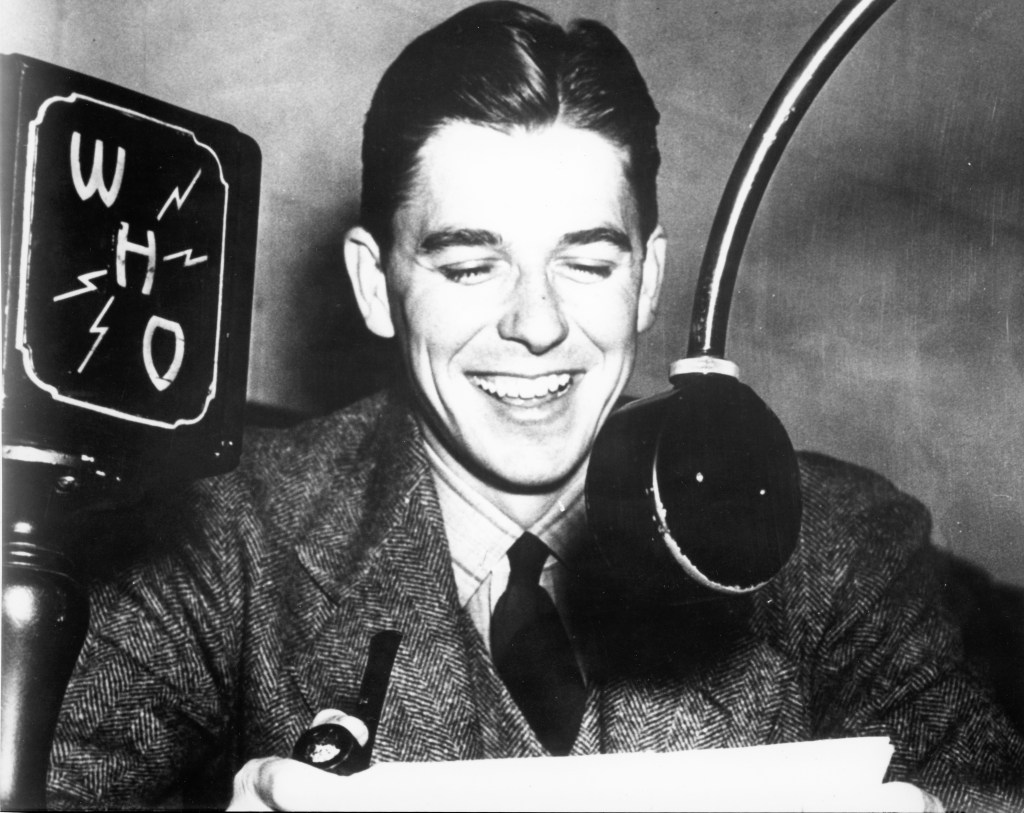
The house is quiet except for the radio.
Family gathered close. Dinner’s done. Lights low. Nobody saying much. Just listening. Plates still on the table. A fan turning slow in the corner. Someone leans back in their chair without taking their eyes off the dial.
The voice comes through steady. Familiar. Not loud. Not worked up. Just certain — like someone who’s been sitting with this longer than you have.
He names what feels off. The pressure in the air. The sense that things aren’t quite holding together the way they used to.
And people lean in — not because they’re told to, but because it feels like it matters. Because it sounds like someone finally putting words to something they’ve been carrying without a name.
That wasn’t unusual.

Ideas showcases stories, opinion and analysis about Hawaiʻi, from the state’s sharpest thinkers, to stretch our collective thinking about a problem or an issue. Email news@civilbeat.org to submit an idea or an essay.
By the late 1930s, the radio had moved to the center of the room. Everything came through it — news, sermons, commentary. Same speaker. Same space. You didn’t go looking for it. It came to you.
You heard the same voice in the morning and again at night. You learned its cadence. The pauses. The way it held certainty just long enough to feel earned.
The country was still trying to steady itself after the Depression. News from overseas landed heavy. There was a feeling — hard to pin down — that things were shifting.
And into that, voices like Charles Coughlin began to fill the gap. The “radio priest” reached tens of millions each week with sermons that blended economic grievance and suspicion into something that felt like clarity.
Week after week. Same tone. Same rhythm.
Enough to give it form. Enough to make it feel like the outline of something real.
When It Broke — And Then Didn’t
Then one night it changed.
Music cuts out. Bulletins break in. Different voice. Different tone. Urgent now. Official.
Something’s landed. Something’s moving. Something no one can quite explain.
Words come fast — fragments, half-formed reports. Enough detail to feel convincing. Not enough to settle.
For a moment, it holds.
People remember the confusion. The fear. That strange feeling that reality had slipped just enough to let something impossible in — not because they believed everything they heard, but because there was no time not to.
What gets lost is what came next.
It ended.
The program wrapped. The signal broke. And by the next day things — imperfect, argued over, but still shared — settled back into place.
People talked it through. Compared what they heard. Laughed some of it off. Argued the rest.
The ground, shaky as it was, held.
That’s the part that’s different now.
Now it doesn’t break.
It just keeps coming — one voice into another, one version into the next. Faster than you can check. Constant enough that it starts to feel like the background of things.
There wasn’t a single moment when it flipped. No clean break you could point to. Just a slow extension of the signal.
Cable stretched the day. News stopped arriving in pieces and started filling the hours between them. What used to interrupt life began to sit alongside it, then inside it.
The space between events filled up, then disappeared.
By the time it was always on, it no longer felt new.
Just normal.
The Environment
Social media didn’t invent that condition.
It refined it — and made it personal.
The systems watch what catches you, what you pause on, what you return to without thinking — and they feed it forward. Not all at once. Just enough to keep you leaning in.
A story doesn’t run and fade. It mutates. Splits. Reappears in new forms before the first version has had time to land.
A headline becomes a clip. A clip becomes a comment. A comment becomes a version of the story that feels closer than the original.
The distortion isn’t a moment anymore.
It’s the setting.
You feel it more than you think about it — that low hum in the background, the sense that something is always about to tip.
Like standing in surf that never quite breaks — just keeps moving under you, pulling the sand from beneath your heels before you can find your balance.
You don’t fall.
You just never quite plant your feet.
The Adjustment
People adjust.
They narrow things down. Stick with what feels familiar — what sounds right, what lines up with the people around them.
They find voices that feel steady. Patterns that feel repeatable. Something that doesn’t move quite as fast.
Not because they’re trying to get it wrong, but because they’re trying to make it hold.
Because without something that holds, everything starts to feel provisional.
And the system rewards that — not by telling you what to believe, but by keeping certain things in front of you again and again until they start to feel like how things are.
Familiarity starts to stand in for certainty.
Repetition begins to feel like proof.
It doesn’t need to convince you of anything outright.
It just keeps things moving long enough that nothing fully settles.
The effect isn’t agreement.
It’s fatigue.
And fatigue changes how people decide. What they trust. How quickly they react.
Power doesn’t have to pin reality down.
It just has to keep it loose.
A small circle now sits close to that flow — close enough to shape what rises and what spreads. The architects of the platforms. The ones who own the pipes and tune the algorithms.
Not deciding what you see.
Deciding what keeps moving.
It doesn’t look like control.
It feels like momentum.
Finding Footing
And in a place like Hawaiʻi, that momentum doesn’t stay abstract for long.
We’re smaller. Tighter. More connected.
A story moves, and it moves fast — about water, about land, about what’s coming next. A post goes up. A message gets forwarded. Someone calls someone else. Before long, it’s everywhere.
You see it when a storm is still offshore and shelves start thinning anyway.
When a message about contaminated water spreads before officials can confirm it.
When a road closure gets reported three different ways and people reroute based on whichever version reaches them first.
It doesn’t just sit online.
It shows up in real decisions.
Plans change. Routes shift. People move differently through their day.
Sometimes they’re right. Sometimes they’re not.
But either way, it’s already moving.
And once it starts moving here, it doesn’t take much for it to touch everything else.
That’s the part that sticks.
Not panic. Not chaos.
Just the sense that things don’t quite land anymore — that they keep shifting under your feet — that even when something feels settled, you’re waiting for the next version to push through it.
After a while, you stop expecting it to settle.
You just learn how to stand in it.
So the question isn’t really about what’s true in any single moment.
It’s simpler than that.
Where do you still find something solid?
What do you trust when everything keeps moving?
What holds when the signal never stops?
Because whatever that is — it has to be something you can stand on.
And hold.
Long enough for something real to take shape again.
 Sign up for our FREE morning newsletter and face each day more informed.

Local reporting when you need it most
Support timely, accurate, independent journalism.
Honolulu Civil Beat is a nonprofit organization, and your donation helps us produce local reporting that serves all of Hawaii.
ContributeAbout the Author