

20,000 Tons Of Mud And Nowhere To Put It
North Shore farmers are feeling left behind in the ongoing cleanup efforts from the Kona low storms.
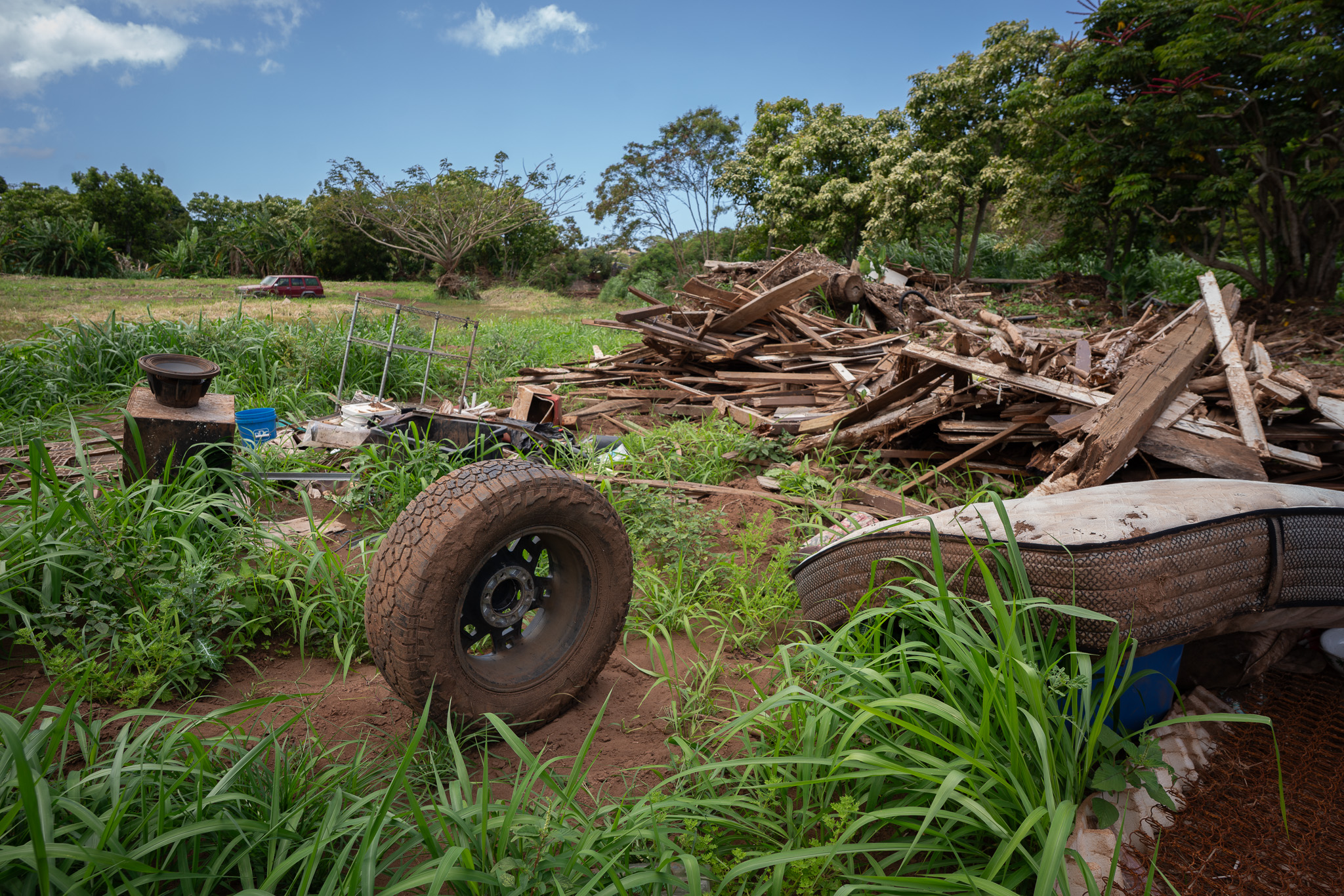
The floods in March dumped more than just mud on Colleen Pescaia’s farm in Waialua.
Her plot near the confluence of the Kaukonahua and Poamoho streams is littered with the personal effects of residents from nearby Otake Camp. Among the debris field lies a doll, a broken tricycle tire, a leather purse, a mattress and box spring, power tools, pieces of unfinished sculptures, and a sign that says “Coming Soon.”
Residents trying to piece their lives together after brutal back-to-back Kona low storms found family photos and birth certificates while rummaging through the piles.
Pescaia planned to use that land to expand her soursop farm. But now, almost all of her 5 acres are covered in 4 feet of mud that has now hardened and become overgrown with California grass.
“I had a vision for this farm,” she told Civil Beat last week. “Now, that’s gone.”
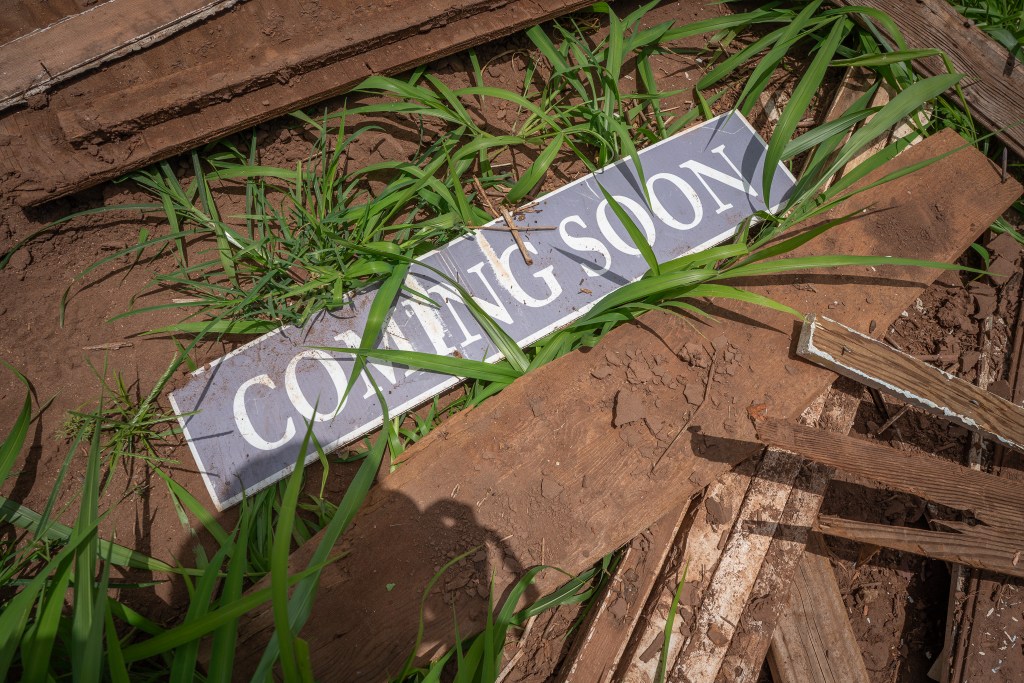
Farmers like Pescaia say they are being left behind by cleanup efforts.
The City and County of Honolulu won’t haul debris or mud from private ag land. The state hasn’t been on-site since National Guard members helped to separate debris piles and hand-dig drainage ditches on inundated pieces of property.
The federal government could pay up to 75% of cleanup costs – so long as farmers front the money.
More than 4,600 acres of farmland were impacted by the Kona low storms, according to data compiled by the ag industry. On O‘ahu, damages total more than $26.5 million.
Hunter Heaivilin is the advocacy director of Hawai‘i Farmers Union United, one of the organizations that took part in collecting self-reported data from farmers. He said those figures likely underestimate the total impact on farming operations in the state.
The recent storms and impact on farmers highlight a need for better representation of agricultural interests in disaster preparedness and recovery, he said.
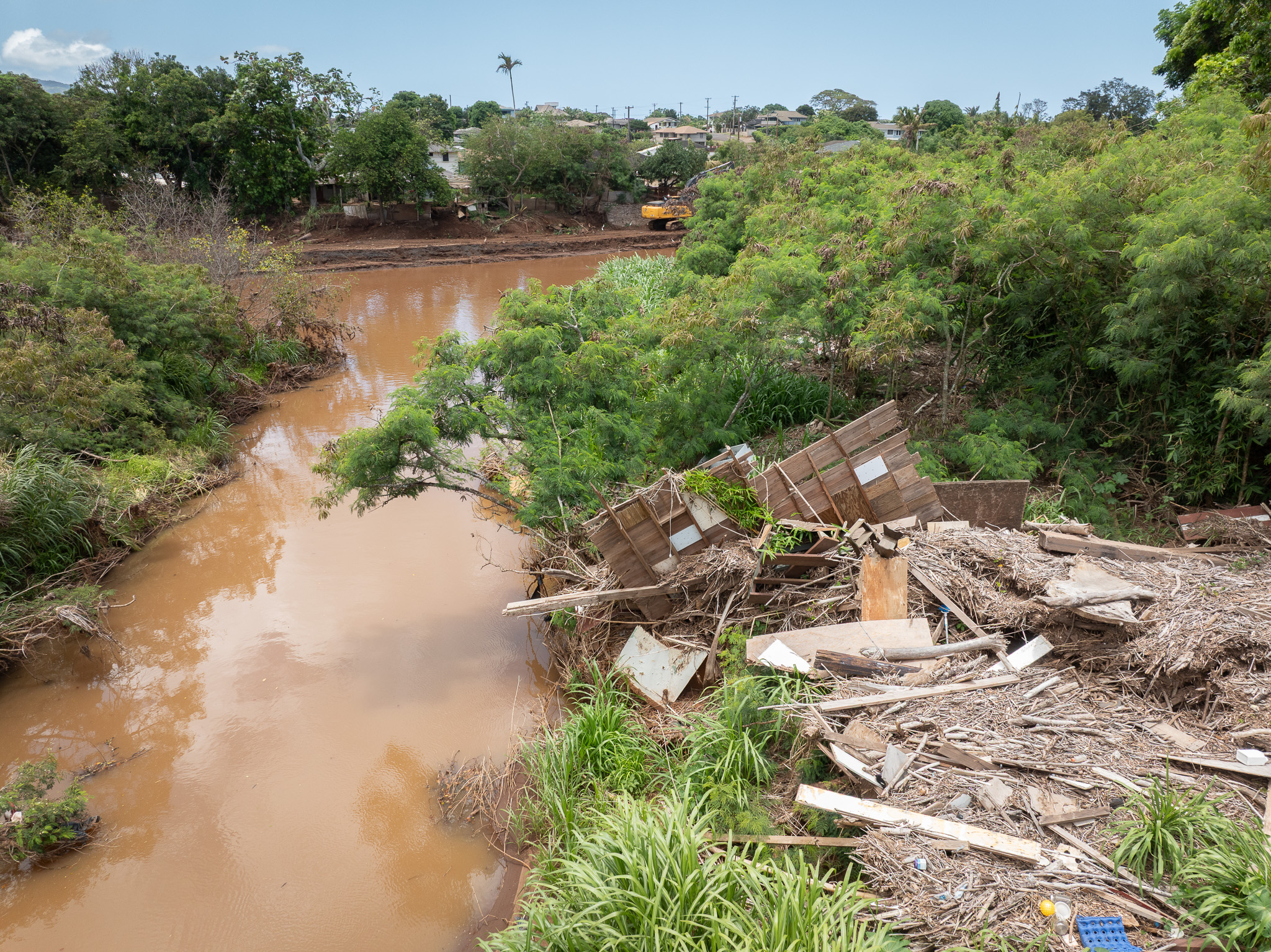
Pescaia estimates that there’s more than 20,000 cubic yards of mud on her land. The average weight of a cubic yard of dirt is about one ton. Estimates she received from contractors indicate it could take a month to clear the land and cost about $300,000.
That’s not counting the cost of hauling the mud away, nor tipping fees that could cost up to $170 per load, and there could be many, many loads. Never mind the cost of the machinery needed to dig it all up.
Doing the math, saying it out loud, makes Pescaia tear up.
Even if she could afford it right now, Pescaia said she can’t move the mud because the city wants it to be tested first. She’s been getting the runaround from various agencies, and on Friday received an email from the Department of Environmental Services saying that a decision on whether to help farmers is in the hands of Mayor Rick Blangiardi.
Ian Scheuring, a spokesperson for the mayor, said the city completed an assessment of what it would cost to clear all of the ag properties on the North Shore but is awaiting an islandwide assessment for impacted farm areas in Waiʻanae, Kahuku, Ko‘olaupoko and elsewhere. It wasn’t clear how long that would take.

Unlike residential properties, where mud was hauled from the road, helping farmers would mean clearing mud and debris from private property. Scheuring said the city needs to ensure that is done fairly.
“It’s not just as simple as waiving tipping fees and taking care of farmers in one area,” he said. “We have to make sure it’s equitable for farmers with disaster needs in all parts of the island.”
Contaminated soil could be dumped at either the Waimānalo Gulch or PVT landfills, Scheuring said. Dirt that is determined to be non-toxic could be dried out and distributed back to farmers.
“I don’t think there’s an actual plan,” he said, “but it’s not going to stay in that pile at the circle forever.”
Land Choked By Grass
Pescaia and her husband bought their land in Waialua in 2022 and rehabilitated an orchard of soursop trees on the property.
Before the storms, Pescaia had about 80 soursop trees she planned to use for sorbet. She was recently selected to take part in a cohort of cottage industry farmers hoping to take their products commercial. She planned to expand the orchard, but those plans are on hold now after the floods that devastated farms across O‘ahu.


The stormwater that flowed down Mount Ka‘ala and Kaukonahua Stream quickly overflowed the waterway that had already been clogged for decades and drowned Pescaia’s land. On a nearby farm, mud stains on mango tree leaves above head-height show just how high the waters rose.
The corner section of a destroyed home slammed into the banks of the Poamoho stream opposite Pescaia’s land on a cacao farm owned by Dole Food Co. that has also been inundated with mud. Planks of wood from an artist’s studio got wrapped in trees on her side of the stream.
When the waters settled, they left behind mounds of mud, averaging 4 feet and covering much of Pescaia’s five-acre lot. Pescaia and workers tried to clear parts of the area after the storms, but those efforts were futile because the mud was too thick to walk through.
The city had DRC Emergency Services, a contractor assisting with debris cleanup, conduct an assessment of clearing Pescaia’s land and that of other farmers on the North Shore.

Shortly after the floods, residents offered to help clear the mud and debris, but Pescaia was told to turn down those offers because the DRC contractors needed to see the totality of the debris to complete an accurate assessment. That work has been done for weeks now, she said, and she’s prodded various city agencies hoping to get some form of relief.
So much time has passed waiting for help that the California grass has grown through the mud layer. Just the tops of the blades of grass, 8-feet tall in some areas, stick out. The roots are buried deep under the dirt at the original height of the land.
Pescaia and her husband had the property mowed every two months, but that’s become impossible now that the land is so uneven.
She said even if the city waived just tipping fees — the cost of dumping debris in the landfill — that could help a little.
“At least do something,” she said, for her and her fellow farmers. “I’m not looking for a handout, just a hand up, even if it’s something small.”
‘Field Of Broken Dreams’
On a nearby farm, Stephanie Shipton grows mangoes, papayas and other produce. Water that came over Farrington Highway pooled on her field. Members of the National Guard – some using their hands because of a dearth of tools – dug a swale to drain the water into a nearby ditch.
She wants to use land across the ditch to expand their crops to plant kalo and bananas in what she calls the “field of broken dreams.” She can’t do that until the ditch is taken care of.
It’s on her land, and she and her husband maintained it before the storms, but now the bottom of the ditch is buried under 5 feet of mud, rubble and chunks of Farrington Highway that washed into the ditch during the storms. At the start of the ditch, a water line is at risk of collapsing and blocking a culvert necessary to drain the mauka side of the highway near Otake Camp.
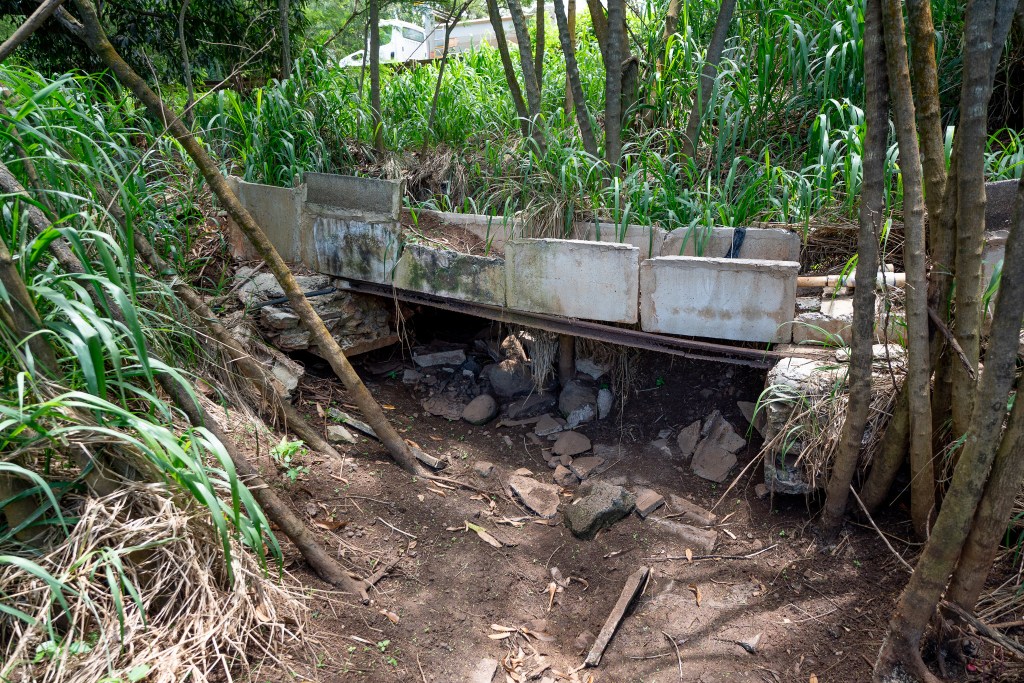
She’d need heavy equipment to clear the ditch and isn’t sure those machines could even make it there using the dirt roads in the area. It’s all a headache for people like Pescaia and Shipton trying to put more locally grown food on dining tables.
Shipton’s plea, like many farmers, is simple: “We just want to farm.”
Despite the setbacks in recent months, Pescaia wants to push ahead with her sorbet product and plans to launch a website in the coming months and begin production in August. She got a glimmer of hope on Wednesday with news that crews with the state Department of Transportation planned to be on site early next week with dumpster trucks to start removing the debris from her property.
They could potentially work on the mud later, but she said that hasn’t been confirmed.
CORRECTION: A previous version of this story misspelled Hunter Heaivilin’s name and included an incorrect reference to his title.
“Hawai‘i Grown” is funded in part by grants from the Stupski Foundation, Ulupono Fund at the Hawai‘i Community Foundation and the Frost Family Foundation. Civil Beat’s coverage of climate change and the environment is supported by The Healy Foundation, the Marisla Fund of the Hawai‘i Community Foundation and the Frost Family Foundation.
