After Kona Lows, Thousands Applied For Aid. Help Can’t Come Fast Enough
Some property owners are paying out of pocket to make their homes livable while waiting for federal funds they hope will come through.
After a series of Kona lows devastated the North Shore of Oʻahu in March, Rafe Maldonado has a long list of repairs.
The family returned home in Waialua to find that one of the two houses on the property had floated off its foundation. Two feet of a thick contaminated mud covered the yard and filled their homes. The electrical system was shot. And much of Maldonado’s equipment for his business repairing boats was destroyed, leaving him with little ability to work. Recovering from the floods, which forced him to flee with his elderly parents and his daughter, has basically become a full-time job.
Maldonado is among the homeowners who now face costs in the hundreds of thousands of dollars. And they are grappling with the uncertainty of who will pay for it.
The Federal Emergency Management Agency and the Small Business Administration have received more than 3,600 applications for aid. So far, more than $14.4 million from FEMA and $8.6 million from the Small Business Administration have been approved, and some households have started to receive money from FEMA.
But some, Maldonado among them, are still waiting for support from the federal government to kick in.
“It’s unbelievably frustrating,” Maldonado said. “It’s just crazy. So at this point, I’m just trying to keep going.”

Maldonado’s family lost about $200,000 worth of personal property. Flood insurance covered his parent’s house, but not his daughter’s, which is on the same property and suffered $170,000 in damage. They’ve already paid about $12,000 out of pocket to fix it.
“In the about two and a half months that have gone by, we are probably about 20% rebuilt,” he said. “It doesn’t sound like a lot, but it is a lot when you factor in a huge portion was just getting to zero. That was all the mud being removed, everything being cleaned.”
So far, the work has been done without the support of the federal government. The Maldonado family’s application for FEMA assistance was not approved. They plan to appeal, but to date, all they’ve received is $1,400 to cover the cost of a few items, including a new generator still in the box.
With Thousands In Need, Some Still Wait For Help
The Trump administration approved a major disaster declaration for the Kona lows in early April, triggering a cache of federal recovery aid. FEMA offers housing assistance to help repair damaged homes or pay for rent for people who have been displaced. The federal agency also covers some other costs caused by the disaster, including personal property, damaged vehicles or even increased child care needs or moving expenses.
The Small Business Administration offers homeowners low-interest loans to cover up to $500,000 to repair damaged real estate and $100,000 to replace or fix damaged personal property, including vehicles. Homeowners can also receive funds to mitigate against future disasters. Renters can borrow up to $100,000 to replace or repair personal property. These loans involve no payments or interest for a year.
The deadline to apply for both FEMA and SBA funds was Sunday.
The Small Business Administration also offers loans to help businesses cover operating expenses and recoup lost income caused by the disaster, and businesses have another roughly seven months to apply.
Over 3,500 residents had applied for FEMA assistance across Honolulu, Maui and Hawaiʻi counties as of June 11, according to FEMA external affairs officer Brady Penn. Housing assistance totaled $7.3 million, and assistance to cover other needs totaled $7.1 million. That number, Penn said, will rise as more people move through the process.
The Small Business Administration has approved 98 loans to homeowners and renters totaling more than $6.8 million as of June 8, according to public information officer Corey Williams. The agency has also approved 20 loans for businesses worth more than $883,000 and 17 economy injury loans for more than $955,000.
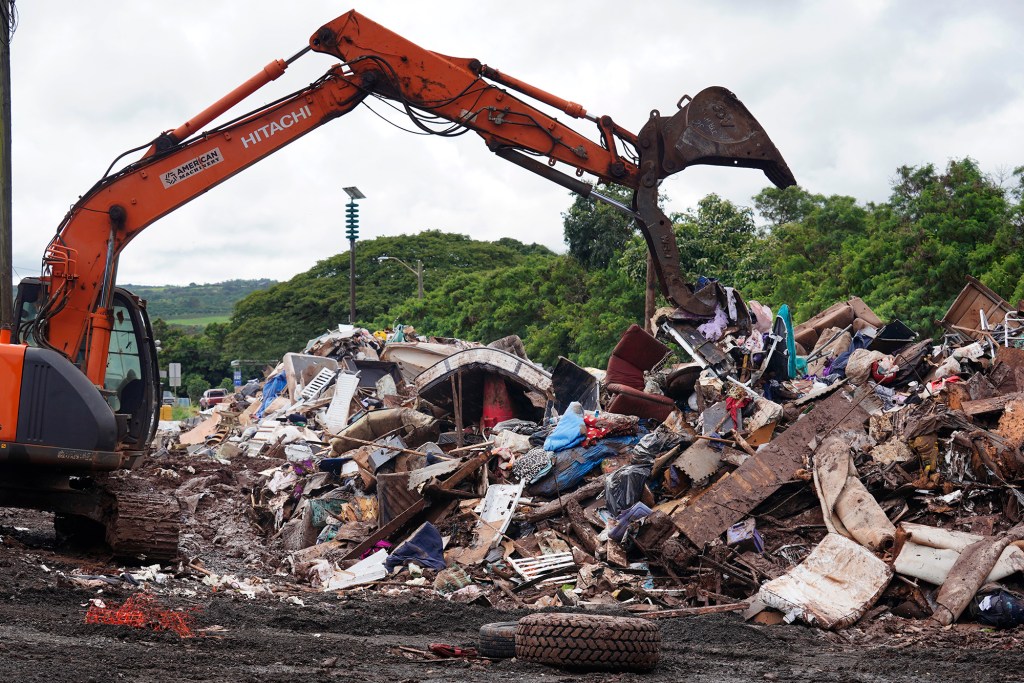
But some residents are already coming up against roadblocks.
Masina Wond, who lives on Oʻahu’s Westside, is still wondering when she’ll get help. Her home on Pa’akea Road in Māʻilii was flooded with knee-high water during both of the Kona low storms in March.
She applied for FEMA assistance, and an inspector came to survey the damage in mid-May. She’s gone weeks without any word about whether her application was approved.
“We’re still waiting,” she said. “I call constantly.”
She said she regularly checks the progress on a FEMA app, scrolling through the blue check boxes indicating the tasks that need to be completed. But the inspection hasn’t been finished —at least according to the app on her phone.
The floods destroyed her husband’s power tools that he needs for his job as a carpenter, flooded the family’s toilet, sent their refrigerator and ice chest floating and swamped their clothes and beds. After the first storm, they took sections of the damp walls down to the studs to start replacing the drywall. The second storm flooded the insides of the walls. Her downstairs unit has new floors, but the mud stains from the back-to-back storms are still visible on the doors.
Her church and family took care of many of the repairs, and they had some items donated. But they’ve paid other costs out of pocket with no indication of when they’ll be reimbursed from the federal government. The wait is frustrating. Many of her neighbors, Wond said, have already received financial help.
Penn said Wond’s experience is atypical. Most of the time, people get a call from an inspector within 10 days of submitting their application, if not much sooner.
“Once you get paired with an inspector, they’re completing them quickly,” he said.
He estimates that the paperwork has been completed for nearly 95% of the inspections that have been done so far. Once the inspection is complete, applicants should receive funds or a request for more information within three to five days.
Still, he said, the need for follow-ups can sometimes delay things.
“I hate to hear when that kind of thing happens because a lot of times, it’s something small that is holding things up,” he said.
Penn encourages people to keep in touch with FEMA. Even after the June 14 deadline has passed, people can continue to update their applications. FEMA staffers are reachable around the clock at 1-800-621-3362 and can help people check on the status of their applications, figure out what else they need to do or upload more information.
‘Appeal And Appeal And Appeal’
Despite the damage to Maldonado’s family property, he counts the strokes of good luck.
A 12-foot retaining wall behind the property along Kaukonahua Stream slowed some of the rushing floodwaters. The mud and water went under the outdoor kitchen he’d built about a foot off the ground, giving them a place to cook when they were able to return. Their cesspool was covered with a tarp under layers of dirt and a flower bed, which kept it from filling with mud and sending sediment rushing up their pipes.
Some of his neighbors, he said, have it worse. One only got back into her house last week. Mud from the cesspool gushed up and damaged all her pipes. Her plumbing had to be fully replaced.
Still, when the FEMA inspector came to Maldonado’s property, she found hundreds of thousands of dollars in damages — and much of it wouldn’t be covered by insurance. His parents’ house had been shifted about three inches off its foundation by the force of the water, disconnecting the plumbing under the house in the process. The flooring, staircases and electrical outlets were all destroyed. The door jambs had all shifted as the house floated. The bathtubs and toilets were clogged with mud. The insurance company’s report logged about 130 pages of damage, Maldonado said. The payout would be $110,000, but the actual bill is probably closer to $200,000 for just one of the two houses on the property.
Before she left, the inspector came up to Maldonado and his father.
“And she was like, listen, I’m going to submit this report,’” Maldonado remembered her telling them. “‘I’m not supposed to tell you guys this. But remember there’s an appeal process. Just appeal if you get denied. Just appeal and appeal and appeal.’”
Maldonado’s family received some money for incidental damage. But their application for their personal property or property damage were not approved because they indicated they had flood insurance. That policy only covered structural damage for one of their two houses on the property and didn’t cover their personal items – something Maldonado said was written in the policy they submitted with their FEMA application.
Amongst his neighbors, he said his family aren’t the only ones who weren’t initially approved.
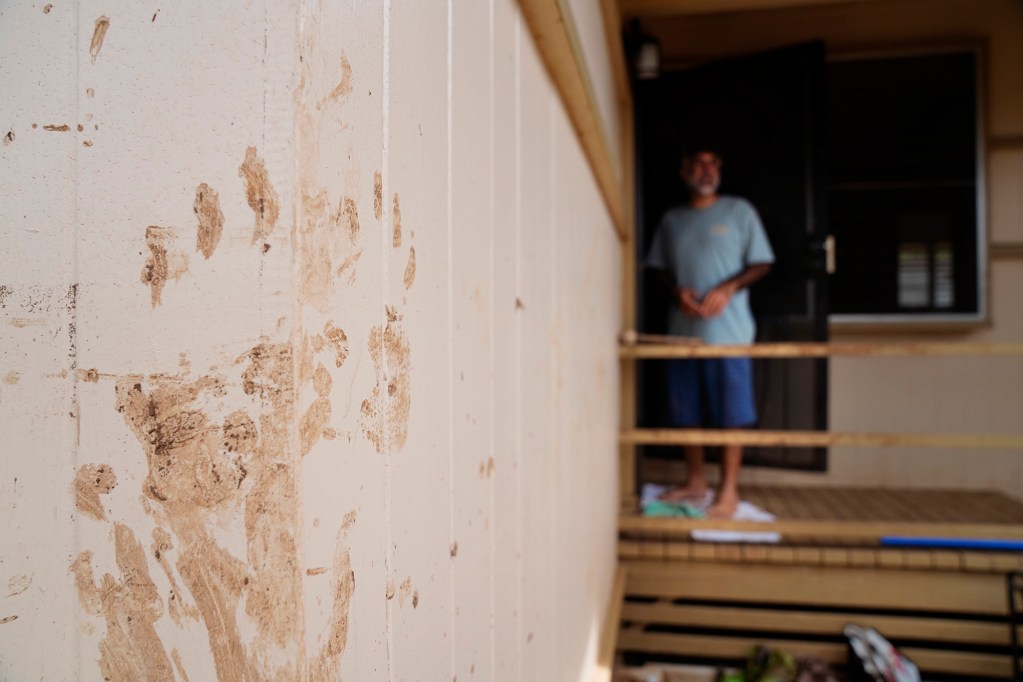
That’s not a sign that they won’t get any funds, Penn from FEMA said.
Some things, like TVs or secondary cars, may not be ineligible for reimbursement, but typically, people can get reimbursed for personal property that is “necessary for people to basically get back on their feet,” Penn said.
Still, it’s a complicated process and someone’s application might not be immediately successful. For example, if someone indicates they have insurance but don’t have the paperwork to show how much they received or that their claim was denied, their FEMA application might initially be ruled ineligible.
Penn said that shouldn’t be read as a definitive denial. The agency has strict rules around duplication of benefits and by law, cannot pay for losses that are covered by insurance or nonprofits.
“It may seem arbitrary, but it’s all in place because of fraud concerns,” Penn said. “There’s a reason for the process being the way it is.”
Sometimes an applicant just needs to submit more information about their uninsured losses, he said.
“There’s confusion because when you tell somebody you’re ineligible, they don’t hear that and say, ‘Oh, good news, all I need to do is upload some more documents,’” Penn said. “They hear that and say, ‘Oh, I’ve been rejected.’”
FEMA encourages people who are initially told they were ineligible to continue to press for funds. As long as residents got their application in ahead of the June 14 deadline, they can continue to submit additional documentation.
Catholic Charities Hawaiʻi has caseworkers helping people appeal their FEMA applications. That support is vital for people who are already overwhelmed and facing the daunting task of trying to get federal aid, according to Shellie Niles, the nonprofit’s vice president of mission.
“I’m not sure most people are going to do that appeal without the support or without knowing that it’s common to get denied. It’s ok, let’s appeal,” she said. “Unless people are telling them that or guiding them through that, they’re going to take it at face value and just be done.”
Community Carries The Recovery
FEMA officials know the federal support is only part of what communities need to fully recover from the Kona lows.
“A lot of programs are really just covering basic necessities for people,” Penn said. “Their longer term recovery will take a very long time.”
In the days after the March 20 storm, volunteers descended on the Maldonado’s house to pressure wash and sanitize the buildings. The sailing team from the University of Hawaiʻi – his daughter’s alma mater – came to clear mud from underneath their houses. As soon as Rafe Maldonado was able to get the bathrooms in working order, his parents returned home to sleep on air mattresses.
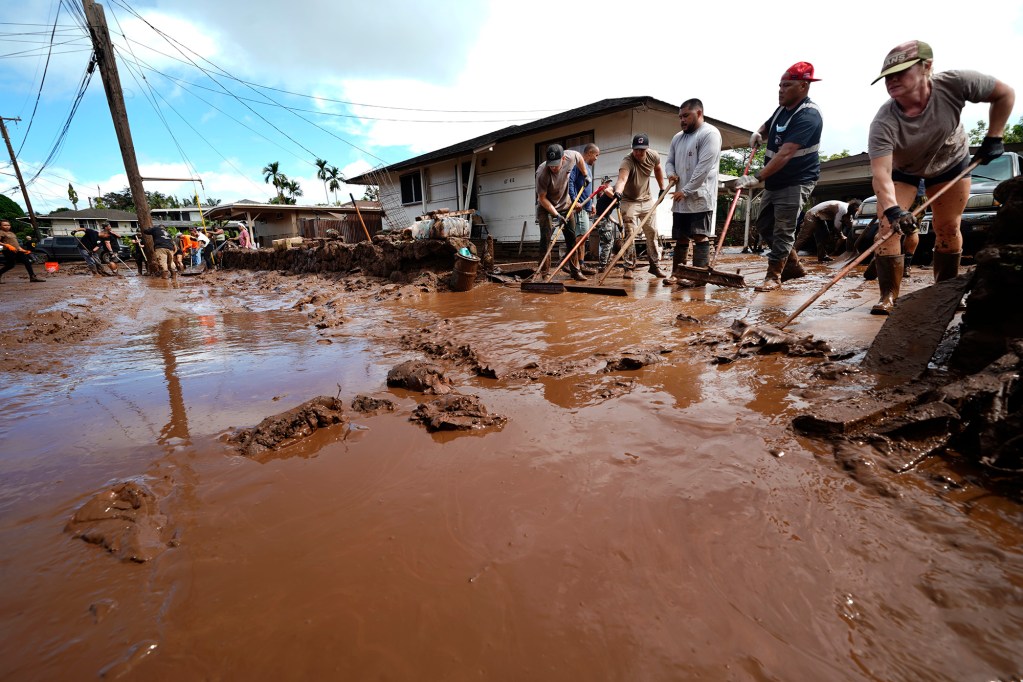
Friends who are licensed electricians came over to rip out all the outlets and replace the electrical system. In the months that followed, a friend who is a contractor is doing the repairs for a fraction of the cost. Without that help, the amount they received from insurance for his parent’s house would have only covered the kitchen and the bathroom.
Maldonado isn’t one to ask for help, and he’s not expecting much from the government. But he has been stunned by the level of support from the neighbors and members of the community.
“I fix things, that’s my job. But it’s interesting how you can change when you’re presented with something that you know is not possible to do by yourself,” he said. “To have an army descend in that moment – that’s what’s so incredible.”