Beth Fukumoto: The Debate Over Debates
The transparency that comes with debates is vital for competitive elections and the health of democracy itself.
June 18, 2026 · 6 min read

About the Author

A last-minute shuffle at the candidate filing deadline turned what looked like a quiet primary season into a competitive one.
State Rep. Della Au Belatti, who was running for Hawaiʻi’s 1st Congressional District, switched to the lieutenant governor’s race, adding another serious contender to the field and creating a head-to-head congressional matchup between incumbent Ed Case and state Sen. Jarrett Keohokalole.
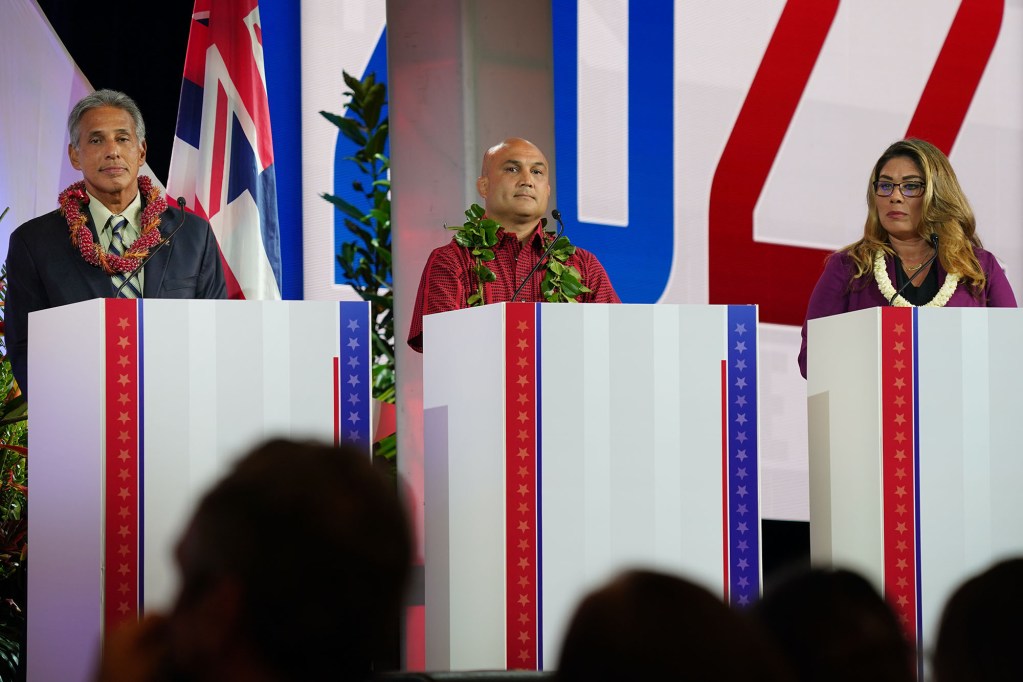
In both races, the newer entrants are pushing their better-resourced rivals toward debates — a key arena for public accountability and voter engagement. Yet their opponents aren’t showing much enthusiasm, highlighting a strategic reluctance with broader implications for voters beyond campaign drama.
Case settled the question of his participation this week, telling Civil Beat’s Nick Grube flatly that he won’t debate. His explanation: Keohokalole’s campaign, in his view, is built on attacking him rather than offering policy alternatives of his own, and a debate would do nothing but amplify that strategy. Case suggested he’d rather focus on working hard in Washington and leave it to voters to judge his results.

Granted, this season is a busy one in Congress. But with midterms around the corner, plenty of members are clamoring to get out on the campaign trail. I’m sure that’s one reason that the House Majority Leader’s calendar shows a recess from July 3 to 10, and another starting July 27. Many members of Congress are doing their work in Washington while also answering challenges in their home districts.
And, for what it’s worth, Case wouldn’t even need to come home to do the debate. Keohokalole has also offered to fly to Washington, D.C., to debate Case at “any venue, in any format, on any date of his choosing.”
Over in the lieutenant governor’s race, Belatti is calling out her opponents to debate on every island, saying voters deserve “unscripted” answers rather than “slick ads paid by corporate PACs.” So far, no debates have been scheduled for that race either, and Case’s refusal to debate will make it easier for LG candidates to do the same.
But does any of this really matter? That’s a fair question, and one that goes to the heart of what debates are for. While research on political debates shows they rarely change anyone’s vote, defining their value solely by this metric misses the bigger picture.
A widely cited study in the Quarterly Journal of Economics looked at 56 televised debates across 31 elections in seven countries and found debates account for no more than 3% of the shift in voters’ final decisions over a campaign’s last two months.
The domestic numbers tell a similar story. After the June 2024 Biden-Trump debate, a CHIP50 survey found that 94% of people who’d backed Biden in May, and 86% who’d backed Trump, stuck with their candidate. Fewer than 3% crossed party lines. Even the famous televised Kennedy-Nixon debate in 1960, which was credited with revolutionizing political campaigns, turned out to be more legend than anything else, according to historians at the University of Virginia’s Miller Center, who call that story “telemythology.”
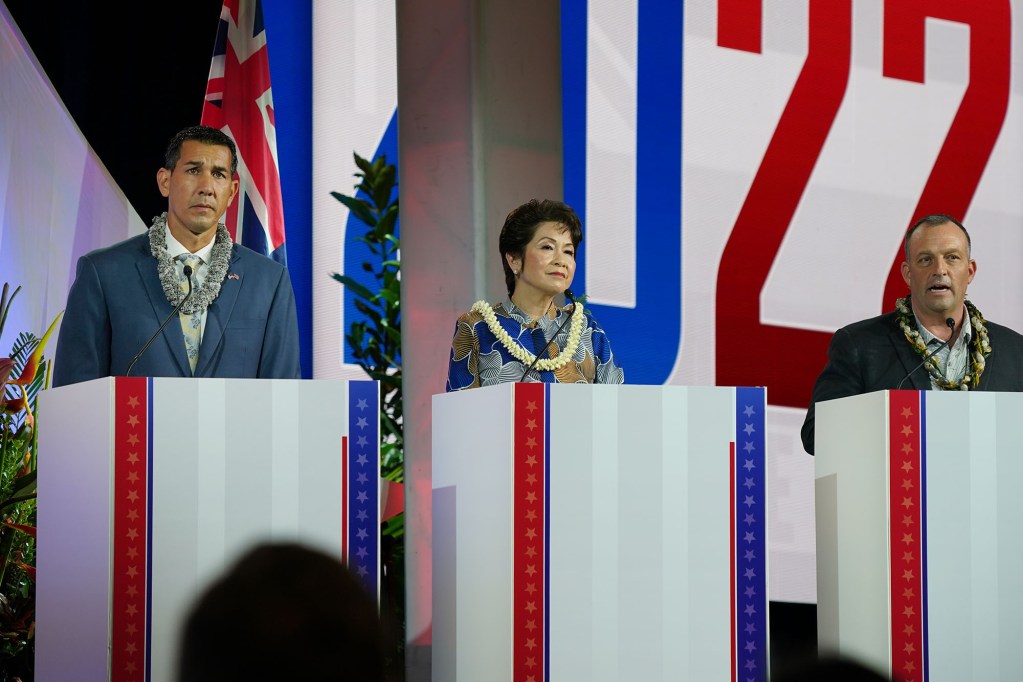
So, no, debates probably won’t change the minds of people who already know who they’re voting for. If voters have already committed to Case, a debate is unlikely to meaningfully move the needle toward Keohokalole.
But dismissing debates assumes everyone has already formed their opinions, and evaluating debates solely by immediate vote counts overlooks their broader impact on the electoral process and public perception.
Researchers who surveyed live viewers of both 2024 presidential debates found that people changed their views of the candidates significantly across issues ranging from specific policies to respect for democratic norms. The most dramatic example: after the June debate, viewers reassessed Biden’s fitness for office, sparking donor panic and mounting pressure that ultimately pushed Biden out of the race. Here, a debate failed to move votes but fundamentally altered the course of the election, underscoring that debates can matter even when ballots don’t shift.
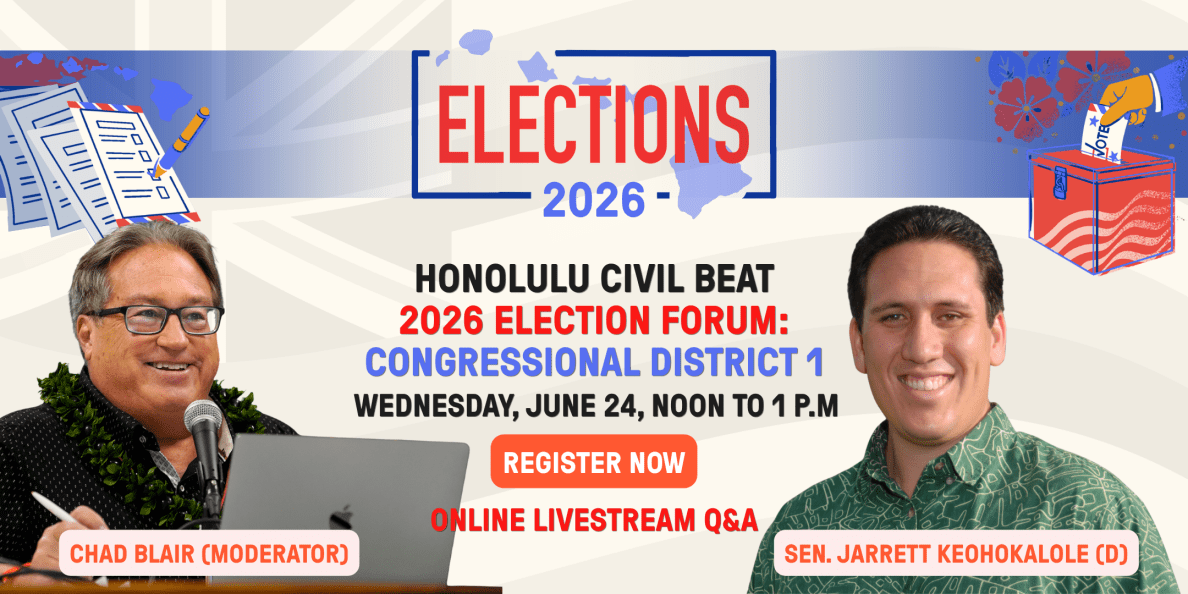
I suspect that is a part of Case’s political calculation. Case is a known quantity in Hawaiʻi politics, and it’s not in his interest to disrupt that. While he says that a debate wouldn’t add anything constructive, a debate over policy is always productive, especially in a primary, where airing disagreements can lead to a better understanding of where both candidates stand on their party’s priorities. By debating Keohokalole, Case would give Democrats frustrated by his SAVE Act vote or other issues the opportunity to determine if he is the right person to send back to Washington in the Trump Era. Obviously, that’s a risk with little upside for Case.
Keohokalole is the less familiar name, so he stands to gain the most — and risk the least — by participating in a debate. Studies show voters are most open to persuasion when they aren’t yet familiar with the candidates. In the lieutenant governor’s race, with no incumbent and no one with a statewide profile, debates give Belatti, Kaua’i Mayor Derek Kawakami and others a chance to introduce themselves and make their case to voters. Regardless of Case’s decision, they should move forward and debate anyway.
While debates rarely flip the votes of entrenched partisans or loyal supporters who have already picked a candidate, I would venture to say that most voters in both the congressional and LG’s races are not wholly in one camp. And, even if they were, we know that a debate can boost support for a candidate, chip away at an opponent’s, deflate enthusiasm for a rival, or stir up opposition to one. Debates reliably shift how favorably people feel about candidates, which later shows up in fundraising, volunteering and turnout. That does shift votes.
Still, there’s an even broader reason why our candidates should be participating in debates. These forums are one of the few opportunities in a campaign when candidates must answer real questions, live and unscripted, before the very people they seek to represent. This transparency is vital for competitive elections and the health of democracy itself, regardless of immediate electoral outcomes.
While skipping the debate may benefit Case politically against a challenger with less to lose, he should be setting an example for other candidates in other primary races and opening himself up to being held accountable on a public stage.
 Sign up for our FREE morning newsletter and face each day more informed.
Read this next:

Local reporting when you need it most
Support timely, accurate, independent journalism.
Honolulu Civil Beat is a nonprofit organization, and your donation helps us produce local reporting that serves all of Hawaii.
ContributeAbout the Author