Charter Commission Still Undecided On The Mayor Hiring The Police Chief
The Honolulu Charter Commission has vetted hundreds of proposals. There are still a few on the table.
June 7, 2026 · 6 min read


About the Author

Honolulu Mayor Rick Blangiardi came pretty close last week to losing one of his major asks: that the city charter be changed to allow the mayor to hire his own police chief.
The 13-member Honolulu Charter Commission, narrowly voted to kill the idea after a commission working group tacked on a provision that would give the Honolulu City Council the power to confirm or reject the mayor’s pick, just like the council does with other cabinet members. That twist did not sit well with the mayor’s office which asked that it be removed.
But a number of commissioners wanted the council to have a role in selecting the chief, which, they argued, is one of the most important jobs in the city. And the council is really the only place where the public can have a say in who gets picked, they insisted.

The mayor’s proposal couldn’t muster enough support to advance and it looked to be dead. Until one commissioner quickly moved to table the proposal for further discussion until the next meeting, scheduled for this Monday, when two key commissioners would be back. So that’s what they did and Proposal 230 will live to see another day of debate.
Whether pro-mayor commissioners will be able to sway those against the idea remains to be seen, of course. Several commissioners were outspoken last week on the importance of the council being involved in the selection. And whatever the outcome the whole idea certainly has been given a lot of thought, not only by the managing director’s office which drew up the original proposal but also the commission’s working group — called a permitted interaction group, or PIG.
The proposal is separate from another police reform effort, Proposal 232, which would substantially overhaul the Honolulu Police Commission and create a separate investigative arm to review police misconduct. Presumably they would be separate questions that would go before voters in November, which is a good thing because public sentiment has trended pretty strongly against letting the mayor hire the police chief while revamping Honolulu’s historically lax civilian oversight board would seem to have solid support.
Still, Blangiardi has been arguing that the mayor should be the one to hire his own department head since becoming disillusioned with the job being done by former Chief Joe Logan, who opted to retire after he and the mayor continued to butt heads over rising violent crime on the Westside and Logan’s lack of communication about various incidents, including a highly publicized police shooting. The mayor has reasoned that it is his office that takes the brunt of citizen anger over public safety so he should be able to have more control over the police chief.
That led Blangiardi’s office to submit the charter proposal that takes hiring and firing of the chief away from the Police Commission, which has done it for decades. Under his proposal, the Police Commission would go through a selection process similar to what it does now, advertising for applicants and screening them and then selecting three finalists. But then it would be the mayor, rather than the commission, that picks the chief from the list of three.
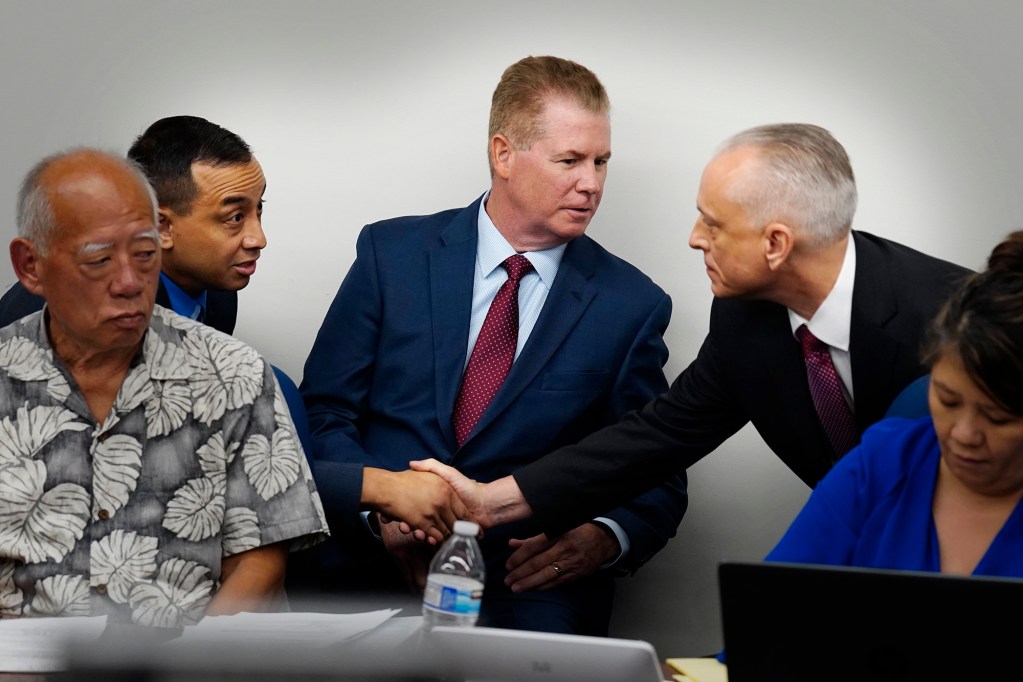
The Charter Commission, on the recommendation of the PIG which also put a lot of work into looking at other jurisdictions and selection processes, added in another layer of scrutiny — the City Council, which would have to confirm the mayor’s pick.
The recent hiring of former San Francisco assistant chief David Lazar as Honolulu’s new chief wouldn’t have happened if this proposal had been in place. Blangiardi wrote a letter to the Police Commission saying he wanted Mike Lambert, the state law enforcement director, to get the job. The Police Commission voted 5-2 for Lazar instead. The City Council had no say in it.
The issue is important enough that it’s well worth the Charter Commission taking another crack at it with fresh eyes this week. But here are a couple of things to keep in mind.
The first and most critical thing is that the Police Commission needs to be fixed, and that means strengthened into a true oversight board that is not just a cheerleader for the Honolulu Police Department. Proposal 232 which needs to be passed by voters would, among other things, allow the City Council to pick some of the commissioners along with the mayor. Right now, the mayor appoints all seven and under his proposal his appointees would pick three chief candidates who then pass those names along to him to pick from. That seems wrong. The commission makeup needs to changed by voters first, and then it makes more sense to talk about who has final say in choosing the chief.
Charter commissioners also need to consider how best to involve the public in who becomes the next police chief. The public has been kept mostly at arms length when hiring previous chiefs, with limited opportunity for public testimony, engagement or scrutiny. This year, the finalists sat down for numerous media interviews, thanks largely to the insistence of the Blangiardi administration that they be available to the press.
Would another layer of scrutiny through a City Council confirmation process give the public more opportunity to vet the applicants and offer feedback? Other cities have found council confirmation helpful but its not always the way.
The police chief hiring proposal is one of three still on the table for the Charter Commission to decide. Over the past eight months the commissioners have reviewed nearly 300 proposals submitted by community members. They’ve narrowed that down to 18 that have been moved along to the commission’s style committee, which means they’re headed to voters on the Nov. 3 ballot unless the city attorney’s office finds a problem or they don’t make it through a final vote of the full commission.
Commissioners have said numerous times they don’t want to put too many questions on the ballot this year. In 2016, the Charter Commission put 20 questions before voters and 16 of them passed.
Besides the major overhaul of the Police Commission, issues that appear headed for voter consideration include:
• creating a new ranked choice voting system for city elections
• expanding the number of council seats from nine to 11 to reflect population growth
• creating an Office of Data and Innovation with a chief data officer
• creating a new special fund for affordable housing and two other housing-related initiatives
• establishing a food security fund
• creating an office of ʻŌiwi Respurces and Cultural Stewardship
• creating an LGBTQIA+ Commission
 Sign up for our FREE morning newsletter and face each day more informed.

Local reporting when you need it most
Support timely, accurate, independent journalism.
Honolulu Civil Beat is a nonprofit organization, and your donation helps us produce local reporting that serves all of Hawaii.
ContributeAbout the Author