

Civil Beat Is Training The Next Generation Of Journalists
Summertime means a new crop of Civil Beat interns.
Look out for some new bylines at Civil Beat.
This summer, our newsroom is continuing our tradition of training new reporters in the foundations of journalism. In these paid positions, they’re learning about finding news stories, interviewing, writing and building trust with the community.
Hikari Mae Hida comes to us from Tokyo, Japan by way of Columbia University where she earned a Master’s degree this spring from the Toni Stabile Center for Investigative Journalism.
The daughter of a Japanese father and Thai mother, Hida is fluent in Japanese, Thai and English. As an undergraduate, she studied political science and East Asian studies at Temple University in Japan and initially thought she would do nonprofit work with women and children in Thailand.
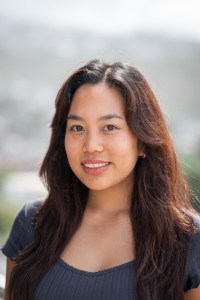
However, an unexpected opportunity led her to journalism.
When the Covid pandemic broke out, The New York Times was looking for a Japanese-speaking news assistant who could help their foreign correspondents. Hida had the language and research skills they needed, and she ended up working on some major stories, including the Tokyo Olympics and Prime Minister Shinzo Abe’s assassination.
“I was being paid to learn everyday. It’s such an amazing job,” she said. “People just trust you with their stories, and that felt very special.”
She sought out the Master’s program at Columbia to learn more about accountability reporting from Sheila Coronel, a Filipina investigative journalist. Investigative journalism can help people understand the world, Hida said.
“That is what journalism is about, at its core,” she said.
Hida already had a connection to Hawaiʻi. Besides coming to the islands for family vacations, she visited Punahou School on a student exchange program during high school and later returned to Punahou as a teaching assistant during her undergraduate years.
This summer, Hida hopes to build on her investigative abilities and use her language skills to tap into communities that are usually undercovered by the mainstream press.
“I think there’s so much more to Hawaii than people initially think,” she said.
Malia Manuel was born and raised in Kalihi. She has always been engaged in politics and activism and loved writing, especially creative writing and poetry. But her interest in journalism began at McKinley High School. Her English teacher, Cynthia Reves, encouraged her to channel her interest in current events into writing for the student newspaper.
Manuel is glad she did.
“I had to stay away from my own opinion,” she said. “You have to be able to talk to people and understand where they’re coming from, even if you really don’t agree with them.”
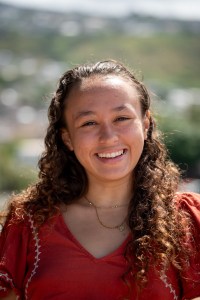
Through Reves’ journalism class, Manuel attended Civil Beat’s first ever high school journalism bootcamp last year, a three-day crash course in reporting and writing.
At the bootcamp, Manuel learned about the basics of investigative reporting and visited the Hawaiʻi Capitol. It made an impression on her.
“I came back with a folder of resources we could use,” she said, “and I still look back on it.”
The bootcamp is part of Civil Beat’s Pipeline Project, an effort to build a pipeline for Hawaiʻi talent into our newsroom. Manuel said that’s a worthy goal.
“Who is better to talk about Hawaiʻi than the people who have been here and have that lived experience — as a local person, as a Hawaiian, as someone who has been here and has roots here?” she said. “I feel that’s a much-needed perspective.”
Manuel just finished her freshman year as a journalism major at the University of Hawaiʻi at Mānoa where she’s been busy writing for her classes and the student publication, the Mānoa Mirror. Manuel was selected for the Civil Beat internship through the Hawaiʻi chapter of the Society of Professional Journalists.
This summer, Manuel wants to hone her investigative skills. She would like to follow in the footsteps of New York Times reporter Jodi Kantor, who spoke at ʻIolani School earlier this year. Kantor was one of the journalists who exposed Harvey Weinstein as a sexual predator and co-authored the book “She Said” with her colleague Megan Twohey.
“The fact that she did so much groundbreaking work for women, as a journalist, inspired me,” said Manuel, who interviewed Kantor for the Mānoa Mirror.
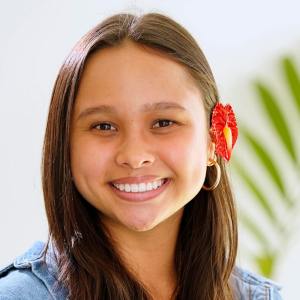
Valentina “Tia” Lewis is a familiar face, returning this summer for her third Civil Beat internship.
Originally from Maui, Lewis grew up with a love of reading and writing and graduated from Seabury Hall in Makawao.
After high school, she spent a few months at Northwestern University but couldn’t take the cold weather and came back home. She studied hospitality and tourism for a time at Maui College before pivoting to the UH Mānoa journalism program.
In the spring of 2025, Lewis interned for Civil Beat’s Sunshine Project, an initiative aimed at making Hawaiʻi’s government more transparent. She attended legislative hearings and tracked bills and wrote opinion pieces, including one about illegal fireworks.
This summer, she is lending a hand on Civil Beat’s newsletter and social media accounts — turning news stories into Instagram posts — in addition to reporting the news. She’s already attended Honolulu Ethics Commission meetings, interviewed patrons of the Honolulu Zoo and researched how a new traffic law is not being enforced. (We can’t reveal too much. Stay tuned.)
For Lewis, journalism is an opportunity to share information about current events with a community she says doesn’t always trust the media.
“I feel like it’s important for people to rely on a trustworthy news organization to get their information and their facts from,” she said. “I wanted to be able to contribute to that.”
As part of her audience engagement work, Lewis also hopes to make the news appealing to young people.
“I know a lot of Gen Z people, we rely on TikTok for our news,” she said. “If there’s a way to bring them into Civil Beat — so they’re like, ‘Oh I got it from Civil Beat’ — that’ll spread even more awareness of what we’re doing and our mission.”
Civil Beat’s local journalism pipeline program is funded in part by The Clarence T. C. Ching Foundation.

