Councilman And His Opponent Are Big On Construction. Similarities End There
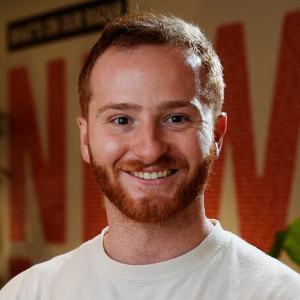
Honolulu council member Tyler Dos Santos-Tam, a prolific introducer of bills and longtime political insider, is being challenged by city worker Corey Morihara in his bid for reelection.
For the past few years, Honolulu City Council member Tyler Dos Santos-Tam has passed more legislation than any of his other colleagues.
The 38 ordinances vary in substance. Some bolster programs that encourage the construction of affordable rental housing, others deal with parking. They encompass a little more than half the bills that became law during his first term, not counting bills originating from the mayor’s administration like the budget or one that tinkered with admission fees to the zoo.
“I’d like to be thought of as somebody who approaches problems with the urgency that it deserves,” Dos Santos-Tam said.
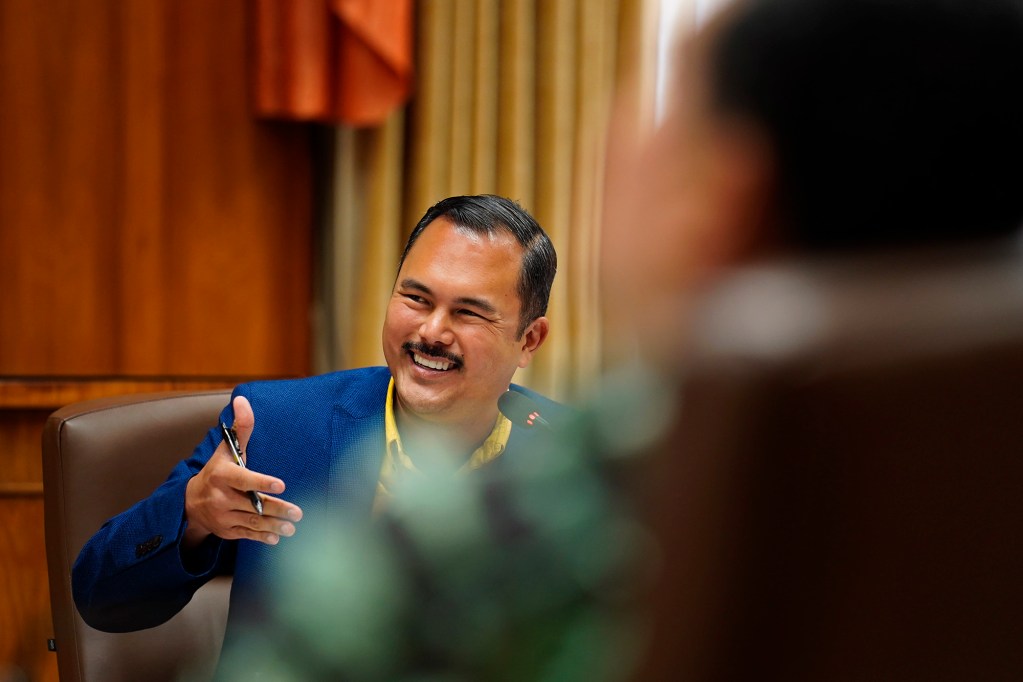
Voters will get to weigh in on Dos Santos-Tam’s performance in the November general election as he seeks another four years representing Kakaʻako and Kalihi on the City Council. He is being challenged by Corey Morihara, a first-time candidate for office who works as a building inspector aide in the Department of Planning and Permitting.
Both candidates come from a construction background but have little else in common.
A Punahou School and Yale University graduate, Dos Santos-Tam was previously a lobbyist for the Hawaii Construction Alliance, which represents union members like the carpenters, and the chair of the Democratic Party of Hawaiʻi. He began his career interning for the city under then-Mayor Mufi Hannemann.
Morihara grew up in a household where construction was the family business, and today his job involves inspecting job sites to ensure they’re following safety and sanitation standards.
“He says he has construction background,” Morihara said about Dos Santos-Tam. “He’s never swung a hammer.”
While Morihara said he has never met Dos Santos-Tam and has nothing against him personally, he thinks he has more real-world experience.
“I can see where Tyler’s coming from,” he said, “but he doesn’t see where I’m coming from.”
‘A Great Learning Experience’
Dos Santos-Tam had assumed while growing up that he would leave Hawaiʻi for the mainland. He graduated Yale two years into the Great Recession and came home to the islands, thinking he’d work for Hannemann for a year or two before eventually applying to law school.
But his city experience made him realize he enjoyed the scale of local government, he said, and that it can involve more than just updating zoning policy.
“The place where interesting experimentation’s actually happening is often on the municipal level,” he said.
He first ran for City Council in 2018, when he challenged Carol Fukunaga for her seat. At the time, he asked for assistance from resident Chu Lan Shubert-Kwock, a staple of the Chinatown business community.
“You have done nothing,” Shubert-Kwock remembers telling Dos Santos-Tam in response.
She said many candidates who have vied to represent Chinatown, including Dos Santos-Tam, “never have done anything, volunteered or even picked up a piece of garbage here. And all of the sudden you want to represent us. And you want me to walk you around.”

He got trounced in that election, winning just under 17% of the vote and placing third.
“Running for office and losing is a great learning experience,” he said.
Constituents want to see a dedication that goes beyond door knocking and mailers, he said, inspiring him to begin an organization called HI Good Neighbor that advocated against so-called monster homes — sprawling properties with sometimes a dozen or more bedrooms in already crowded residential districts.
By the time he ran again in 2022, Fukunaga was vacating her seat after reaching her term limit, and he had enough clout to beat council staffer Traci Toguchi by 8 points.
Shubert-Kwock said she’s been impressed with Dos Santos-Tam’s efforts now to walk the streets and clean up Chinatown.
“Tyler is a rising star,” she said.
An Advocate For Construction
Dos Santos-Tam is one of a slew of elected officials in Hawaiʻi with strong ties to powerful construction and development interests.
He was executive director of the Hawaii Construction Alliance, and some of his top campaign donors over the years have been familiar names in the development world:
- Hawaii Carpenters Political Action Fund
- Patrick Kobayashi, the president and CEO of Kobayashi Group
- Downtown developer Christine Camp of Avalon Development Co.
- Several labor unions
- Castle & Cooke
Does this make him beholden to construction interests? He says no.
“If we extend rail to UH,” he said, referring to a bill he and council member Radiant Cordero passed last year, “yes, it’s going to create a bunch of construction jobs, but it’s also going to create a bunch of housing and create the transit network that’s going to get people to where they need to be.”
Still, he’s willing to base his vote on political calculations.
In the spring of 2024, state legislators wanted to densify existing housing areas by requiring counties to allow up to two accessory dwelling units per residential lot.
Dos Santos-Tam the housing advocate probably would have supported the bill, he said in an interview. But Dos Santos-Tam the council member joined his eight colleagues to unanimously oppose it, saying the state should let the city address housing on its own terms.
“But we have to do our thing,” he said.

He said increasing the homeowners’ exemption by $20,000 so people are taxed on a smaller amount than what their home is actually worth, a current council initiative set to take effect in 2027, is cute but wildly insufficient.
“That’s going to help at the margins for a homeowner that’s paying their taxes,” he said. “We need to be dealing with the underlying issue, which is that there’s not enough housing at the right places, at the right cost.”
He supports passing an empty homes tax, which Council Chair Tommy Waters recently said he plans to schedule for a final vote in July a year and a half after tabling it. It’s unclear whether the proposed tax has enough support to pass. When Waters reorganized council leadership a year ago, he sacked Dos Santos-Tam and council members Matt Weyer and Radiant Cordero from his faction in favor of a slate of council members who oppose it. Mayor Rick Blangiardi also recently said he isn’t in favor of the proposed tax.
Dos Santos-Tam advocates for increasing the supply of housing to slow its rising cost, an approach that is sometimes controversial. A few years ago, a bastion of older but affordable rental units along Kapiʻolani Street was demolished to make way for towering Kuʻulei Place. Opponents said the new units would be unaffordable to many of the people who were displaced, exacerbating the island’s housing crisis as developers got rich.
Still, council members unanimously approved exemptions for the tower. In an interview, Dos Santos-Tam defended his vote by saying he believes more supply will be good in the long term, since voting no would mean the massive infusion of new units – about 1,000 total, with about 600 set aside for people with lower incomes – would not happen.
“If I’m going to vote no,” he said, “how else would I achieve a similar result?”
Morihara: People Are ‘Barely Making It’
Morihara likes to avoid the news until a week after news events pass, he said. That way he can avoid getting swept into sensationalized narratives.
For the longest time, he wasn’t political. He grew up playing sports and wanting to run his own business after seeing how much his own entrepreneurial father made time to watch his games. In addition to his role with the city Department of Planning and Permitting, Morihara is listed on the state’s business registration webpage as the point person of a sorbet and pop-culture merchandise business called Yoas Sorbet & Aquascapes, though he said his involvement is more as a secretary who helps with shipping products.
He said he wants to live a quiet life, but that seeing things like transgender women competing in women’s sports made him scratch his head at what elected officials are advocating for and accomplishing.
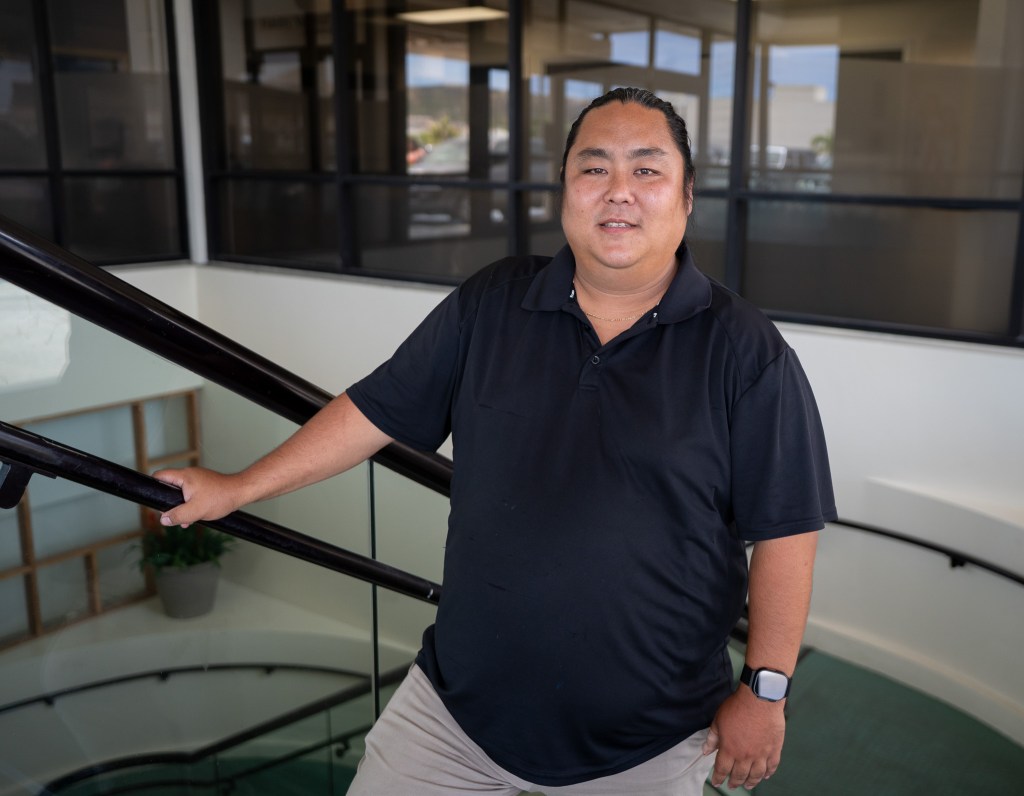
“A lot of these politicians, they’re trying to make everybody happy,” he said. “And that’s not their job. Their job is to represent their communities to the best of their ability.”
Morihara identified crowded neighborhoods as his district’s top issue. He said he decided to run for office two months ago, and that he was inspired to run in part by Dos Santos-Tam’s successful proposal last year to increase sewer fees to pay for federally mandated upgrades — a rising cost Morihara saw as adding to an already untenable cost of living.
“People were barely making it,” he said. “Now, how many people are going to lose their homes? How many businesses are going to go out of business? It’s going to exacerbate the homeless problem.”
Morihara thinks the city is already spending lots of money — billions of dollars — on the upgrades, and that it might as well make it state-of-the-art to fend off future upgrades and ensure it can handle Honolulu’s growing population.
Won’t that cost ratepayers even more money to upgrade?
“Just because it handles more,” Morihara said, “doesn’t mean it’s going to cost more … I’m trying to think of a good example that you can double something without increasing its cost.”
He wants the city to look at getting federal funding to pay for these upgrades.
The federal government did help local governments pay for them when it passed the Clean Water Act in 1972. But some coastal cities, including Honolulu, successfully asked the Environmental Protection Agency to waive the requirement for them, saying the ocean’s immensity can dilute the sewage. Now, the EPA no longer takes these waivers, and cities are left to cover the cost of the upgrades themselves.

Morihara has a checkered past.
He had a temporary restraining order against him that just expired from a woman named Trina Nguyen, whose husband is a sibling of Morihara’s fiancée.
The court files are confidential. But Morihara said the TRO, which was filed for in May 2023, arose from a dispute in which Nguyen’s husband, who she filed for divorce from this past April, vandalized Morihara’s fiancée’s house.
Morihara’s fiancée was upset, he said, and then Nguyen came out and threatened her. Morihara got defensive.
“You need to calm down,” he remembers telling Nguyen. “Because if you touch her, I’m going to get upset.”
Nguyen took that to be a threat, and a judge granted her a TRO. In an email, Nguyen said she was upset with Morihara’s fiancée since she had taken a necklace from Nguyen’s husband. She said she saw Morihara with a gun a few days later. In an interview, Morihara said the necklace had been given voluntarily, and he denied that he has a gun.
“I don’t even know where you would buy one to begin with,” he said.
He also owes over $2,000 in unpaid property taxes for a property on the Big Island, which he said he’s working to pay off, and he received a criminal written complaint in 2015, when he was in his late 20s, for harassing a minor.
“He was led to believe something, and he showed up at my neighborhood, and then hit me with a car, and then I went to talk to his parents about it,” Morihara said about the incident. He said the harassment allegation came from him saying “fucking haole” when he was hit. The case was dismissed.
Hard Decisions On Homelessness
Each candidate said Oʻahu’s homelessness issue needs drastic action, though to different extents.
Dos Santos-Tam said he used to see homelessness as an economic issue, where people down on their luck who end up on the streets can be helped back into housing somewhat straightforwardly. But his thinking has evolved since taking office.
“What has become abundantly clear to me is that homelessness is a trigger for mental illness,” he said. “And once that happens, it’s very, very difficult to get people out … This is economically driven, and then it becomes a mental health crisis, and then it’s on us to deal with both.”
Shubert-Kwock would like to see him expand the enforcement hours of the city’s Sit-Lie Ordinance, which prohibits people — the vast majority of whom are homeless — from sitting or lying in business areas during business hours.
Dos Santos-Tam said that might just push homeless people outside of the areas where the law is in effect. At this point, he said, many people still living on the street have drug or mental health issues.
“The ones that are no longer on the street were the easy cases,” he said. “Now what’s left are the hard ones.”
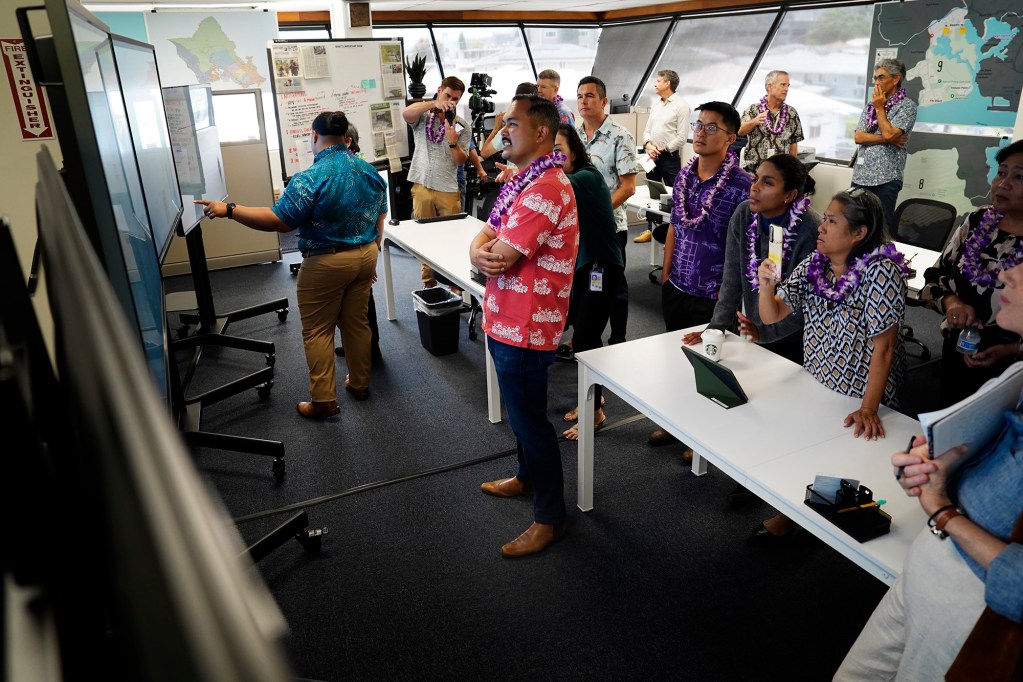
This is an issue he hopes to tackle if he is reelected, saying he plans to work with Honolulu Department of Emergency Services Director Jim Ireland, whose department runs the city’s CORE program that treats unsheltered people in crisis, on ways to transition people out of homelessness.
Morihara also sees the issue as more complicated than simply giving unsheltered people housing, saying he has tried to offer jobs to them while working construction, but that many declined. He thinks they’ll respond better to more forceful tactics – including removing them from the streets and keeping them all in one area, perhaps at Sand Island.
“Push them into these areas, and then help them,” he said. “Put a guard at the gate or something. I mean, they’re going to try to break out. Guaranteed they’re going to try to break out.”
Morihara said it would be tough to make this work, both in the confines of the law and in the confines of Oʻahu’s limited geographic space. Hawaiʻi island’s sprawling lava fields could be one option for where to put them, he said, “but even then that’s hard, because you’re going to have to move them to a different island. Their families might be upset at that.”
Oʻahu has few options, he said.
“There’s the Japanese internment camps that’s probably not being used,” he said, “but we can’t use that. It’s historical.”
His point is he believes homeless people cannot be living on the streets anymore, both for their own safety and for the safety of everyone else, and that solving the issue is difficult.
“I don’t have a good solution for the homeless,” he said.
A Prolific Bill Passer
Constituents generally see Dos Santos-Tam as hardworking.
Kalihi resident Lynette Kumalae, who lives in Oʻahu’s first neighborhood to receive a restricted parking zone, commended Dos Santos-Tam for his perseverance in passing a bill to make the program permanent and set up a structure so other neighborhoods could do the same thing.
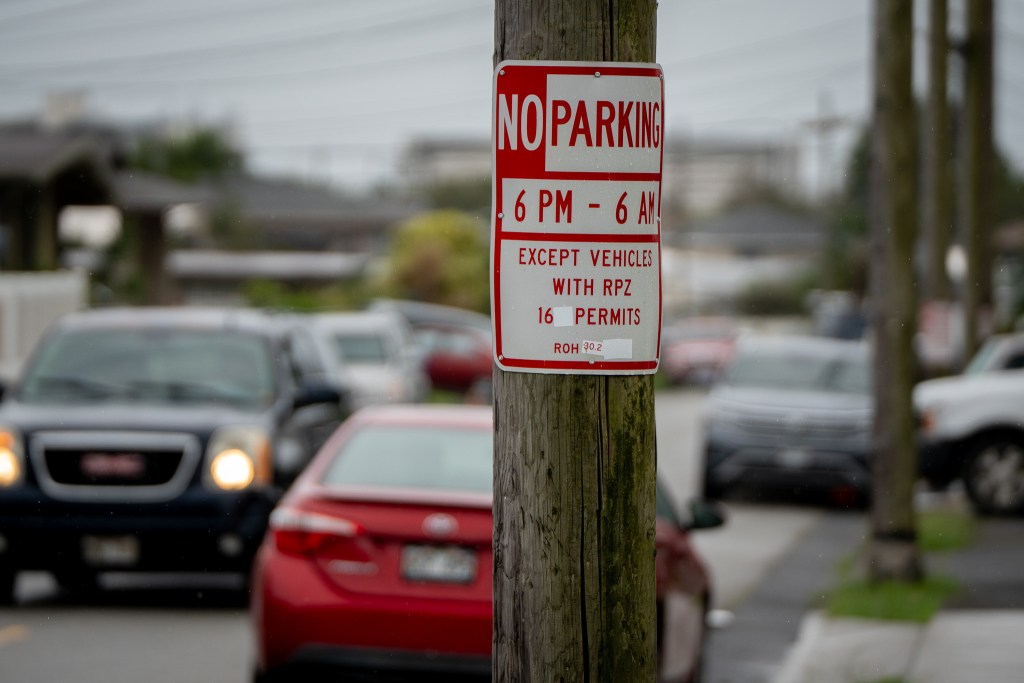
The bill went through about a dozen hearings — double what other bills usually undergo before eventually passing. And once official, the program got off to a rocky start, with neighbors flabbergasted at the cost of an annual permit. But Kumalae thinks the cost is worth it.
“When you look at the benefits where you’re assured a parking stall when you come home from work or so,” she said, “I think it’s a good deal.”
Similarly, he and Cordero revitalized a city program in 2024 to give grants to small businesses that lost revenue because of neighboring rail construction. That program has fallen short of its potential, however, with strict requirements and small amounts given. Its budget dropped from $400,000 last year to $100,000 this year.
Still, Dos Santos-Tam holds the program up as an example of government incrementally upgrading its programs to meet community needs.
“Do I think the program could be made better? Yes,” he said. “But for the businesses that received it, I’m happy for them. And I think in a world where we didn’t do this in the first place, that wouldn’t have been satisfying for me.”
He bemoaned the tendency of Hawaiʻi politicians to commission study after study rather than passing legislation, even if imperfect. Many of his bills simply clean up outdated language in the Honolulu Revised Ordinances.
In one recent video he posted on Instagram from a Kapolei roller rink, he explained that an old law forces skating rinks to be closed between midnight and 8 a.m.
“Honolulu’s small businesses already face enough challenges,” he said in the Instagram caption next to an ice cube emoji. “They should not also have to navigate outdated rules that no longer make sense.”
Skating rinks could host 24-hour skate-a-thons, he said, or even all-night alcohol-free events for graduating high schoolers.
“Sometimes these small things lead to bigger conversations,” he said in an interview.
Dos Santos-Tam said he believes in tackling problems proactively. He said self-driving cars and autonomous delivery robots, like those seen in cities in California, will be in Honolulu “sooner than we think,” and that he’s already thinking about how to regulate where they’ll be allowed to go.
His bill requiring naloxone in every establishment that serves alcohol — treating naloxone as a safety measure almost on par with fire extinguishers and automated external defibrillators — made Honolulu the first city with this requirement in the nation. If reelected, he said he plans to look more into regulating drugs that are growing in popularity like the tranquilizer xylazine and the herbal extract kratom that currently have no restrictions on them in Hawaiʻi.
Common wisdom in legislative bodies is to pick one or two causes to champion and focus your energy there, an approach Dos Santos-Tam said he expected he would take in the City Council. But he’s since decided that’s too limiting a view.
“As it turns out,” he said, “you as a council member have incredible power to make a bunch of difference in the community.”
CORRECTION: A previous version of this story misstated when the candidates will be on the ballot. They will both be in the November General Election.