Denby Fawcett: When A Shark Comes To Your Neighborhood
Shark bites are uncommon on Oʻahu, despite it having the state’s largest population.
June 16, 2026 · 7 min read

About the Author

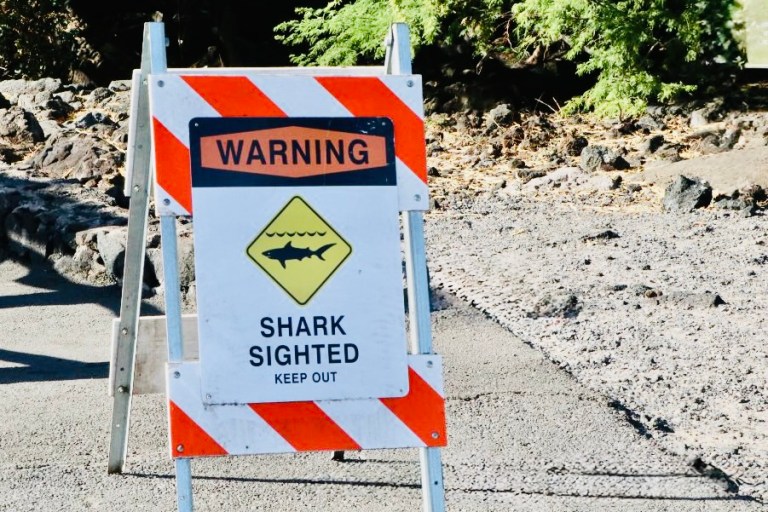
Hawaiʻi’s most recent shark bite happened at Cromwell’s, the beach just below my house. The shark bite got me wondering about the latest scientific information about encounters between sharks and human beings. Are shark bites becoming more common? And what have scientists discovered to help us avoid them?
It’s fascinating that so many people are in the ocean in Hawaiʻi all the time — swimming, kayaking, snorkeling and surfing — yet shark-human encounters remain exceedingly rare and are almost always non-fatal. Statewide, the number of shark bites hovers at around three to four a year.
The incident in my neighborhood happened May 30 when surfer Koa Smith was bitten at Kaikoʻo’s surf break off of Kaʻalawai Beach, popularly known as Cromwell’s, by what he believes was an 8-foot Galapagos shark. The shark tore a 10-inch gash in his left leg and left a 5-inch laceration across his right foot.

Ideas showcases stories, opinion and analysis about Hawaiʻi, from the state’s sharpest thinkers, to stretch our collective thinking about a problem or an issue. Email news@civilbeat.org to submit an idea or an essay.
After two surgeries, including a skin graft and a week in The Queen’s Medical Center, the 38-year-old father of two is home and expected to make a full recovery. When I spoke to him by phone Friday, he said when the shark bit him it was more confusing than scary.
“It felt like something had grabbed on to my ankle and was pulling hard. I didn’t know I was injured until I turned my head back and saw the shark and my legs. There was not much pain. Only after I was in the ambulance did I start to feel it,” Smith said.
He is matter-of-fact about the incident. “When you spend a lot of time in the ocean, something like this just happens,” he said.
Carl Meyer — an internationally recognized marine biologist from the University of Hawaiʻi’s Institute of Marine Biology Shark Research Lab — says Smith’s encounter appears to have been a case of simple bad luck.
It was more a question of Smith being in the water waiting to catch a wave at the exact same time as a shark was going about its usual business of investigating the environment, looking for favored prey.
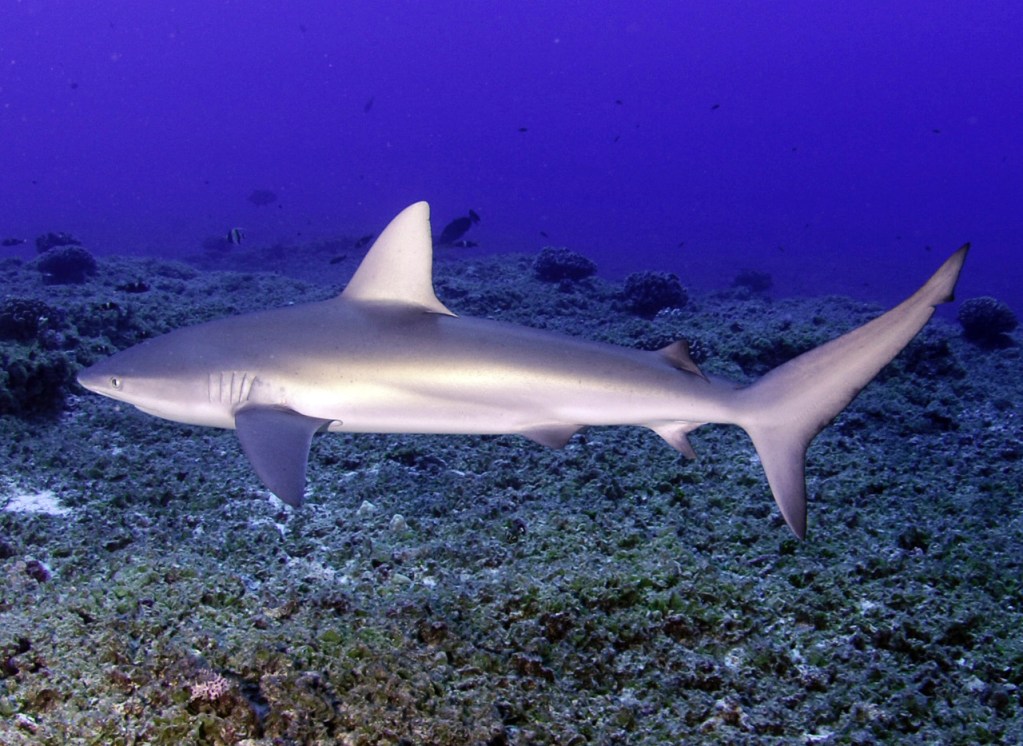
Meyer says sharks tend to go for energy-rich foods, especially prey high in fats and oils. “Tiger sharks, in particular, have an unusually broad and flexible diet which suggests they are naturally inclined to investigate unfamiliar prey,” he says.
The trouble is if a shark takes an investigative bite of unfavored prey like a human its very sharp teeth can inflict great damage to the human.
Why are shark bites so uncommon on Oʻahu, despite it having the state’s largest population? Meyer says it may be because the areas most used by tiger sharks don’t overlap much with the places where residents routinely swim and surf. Kahuku Point is a known tiger shark gathering area on Oʻahu, but you don’t hear about shark-human encounters at Kahuku Point because relatively few people enter the water there.

Maui historically has the largest number of shark bites of all the Main Hawaiian Islands because tiger sharks are attracted to the extensive insular shelf that extends around much of West Maui which happens to be where most people like to swim and surf. Maui’s insular shelf stretches from shoreline out to depths of 600 feet.
The most dangerous sharks in the world are white sharks, tiger sharks and bull sharks. Tiger sharks are the ones that bite people in Hawaiʻi most frequently. White sharks are rare in the islands and bull sharks do not exist here at all.
Sharks spend their lifetimes searching for food, not stalking humans like the vengeful monsters depicted in the 1975 movie “Jaws.” Interestingly, on the good side, the misrepresentations in “Jaws” caused a whole generation of budding scientists to become marine biologists. On the bad side, the movie has made hundreds of people scared to death of sharks.
Myths about sharks continue to abound. One myth I have believed all my life is the danger of getting bitten by a shark is greatest at dawn or dusk.
Meyer says most shark bites in Hawaiʻi occur in broad daylight between 10 a.m. and 4 p.m., not at dawn or dusk. This state’s shark Incidents database supports Meyer’s point.
Adam Wong, an education specialist with Department of Land and Natural Resources Division of Aquatic Resources, has been tracking shark incidents in Hawaiʻi for the list since the mid-1990s. In addition, it has reviewed all known cases in the islands going back to the late 1700s.
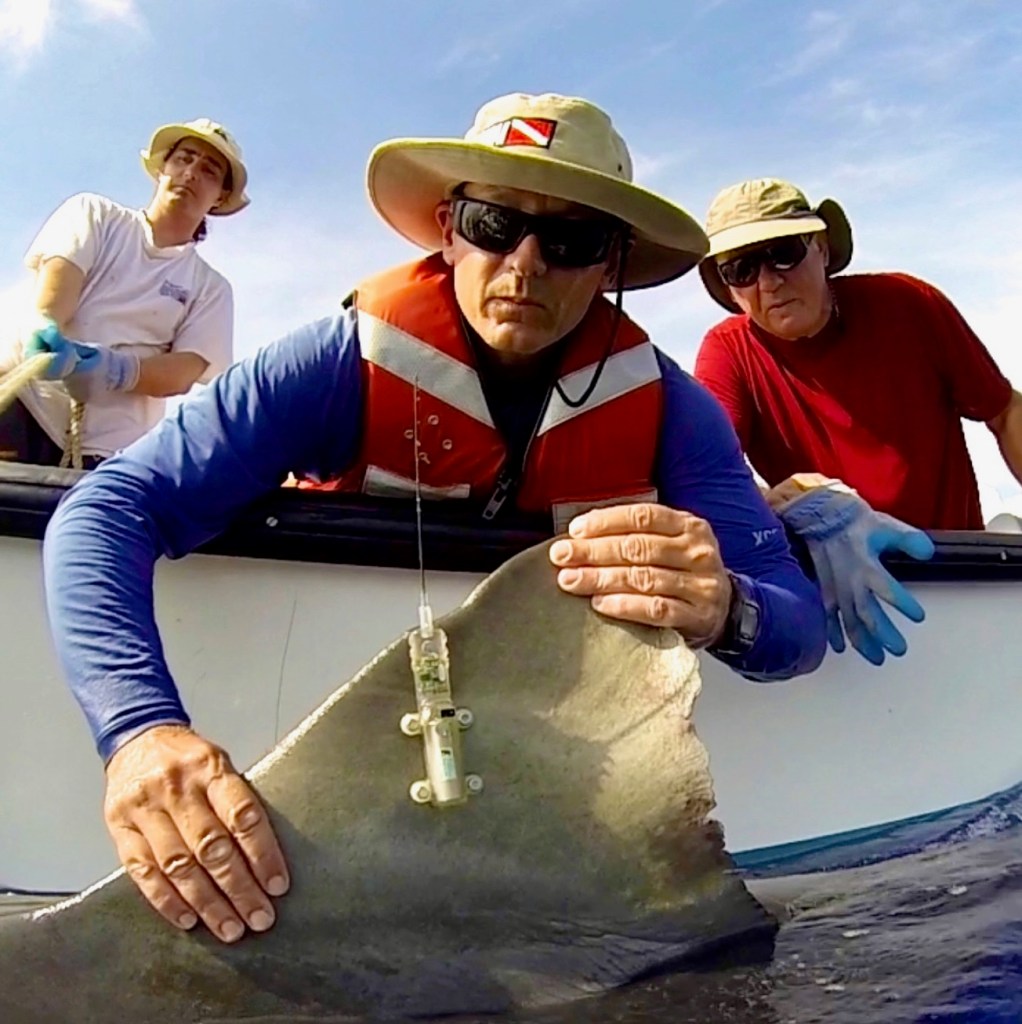
So far this year there have been two shark incidents in the state including Koa Smithʻs injury. In March, a Maui couple reported a tiger shark repeatedly bit their kayak about a mile off of Olowalu.
The state’s incidents list includes shark bites of kayaks and surfboards as well as human injuries and deaths. Wong says patterns revealed by the list show shark bites occur more frequent in muddy, turbid water and most often happen in daylight, not when it’s dark.
In recent years, the incidents list shows shark injuries to people participating in “swimming with the sharks” tours. DLNR categorizes these as “provoked incidents,” meaning people are putting themselves intentionally in close contact with sharks, sometimes bitten when they try to pet a shark or feed it.
Meyer says it is only a matter of time before someone gets killed during a cageless shark encounter tour.
“It is a numbers game: While the absolute risk of being bitten is small, it is not zero,” he said. ‘Many tours operate every day without incident, but the absence of a physical barrier between sharks and people, combined with the sheer volume of cageless tours, makes serious incidents a matter of when, not if. Tours that use cages are much safer.”
Meyer says another falsehood about sharks is what he calls “the myth of mistaken identity” that the animals bite people because they mistake them for favored prey like turtles or seals.
“That’s pure nonsense,” he says.
Meyer and scientist Eric Clua challenged the “mistaken identity” notion in a 2023 scientific paper. They wrote: “Simply stated, sharks don’t make ‘mistakes’ but instead continually explore their environments and routinely investigate novel objects as potential prey by biting them.”
As for safety advice, Meyer says to swim, snorkel and surf with others. “This decreases the odds of being bitten and increases the chances of favorable outcome should you be bitten,” he says. If an injury does occur, companions can help get a victim ashore and summon aid far more quickly than someone alone in the water.
Koa Smith says he plans to follow the same advice: Donʻt surf alone.
He says his doctor tells him he can be back in the water again any time from six weeks to four months from now. He says Cromwell’s remains a favored spot where he looks forward to catching waves again on the Kaikoʻo’s break.
“The chances were so low that I got bitten in the first place,” he said. “It would be crazy if it happened again.”
His wife, Dennae, calls him “the most unlucky lucky person there is.”
“Unlucky because he was bitten but lucky because he did not lose the use of his leg.”
 Sign up for our FREE morning newsletter and face each day more informed.
Read this next:

Local reporting when you need it most
Support timely, accurate, independent journalism.
Honolulu Civil Beat is a nonprofit organization, and your donation helps us produce local reporting that serves all of Hawaii.
ContributeAbout the Author