

Experience Or New Energy: Case Squares Off Against Keohokalole for Congress
U.S. Rep. Ed Case, who is seeking a fifth consecutive term, faces his most challenging primary race since returning to Congress in 2018.
U.S. Rep. Ed Case’s pitch to voters in the upcoming August primary is simple.
Consider just one of his online ads titled “Seniority Matters.” In it, Case alludes to his 12 years in Congress and the fact that he sits on one of the most powerful financial committees in the country, appropriations, where each year he directs billions of dollars in federal spending, including to Hawaiʻi.
With a single sentence delivered straight to camera he sums up his candidacy.
“If reelected,” he says, “I’ll move to the top 25% of House seniority, expand my role on our powerful House Appropriations Committee, and increase my ability to just get stuff done.”

Case, a Democrat, is seeking his fifth term representing Hawaiʻi’s 1st Congressional District, which covers urban Oʻahu from Hawaiʻi Kai to ʻEwa. But if he’s to return to Washington in 2027 he’ll need to stave off a challenge from 42-year-old state Sen. Jarrett Keohokalole, who’s now his main opponent in the contest.
Case was once thought to have an easy path to reelection when it was a three-way primary between him, Keohokalole and state Rep. Della Au Belatti. But Belatti upended expectations when she announced last month she was running for lieutenant governor instead. That decision cleared a path for Keohokalole to sweep up her supporters and mount a more direct challenge against Case.
Because Hawaiʻi is a heavily Democratic state, whoever wins the primary will very likely represent the islands in Washington.
In many respects, the race between Case and Keohokalole is less about distinct policy differences and more about a clash of generations and style with Case, 73, leaning on his seniority, experience and record of delivering federal dollars to Hawaiʻi versus Keohokalole, a full-time legislator who casts himself as part of a younger, more progressive cohort that wants to bring a louder and more reliably partisan voice to Washington.
Keohokalole’s argument is similar to one Case pushed 20 years ago when he upset the Democratic establishment by abandoning a safe seat representing Hawaiʻi’s 2nd Congressional District to run against U.S. Sen. Daniel Akaka, a decision that ultimately made him an outcast in his own party.
The stakes, though, are far lower for Keohokalole because even if he loses he’ll get to keep his seat in the Senate since he’s not up for election again until 2028. Case also doesn’t have the same level of adoration from Hawaiʻi voters as Akaka did, which means it’s unlikely the state’s political establishment will hold the same kind of grudge if he loses.
Colin Moore, a political scientist at the University of Hawaiʻi, said the race is a microcosm of what’s been happening throughout the Democratic Party, particularly on the mainland, as younger candidates pushing progressive ideals seek to unseat established incumbents who traditionally lean toward the center.
“There’s increasing generational frustration that’s been happening for a number of years, but now it’s arrived in Hawaiʻi,” Moore said. “And Ed Case is probably the most vulnerable of the members of the delegation to an electoral challenge.”
Purity Tests and Puppets
For Case, this is the first time he’s faced a serious challenge since returning to Congress after winning a crowded primary in 2018 and sweeping away his token Republican opposition. This year only a single GOP candidate, Adriel Lam, has filed to run against him in the November general election. Lam is a U.S. Army retiree who lost a GOP primary bid in 2024 for U.S. Senate. He has not reported raising any money and describes himself on LinkedIn as a “Neighbor, Citizen, Friend.”
Case has positioned himself on key committees, most notably appropriations, where he gets to decide how the federal government spends its money. It’s one of the most sought after positions in Washington and one that has long been relevant for Hawaiʻi, which is among the least populated and most isolated states in the country yet often punches above its weight when it comes to its share of federal dollars.
But Case has sometimes angered Democrats for votes that veered over party lines and were deemed unnecessary given he’s a Democrat in a deep blue state where Republicans have about as good a shot at flipping a congressional House seat as they do filling their tanks with $3 gas on Molokaʻi.
In 2021, for instance, he upset progressives when he teamed up with his fellow moderates in Congress to block Democrats’ $3.5 trillion spending package that was a cornerstone of then-President Joe Biden’s Build Back Better agenda, arguing among other things that it was too expensive. At the time, he was one of only a handful of Democratic holdouts and the only one not on the frontlines of the GOP’s efforts to retake the House.
More recently he drew criticism from some constituents as one of only four Democrats to support the SAVE Act, a strict voter ID bill pushed by Republicans and backed by President Donald Trump that experts warned could make it harder for millions of Americans to cast ballots. Case initially defended his April 2025 vote, saying that some of the allegations were overstated. But he’s opposed subsequent iterations, including a more extreme version, known as the SAVE America Act.
Keohokalole used one word to describe Case’s vote with Republicans on the SAVE Act: “Lame.” He also pointed to the fact that Case was the only member of Hawaiʻi’s four-person delegation to not sign a letter condemning federal immigration tactics they said were fostering “fear and terrorizing communities” in the islands.
Both decisions, Keohokalole said, show that Case has fallen out of touch with the issues that Hawaiʻi residents care about.
“I don’t think it’s unfair for voters to ask what they’ve gotten out of his representation,” Keohokalole said. “The voters don’t really have to consider that question unless there’s a viable challenge to an incumbent.”
Case has a different view of the race. He said he’s part of a high-functioning delegation that shouldn’t be disassembled during a critical time for the country — and the islands.
He bristled at the notion that his record doesn’t reflect Hawaiʻi’s values or that his career should be defined by a handful of votes. He also said he doesn’t subscribe to ideological purity tests or bend to the will of outside groups that seek to control legislators who might not be with them 100% of the time.
He’s taken more than 6,000 votes dating back to 2003, so Case said it’s easy for his detractors to pick the ones they don’t like. But at the end of the day he still votes with Democrats 97% of the time.
“Do you want a puppet?” Case asked. “Or do you want somebody that actually tries to get problems solved and actually tries to find solutions that will actually work for the country?”
Establishment Pick? Or AOC?
Keohokalole presents himself as a more reliable Democrat who will better represent Hawaiʻi’s working class voters, even though like many of his legislative colleagues, he is a career politician who holds no outside employment. He was born in Honolulu and raised in Kāneʻohe where his family has lived for generations. His father was a construction worker, his mother a nurse.
Case, meanwhile, was born and raised in Hilo on the Big Island and is the scion of a family of lawyers and sugarmen. His siblings and cousins have found their own success in business, law and public service. His sister Suzanne Case, for instance, is the former director of the state Department of Land and Natural Resources while one of his cousins, Steve Case, is the billionaire co-founder of AOL. Case himself had worked for decades as a lawyer, including for Outrigger Hotels.
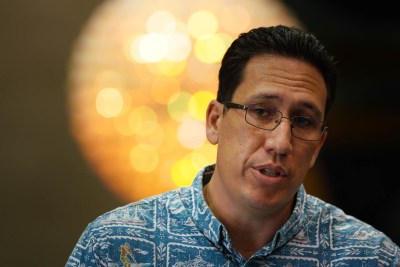
Keohokalole studied journalism at the University of Hawaiʻi and received his law degree there in 2013. A year later he was elected to the Hawaiʻi House of Representatives and served two terms before winning a seat in the state Senate in 2018. Throughout his legislative career, Keohokalole has represented districts in Windward Oʻahu and each of the races he won were for open seats, meaning he has never had to challenge an incumbent until now.
Over the last several years, Keohokalole has established himself as an increasingly vocal figure in the Senate, where he leads the Commerce and Consumer Protection Committee and is a co-chair of the Native Hawaiian Caucus.
After the Lahaina fires in 2023, he was one of a handful of senators who balked at a proposal to allow the Public Utilities Commission to cap future liability for Hawaiian Electric Co. in the event of disasters, calling it a “blatant corporate handout.” The year before he helped shepherd legislation that gave $600 million to the Department of Hawaiian Home Lands to build homes for Native Hawaiian beneficiaries, and at one point even proposed putting a casino on agency land.
One of his signature accomplishments was passing legislation designed to stabilize the condominium insurance market after a series of disasters limited options and increased premiums for Hawaiʻi residents. When Gov. Josh Green signed the bill into law, Keohokalole described the legislation in a press release as a “lifeline for thousands of Hawai‘i residents crushed by soaring insurance costs.”
“The thing that distinguishes me from everybody else in the race,” Keohokalole said in an interview, “is that I can get big things done.”
When Keohokalole talks about what he wants to do in Washington, he offers broad proclamations about reversing Trump’s tariffs, expanding access to healthcare and building more affordable homes, but few details about how he plans to tackle those issues as just one of 535 members of Congress.
For instance, when pressed to provide one idea about how to make life more affordable in the islands, Keohokalole initially struggled before landing on stopping the war in Iran, which has led to increased costs for fuel and other goods. Keohokalole similarly wouldn’t provide much insight into the types of committee assignments he might seek if ultimately elected, saying he didn’t want to limit himself to one specific pathway.
While he didn’t articulate a detailed legislative strategy, Keohokalole said that he would bring a more vocal, progressive style to the job, which he said distinguishes him from Case.
“I like to run to the hard stuff because the hard stuff is important.”
State Sen. Jarrett Keohokalole
He said he’d like to model his approach after politicians like U.S. Reps. Alexandria Ocasio-Cortez, Ro Khanna and Pramila Jayapal, who have used their voices on the national stage to push their liberal priorities. He specifically mentioned Khanna working with Kentucky GOP Rep. Thomas Massie to force the release of the Jeffrey Epstein files. Even Marjorie Taylor Greene, the GOP firebrand, secured a committee chair before leaving Congress, he said, a distinction that so far has evaded Case.
“There are examples of legislators who are less tenured than Ed, who have used their voice to make impactful changes up there,” Keohokalole said. “So I think part of it is the priorities you’re focusing on, and then the other part of it is the energy that you’re putting into advocating on behalf of those issues.”
So far, Keohokalole has been successful at coalescing a base of support that includes those who have long sought to oust Case, including progressive groups like Indivisible, labor unions and those with ties to Hawaiʻi’s shipping industry.
When Keohokalole first announced his candidacy last year, he was flanked by prominent politicians, activists and party insiders, including former Hawaiʻi Gov. Neil Abercrombie, and retired First Hawaiian Bank executive Walter Dods, who was U.S. Sen. Dan Inouye’s closest confidant when he was alive and one of the most influential politicians in the state.
He’s kept pace in the money race as well, and as of March 31 had raised nearly $600,000, with significant contributions from those tied to Hawaiʻi’s political establishment, including large donations from political action committees, including from Alexander & Baldwin and two of Hawaiʻi’s main shipping companies, Matson and Saltchuk Resources.
Case, on the other hand, had nearly $900,000 in the bank at the end of March to bolster his campaign. Some of his largest donations have come from groups representing various business interests, including sugar, defense and space exploration.
Big Money Vs. ‘Big Things’
Case said he believes he represents the mainstream of Hawaiʻi more so than Keohokalole who he describes as offering the “extreme perspective.” He portrays Keohokalole as an untested candidate backed by ideological groups, such as Indivisible Hawaiʻi, that demand “100% purity.” On the issues, Case said his opponent “talks in great generalities” and has offered “nothing substantive” about what he would do better if elected to Congress.
Case, meanwhile, keeps a running tally of the the votes he’s made, the letters he’s written and the bills he’s co-sponsored, a list he provided to Civil Beat. It included 17 documents, each with its own description, such as actions he’s taken in opposition to the Trump administration and efforts he’s made to support the LGBTQ+ community.
The total number of pages: 457.
Case puts a lot of effort into keeping his constituents informed, whether it’s hosting town halls or writing letters about difficult votes he’s taken, such as on the SAVE Act or impeaching Donald Trump.
With Congress increasingly divided, Case said he worries about the parties “drifting off to extremes,” particularly when it comes to serving as a check on the president. He said he tries to offer a measured approach to legislating and holding the administration accountable that goes beyond just “screaming and swearing and contributing to polarization.”
Where he said he exerts the most control is through the purse strings.
Case describes his eight years on the House Appropriations Committee as the “single biggest offer I have to our Hawaiʻi.”
“If you want to translate that into real hardcore reality,” he said, “that’s worth billions of dollars every year.”
He highlighted a series of crises that occurred since returning to office — from the fuel spill at Red Hill to the Covid-19 pandemic to the Lahaina wildfires — and the huge sums of money, totaling more than $11 billion, that he and the rest of Hawaiʻi’s congressional delegation were able to secure in response. He’s also used his position to help fund various Native Hawaiian programs that the Trump administration has targeted for elimination, such as those supporting healthcare and education.
Right now two of Hawaiʻi’s four-person delegation are assigned to appropriations – Case and U.S. Sen. Brian Schatz. That tandem is helpful when steering crisis funding to the state and protecting at-risk programs, Case said, because it means members of both chambers can advocate for Hawaiʻi’s interests. Giving that up, he said, would make for a “very heavy lift.”
Keohokalole, however, doesn’t buy the argument. He sees Case’s newsletters to his constituents boasting of his accomplishments and said it’s often just a “continuous stream of a million here, a million there.”
“Those are all really important and significant appropriations for the groups that are receiving them,” Keohokalole said, “but is that really all we’re going to get when we need really big wholesale change and direction change in the country?”
Keohokalole summarized Case’s overall record as that of someone who is ”managing existing systems that don’t work” and said Hawaiʻi needs someone like him who can “make big things happen and move with urgency.” He wouldn’t address the ramifications of what it might mean for a small state like Hawaiʻi to lose its place on the House Appropriations Committee, only saying that there are “lots of different ways to be effective, but there are many more ways to be ineffective.”
In general, Keohokalole leaned into his past accomplishments as a state legislator. And the one he reached for most frequently was Senate Bill 2471, a bill recently signed into law by Gov. Josh Green that’s designed to curb the influence of corporate money in politics by directly challenging the U.S. Supreme Court’s ruling in Citizens United. The Hawaiʻi attorney general opposed the bill saying it wouldn’t withstand constitutional muster, but Keohokalole said he was able to work around that to get it passed anyway.
There are still plenty of questions about whether SB 2471 will do much of anything. For one, it doesn’t go into effect until next year when no elections are scheduled, and many observers expect there to be legal challenges before it ever gets to decide who can and cannot spend in Hawaiʻi’s elections. Just last week the Grassroot Institute of Hawaiʻi filed the first lawsuit challenging the law, saying it violates the First Amendment.
“I like to run to the hard stuff,” Keohokalole said, “because the hard stuff is important.”
Case questioned whether Keohokalole should be claiming as much credit as he has for the bill, considering that the version that passed was originally introduced by state Sen. Karl Rhoads and it took the support of many other legislators, including Belatti, to get it signed into law.
“I think he kind of jumped on a horse that was winning already,” Case said.
Affordability And The Jones Act
Both candidates treat affordability as the defining domestic issue confronting Hawaiʻi’s families.
Case calls the cost of living his “No. 1 priority” and says that it’s an issue of both high prices and incomes not keeping up. His strategy in Congress is to focus on specific barriers to affordability and apply targeted policy tools to mitigate them. By pulling on these levers, he said, he hopes to offer at least some relief.
“You have to break down the drivers of the cost of living and then ask yourself what can you do about each of those drivers,” Case said, noting that this is the issue he hears most about from his constituents. “Otherwise you just get caught in this very nebulous, very unproductive circle of bemoaning the high cost of living without actually getting into practical solutions, which is what I’m all about.”
Case ticked off a handful of policy positions he’s taken that aim to make life more affordable for island residents, such as opposing Trump’s tariffs and supporting renewable energy, caps on drug prices and incentives to build more affordable housing.
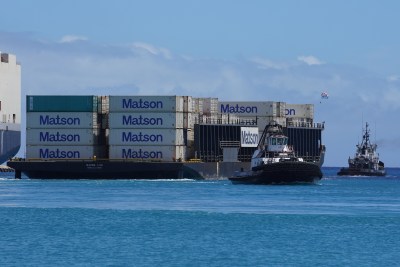
But the issue at the top of his list — and the one that makes him stand out among Democrats in Hawaiʻi, including Keohokalole — is his opposition to the Jones Act, a 106-year-old maritime law that requires goods shipped between American ports to be carried on vessels that are U.S.-flagged, built, owned and operated.
Case described the Jones Act as the single biggest isolated driver of higher costs in the islands because it creates a monopoly on Hawaiʻi shipping lanes. He cited a Grassroot Institute commissioned study from 2020 that found the average added cost to Hawaiʻi families is about $1,800 a year.
“That transcends right across all components of our economy: food, gas, housing, fertilizer, agriculture products, everything,” he said. “So if you want to talk about the cost of living let’s talk about the Jones Act.”
Case has been pushing for an exemption to the Jones Act for Hawaiʻi going back to his first term in Congress. But it’s been a lonely battle as every other member of the islands’ delegation supports the law.
Keohokalole has joined that chorus. When speaking of the Jones Act, Keohokalole relies on familiar arguments that center on national security and reliability.
“I’m for the Jones Act, especially in the moment we’re in,” Keohokalole said. “With the instability around the world, moving away from it and into a place where foreign nations deliver our toilet paper and Spam is a very risky proposition. Hawaiʻi cannot guarantee delivery from foreign nations, like China.”
While Case has argued that other ally countries, such as Japan and Korea, could help fill the void, Keohokalole dismisses that as “such a 2006 thing to say.”
“It presumes a world where America is still the supreme power on earth, and all the countries around the world will just do what we ask,” he said. “That’s not the world we live in anymore.”
The bigger problem, he said, is that many ships traversing the Pacific bypass the islands because there’s no longer a manufacturing base, which is the part of the equation that should take precedence.
Keohokalole also downplayed the significance of any savings from eliminating the Jones Act, bringing up Trump’s recent waivers of the law to lower gas prices in response to spikes caused by his war in Iran. Those waivers, Keohokalole said, haven’t seemed to have had any noticeable effect in the islands.
“How long are we going to advocate for this and go absolutely nowhere on it before we try something different?” Keohokalole asked.
Case countered by saying it’s important to consider the messenger and those who are spending the most to back him up, noting that Keohokalole has received significant campaign contributions from the shipping industry that profits off the Jones Act. Those interests, he said, “want to shut me down.”

