

Gov. Green Saves Option To Go Green With Solar Credits In 2026
Executive order preserves the solar energy tax credit for commercial and industrial uses that lawmakers had capped.
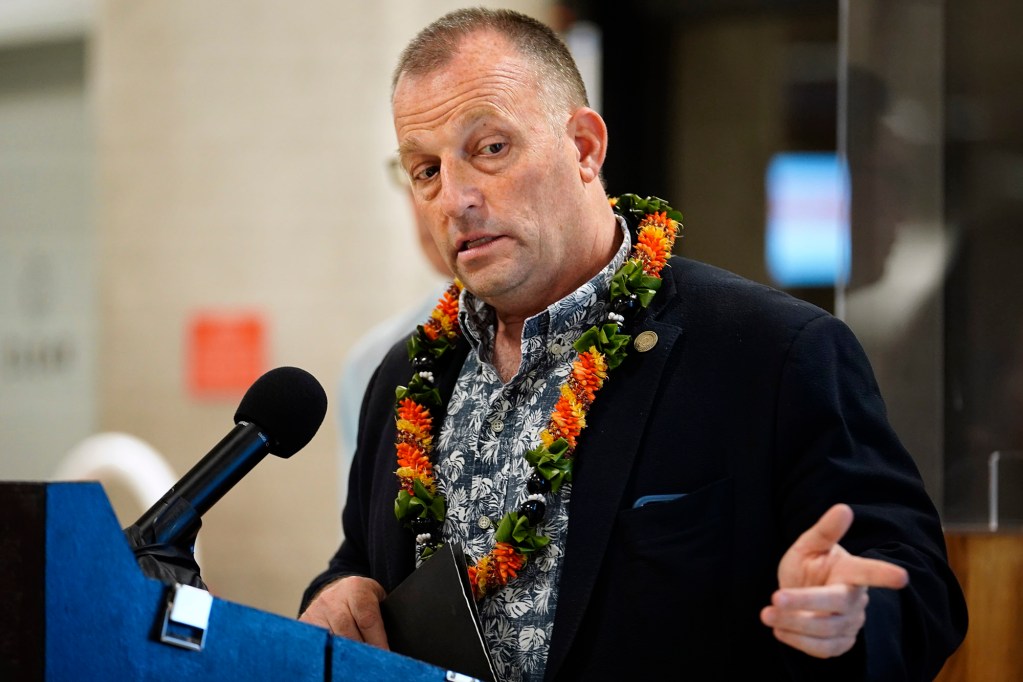
Gov. Josh Green on Friday extended the state’s solar tax credits for 2026, providing relief to hundreds of commercial and industrial projects that had been imperiled by the Legislature’s decision to abruptly cap the credits this year before eliminating them in 2030.
Developers had previously crafted deals to build solar electricity systems for a range of commercial users, including condominium complexes, health clinics, small businesses and hotels. In many cases, those credits were a crucial part of plans to finance the projects.
But the Legislature’s move to cap the credits at $40 million annually – and apply the cap retroactively to 2026 – shocked the solar industry, which said investors had begun pulling out of the deals. The industry said 256 projects valued at $436 million in the pipeline for this year were at risk.
Officially called the Renewable Energy Technologies Income Tax Credit, the solar tax credit lets taxpayers subtract 35% of the cost of a solar system from their income tax bills.
Green’s executive order to preserve the credit for 2026 saves projects that were completed or in the works before May 21, although the $40 million cap remains in place for future years until 2030, when the credits will be eliminated. Taxpayers who didn’t complete projects before May 21 will have to show that they had put financing together that relied on the credits.
The order quoted a previous, broad executive order issued in 2025 supporting decarbonization of Hawaiʻi’s economy – which dovetails with a law requiring that all electricity sold in the state be produced with renewable resources by 2045: “Distributed solar energy has been, and will continue to be, a leading contributor to the state’s sustainability and resiliency goals.”
Lawmakers this past session were determined to avoid raising income taxes for residents, and the solar industry subsidies got the ax – or at least a $40 million cap. The most onerous part for the industry was that lawmakers made the cap retroactive until 2026, affecting projects in the works.
“Distributed solar energy has been, and will continue to be, a leading contributor to the state’s sustainability and resiliency goals.”
Gov. Josh Green
The solar tax credit is by far the largest of nine credits the Legislature established to encourage certain industries or economic activities. The state has awarded $1.36 billion in credits since 2006, according to the Hawaiʻi Department of Taxation, including more than $100 million in 2023, according to the department’s most recent data. That compares to $43.5 million in credits to support film and television production.
But the solar industry differs from other industries because state law effectively requires Hawaiʻi to switch to solar and wind over the next two decades. While much of that is expected to come from large solar and wind farms, Green has established a state policy “to maximize distributed solar energy paired with battery storage, with the goal of dispatchable solar generation on every rooftop and parking area on land constrained Oʻahu by 2045.”
Rocky Mould, executive director of the Hawaiʻi Solar Energy Association, applauded the move.
“Families, businesses and non-profits with solar have been able to cut their electricity bills by hundreds of dollars per month,” he said. “With each installation, Hawaiʻi’s grid becomes cleaner and more resilient — community by community, rooftop by rooftop.”
Civil Beat’s coverage of climate change and the environment is supported by The Healy Foundation, the Marisla Fund of the Hawai‘i Community Foundation and the Frost Family Foundation.

