Hawaiʻi Primary Shows There’s Still Hunger For Public Service
High-profile corruption cases and voter apathy have not crimped the desire to run for office.
June 7, 2026 · 8 min read

About the Author

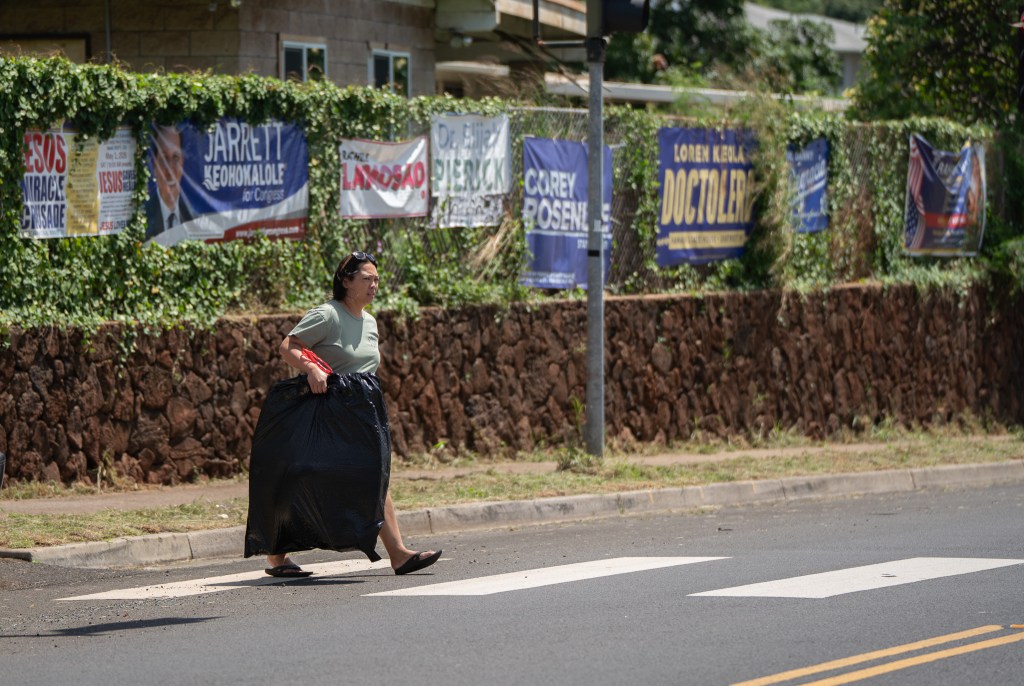
At first blush the August primary election would seem to be a bit of a yawner. Hawaiʻi’s top elected official, Gov. Josh Green, appears so confident of reelection that he’s taking a family vacation June 8-23 rather than spend time campaigning.
It’s true that Green faces only nominal competition in the Democratic primary. But dig a little deeper and voters will find a lot of competitive races across the ballot, especially for county-level offices.
There are a number of significant intraparty challenges, too, with even Republican candidates challenging GOP incumbents.
Even a couple of entrenched Democrats at the state Senate have drawn competitors who are shrugging off the conventional wisdom that incumbents almost always win. That’s good for Hawaiʻi’s democracy.

And, while there are only a handful of Green Party candidates and Libertarians vying for seats in this year’s primary (it’s roughly par for the course historically for third parties in Hawaiʻi, where none of their candidates have ever been elected to the Legislature, governor or to Congress ), there has been an uptick in the number of contenders choosing to run as nonpartisans in a state dominated by Democrats.
Meanwhile, the minority GOP overall is fielding more candidates than it did two years ago, when it managed to get the highest number of Republicans elected to the Legislature since the halcyon days under former governor and party chair Linda Lingle.
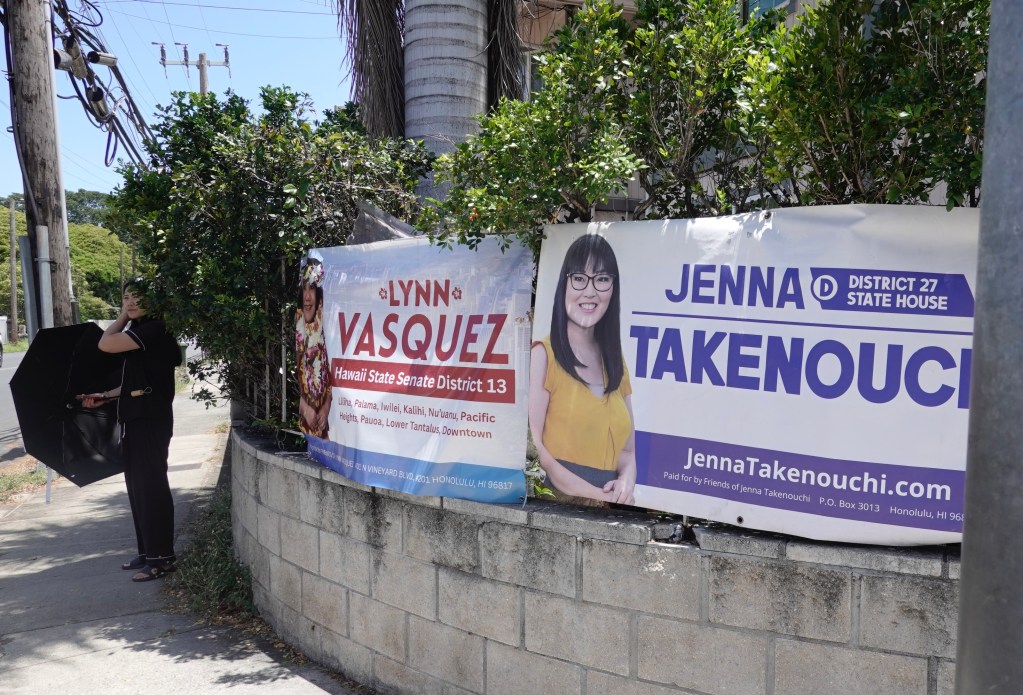
It can be tempting to succumb to cynicism when it comes to Hawaiʻi politics. The 2022 legislative bribery scandal continues to be unresolved and voter turnout remains low.
Here’s my quick takes on who’s running in the Aug. 8 primary. My colleagues and I will be taking deeper dives on key races over the summer as well as sponsoring numerous candidate forums statewide. And watch for our Candidate Q&As, which are already filling up our email inbox.

Challenges To Incumbency
About two dozen incumbents drew no primary challengers this year. That’s not unusual for Hawaiʻi, though, where we usually vote for the same people election after election.
But it’s important to stress that most of the lawmakers getting a free pass are legislative veterans like Senate President Ron Kouchi and House Speaker Nadine Nakamura. Why would anyone on Kauaʻi want to take on those two when they lead their chambers and help bring home a lot of capital improvement project pork?
Despite the power of incumbency, there are several surprising challenges that will reveal whether some have worn out their welcome.
Sen. Donovan Dela Cruz faces Nani Brown for the District 17 seat in Wahiawā while Sen. Donna Mercado Kim is opposed by Christy Kikue MacPherson in the District 14 Moanalua valley seat. Dela Cruz and Kim are two of the most controversial legislators, as anyone who reads Civil Beat knows, and Brown and MacPherson — while long shots — are demanding change.
It’s appropriate to have Dela Cruz and Kim — and all incumbents — explain why they should be reelected. It amounts to a job evaluation by voters.

The Lege does not have term limits, but younger candidates are sometimes emboldened to take on older ones.
Rep. Jackson Sayama, for instance, hopes to appeal to voters wanting a change by challenging Sen. Les Ihara, who has been in office since long before Sayama was born. The voters of District 10 in the greater Kaimukī-Kapahulu area will make that choice.
And it’s not just majority Democrats who have to face voters this year. Former state Rep. Bob McDermott is gunning for GOP Sen. Kurt Fevella, complaining that the ʻEwa Beach lawmaker seems more inclined to go along with Senate majority leaders like Dela Cruz than champion Republican issues.
Just to make things even more interesting, former Rep. Rida Cabanilla Arakawa is in that District 20 GOP primary, too — and she’s a former Democrat.
Speaking of the GOP, it hopes to retain its hold on Oʻahu West Side seats and maybe pick up others. Charlie “Kahealani” Weaver wants to face Rep. Darius Kila in November. But first Kila, a pro at getting himself in the news and one of the more successful when it comes to getting bills passed, has to get past former state Rep. Mike Kahikina in the Democratic primary for District 44 in Nānākuli and Māʻili.
There are also other GOP incumbents who have to fend off primary challengers, like Rep. Kanani Souza, who again faces fellow Republican Sheila Mederios in District 43 (Makakilo-Kapolei). Souza, critics say, seems to side more with Dems than her own party.
Crowded Fields
Open seats in the Lege have also inspired multiple candidates to seek the same office.
With Sayama leaving the House, Derek Turbin, Andrew Phomsouvanh, Jake Takaya Morrow, Angie Knight and Ranell Asuega-Fualaau are all wanting the District 21 seat (St. Louis Heights, Palolo Valley, Maunalani Heights, Wilhelmina Rise, Kaimukī).
Rep. Della Au Belatti’s is bidding to be lieutenant governor (the Democratic primary for LG is among the state’s top contests this summer). Because of that, Ian Ross, Arjuna Heim, Janel Fujinaka and Nathan Kenichi Char are in the Democratic primary for Belatti’s District 26 (Makiki, Punchbowl) while Tony Silva and Robyn McCreary are in the GOP primary.

And in District 28 (Sand Island, Iwilei, Chinatown), incumbent Rep. Cov Ratcliffe has drawn no less than four Democrats opposing him: Tony Nagatani, Ernest Caravalho, Nadia Alves and Reno Abihai. Freshmen lawmakers like Ratcliffe are often especially vulnerable, and in his case he was just appointed earlier this year to replace Daniel Holt.
It is the neighbor island counties, though, that have drawn the greatest interest in local elections. And all the races are nonpartisan, which seems to attract larger fields than partisan matches.
On Maui, for example, nine people hope to knock off incumbent Richard Bissen. The Wailuku-Waiheʻe-Waikāpu council seat (incumbent Alice Lee is stepping down) has five contenders while the Upcountry council seat (incumbent Yuki Lei Sugimura is running for mayor) has four.
The Kauaʻi council features a whopping 26 people (including three current officeholders) vying for just seven seats. Six candidates are also running for mayor.
Parties And Personalities
Speaking of nonpartisan candidates, there are also NPs running for both seats in Congress, four in the race for governor, another in the LG race and three angling for spots in the Lege.
I find it refreshing that these folks dare to run without swearing allegiance to a party, presumably because they don’t wish to be labeled with partisan ideologies.
But it’s a very high bar to win as an NP. Not only do voters have to stick to only the NP ballot instead of moving between the Dem, GOP, Green or Libertarian ballot (primary voters can only vote for candidates of one party, which is stupid, but that’s an essay for another day), but the NP candidates in order to move on to the general have to either receive at least 10% of the votes cast for the office in the primary or get a vote equal to or greater than the lowest vote received by the partisan candidate who was nominated. That’s stupid, too, and does not apply to the major parties.
But, should an NP somehow manage to get into the general and even win, that could shake up one-party dominance and force lawmakers to not just blindly adhere to party principals but to openly and honestly debate ideas.
I don’t believe most voters are politically rigid. They hold various views on various issues. And, while party is determinative, they also vote based on name recognition and whether or not someone is personally appealing.
I think that helps explain why so many former office holders, like McDermott, Cabanilla Arakawa and Kahikina, want back in the game. They want to serve, but they also like being liked and in the public arena. Familiarity breeds familiarity.
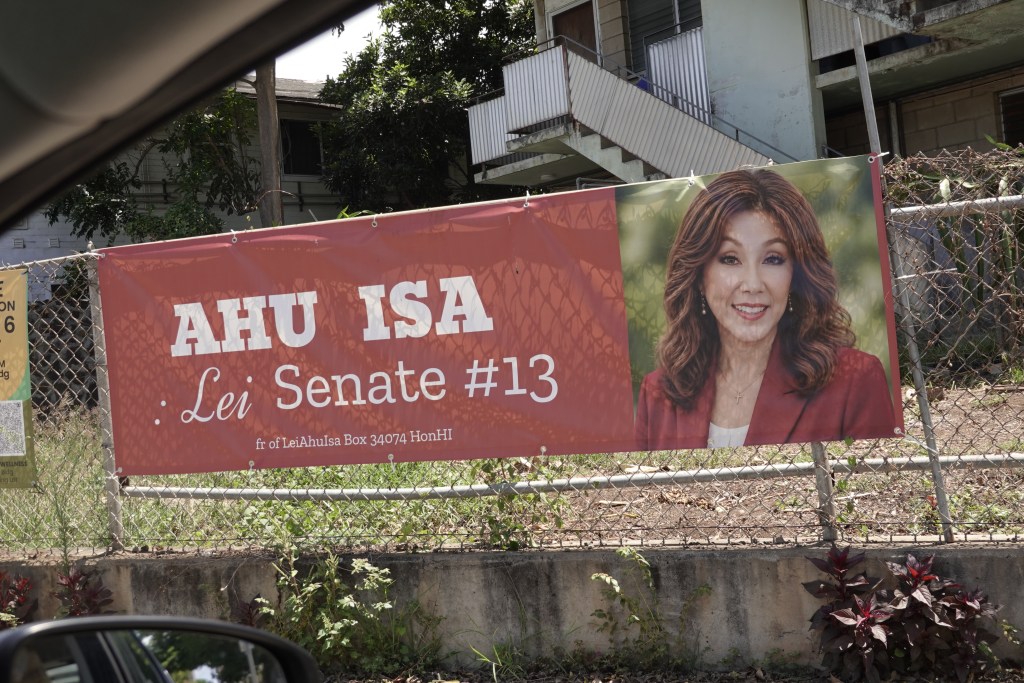
John Mizuno is running for the state House again, and veteran pol Lei Ahu Isa is running for the state Senate (yet another busy race, where four other Dems and a Republican want the seat of the retiring Karl Rhoads). And Trevor Ozawa is once again lined up against Tommy Waters in the Honolulu City Council contest for District 4.
Five of the nine Office of Hawaiian Affairs trustees are up for reelection, and all five are running again this year. Three of those incumbents — John Waiheʻe IV, Brickwood Galuteria and Keoni Souza (he’s Kanani’s brother; hey, it’s Hawaiʻi) — have 11 others running to replace them in the three at-large seats. That pack includes another familiar political name, Ikaika Anderson.
Choices are good. There are a lot of them on Aug. 8. If you don’t like somebody who’s running, express your preference at the ballot box.
Peruse Civil Beat’s unofficial version of the full primary ballot here.
 Sign up for our FREE morning newsletter and face each day more informed.

Local reporting when you need it most
Support timely, accurate, independent journalism.
Honolulu Civil Beat is a nonprofit organization, and your donation helps us produce local reporting that serves all of Hawaii.
ContributeAbout the Author