Hawaiʻi Should Stay On The Path To Clean Energy
Hawaiʻi needs renewable fuels to transition away from oil. Killing the Renewable Energy Technologies Income Tax Credit would stall the industry.
June 5, 2026 · 4 min read


About the Author

Gov. Josh Green faced an impossible choice. The Legislature passed Senate Bill 3125, which bundles a meaningful win for working families with a serious blow to Hawaiʻi’s clean energy future — wrapped into a single take-it-or-leave-it package. He signed the bill. The positives should be appreciated, but the damages need to be undone.
What the bill gets right is preserving income tax cuts for low- and moderate-income households made two years ago, while pausing them for the highest earners and creating a new top bracket. In a state with the highest cost of living in the nation, working families need that relief. That part deserves to stand.
But included in the same bill are two provisions that would dismantle the architecture of Hawaiʻi’s clean energy progress.
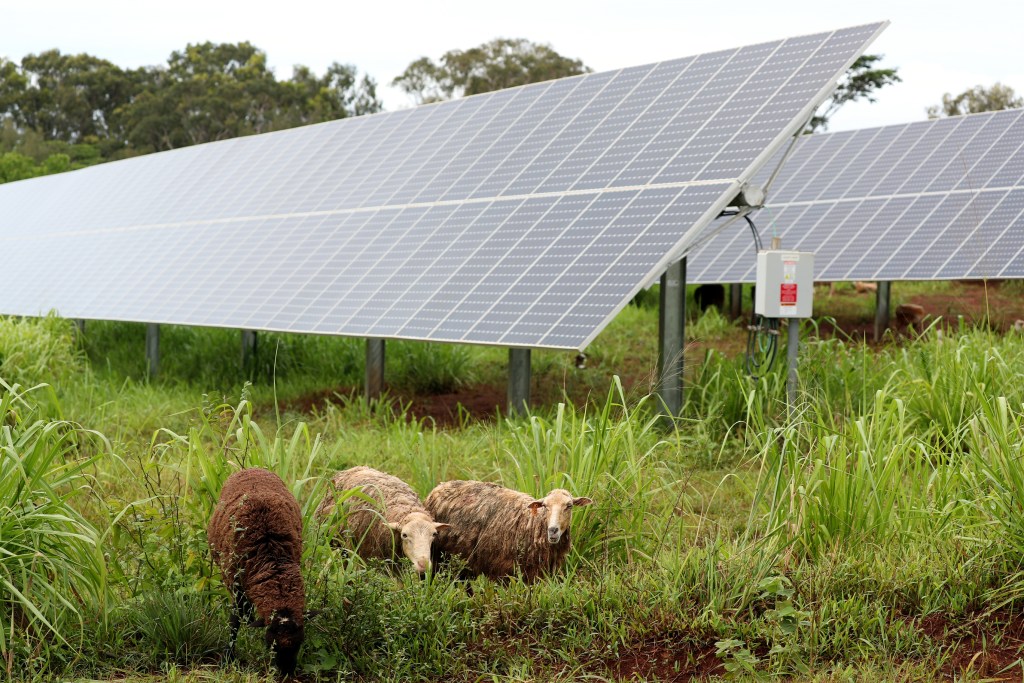
The bill phases out the Renewable Energy Technologies Income Tax Credit— the financial incentive that has made Hawaiʻi the national leader in rooftop solar adoption. This credit matters more now than ever. Congress has eliminated the federal residential solar tax credit, leaving the state credit as the last meaningful financial incentive available to Hawaiʻi homeowners.

Ideas showcases stories, opinion and analysis about Hawaiʻi, from the state’s sharpest thinkers, to stretch our collective thinking about a problem or an issue. Email news@civilbeat.org to submit an idea or an essay.
The State Energy Office called the renewable energy tax credit a critical financing mechanism and one of our most effective tools for reducing dependence on costly imported fossil fuels. The Department of Business, Economic Development and Tourism found that for every $1 in renewable energy tax credit there would eventually be an increase in state tax revenue of about $2 due to the expansion of local economic activity created by solar installation.
There is also an equity and affordability concern. The Hawaiʻi Green Infrastructure Authority testified that the vast majority of applications expected through its Green Energy Money Saver program will serve low- and moderate-income households. Without the renewable energy tax credit as a lever for private investment, those families — already most vulnerable to volatile energy costs — lose the most. Eliminating this credit doesn’t just slow decarbonization. It pulls the ladder out from the households that need clean energy access the most.
The bill also eliminates the renewable fuels production tax credit after 2028. Hawaiʻi is counting on renewable fuels to decarbonize transportation and maintain power generation during the transition away from oil. Killing that credit in 2028 would stall an industry still in its early development.
Bundling these clean energy rollbacks with income tax adjustments in a single bill also raises a constitutional concern. Article III, Section 14 of Hawaiʻi’s Constitution requires each bill to embrace only one subject. Packaging unrelated provisions together denied lawmakers and the public a fair hearing on each. Yet, that is what the Legislature did.
Faced with an impossible choice, the governor’s signature on SB 3125 contradicts his own Executive Order No. 25-01, which commits the state to 50,000 new distributed solar installations over five years, with a focus on low- and moderate-income residents. The renewable energy tax credit is the engine that makes that goal achievable. Signing it away undermines his own executive commitment.
The path forward is clear. The governor must call a special session to pass legislation preserving the renewable energy tax credits and the renewable fuels production tax credits at least through the 2026-27 fiscal year. The Legislature can make further adjustments in the 2027 session.
The cost of inaction is not abstract. Without a special session, an estimated $400 million in renewable energy projects currently in development would be lost, along with the hundreds of jobs they support and the progress they represent.
For the sake of its economy and energy affordability, Hawaiʻi must continue its progress toward clean energy – not reverse its course. The income tax relief was worth fighting for. The clean energy future is worth fighting for too, and to do so, the Governor should call a special session.
 Sign up for our FREE morning newsletter and face each day more informed.
Community Voices aims to encourage broad discussion on many topics of community interest. It’s kind of a cross between Letters to the Editor and op-eds. This is your space to talk about important issues or interesting people who are making a difference in our world. Column lengths should be no more than 800 words and we need a photo of the author and a bio. We welcome video commentary and other multimedia formats. Send to news@civilbeat.org. The opinions and information expressed in Community Voices are solely those of the authors and not Civil Beat.

Local reporting when you need it most
Support timely, accurate, independent journalism.
Honolulu Civil Beat is a nonprofit organization, and your donation helps us produce local reporting that serves all of Hawaii.
ContributeAbout the Author