Lawmaker’s Dogs Are ‘Terrorizing’ People, Neighbor Says After Attack
A neighbor who says he was attacked by the dogs in March says the animals have been menacing neighbors for two years.
Xavier Staub was standing outside his car in his Waiʻanae driveway one afternoon in March when five of his neighbor’s dogs bounded toward him.
Three latched on, he said — one bit his face, one clamped onto his left leg, another tore into his left arm.
“My whole body was in a tremendous amount of pain,” he said.
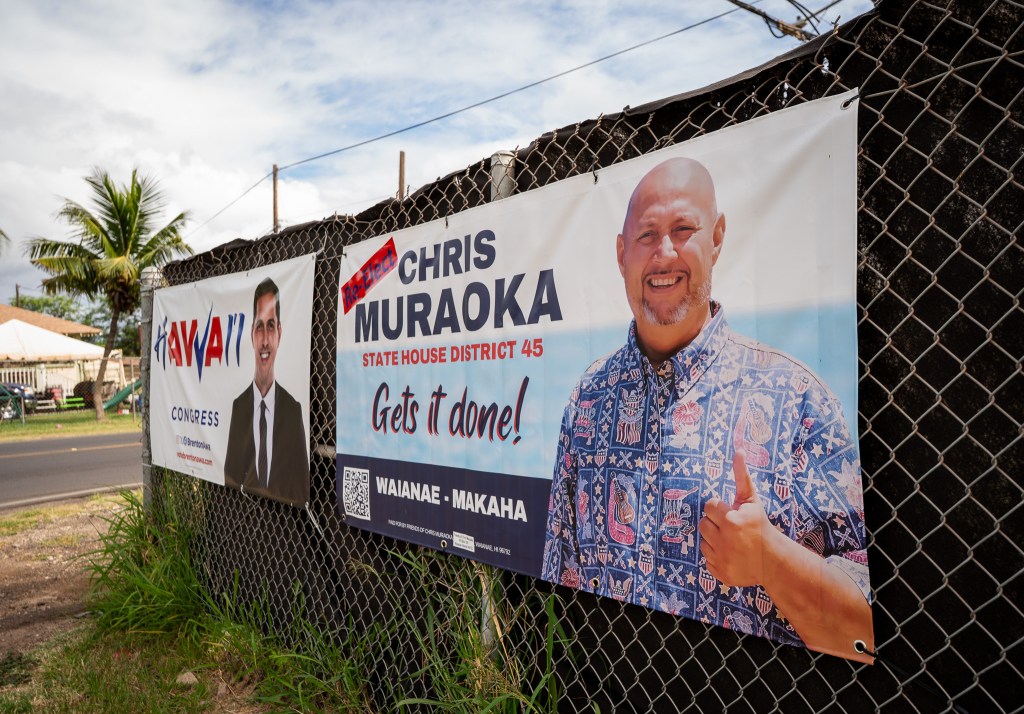
The owner of the dogs and the neighboring property is a state legislator, Christopher Muraoka, who has represented Waiʻanae and Mākaha in the House since 2024. On Wednesday, Muraoka said he surrendered one of his dogs in response, but a Civil Beat reporter saw a dog on the property that day that Staub said was one of the three that bit him.
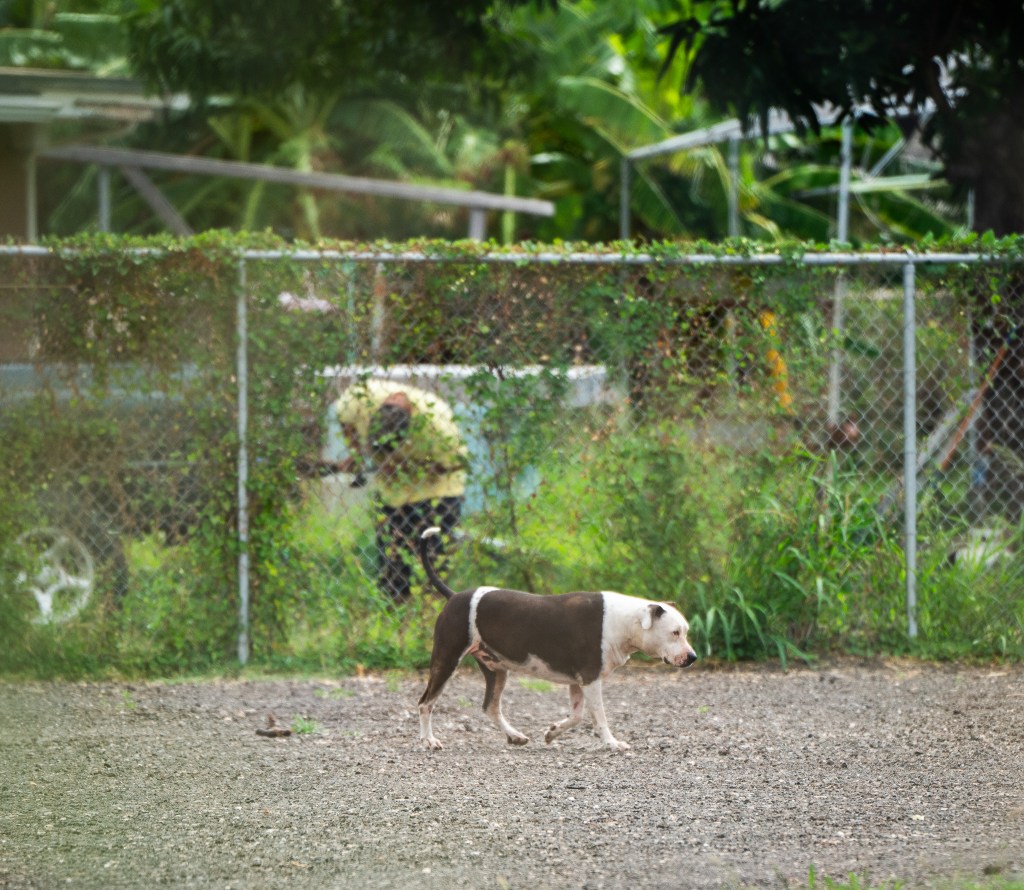
In an emailed statement, the lawmaker — who is running for re-election — apologized for the March attack and said he had been in Arizona visiting his father in the hospital when it happened.
“When I found out, I tried to contact Xavier to ask if there was anything I could do to help him or make it right,” he said. “His text response was to contact his attorney. I contacted his attorney, and that’s where things stand. I am really sorry for what happened and hope that when this is over, we can continue the relationship we had before this.”
However, Staub says more needs to be done. In his telling, the dogs have been “terrorizing” the neighborhood for two years on Muraoka’s property, which Staub says the lawmaker uses for equipment storage.
The case underscores the difficulties facing Hawaiʻi residents who are threatened by menacing dogs and want protection. A bite isn’t always enough to prompt a response, and neighbors can be left feeling unsafe. Residents of Puna on the Big Island also called for help recently after repeated dog attacks by a German shepherd. The owner has since said she’s moved away and boarded the shepherd.
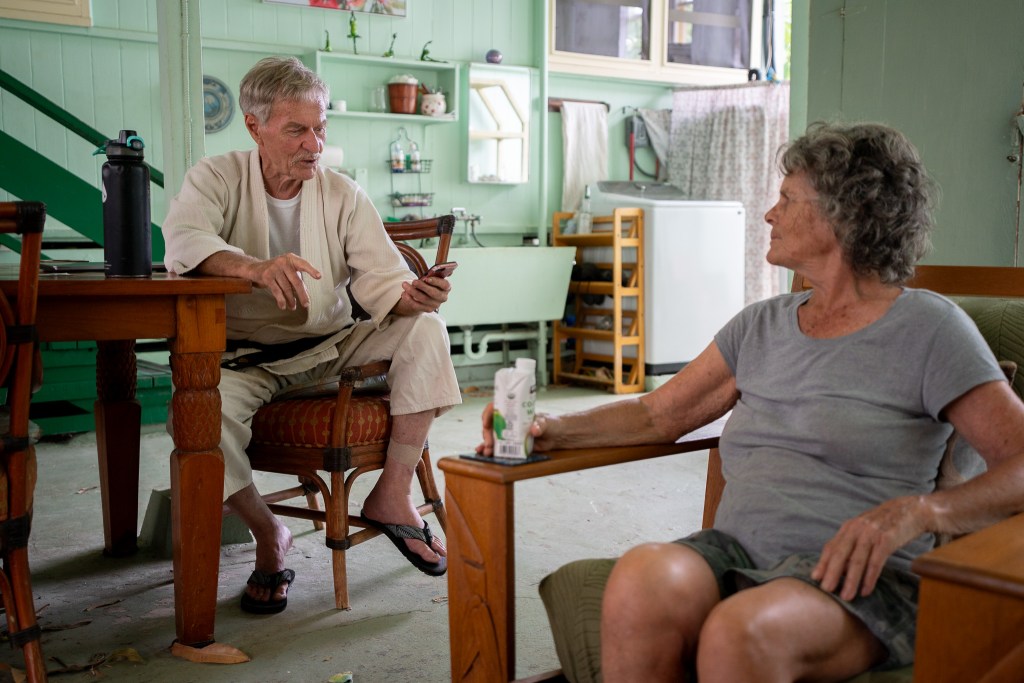
Staub has filed two reports against Muraoka with the Honolulu Police Department, one reporting the March 27 attack and another documenting the time a dog bit one of his guests in 2024, records show. Staub said one of the dogs also bit a teenage student of his at Waiʻanae Coast Aikido and Movement Center.
He works there with students ages 6 to 12 and is mostly worried about their safety, he said.

“I’m telling you, if somebody doesn’t pay attention, some little kid’s going to die in front of that guy’s gate,” Staub said. “Everybody’s living on edge.”
The police reports accuse Muraoka of violating the county’s dangerous dog statute, which requires owners to take reasonable measures to prevent their pets from attacking people or animals if they are not provoked.
Neither resulted in criminal charges or court orders requiring the dogs be impounded, the records show.
“Everybody’s living on edge.”
Xavier Staub, neighbor to State Rep. Christopher Muraoka’s property
After Staub filed the report about the March incident, police issued a criminal citation against Muraoka, but prosecutors dismissed the case without prejudice in May, pending further investigation.
After one of the dogs bit a guest at Staub’s house in 2024, causing minor injuries, a criminal citation was filed, too. Prosecutors dismissed it less than a month later.
Muraoka said the 2024 case against him was dismissed because the dog was not his. Reached by phone Wednesday, he said he’d surrendered a dog that a neighbor told him bit Staub in March. He later said two dogs had been surrendered, but he did not say to whom.
The Hawaiʻi Humane Society said on Thursday it was not involved in either case. The organization has no record of complaints associated with Muraoka over the past three years and no record of a dog surrendered under his name, according to spokesperson Brandy Shimabukuro. But, she said the Humane Society’s field operations team would conduct a welfare check at the property after Civil Beat’s inquiry.
‘Your Dogs Tried To Kill Me’
Geraldine Tremblay, who co-owns the aikido center with Staub, said she and her grandnephew, Anthony Tremblay, were walking down Mākaha Valley Road on March 27 returning from the beach when five dogs came running at them from Muraoka’s property.
Geraldine Tremblay, who goes by her middle name, Louise, was carrying a large metal water bottle and swung it at them to keep them at bay. She and her grandnephew managed to get to the house they live in on the same property as the center, which is also known as a dojo.
She called Staub while she looked through the closet trying to find a big walking stick to ward off the dogs. When he answered, he said he was already almost home. Moments later, he pulled into the driveway.
Staub said after he stepped out of his car, five of Muraoka’s dogs charged him and three bit him. He fell to the ground and screamed.
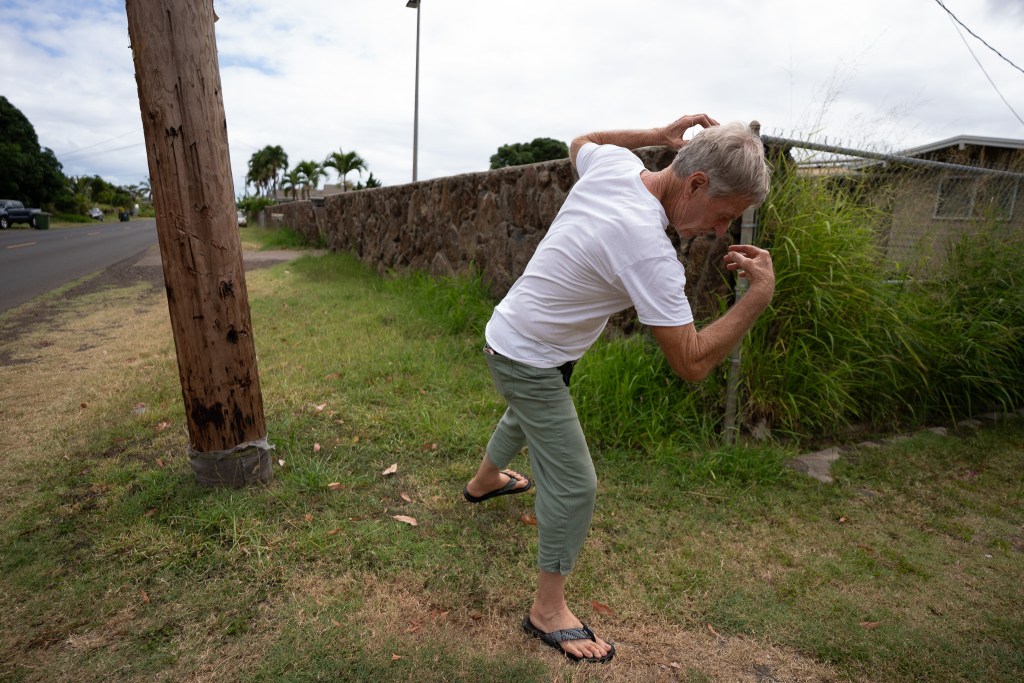
“I never heard a scream like that in my life,” Tremblay said.
She grabbed a stick and started to run out toward the driveway, where she saw Staub with his mouth full of blood.
“I had like a 50-pound bulldog hanging off my jaw, one hanging off my arm and another gnawing on my leg,” Staub said. “All I can say about how I got to standing was 50 years of aikido training.”
Staub’s scream seemed to startle the dogs, and they let go of him, he said. He got back into his car and Anthony Tremblay ran out and hopped into the driver’s seat. He drove Staub to Waiʻanae Coast Comprehensive Health Center, flying through red lights on the way as Staub screamed in pain.
In the emergency room, Staub got stitches in his arms and legs and superglue in his lip, he said. Doctors sent him home with antibiotics.
A week later, he returned to the emergency room with severe pain in his left leg. It was badly infected, and doctors sent him to The Queen’s Medical Center, West Oahu for intravenous antibiotics. He spent three days in the hospital and was discharged with two more prescriptions for antibiotics, according to his medical records.
He just finished taking those antibiotics on May 30.
“Part of me died in my driveway as your dogs tried to kill me,” Staub texted Muraoka in April after Muraoka texted to check on him. “They have previously bit a guest in my house and a young student at the Dojo and now me.”
Muraoka did not respond to that text until Wednesday, when he texted to say he had been in touch with Staub’s attorney.
“I am truly sorry this happened,” he wrote. “My hope is when this is over we can continue to be good neighbors and friends.”
Case Dismissed
Staub said he’s frustrated with the lack of action by authorities.
A state law passed in 2024 to crack down on dangerous dogs has proved difficult to enforce. The law allows for a dog to be declared dangerous through an administrative process with the police department prior to the owner going to court, but two years later officials are still setting up the administrative process.
Ultimately, the rules will need to be approved by the Honolulu police chief.
In the meantime, animal enforcement officers are working within existing county rules, which usually don’t allow for the Humane Society to get involved in a dangerous dog case until the case goes to trial or a court order is issued. The Humane Society can step in sooner if the dog is deemed to be an imminent threat and can’t be contained on a property.
Staub said he’s discouraged that prosecutors dismissed his case against Muraoka despite the evidence he had, including photos of his injuries, hospital records and at least two other witnesses to the attack.
Christine Denton, spokeswoman for the Honolulu Prosecutors Office, said in a statement that prosecutors can only charge cases they can prove beyond a reasonable doubt with court-admissable evidence.
“In this matter, we did not have sufficient evidence to move forward with prosecution,” she said.
‘What We Want Is The Dogs Out’
Staub said the dogs’ gate — which stretches across the driveway of the adjacent property and has been left open in the past — has been closed most days since he filed the report.
That’s not much comfort though. What he wants is for the dogs to be removed from the property altogether.
But other than filing the dangerous dog report, he doesn’t know what to do. He’s working with an attorney to see if there’s any civil action he can take against Muraoka. His attorney, Keith Kagawa, did not respond to a message seeking comment.
According to the county’s dangerous dog ordinance, dogs determined to pose an imminent threat to the public can be ordered impounded until the owner’s court date. Impoundment can mean being secured on the dog owner’s property, at a licensed veterinarian facility or at a kennel. Healthcare providers are also required to report dog bites to the Honolulu Police Department. It’s unclear if an impoundment order was issued in this case.
Officers who make dangerous dog reports are also supposed to forward them to the Hawaiʻi Humane Society, according to HPD policy. Spokespeople for HPD did not respond Thursday to a question about why the Humane Society wasn’t notified in this case.
“What we want is the dogs out,” Geraldine Tremblay said. “That’s it.”
The Mākaha neighborhood where Staub’s aikido center is located sits in a valley surrounded by steep, craggy mountains. Most of the houses are on large plots of land, surrounded by fences.
Staub’s center is just blocks from the beach. Neighbors, he said, used to stroll to the beach whenever they felt like it. Now, because of the dogs, they think twice.
“Bottom line, it’s been two years of everybody living on edge,” Staub said. “Oh, let’s go to the beach. Oh, we can’t, we have to get in the car and drive because we don’t want to walk by that guy’s house and get killed. You know, it’s crazy.”