

Honolulu Building Permits Moving Faster For Homes, Slower For Businesses
The city is planning to expand its use of AI software after it showed promise in prescreening applications.
Honolulu’s multimillion-dollar investment in new building permit software may be showing signs of paying off after a stormy start that saw some permitting staff pleading for a return to the old system.
Following years of complaints from residents and builders about epic delays that left projects to languish — delays that hit the city’s property tax revenues — permit wait times have fallen since the launch of the new system, HNL Build, in August.
The median wait time to obtain a new building permit dropped to 2.5 months in the period from August through April — a 40% decrease compared to the same eight-month time period the previous year, a Civil Beat review of Department of Planning and Permitting data shows. Permits previously took four months to obtain.
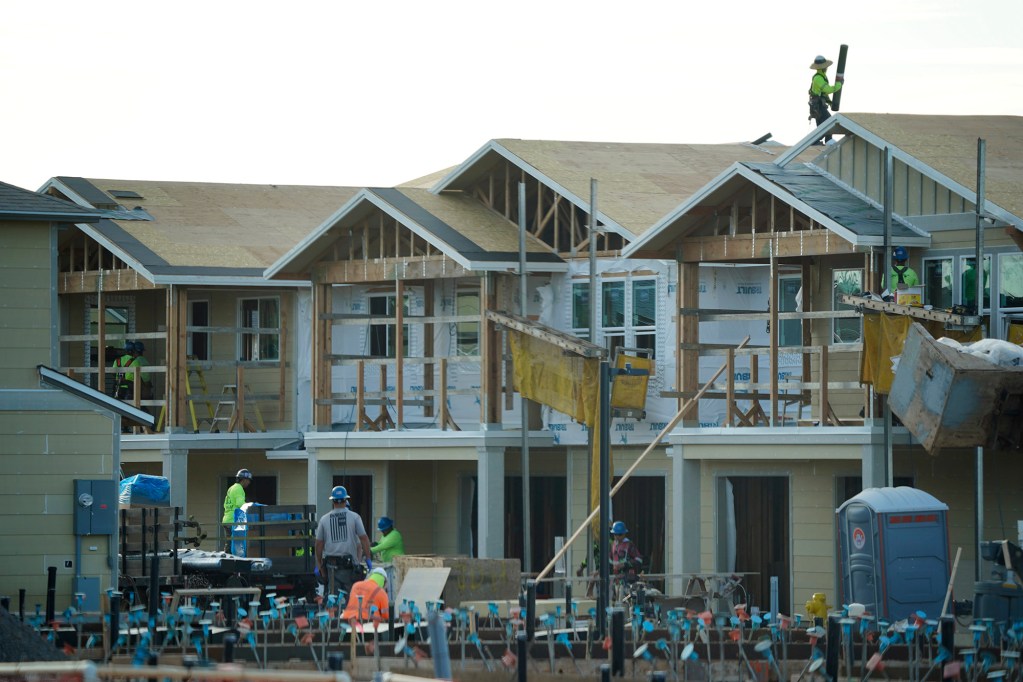
Only 20% of those who applied for a permit in August 2024 had one eight months later. After the city’s new system took effect in August 2025, 30% had permit approval within eight months.
“We’re proud of the dedication and adaptability shown by our staff throughout this transition,” DPP spokesman Davis Pitner said in an email, “and we also appreciate the patience of our customers as we work through this modernization effort together.”
However, there are caveats. The way the city counts permitting delays has changed. In many cases, the city no longer tracks the time spent in so-called prescreen — vetting the plans for basic requirements. That review by DPP staff used to take months. It’s now being done by some applicants themselves with the help of an artificial intelligence tool before the application is officially submitted.
And the shorter wait times have mainly benefited residential projects. Many commercial permits took longer through HNL Build, Civil Beat found.
Many of the commercial permits created since August took about a month longer to be cleared using HNL Build than under the old system, POSSE. The median wait time for a commercial building was 85 days, or just under three months before the new system. More recently, it’s been four months.

In this ongoing series about Honolulu’s notoriously troubled permitting department, we seek to explain the failures, inequities and inefficiencies in O‘ahu’s permitting process and explore solutions that would make the system work better for everyone.
DPP Director Dawn Takeuchi Apuna declined repeated requests to be interviewed for this story. The department instead responded to Civil Beat via email.
Pitner, the agency spokesman, said the department couldn’t comment on the specifics of the commercial delays, but those projects are inherently more complex and reflect ongoing challenges filling vacancies for engineers and electricians. Electrical permits in particular were backlogged for a while, he said.
That signals challenges ahead because while the volume of permits being processed has increased and are generally moving faster, HNL Build has yet to be tested by a complex major capital development project requiring multiple reviews.
Still, builders and contractors have been telling Hawaiʻi chapter of the Association of Builders and Contractors that they are seeing some improvements in the process since it launched in August.
“They know that it’s going to take a long time to turn around the ship,” the organization’s president, Jeffrey Alameida, said.
Contractors tend to be reticent, Alameida said, “but they’re more than willing to say that things seem to have improved.”
But Milan Heger, a Seattle-based architect who has designed and remodeled over 80 homes in Hawai’i since 1988, said he did not see a noticeable improvement in the system.
“It’s going to take a long time to turn around the ship.”
Jeffrey Alameida, president and CEO Association of Builders and Contractors Hawaiʻi
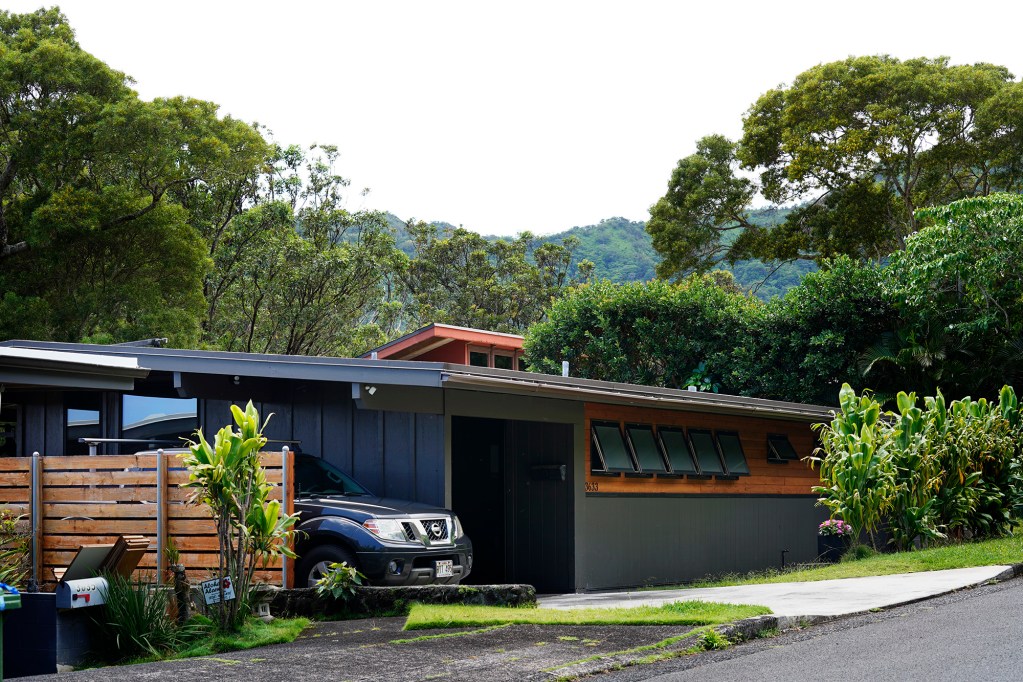
Heger was recently hired to design a master suite on a mid-century residence in Mānoa. He said he submitted an application to DPP three or four months ago but has not heard anything back.
“It’s not good for my business,” he said. “The architects look like they don’t know what they’re doing, and the clients get antsy. I am starting to worry about what is happening.”
‘Herculean Effort’
Honolulu’s Department of Planning and Permitting spent an estimated $7.3 million in federal and city funds to transition to HNL Build, replacing the older POSSE system that had been in use since 1998.
HNL Build is a centralized system where homeowners, contractors and developers submit and track permits for building projects, including new construction, electrical and plumbing work, home alterations and demolitions. The platform is also where they pay fees and track their applications.
The updated technology was launched with the promise of reduced permit delays and a more streamlined process in a move described by Mayor Rick Blangiardi last year as an “Herculean effort.”
But the transition would take time, the department cautioned.
At first, the cure seemed worse than the disease with the launch labeled a “complete failure” and akin to “driving a bus off a cliff,” according to a staff survey.
Some building plans hit snags during the switch to the new technology.
Heger’s application was one of them, DPP spokesman Curtis Lum said Tuesday. The project was with DPP 47 days before it was sent back to the client, an abnormal delay, Lum said. Now that review typically takes 12 days.
Those early hitches were characterized as growing pains by Takeuchi Apuna, even after the department at one point suspended its counter service to clear a six-week backlog.
“We know there is still hard work ahead. The system is not perfect, and we are not claiming it is,” she wrote in an October column for Civil Beat.
Eight months later, HNL Build is more stable and capable, Davis said. The focus has shifted to increasing the usability and efficiency of the system based on feedback from staff and public users throughout the process.
In addition to HNL Build, the department is using CivCheck, a software that pre-screens permit applications for errors.
There are about 130 registered users currently, and its use is optional for residential project applications, but DPP is planning to allow commercial applicants to access it at the end of the summer.
Mixed Feedback From Customers
The data shows the department is processing more permits and at a faster rate than prior to HNL Build, Pitner said.
That’s true overall.
Over 17,000 permits were being processed under HNL Build between August and mid-April, compared to 12,000 permits the previous year, a 40% difference.
But permit delays times varied according to the scope of the work.
Delays on alterations dropped by two-thirds, from three months to 40 days, and new building permit delays fell by half, as did repairs. Demolition permit delays showed the least progress, with only a few days shaved off the average three-month wait time.
Pitner says improvements have been made because the platform is better at catching information missing from applications upfront and more accurately tracks each application through the process.
Public users can now better track the status of their applications, Pitner said, and DPP has launched a library of step-by-step user guides.
Jayna Yeager of Oʻahu Permits, a professional permit router, said she was hopeful that the software will continue to improve, and there are certain benefits to HNL Build.
Yaeger has not noticed major changes in the permit delay times because she has projects at varying stages in the process, including some started prior to HNL Build launching.
“My difficulties and frustrations have been in the prescreening process,” of HNL Build, Yeager said, the period where applications are pre-vetted before a permit is formally issued.
In some cases it had been hard to move projects along because of minor glitches and technical errors in the feedback from the department that aren’t related to issues with the building code, she said.
DPP staff are helpful in person when an applicant tries to resolve these issues, Yeager said. It just adds time to the process.
Her one big request is that HNL Build eventually includes the detailed historical property data and information that used to be available in POSSE.
“There is still a lot of important information about parcels that is missing,” she said.
The system could reach that milestone by the end of the month after it finishes migrating historical records and files into the new system, Pitner said.
All In On AI
DPP is banking heavily on the power of AI to take the upgrade that HNL Build provides to the next level, including addressing those delays in large-scale commercial projects.
An AI-vetting system called CivCheck that DPP has been piloting with residential projects has helped to reduce delays in the pre-screening process of applications by 71% during a trial run late last year, according to their analysis, which could not be verified by Civil Beat.
A selected group of two dozen projects were cleared in 32.5 days using CivCheck, instead of the 70 days it would have taken without, Pitner said.
The integration of the CivCheck system, which screens applications for compliance, has resulted in applications “arriving significantly cleaner” for HNL Build requiring far fewer technical reviews, and the department is now looking to expand its use, Pitner said.
The department has for years pointed to incomplete or error-ridden applications as one reason for bottlenecks that cause delays.
The time spent addressing issues in CivCheck isn’t counted as part of the official processing time, as the official creation date is only timestamped after the application has exited CivCheck.
DPP said it doesn’t have a firm date for when use of the program would become mandatory, but that day is coming. The opening up of CivCheck to commercial permits later this year will help address some of the challenges on that side, including staffing shortages.

Out of the permitting department’s 365 positions, 76 — or 20% — are vacant.
“Commercial permits are generally more complex and unique than residential permits and often require multiple rounds of review, coordination among various agencies, and compliance with a broader range of code requirements,” Pitner said.
The teething problems of the new system also appear to have put a dint in the city coffers.
Revenues and fees since HNL Build launched in August are tracking at about half the total at the same time the previous year, from $24.6 million to $12.75 million. And that’s with a 40% increase in the volume of permits from over 12,000 to over 17,000.
That drop in revenue also reflects the absence of large-scale commercial projects on the DPP books that have cleared the review process.
A review of current filings shows that the top 15 most valuable commercial projects that were submitted after August but still haven’t cleared review have a combined value of $138.5 million.
Combined, the permits on those 15 buildings would generate over $200,000 in fees.
“While revenue is one indicator of overall activity, our focus remains on delivering better service, improving transparency, and helping applicants navigate the permitting process as effectively as possible,” Pitner’s email said.
HNL Build enables staff to selectively skip some review stages — a reduction of internal controls in a department that was embroiled in a high-profile bribery scandal less than five years ago.
That feature raised some eyebrows when the software was launched last year. At the time, department leaders expressed confidence the review process met the required ethical standards.
There hasn’t been any additional ethics training so far, but DPP staff still participate in the mandatory citywide program that has to be completed every two years.
Hikari Mae Hida contributed reporting to this story.

