Honolulu Council: Powerful Incumbent Faces Challengers Old And New
Voters spanning Waikīkī to East Honolulu get to decide this year whether to replace Council Chair Tommy Waters or elect him to a third term.
For nearly eight years, council member Tommy Waters has represented Waikīkī and East Honolulu, reigning as the powerful council chair for much of that time.
What he’s done with that power will soon be judged by voters. Waters faces several challengers, including his longtime political opponent Trevor Ozawa and two political unknowns, Jason Liang and Tara Malia Gregory.
As an incumbent, Waters will run on his record of advocating against cost of living increases in the face of administration pushback. But he’ll have to make the case that his political wins were substantial enough to better the lives of his constituents, and worth the controversial 64% raise he and his colleagues received in 2023 after he cleared the way for it to occur. Subsequent raises mean Waters now makes 80% more than he made in 2022.
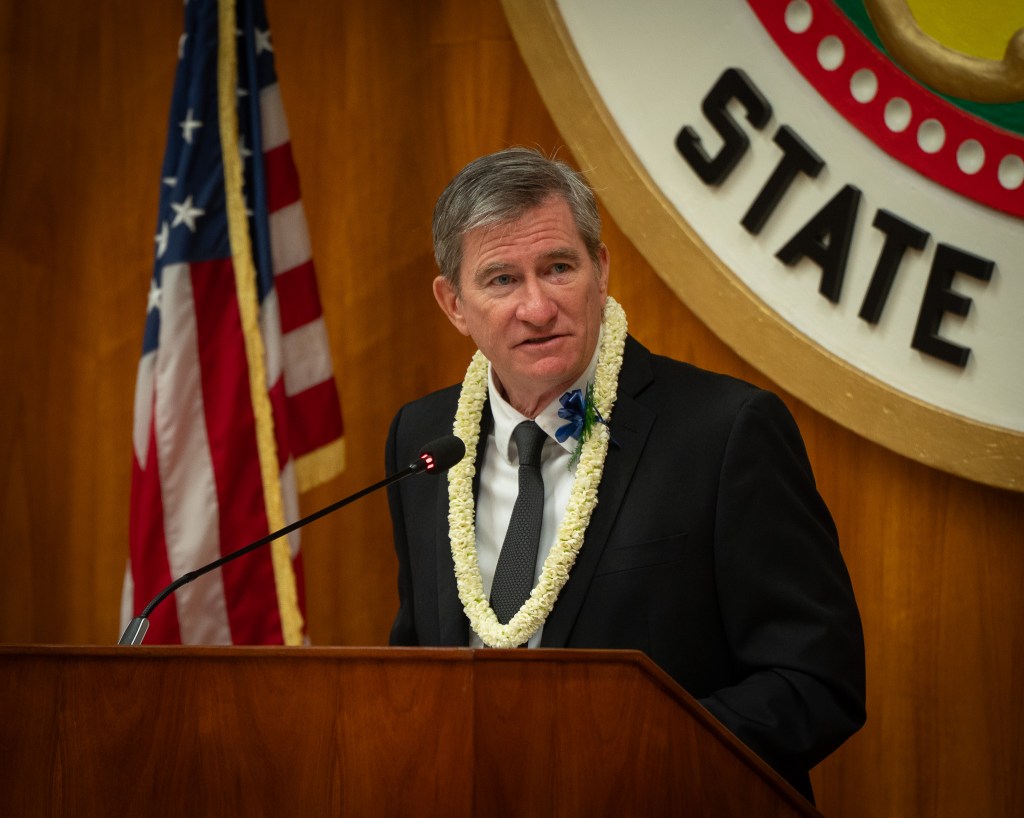
Waters will also have to defend himself against political and legal challenges to his eligibility for the office. Council members are term-limited to two consecutive four-year terms, and Waters says his first term was slightly less than four years, making him eligible for another.
Even if Waters prevails legally, voters could be influenced by arguments that he is trying to overstay his welcome.
How Has Waters Done?
Some of Waters’ constituents, interviewed by Civil Beat, say they’re pleased with his performance. And on the council, Waters has held onto the chairmanship longer than most of his predecessors, meaning he’s adept at keeping members happy and maintaining political power. But that isn’t always the same thing as keeping constituents happy.
The council’s massive and widely unpopular pay raise in 2023, which Waters took much of the heat on, may be the clearest example of this dynamic.
“His thing that he has to watch out for is the people who remember that incident,” Kaimukī resident Lori Yamada said.
It’s an issue his opponents are seizing on as well in the council’s most competitive race. Colin Moore, a political science professor at the University of Hawaiʻi Mānoa, said Waters would have likely cruised to reelection against his other two challengers before Ozawa joined the race the day of the filing deadline.
“Waters goes in with a lot of advantages,” he said. “But this won’t just be a check-the-box exercise anymore.”
Constituents, especially within the Waikīkī business realm, praised Waters’ work within the community. Waikīkī Improvement Association President Rick Egged referenced a bill Waters introduced that reduced the number of street festivals in Waikīkī, which he said had grown too frequent and too full of outsider interests.
“Sometimes it just takes forever to get anything done,” Egged said about the general pace of government. “And Tommy is very efficient. When he’s moving an agenda forward, it moves – of course, it helps being the council chair.”

Yamada also noted Waters’ community involvement, saying she started to notice more of it after the controversy over council pay raises.
Recently, for example, some residents started opposing plans to put a traditional Japanese archery range at a Kaimukī park. Waters stayed out of the discussion but sent a survey in the mail to households nearby asking how they felt about the proposed archery range. When the vast majority of responses opposed it, Waters joined their chorus.
He also continues to push the administration to take over the dilapidated Queen Theater on Waiʻalae Avenue, even though officials have said they don’t think it’s a good idea.
While Yamada and other Kaimukī residents support the idea of the Queen’s resurgence, she said, “I can see what he’s doing now to get reelected.”
The Challengers
Like Waters, Ozawa is a lawyer. Waters’ background was in criminal defense, while Ozawa worked in business and real estate litigation.
Ozawa originally went to law school because he wanted to become a sports agent. He met fellow Hawaiʻi-grown law student Stanley Chang when they both attended school in Boston, though Ozawa later returned to Hawaiʻi to complete his final year as a visiting student at Richardson School of Law.
After graduation, Ozawa helped Chang get elected to the City Council and briefly worked as his staffer.
“I’m a person of action,” Ozawa said in a recent interview. “And I felt that I could probably do more as a council member than as a staff member.”
He left his staffer role to gain experience practicing law in the private sector, then won the council seat in a 2014 nailbiter against Waters, who entered the race with more political experience as a former state legislator.
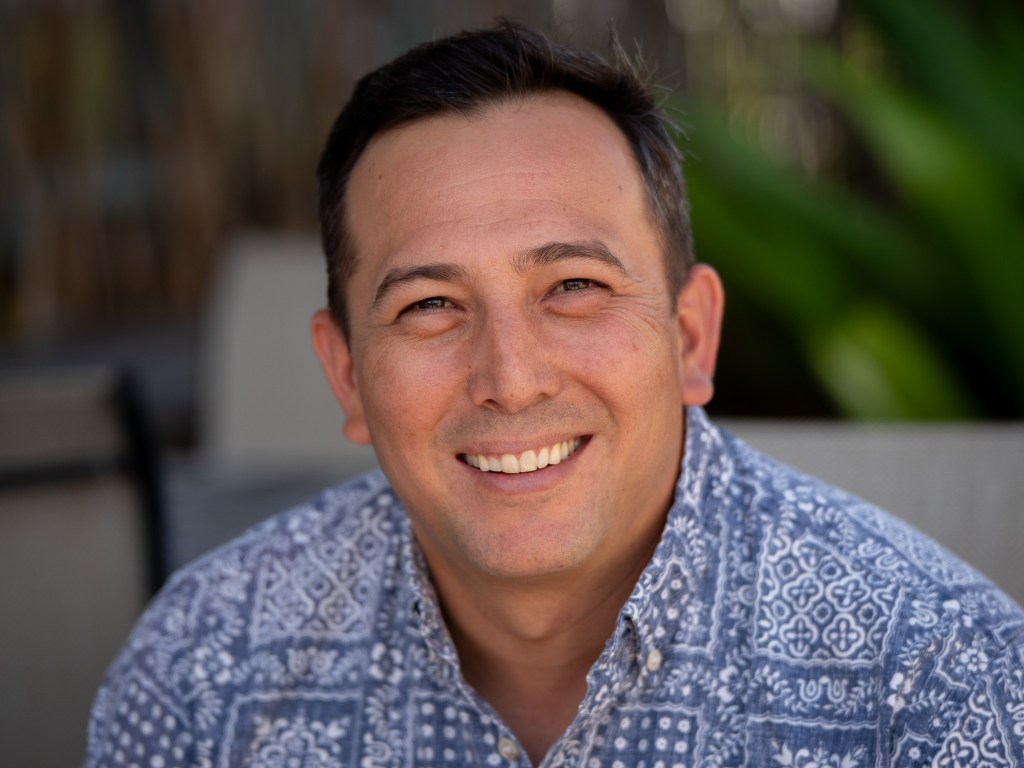
The last two times Ozawa and Waters faced off for the City Council seat in the general election – in 2014 and again in 2018 – they were separated by fewer than 50 votes.
Ozawa was up both times, and in each case Waters challenged the result. The Hawaiʻi Supreme Court rejected Waters’ challenge in 2014 but invalidated the results in 2018, leading to a spring special election where Waters ultimately prevailed.
Ozawa laid low in the aftermath. He said he focused on his family and stayed involved “in a quieter way,” including through coaching youth sports.
Some community members last year urged him to run for a state House seat after longtime East Honolulu Rep. Gene Ward died, Ozawa said, though he realized he was still more interested in tackling issues that fall under city jurisdiction like parks, infrastructure and permitting.
“People in the community have been saying: ‘Why does the city government move so quickly when it takes care of itself, but so slowly when we want to get things done for our own lives, and our own families?’” Ozawa said during his announcement, criticizing Waters. “This third term attempt shows too much focus on power and remaining there.”
Liang, another challenger, also criticized Waters’ attempt to remain in office for longer than eight years.
“I feel like that is very much a violation of the spirit of the law,” he said during a recent interview.
Liang, a real property appraiser for the city, said he decided to run for office after joining the Democratic Socialists of Oʻahu in 2025.

He had drifted through life a bit beforehand. An interest in teaching didn’t pan out when he realized he didn’t jibe with its structure, despite enjoying the broad task of helping people. He felt disaffected after starting his full time city bureaucrat job a few years ago, he said, mostly due to seeing how much healthcare cost compared to when he was on QUEST.
“It’s when I’m making the most amount of money – which still isn’t that much for a government employee – is when I’m paying the most I’ve ever had for healthcare,” he said.
He likes leftist politicians like U.S. Sen. Bernie Sanders and U.S. Rep. Alexandria Ocasio-Cortez, he said. For a while, he resigned himself to waiting for someone like that to come along here before deciding to take on the challenge himself.
“I wouldn’t feel right if I didn’t get involved,” he said.
Gregory grew up between Hawaiʻi and the mainland before eventually moving to East Honolulu in 2023 from Texas.
She wanted to get to the bottom of the neglect that had led to that summer’s devastating Maui wildfires, she said, and the people she connected with on that issue had conservative values, leading her to get involved with the state Republican Party.

Gregory was wary about “land grabs” that benefit developers, and stayed active in East Honolulu affairs by getting signatures for Hahaʻione Advocates for Responsible Development, aiming to prevent a high-rise building on what was land zoned for agriculture.
The House seat left open by Ward’s death needed to be filled by a Republican, and Gregory was one of three names the party put up to take his place. While the governor ultimately chose to appoint Joe Gedeon, it made her think about running for public office. She soon lost interest in partisan politics and decided to run for a nonpartisan City Council seat.
Waters was close to finishing his second term on the City Council, and Gregory figured she could take his open seat after he moved on.
“Obviously that’s changed,” she said.
Gregory has worked for the multilevel marketing company Herbalife since 2012, she said.
She’s aware the Federal Trade Commission won a $200 million lawsuit against the company after it alleged Herbalife “deceived consumers into believing they could earn substantial money selling diet, nutritional supplement, and personal care products.”
The FTC stopped short of calling Herbalife a pyramid scheme, and Herbalife’s website denies this perception on its Frequently Asked Questions page.
Gregory said she believes the products have given her loved ones genuine health benefits, and that there are bad actors in any big organization but her experience with it has been good and profitable.
“For me, I do stand by the company,” she said. “I do stand by my clients and products … there’s just no way I could even afford to be in Hawaiʻi right now (without it).”
Addressing Housing And Homelessness
Three out of four candidates for the seat – Waters, Gregory and Liang – would like to see a higher tax passed on vacant homes.
Waters introduced an empty homes tax almost two years ago, but he tabled the idea right at the finish line when he realized he didn’t have the votes to pass it. It was a controversial bill, with many community members including frequent council testifier and East Honolulu resident Natalie Iwasa opposing it.
“That is such a bad policy,” she said in an interview, saying that awkward timing could make it hit local families who are trying to buy or sell their homes.
The bill will die if it goes two years without passing, which will be Aug. 1. Waters plans to schedule a final vote on it in July, he said in a recent interview.
“I didn’t have the votes,” Waters said. “So I withdrew it, hoping that the community who was advocating for it would go out there and get me that fifth vote.”
Mayor Rick Blangiardi said he wouldn’t sign a bill authorizing the empty homes tax if it came to his desk.
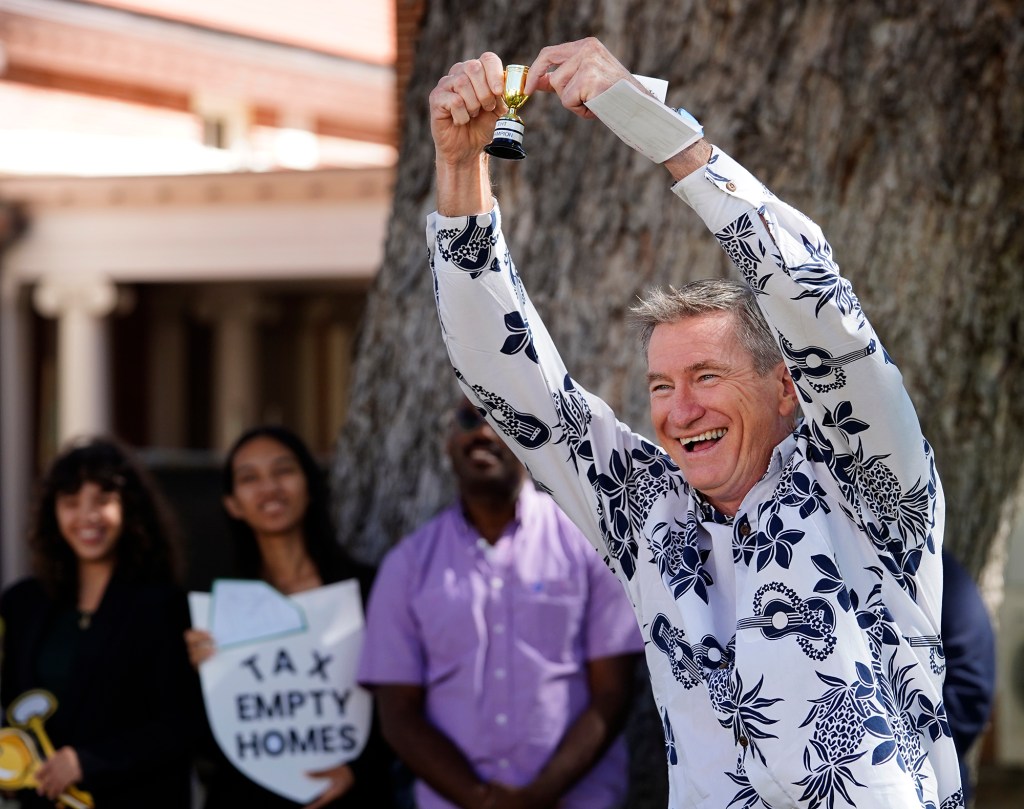
Liang wants to tax nonresidents a higher property tax rate and raise taxes on ultra high value properties. He pitched the idea of taxing residential properties worth at least $10 million at a rate in the ballpark of what hotels pay.
And he’d like to put a higher tax on large commercial properties too.
“These large, large properties – you know, Walmart, Target – they are extracting wealth from our island,” he said. “And they take that wealth, transfer it over to [the] mainland and their shareholders. And it’s to the detriment of the people here.”
Ozawa said he’d like to do a deep dive on the property tax reform issue before coming down on one side. His approach to housing is to build more around the rail line and to fix the city’s notoriously slow permitting process.
Some million dollar homes in his district are fixer-uppers, he said. He wants residents to be able to more quickly and easily make repairs.
“Whatever we can do to help the homeowners or future homeowners see homeownership as more of an achievable hurdle to actually get over … the better,” he said.
He also emphasized the new housing projects he helped approve while on the council, including almost 12,000 homes in the controversial Hoʻopili development of former farmland around a rail station.
On homelessness, three of the four candidates – Ozawa, Waters and Gregory– emphasized the need for enforcement of city laws to prevent people from commandeering public areas like parks, sidewalks and bus stops.
Conversations around homelessness often involve using some combination of shelters and other forms of help, or “carrots,” as well as punitive methods for getting people out of public spaces, or “sticks.” Gregory and Waters said they think the city should use more sticks.
“We need to be harder on crime,” Gregory said, “and we also need to be more helpful to those who actually need the help.”
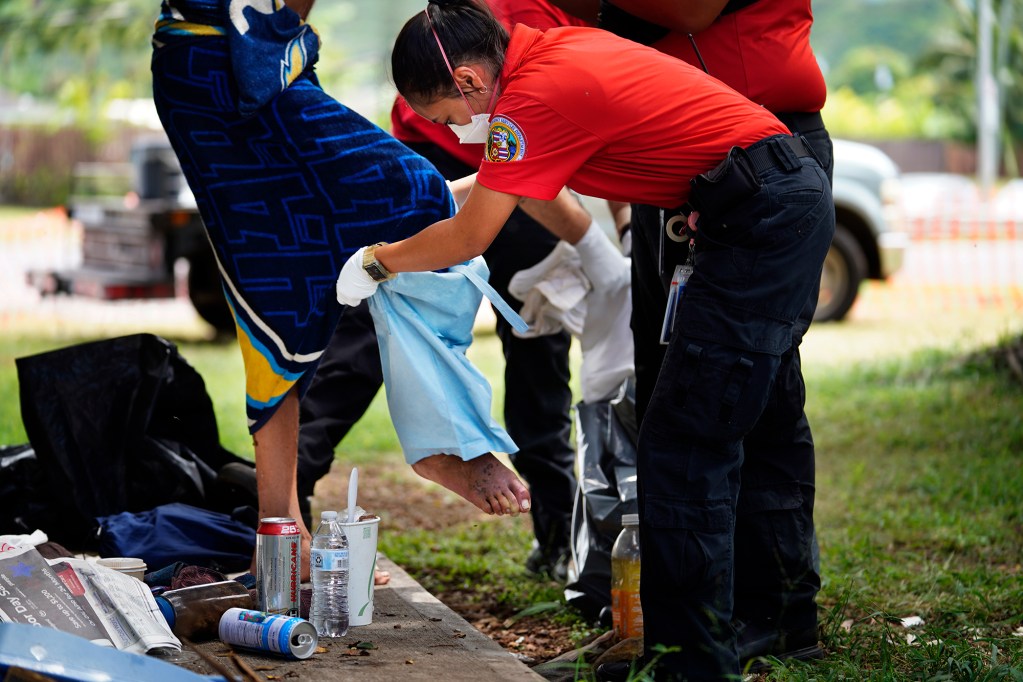
Waters thinks the administration has made progress towards lessening homelessness, and gave kudos to mayor’s homelessness lead Roy Miyahira. More homeless people are now sheltered than unsheltered on Oʻahu, according to the most recent count.
“Who’s left is people who have substance abuse problems,” Waters said, referring to people sleeping in parks. “So why not make mandatory counseling for those guys?”
He said he’s working on a bill to do this and will need support from his state counterparts, since they have jurisdiction over how the courts operate.
Ozawa said building more low-income housing will help too, and he generally supports the Blangiardi administration’s efforts to address the issue.
Liang, on the other hand, is skeptical about the value of enforcement and the idea that people need a “stick” to get off the street. He likes the city’s CORE program, where EMS workers go out and treat homeless people with medical issues and who are in crisis, and he wants to invest more in it. He also wants to dedicate more resources towards increasing housing and shelter spaces, and he wants to lower the barrier of entry to get into a shelter.
“No one wants to live on the street,” he said.
Making It Easier To Get Around
Roughly 50 people die each year in traffic fatalities on Oʻahu. To mitigate the issue, Liang wants to get people out of cars.
“I believe as we improve city services and create more multimodal transport options,” he said, “that we’ll see traffic fatalities go down.”
He sees free buses as one potential avenue for doing this. Like in the vast majority of American cities, public transportation in Honolulu is heavily subsidized. Rider fares cover only about 10% of the city’s transit budget, and Liang thinks it’s feasible to reduce that number to zero.
“Why are we passing that cost on to working people?” he said.

He also wants to invest in more cameras to catch scofflaw drivers as well as safer infrastructure to slow down traffic in the vicinity of every school.
Waters sees these infrastructure priorities as more of a case-by-case decision. He said plenty of constituents request speedbumps and other traffic-calming infrastructure in their neighborhoods, but others reject the city’s attempts to reorganize their street layouts, specifically referencing a project to reduce the number of lanes along Kīlauea Avenue.
“I’ve told them: Look, you’ve got to listen to the community,” he said. “Kīlauea is a major thoroughfare.”
Ozawa thinks multimodal transportation isn’t as good as it could be on Oʻahu. He thinks development buildouts around Skyline stations are going too slowly, and that combined with a lack of parking lots around the stations means people generally have a hard time getting to the stations.
Suburbs along Boston’s commuter rail lines have parking lots, he said, while stations closer to the urban core don’t but are at least surrounded by walkable areas. In Honolulu, meanwhile, the rail system’s western terminus sits in the middle of fields.
“There’s no point in going to a station and you walk out and you’re in the middle of nowhere,” Ozawa said.
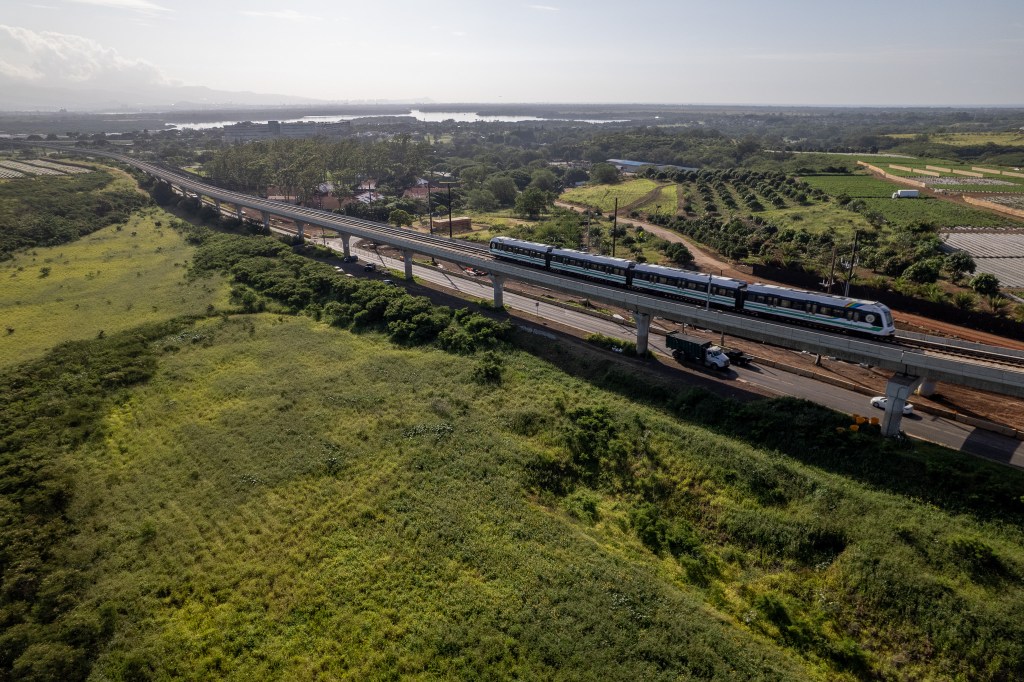
Regarding the dozens of yearly traffic deaths, he thinks a lot of the danger can be traced to the proliferation of kids on e-bikes, and Ozawa wants a working group to come together to think about how to solve this issue.
Gregory sees the traffic death issue as stemming from lax enforcement against crime. Drivers feel like they can get away with breaking the law, she said, and “that overall mindset is the reason why the hit and runs have happened.”
She also wants there to be more frequent bus service between Waimānalo and Hawaiʻi Kai. Currently, traversing between the two areas requires a roughly hourlong ride across two buses, each of which comes about once per hour.
“A lot of people that live in Waimānalo actually work in these centers here,” she said.
Grappling With High Cost Of Living
All four candidates point to cost of living as a prime issue, with Ozawa and Liang framing the issue more as wanting to provide residents a better quality of life.
Liang draws inspiration from New York City’s new democratic socialist mayor Zohran Mamdani. In addition to free buses, he wants to invest in a city-run grocery store pilot, and he plans to fund these projects with revenue from raising taxes on ultra high value properties.
Given the high cost of living, Ozawa said Honolulu residents should be able to better enjoy their local parks.
He said some of the parks in the district have yellow grass and run-down playgrounds, and that he’d invest time and effort into elevating recreational opportunities if elected. He referenced when he made municipal golf free for kids, saying it wasn’t a massive sweeping policy change but took some ingenuity to make work.
“That is something we can accomplish for not a lot of money, but can make a big difference,” he said.
Gregory, on the other hand, wants to reduce what she considers wasteful government spending. She suggested auditing every department and taking a critical look at tasks the city delegates to outside contractors, as well as money being directed to fund vacant positions.
“If we were to take accountability for the wasteful spending,” she said, “we could really reallocate a lot of this budget.”
Waters agrees with that sentiment. He said he’s also chipped away at cost of living issues by gradually reducing how much value a home is taxed on if the owner lives there, and by not introducing a bill that would create a monthly stormwater utility fee to pay for improvements to the island’s drainage system. That fee was considered by the previous mayor Kirk Caldwell’s administration before the pandemic but has largely lost steam.
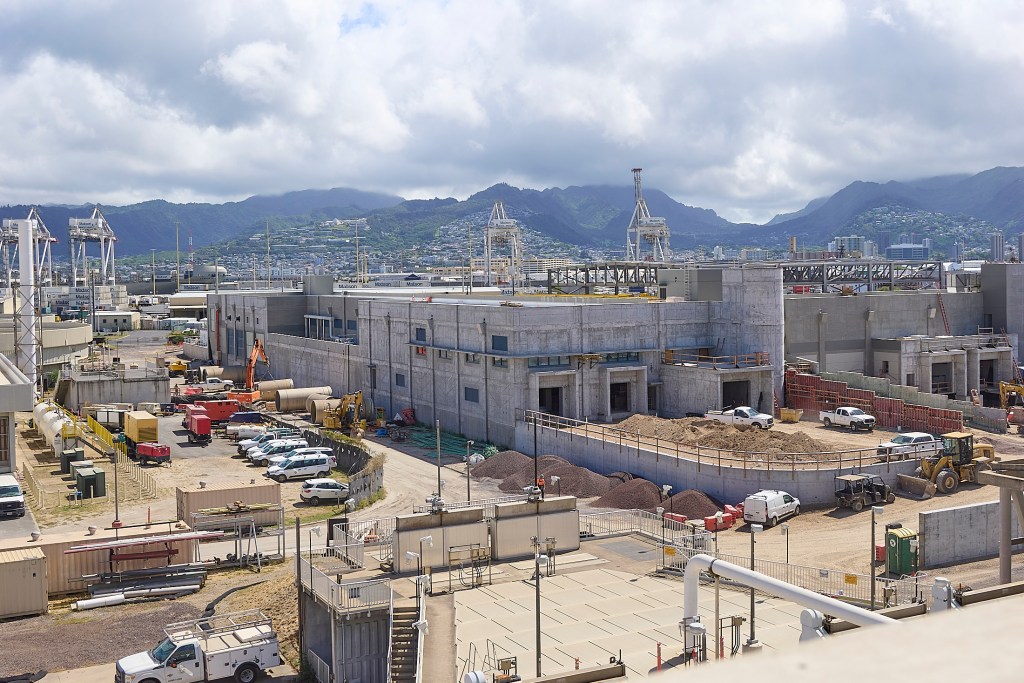
Still, bus fares will go up in July, their cost rising faster than the pace of inflation. Sewer fees are going up to cover federally mandated upgrades, though Waters opposed the change and unsuccessfully fought Blangiardi administration officials on it.
When Waters didn’t get his way and Budget Chair Tyler Dos Santos-Tam’s proposal won out, Waters removed him from the committee.
If elected to a third term, Waters said he would again push administration officials to use general fund money for sewer upgrades rather than raise the cost of monthly fees. City budget director Andy Kawano and waste management head Roger Babcock rejected that idea last year, saying it would hurt the city’s bond rating.
“That was a battle that I lost,” Waters said. “But you wait – when the shit hits the fan, and people’s sewer fees start to go up, I’m going to reintroduce my idea on how to lower them.”
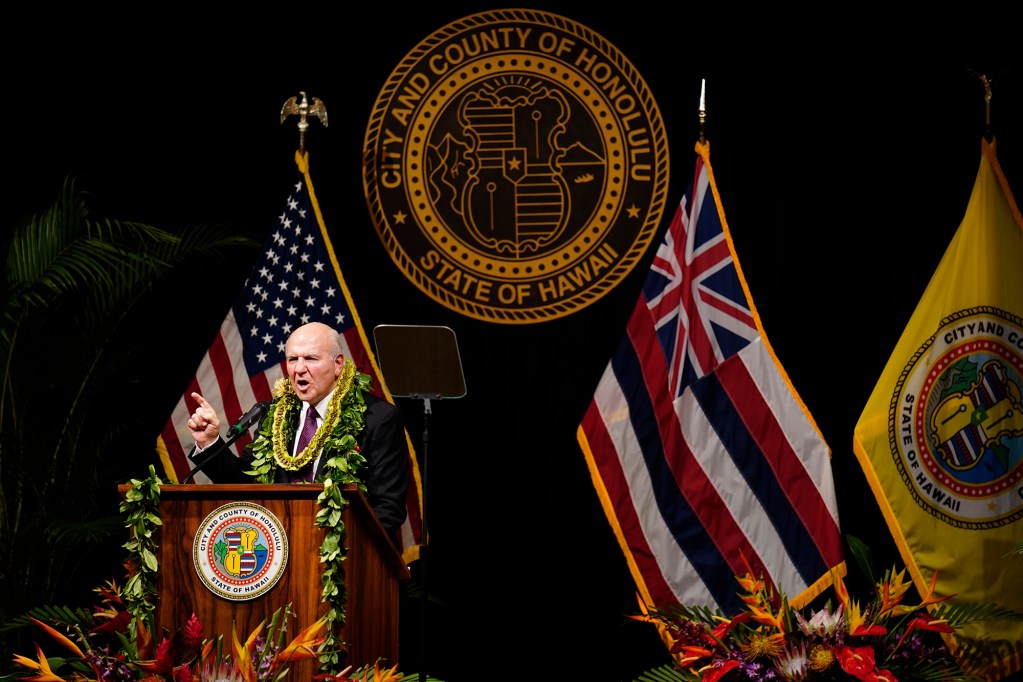
In spite of these increases, both the City Council and the Blangiardi administration are trying to communicate this year that they care about keeping the cost of living down. The mayor’s proposed budget cut $50 million from vacant position funds, and the City Council reduced salary funding across several agencies even further, including by cutting two-thirds of positions from the Office of Economic Revitalization.
“For years – year after year, actually – hundreds of millions of dollars that the council appropriated simply went unspent and lapsed quietly with little public discussion,” Waters said on the council floor before passing the budget on Wednesday. “Rather than letting the same old pattern of many lapses and paper vacancies repeat itself, the council tightened the budget.”
Department heads were unhappy with the cuts, and a frustrated Blangiardi said he would veto part of the budget. In Waters’ telling, however, this was the culmination of a leadership shakeup he led a year ago when he booted younger progressive members from his faction in favor of a more experienced slate of mostly former state legislators.
Council members often threaten to slash funding, even just to get the administration’s attention. Now that his new leadership team has followed through, Waters said, “hopefully they take the council a little bit more seriously.”