Lee Cataluna: Biki Is A Waste Of Money. Get Over It
Biki represented an ideal Honolulu that hasn’t worked in the real Honolulu.
June 7, 2026 · 5 min read


About the Author

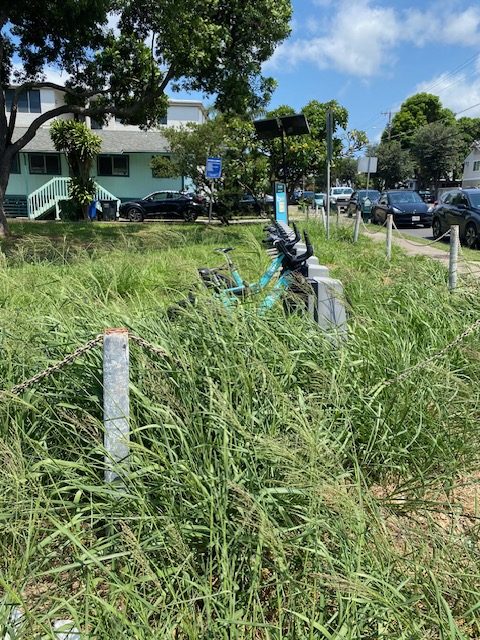
On the corner of Wilder and Metcalf streets, overwhelmed by tall weeds and decaying relevance, a Biki bike station stands as a shabby monument to a bygone dream.
If public ride-share bikes were important to the community, this place would show it.
There in densely populated, parking-challenged Makiki, where grandpas are known to take their civic pride and personal weed-whacking skills to overgrown eyesore public spaces, a Biki bike station should be a valuable resource, not another government project no one cares enough about to fix. Hundreds of Punahou parents drive by the station every day and you don’t see those movers and shakers complaining to the city.
There are elements of Honolulu life that people care deeply about and will fight for. Biki is not one of them.
Biki was always more a lofty idea than a practical convenience.
Yes, it would be great to have a way for folks to get around town on widely available rental bicycles that would reduce auto traffic and provide a way for folks to get fresh air and exercise.
But as time has passed, bike share has not taken hold in Honolulu. It just hasn’t. Asked and answered. Tried and failed. Hundreds of the bikes have been broken or stolen. The city has no business throwing more money at an idea that has already been proven not to work.
When Biki first launched in June 2017, folks gamely gave it a try. I remember a group of people where I used to work going on on a trial bike ride together. They came back to the office happy but hot, and that was the end of that experiment.
It didn’t suddenly change anybody’s life. It was a novelty, and a somewhat treacherous one at that. You don’t have to get rained on or nearly whacked by a crazy driver or arrive to work drenched in sweat too many times to figure out a bicycle is not an easy swap for a car or a bus ride. Plus, what if you need to stop for groceries after work? Or pick up the kids from different schools and take one to soccer practice and the other to piano? A bike is no help in the busy, run-around lives many Honolulu people have.
At the time, the Honolulu Star-Advertiser cheered the concept of rental bikes, including this line in an editorial:
“When you can ride a bike safely from Chinatown to Ala Moana and beyond, urban Honolulu will become a thoroughly mobile metropolis.”
That line is 100% aspirational and also wholly unachievable. Just being safe in Chinatown, with or without a bike, is a long-held, often-shattered dream.
So many issues have to be addressed for Biki to work in Honolulu. Those issues are the kind that never get addressed no matter what any politician says.
For starters, the bikes are vulnerable to vandalism and theft. Until the security issues are addressed, it’s just dumb to keep buying more bikes for thieves to steal and vandals to vandalize.
Honolulu roads have to be safer for bikers. Honestly, “sharing the road” with cars and trucks and all those zooming Amazon delivery vans is always a risk. People drive crazy in this town. Bicylists should have bikeways separate from highways. That would mean wholly redesigning Honolulu in a way that just isn’t possible.
Like a lot of things in Hawaiʻi, local leaders are there for the ribbon-cutting photo-op in the beginning, but once things get going, there is no lasting commitment or excitement, no oversight, not enough maintenance, and no one with an eye on the spreadsheet who can step up and say, “Hey, we need to rethink a few things.”
On top of those unsolvable issues, the community has changed since Biki first took $2 million in state and city money to launch the nonprofit almost a decade ago.
The Covid era taught many businesses that having employees work from home is a viable option. E-bikes have gained popularity. Uber and Lyft are more ubiquitous. Many appointments can be handled virtually rather than in person.
Pitching Biki as important to the visitor industry seems disingenuous. That’s not how it was framed when it was first launched, and like every other business that rises and falls with arrival numbers, relying on tourists is not a stable business plan.
Biki was a nice idea, like something that would win a ribbon in a middle school entreprenurial contest or environmental fair. It would be lovely to hop on a shiny clean bike in safe Chinatown and pedal down a petal-strewn path to Magic Island and then along beautiful Waikīkī Beach.
That’s a fantasy, though. Achieving anything like that requires so many factors to line up perfectly in order for it to work, and those factors did not line up and will not in the foreseeable future. Pack up those empty bike racks, replace them with grass or parking spaces, and stop spending money on starry-eyed projects to make politicians, and Honolulu, seem like standouts in an urban planning seminar.
 Sign up for our FREE morning newsletter and face each day more informed.
Read this next:
Local reporting when you need it most
Support timely, accurate, independent journalism.
Honolulu Civil Beat is a nonprofit organization, and your donation helps us produce local reporting that serves all of Hawaii.
ContributeAbout the Author