‘Making Sanitation Sexy’: Hawai‘i Colleges Are Growing Wastewater Workforce
UH schools on the Big Island and Maui are training students to convert cesspools to cleaner alternatives.
Hawaiʻi needs more people to work in the wastewater sector to meet a 2050 deadline to rid the state of cesspools. To help fill the labor gap, two community colleges on neighbor islands are training the next generation of wastewater workers.
More than 83,000 cesspools seep tens of millions of gallons of raw sewage into the ocean every day, damaging reefs and marine life. The state has made slow progress to meet the deadline set by the Legislature in 2018 to convert them. Hawaiʻi County Mayor Kimo Alameda said the Big Island, which has the most cesspools in the state, likely won’t meet the deadline.
The cost of conversions is the biggest roadblock. But another barrier has been limited workforce capacity, according to reports by working groups looking into the problem for the state and Hawaiʻi County. Clean water advocates say creating more workers could bring down costs through increased competition and supply-and-demand economics.
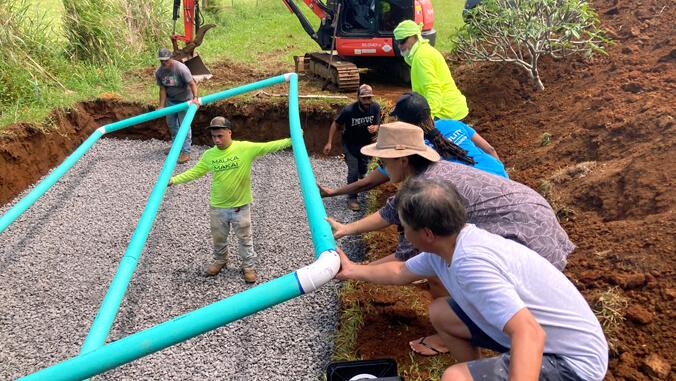
Charlotte Cheek, the project coordinator for the program, said she helped create the Onsite Wastewater Treatment Systems Specialist certificate through the University of Hawai‘i after it became clear the state would need more workers in the wastewater industry to convert cesspools, pump septic tanks and maintain the systems.
The yearlong program at Hawaiʻi Community College on the Big Island and Maui College launched in 2025 and 2024, respectively, with a nearly $1.1 million grant from the National Science Foundation.
Sanitation can be a dirty job, but it’s meaningful work, Cheek said. Converting cesspools gives people a chance to directly improve their environment and bring value to their community.
“It feels really good to be involved with something that is so tangible and makes such a direct impact on our waters,” she said.
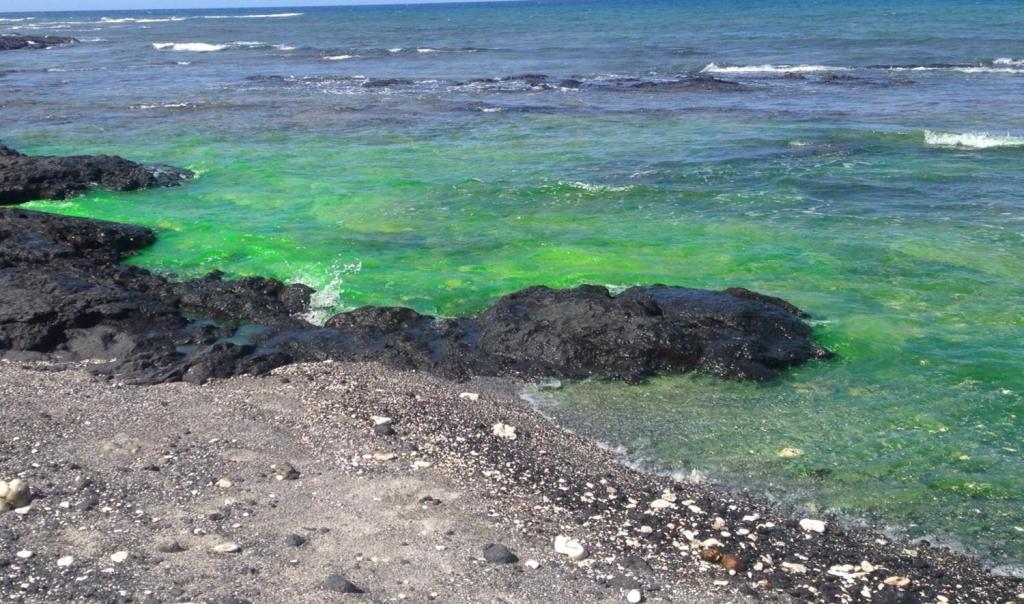
Seepage from cesspools is killing coral reefs in places like Puakō and Miloliʻi, which are already under stress from warming waters and polluted runoff. As the ecosystems die, so does the natural barrier they provide from storms and the fish that many rely on for food.
The jobs converting the polluting wastewater systems won’t go away either, said Stuart Coleman, executive director of the Honolulu-based nonprofit Wastewater Alternatives and Innovations.
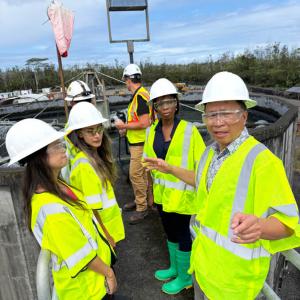
The industry has good job security, he said. Home wastewater systems need regular maintenance and have limited lifespans. County treatment plants need inspectors and people to upkeep the systems and make repairs.
“There’s one thing we can count on,” he said, noting people will always need to use the bathroom.
The decentralized onsite wastewater sector — the job force installing and maintaining systems like septic tanks — is a growing industry, according to a 2021 Environmental Protection Agency report. Private sector jobs were projected to grow at a rate of over 11%.
Wages are competitive as well. The median hourly wage ranges from $21 to $41, according to the report. But the industry is facing a lack of workers for many critical occupations across the public and private sectors, the report said.
To fill the need, investing in the training of the wastewater workforce is key, Coleman said. An increase in manpower could also bring conversion costs down by creating competition in the market.
Beyond protecting the state’s waters, the 2050 cesspool mandate will create much-needed opportunities for workers in the state, Coleman said.
“Everybody thinks of (the 2050 mandate) just as a burden, and you know it is, it’s a hefty burden,” Coleman said. “But it’s also going to create hundreds if not thousands of jobs and it’s going to stimulate the economy.”
‘Part Of The Change’
Natasha Bohm worked in construction for years before deciding she needed a career change. She found her inspiration for her next job after a visit to Shipman Beach near Hawaiian Paradise Park.
“We hiked 2 miles out and then we’re literally swimming in poop water,” she said. “I couldn’t believe it. You could smell it. It was bad.”
After finding out that the poor water quality was in part due to thousands of cesspools in Hawaiian Paradise Park, she said she wanted to do something about it. Then she saw a flier for Hawai‘i Community College’s program.
“I love water, I love swimming in our oceans,” Bohm said. “I want to be a part of the change, because this is just getting worse.”
Throughout the yearlong course, students get hands-on training in drafting and reading blueprints, septic installations as well as lessons in sustainability science.
So far, about 20 students have gone through the course, according to Cheek. Most of the graduates have gone on to work alongside engineers doing cesspool conversions, she said. Others now work for septic pumpers, plumbers, Maui County’s Department of Environmental Management and the UH Water Resource Research Center.
The program doesn’t license students for higher-paying jobs like engineering, but Cheek said it’s a good stepping stone to other jobs within the industry. Some graduates of the program do site assessments and draw up plans for septic installations for engineering companies.
Bohm is interning at a company installing above-ground alternatives to septic tanks and hopes to continue working there or under an engineer in planning and permitting for cesspool conversions. She said she’s learned a lot from the course and hopes other people take advantage of it.
“If you love the land and you love where you live, then why not be a part of keeping it healthy?” Bohm said.
Funding for the program runs out next year, however. Cheek and Coleman said they hope the University of Hawaiʻi decides to make it permanent and explore expanding it to Oʻahu and Kauaʻi.
The university has not made a decision on the future of the program yet, UH spokesperson Kelli Abe Trifonovitch said in an emailed statement.
This fall students at Maui College can take the course tuition-free, Cheek said. HCC got grants to help cover tuition for students on the Big Island as well.
“Our motto is to make sanitation sexy,” Coleman said. “In the end, nothing is more important than our water quality and making sure that we’re treating our waste.”
Civil Beat’s coverage of environmental issues on Hawaiʻi island is supported in part by a grant from the Dorrance Family Foundation; coverage of climate change and the environment is supported by The Healy Foundation, the Marisla Fund of the Hawai‘i Community Foundation and the Frost Family Foundation; and reporting on fresh water issues is funded in part by the Ulupono Fund at the Hawai‘i Community Foundation.