Neal Milner: It's Tough To Be A Dog In Hawaiʻi
Life in Honolulu is hard on dogs for the same reasons it’s hard on people — unaffordability, confining living conditions and limited infrastructure.
June 4, 2026 · 6 min read

About the Author

Soon after he was first elected president, Barack Obama got the following advice from Kinky Friedman, the front man of the country band Kinky Friedman and the Texas Jew Boys and an occasional political candidate himself: Get a poi dog.
“By the time you read this,” Friedman said, “you may have already purchased that much-talked-about pedigreed pooch for the kids. This does not really count.”
“With your childhood in Hawai‘i you surely know what a poi dog is. Get a poi dog.”
Friedman’s cultural lesson continued. “Note to mainland readers: If you’re a haole, you may not know that a poi dog is a mixed breed — that is, a mutt, the very best dog you could possibly have.”
He couldn’t have said it better if his name was Kinky Kawamoto.

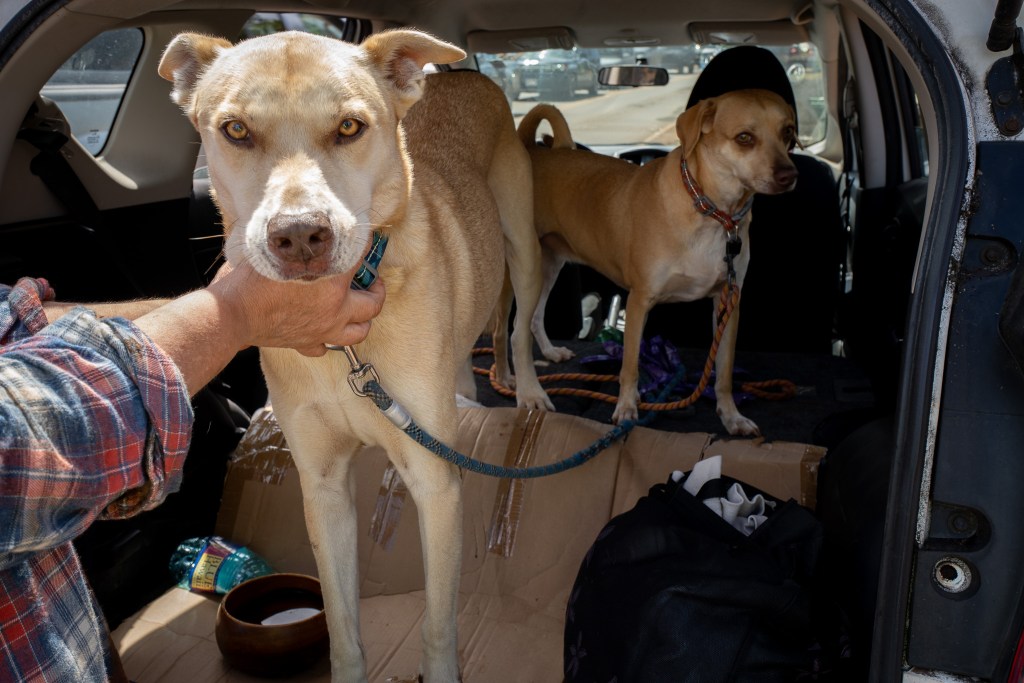
In Hawaiʻi, National Mutt Day is called Poi Dog Day. Poi dogs are linked to the first dog the Polynesians brought to Hawaiʻi, special to Hawaiʻi in a cultural sense.
Rap Reiplinger‘s first album, the one that really propelled him, was called “Poi Dog.” The musical group Poi Dog Pondering started in Hawaiʻi before moving to Austin, Texas.
Poi — a dog so important that it is a powerful cultural symbol of living in Hawaiʻi — a marker of what makes the islands so unique.
So, then how come Honolulu is rated the worse city in the U.S. for dogs — 100th out of a hundred?
Meanwhile, Portland, Oregon, is regularly at or near the top.
Comparing the two cities is a good way to understand dog dynamics in Hawaiʻi.
Both cities have a history and culture of dog friendliness. But Portland’s policies and conditions reinforce its dog-friendly culture. Honolulu’s, on the other hand, threaten it.
The reasons Honolulu is hard for dogs are the same reasons living in Hawaiʻi is hard for people: a restricting mixture of unaffordability, density, confining living conditions, limited infrastructure, constricted choices and slow-to-respond government, all making it so very hard to make Hawaiʻi more dog accommodating.
Dog lover or not, then, consider the dog differences as a sad but significant flesh and blood civics lesson about living in a place where affordable housing and especially home owning is out of reach, where government hasn’t kept up, and where these problems radiate out and even affect the important quality of life bond between a person and a pet.
Portland’s South Waterfront, about a mile from downtown, is an expensive urban-chic neighborhood with a reputation of being a cool place to live.
It has a spacious dog park down the street, a dog-friendly, all-purpose small park in the center, and a miles-long scenic walking path along the Willamette River. Plus a veterinarian and two doggy daycares a block from each other. All in a neighborhood one-third the size of Kaimukī.
Pretty spectacular for humans and pretty cushy for dogs. What is important, though, is not how, dog-wise, this neighborhood is from the rest of the city. It’s how similar.

Portland has dog parks are all over the city, including over twice as many official off-leash dog parks — not just as play areas for plutocrats with designer dogs. Most neighborhoods have a dog park within walking or easy driving distance.
Portland prides itself in having a dog culture and making sure that culture is protected.
Unlike Hawaiʻi’s, Portland’s policies reinforce and protect this culture. Honolulu’s lowly ranking shows that the city’s dog policies do just the opposite.
Recently, Honolulu City and County officials announced a rollout of a “comprehensive and collaborative community effort to make City and County of Honolulu parks more dog-friendly resulting in 36 new on-leash dog parks!”
One-and-a-half cheers for a rollout. Rollouts have a well-deserved besmirched reputation in Hawaiʻi. “We’re on our way!” often turns into “We’re on our … whoops.”
Like that failed rollout of Honolulu’s Department of Planning and Permitting’s high-tech solution to the delays in the planning process, where “we are ready to rumble turned out to mean we are ready to stumble.”
Where at a meeting about that the mayor turned into Triumph the Insult Comic Dog.
I’m not saying that will happen with dog parks where on the surface it’s easier to enclose a space for dogs than it is to find a high-tech contractor who can make the algorithms run on time.
Even if the plan works and doubles the number of on-leash dog parks around O‘ahu, that number is still far short of Portland.
But let’s be fair. It’s an important start in a city where the dog challenges are greater than Portland’s. They involve deep-seated obstacles that severely limit government’s ability to take action.
And that brings us right back to how Honolulu is a hard place for dogs for the same reasons it’s a hard place for people.
Affordable housing is a problem in both cities, as it is everywhere now, but Portland is more affordable than Honolulu. That’s easy since Hawaiʻi’s affordability is right down there in the same cellar as its dog friendliness.
Surprisingly, though, Honolulu has a greater percentage of homeowners than Portland does. But the homes people own in Portland are likely to be single-family with yards. The owners don’t need to ask anyone for permission to have a dog.
Honolulu’s homes are more likely to be much smaller — condos or townhouses — with little or no yard. More important, people living this way often live in places that limit or prohibit dogs.
Space for dogs and dog parks is more limited than it is in Portland.
Poi dog power or not, it’s hard for a place to be dog friendly when it’s so hard for so many to own a dog, have enough money to take care of it, and find a spacious, non-intrusive space for both person and canine.
Culturally dogs have a special place in Hawaiʻi, but economic conditions threaten that specialness. That statement has a familiar ring to it, doesn’t it?
By the way, Obama didn’t adopt a part-pit from the Humane Society. He got two pedigreed Portuguese water dogs instead. Even though he didn’t own his new home, the dog rules were quite encouraging, and outdoor space was not a problem.
You’ve all heard this in one form or another from somebody: “Hawaiʻi is going to the dogs!!”
You should be so lucky.
 Sign up for our FREE morning newsletter and face each day more informed.
Read this next:

Local reporting when you need it most
Support timely, accurate, independent journalism.
Honolulu Civil Beat is a nonprofit organization, and your donation helps us produce local reporting that serves all of Hawaii.
ContributeAbout the Author