Honolulu Council Member Is Shoo-In, But Can He Get More Done?
Weyer has the distinction of being both sidelined by the council majority and running unopposed for reelection.
In some respects, Honolulu City Council member Matt Weyer is thriving in his role.
His constituents speak highly of him. He has productive relationships with members of the mayor’s administration. And he is running for reelection this year with no competition.
For Weyer, the challenge isn’t so much staying in the good graces of his constituents. It’s fighting for his initiatives after getting kicked to the council’s political outskirts a year ago.
That struggle was clear in a recent funding dispute. In the aftermath of large-scale floods that rocked his district this spring, Weyer lost the fight to maintain funding for an office that he says has been crucial to his constituents’ recovery efforts. In the end, about two-thirds of the office’s 24 positions were cut.
“I am disappointed because I feel like the community really expects and asks for transparency,” Weyer said on the council floor in June, “And it’s been a struggle for me to really explain to anybody exactly why the Office of Economic Revitalization is being cut.”
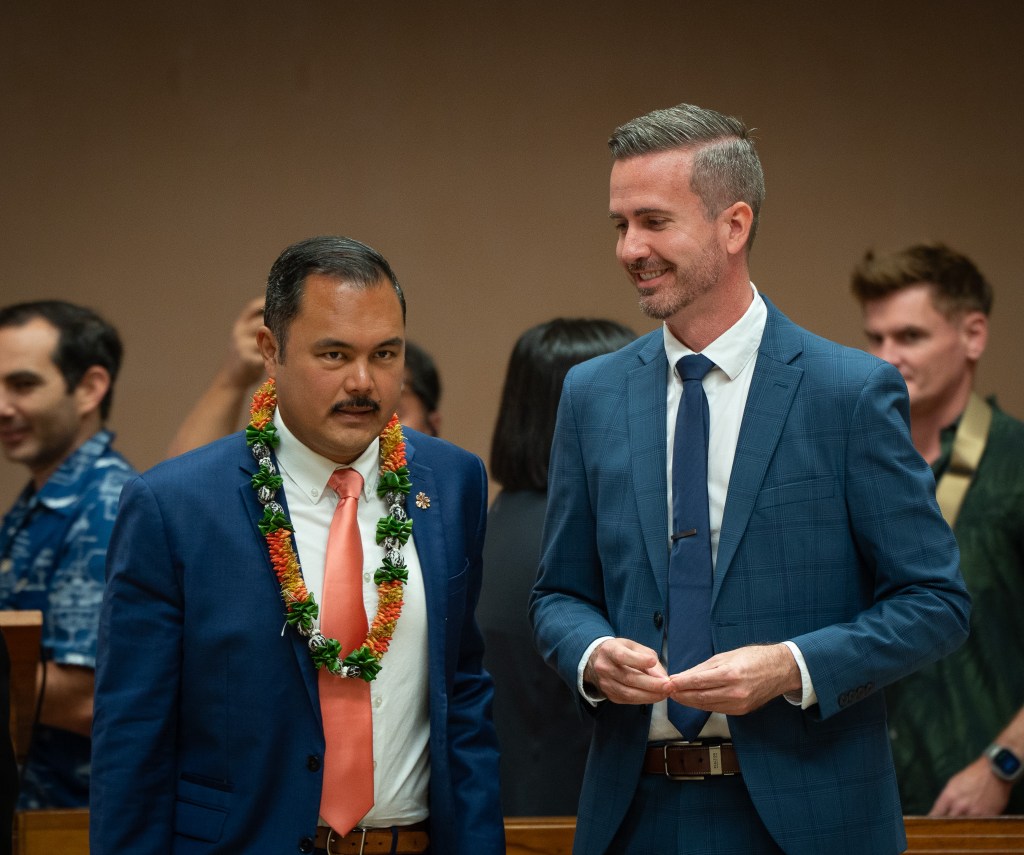
Weyer made his case for the office throughout the past few months of council budget discussions, but he lacked the votes to save it.
Over the next four years, he wants to make it easier for locals to get into housing and he said he will continue facilitating community conversations about land use and community projects such as Kahuku’s new public pool. But whether he has the political juice to tackle big projects remains a question.
“He’s been sidelined on a lot of things,” politically active North Shore resident Denise Antolini said, “which does a disservice to him but also to all of his constituents. So that’s been hard, actually, really hard.”
‘Matt Knew How To Make It All Happen’
Weyer’s district is one of Oʻahu’s clearest examples of an area where locals feel threatened by tourism. Some of his biggest victories, constituents said, have been discussions he facilitated at this intersection.
A controversial redevelopment of the food truck parking lot across the street from Sharks Cove is one example. In 2023, Antolini and her hui pivoted their opposition to the commercial development by pitching that the city take over the land and provide the North Shore a much-needed center for first responders.
It was in some ways a long shot. The landowner hadn’t been interested in selling, and forcefully taking over the property via eminent domain requires a drawn out process that governments like to avoid when possible.
Mayor Rick Blangiardi, however, announced in his 2025 State of the City speech that his team was negotiating a price with the landowner. And the next year, he announced that all parties had signed the purchase and sales agreements.
“To get something big like that to happen you need a million yeses,” Antolini said, giving credit to Weyer for being a sort of liaison between community members and the mayor. “And Matt knew how to help make it all happen.”
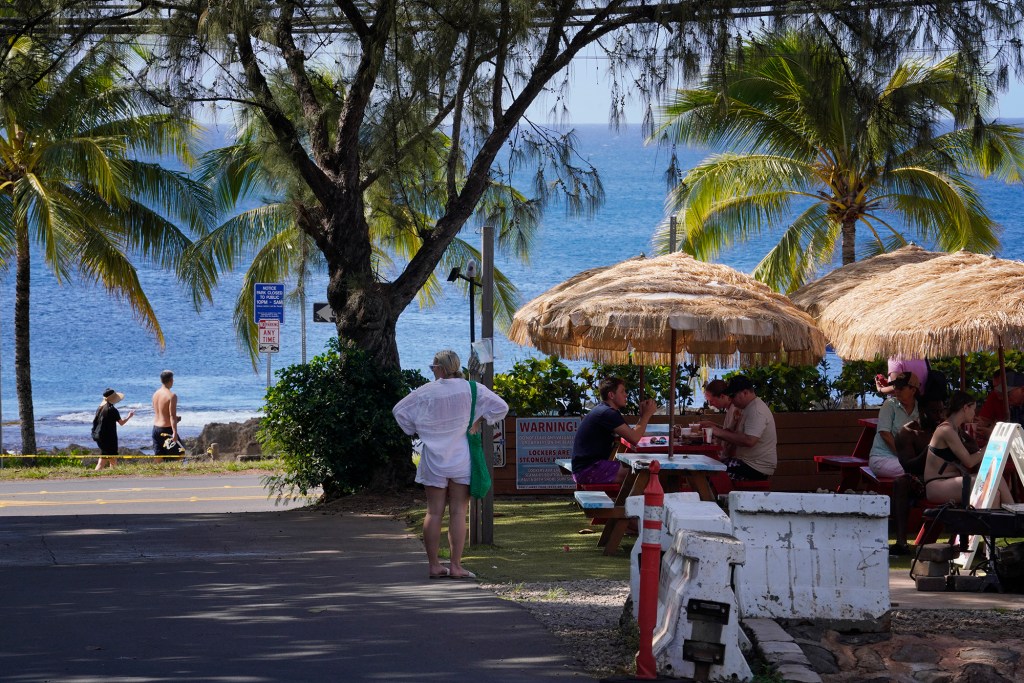
Controversial projects like that are fought in an area where Weyer thrives. He keeps a cool head when community members get riled, North Shore rancher Racquel Achiu said, referencing a proposed housing project called Haleʻiwa Backyards that sparked strong and organized pushback.
“He doesn’t come straight out and agree with us on everything,” said Achiu, who ran against Weyer during his first campaign in 2022. He instead asks questions, she said, like: “What do you envision for there? What do you think is a good idea? Tell me what your concerns are.” Then, Achiu said, he thinks about what levers of power actually exist and what community benefits residents could ask for as compromises.
In the end, the council halted that project by denying the landowner’s request to rezone it from agriculture to urban, a victory for Weyer’s constituents.
“A lot of my work and focus was on conflict management, facilitation, mediation, resolving conflict outside of court,” Weyer, an attorney, said, referencing his education at the University of Hawaiʻi Mānoa. “You know, community facilitated processes.”
Legislative Exasperation
Weyer maintains a similarly noncombative composure on the council floor. Very rarely, however, he reaches his limit.
One notable instance came in January. Council members had introduced a flurry of housing bills, and a hot topic at the time was the city’s program to encourage the construction of new low-rise affordable rentals.
Construction has been slow since the so-called Bill 7 program’s start in 2019, and council members have a variety of opinions about how to proceed. Weyer sees the program as a great way to increase density in urban areas and keep rural areas from being developed. He thinks it has good bones, but that more money needs to be given to developers to offset rapidly rising construction costs.
Council member Esther Kiaʻāina and Scott Nishimoto, on the other hand, introduced a bill to end the program in 2027.
Weyer didn’t like that. At the council’s January monthly meeting, he said there are successful Bill 7 projects already up that are housing people, and that he had expected to have a good discussion about housing policy.
He said this bill instead seemed to be a way for a certain council member to consolidate power. Despite not saying a name, it was clear his thinly veiled critique was about Kiaʻāina, who chairs the council’s powerful Zoning and Planning Committee and whose constituents at the Kailua Neighborhood Board opposed the height of a proposed residential project at 330 Kuʻulei Road.
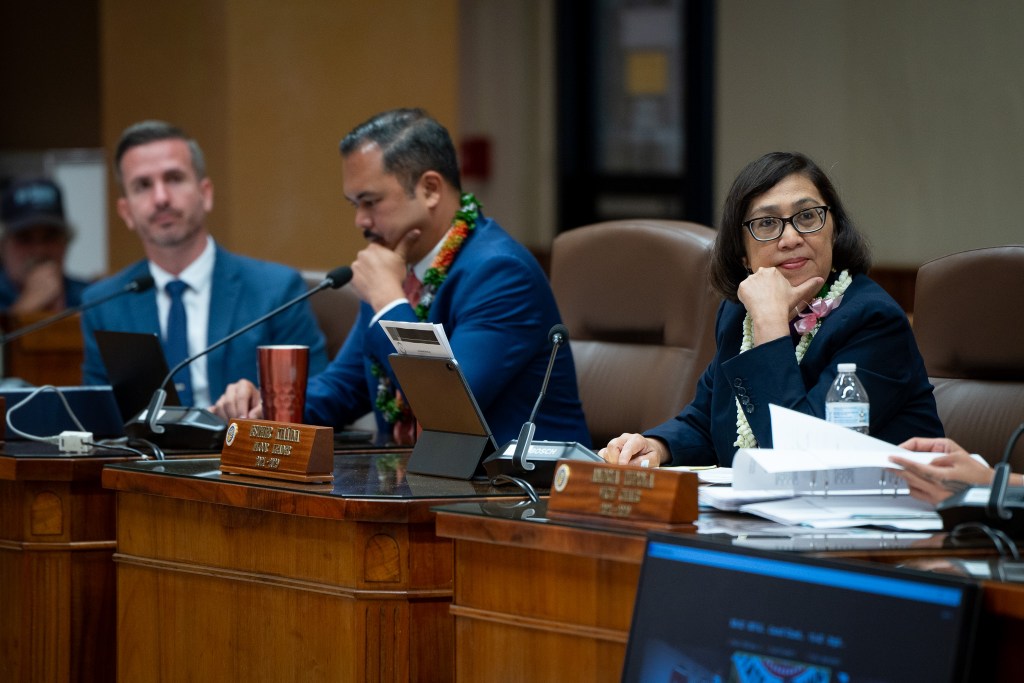
“The understanding that one project that someone doesn’t like is going to result in a bill that threatens to kill the entire program unless someone complies with that person’s wishes, and then all of these measures go to that particular committee … maybe I’m wading into things,” he said on the council floor.
Council Chair Tommy Waters interrupted him to gently warn he was speaking off topic. Council member Augie Tulba, who spoke next, said he agreed with Weyer.
Finally, when it was Kiaʻāina’s turn to talk, she made no attempt to hide her distaste for Weyer’s comments.
“I actually welcome all of the comments and testimony on this bill as for my colleagues, except for council member Weyer,” she said on the floor. “Because he’s attacking me personally, and there’s actually no room for that in this council.”
Kiaʻāina said she introduced the bill to give her Koʻolaupoko community a voice and that it would be up for discussion in three committees: her zoning committee, the budget committee and the housing committee. Almost six months later, however, the bill is still yet to come up again.
Weyer speaks idealistically and likes to introduce progressive legislation, including a proposal he and Waters introduced – and voters approved – in 2024 to direct about $8 million a year toward a climate resiliency fund. But sometimes he struggles, and he became visibly frustrated at the council’s December 2024 meeting while trying to pass a bill he co-introduced with Waters to ban the sale of plastic bottles from city facilities.
Weyer said at a council meeting he thought the bill would be “low-hanging fruit.” Instead, it elicited a barrage of oppositional testimony during its final vote in December 2024 from people representing organizations like the American Beverage Association, Hawaii Food Industry Association and water bottle packaging company Pacific Allied Products. Other individual testifiers said the bill was no good and would harm local jobs.
Exasperated, Weyer said on the floor that the bill’s genesis was a group of 6th graders who had approached the council and said they were worried about the proliferation of plastic in the environment. He referenced studies showing how deeply microplastics have become embedded in human bodies and the negative health effects they lead to. The bill, he said, is somewhat of a symbolic compromise.
“I just feel like this is such a minor step,” Weyer said on the floor. “Like, it’s so small.”
Ten minutes later, the bill was dead.
Working Outside The Majority
Weyer generally votes in line with Radiant Cordero and Tyler Dos Santos-Tam, the chamber’s two other younger and more progressive lawmakers. Waters booted the three of them from his leadership team after a contentious vote on sewer fee increases a year ago, resulting in Dos Santos-Tam’s removal from budget chair and Weyer’s removal from council vice chair. As a result, Weyer’s allies are now out of power.
Waters also removed Weyer from the zoning committee, which regularly discusses legislation important to his constituents. Kiaʻāina remains in charge of the committee, and Weyer has resorted to encouraging his newsletter readers to contact Kiaʻāina and urge her to schedule his resolutions for a hearing.
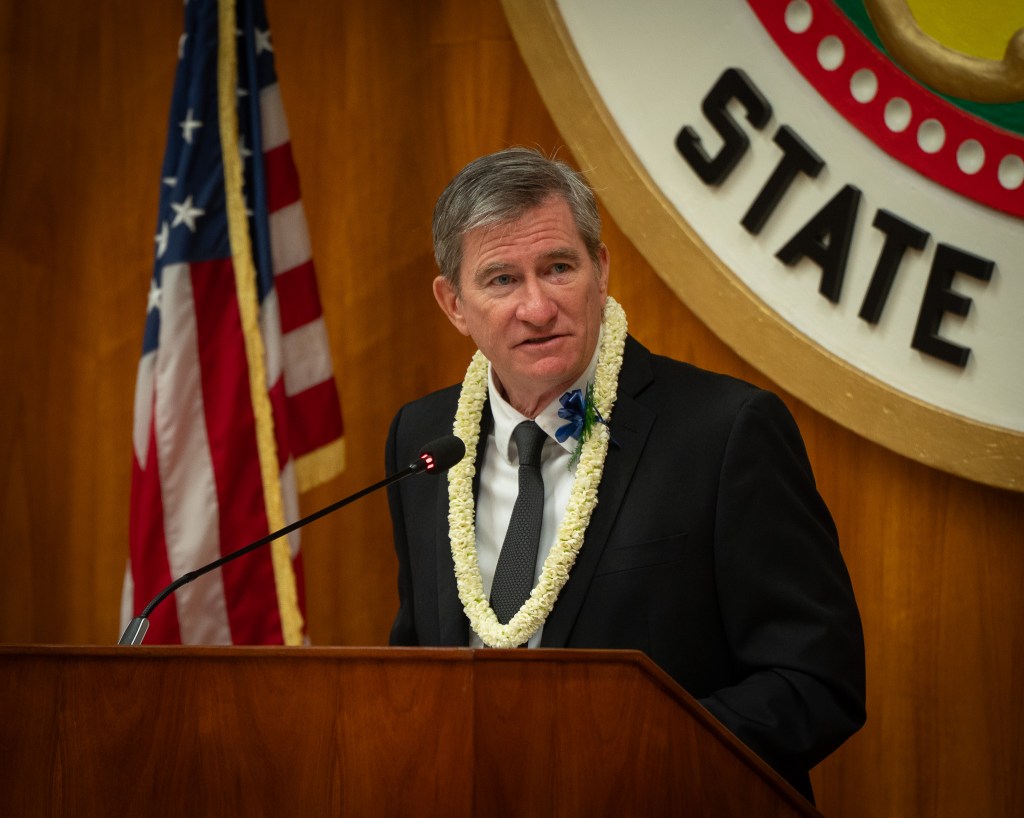
Weyer says that the reshuffling has not affected his performance. Being outside the majority is liberating, he said, in the sense that there’s no expectation he will vote in any direction but his conscience.
Along with Cordero and Dos Santos-Tam, he unsuccessfully opposed transit fare increases earlier this year, which are now set to kick in on July 1. The three of them also supported an empty homes tax introduced by Cordero and Waters in 2024, and Waters said recently he will schedule it for a final vote in July.
Weyer had amended that bill soon after it was introduced to exempt short-term rentals, one of its many compromises.
“I feel like we’ve been able to be just as effective outside the majority as we were inside the majority,” he said, referencing a new lifeguard tower that recently went up in his district.
While his more observant constituents have noticed his demotion in status, they said he still manages to be present and deliver for his district.
Weyer lives in Waikele, and his district stretches up through Wahiawā all the way to the North Shore and loops through Koʻolauloa before ending in Kahaluʻu. It’s a large area to cover, and he said he often returns constituent calls while driving the long distances.
Some people still think he could do better.
“I just think he’s spread way too thin,” Koʻolauloa resident Dotty Kelly-Paddock said, “and we just really don’t get that face-to-face interaction with him like I had hoped we would have.”
She said he’s been more present since the storms this spring. That observation is supported by Achiu, a Waialua resident, who recalls him arriving to the North Shore around 5 a.m. one day and then leaving around 6 p.m. to drive to Hauʻula.
“In a nutshell: Strong presence. Very engaged. Very supportive,” Achiu said.
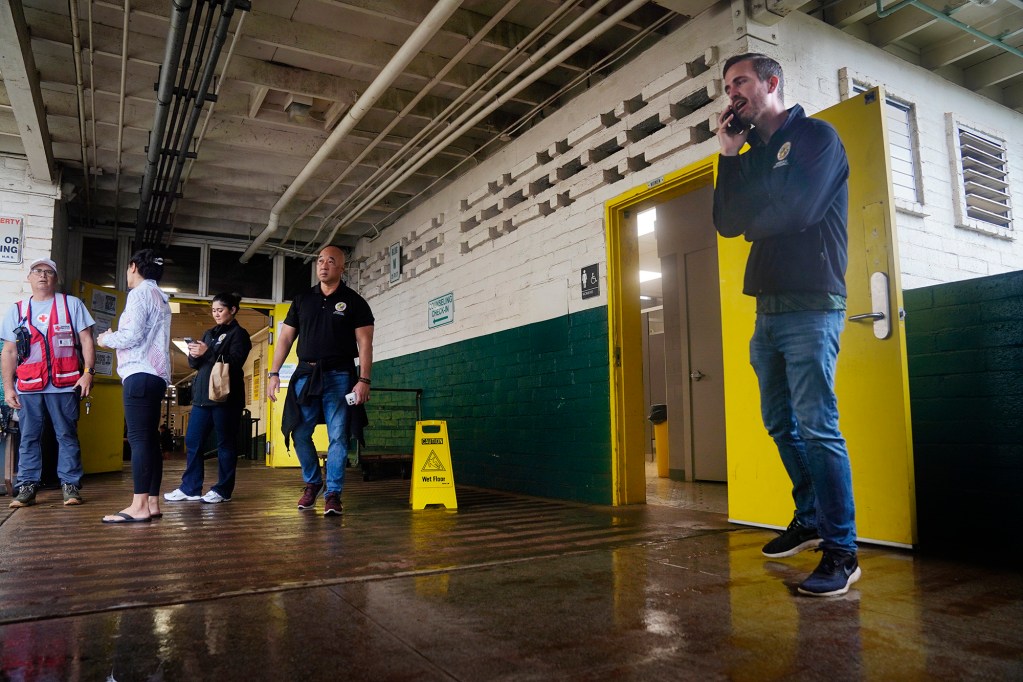
Weyer is running uncontested, so he is set to serve another four-year term.
He hopes to use that time to improve the city’s down payment assistance program for prospective homeowners, continue beefing up the low-rise affordable rental Bill 7 program and reform property taxes to incentivize people using their homes for housing, whether that be through an empty homes tax or some other policy.
He said he’s proud that his district hosts two centers – one in Hauʻula and one in Wahiawā – for families experiencing homelessness to be connected to other services, and added that he would like to see Oʻahu create more shelter space with similar wraparound services.
It remains to be seen how successful he will be with those aims. But Weyer is persistent. After some headscratching in 2024 when his plastic bottle ban died, he introduced a new version of the bill that focused only on city vending machines, which eventually passed.
And, supporters say, there is a lot of time for his political fortunes to change over the next four years.
“The pendulum swings back and forth,” Antolini said, “and I just want him to continue to be persistent, and patient, and a great advocate for his community and be ready for when there’s an upswing in opportunities for him. And his community will support him.”