‘Terrified’ Kids’ Long-Held Concerns About Dentist Surface After Viral Video
Dr. Andrew Choy is one of few pediatric dentists in the Hilo area accepting Medicaid. Parents who say he’s traumatized their kids now drive four hours round trip to visit someone else.
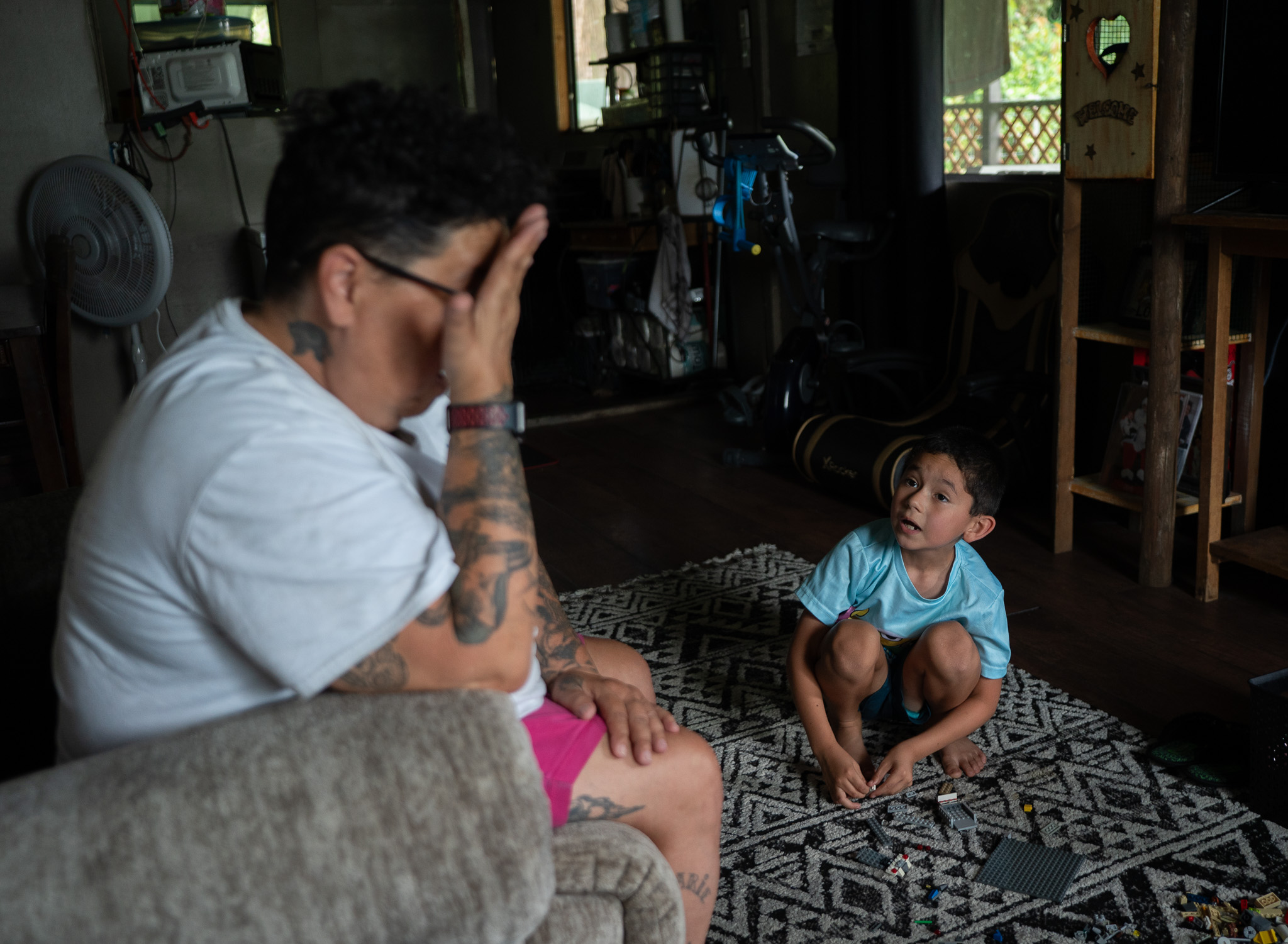
Hazen Pauline laid on the carpet at his Mountain View home running a small grey Lego car back and forth along the floor, as his grandmother, Marlena Dedrick, looked lovingly at him from her recliner.
“I look happy all the time,” he chimed, glancing up from his Legos. “But I’m still sad.”
Watching him play, Dedrick said, you wouldn’t know he was still recovering from the traumatic effects of a dentist appointment more than two months ago.
The appointment was with Dr. Andrew Choy at Keiki Dental Specialists in Hilo and was secretly recorded by someone in the treatment area and posted on Facebook in March. It shows Choy working on Hazen, who is being held down on a table by a female assistant as he screams, cries and gags. Choy scolds him sharply multiple times, ignores Hazen’s requests to sit up and spit out excess saliva, and at the end of the appointment, tells him he’s a “horrible listener,” among other reprimands, as the 6-year-old boy audibly sobs.
The video quickly went viral, sending shockwaves through the small Hilo community. Hundreds of outraged parents commented, describing their own negative experiences with Choy dating back more than 10 years. Many said they had filed formal complaints against Choy and were shocked to find out he was still practicing.
Civil Beat spoke to 17 parents and guardians who said their children had traumatic experiences with Choy dating as far back as 2014. Two provided records of complaints filed with the Department of Commerce and Consumer Affairs, which oversees licensing for medical professionals in the state. Another provided a copy of a complaint filed with Hawaiʻi Dental Service, which runs the dental program for Medicaid beneficiaries. At least three parents have filed police reports with the Hawaiʻi Police Department accusing Choy of assaulting their children or putting injections into their kids’ mouths without their consent.
Other parents said they also had filed complaints but couldn’t find copies. Some said they reported their negative experiences by phone to their health insurance companies. Dozens of others have left scathing reviews online.
Choy has not been charged with a crime in Hawaiʻi. He has also never been disciplined by the licensing board, here or in the two other states where he has practiced — Massachusetts and Kansas — records show.
But parents who spoke to Civil Beat have accused him of behavior ranging from yelling at their children to using restraints on them without parental consent, performing additional and unnecessary dental work without asking first and continuing with procedures despite children’s screams and parents’ pleas for him to stop — all actions pediatric dental experts say go against their professional standards.
Choy told Civil Beat that he has all parents sign consent forms during their children’s intake appointments that allow him to use restraints when necessary. He denied ever performing dental work without first disclosing it and providing estimates for it to parents. And when asked about working through children’s screams, he said that’s something all pediatric dentists deal with daily when treating young kids for cavities and other dental issues.
“Kids with 20 cavities by the time they’re 3 years old? No world exists where they’re going to get from there and be happy,” he said. “We’re not the sunshine rainbow factory.”
However, Choy also said that when parents become confrontational, he kicks them out of his practice. In fact, he said, the negative chatter about him on social media is all from disgruntled parents who he’d asked to leave for being rude to him and his staff.
“Most of those people that I noticed that posted were people we had dismissed from this office for being extremely rude or very violent or had negative language in our office,” he said.
Choy estimates he’s seen 20,000 kids over the last two decades and says 99% of his clients are happy customers. They’re just the silent majority online, he said. A Civil Beat reporter asked Choy to connect her with some of his satisfied patients but he did not provide any contacts. Inquiries sent to internet commenters who left positive reviews of his practice did not receive responses either.
“We’re not the sunshine rainbow factory.”
Dr. Andrew Choy, in response to complaints about how he treats his young patients.
Some parents say they want him to stop treating children altogether, but beyond filing complaints, leaving online reviews and telling friends to stay away from his practice, they don’t know what to do. Some families are going to great lengths to avoid him. Nearly all of those who spoke to Civil Beat say they now drive four hours roundtrip to bring their kids to dentists on the west side of Hawaiʻi island. Choy said he is one of only three pediatric dentists in the Hilo area who accept HMSA-QUEST, which is Hawaiʻi’s Medicaid program.
Brandi Keohokapu-Dutton is one of the parents who moved on. She said she started taking her kids to see Dr. Matt Griffith in Kona after what she described as an awful experience with Choy in 2018. He handled her sons, who were 4 and 5 at the time, roughly, pinched their cheeks and spoke to them harshly, she said. Her 4-year-old emerged from the treatment room with silver caps on all his front teeth — something she said she hadn’t been informed would happen.
“It’s on the other side of the island, so I lose a whole day of work,” she said of driving her sons to see their current dentist, “but I do it for my kids because they shouldn’t have to be terrified.”
‘It Crossed A Line’
After the video of Hazen went viral, Dedrick’s inbox flooded with messages.
“Some just said, ‘Hey, I seen the video of your grandson, I want you to know you’re not alone,’” she said. “This is not an isolated issue, it’s been going on for some time now.”
Before she saw the video, Dedrick didn’t know what had happened during Hazen’s appointment. She brought him to the dental office for a regular cleaning that day, but unlike previous appointments, employees asked her to stay in the waiting room rather than accompany him to the treatment area.
Hazen emerged from the appointment crying, Dedrick remembers, but he couldn’t articulate what had upset him.
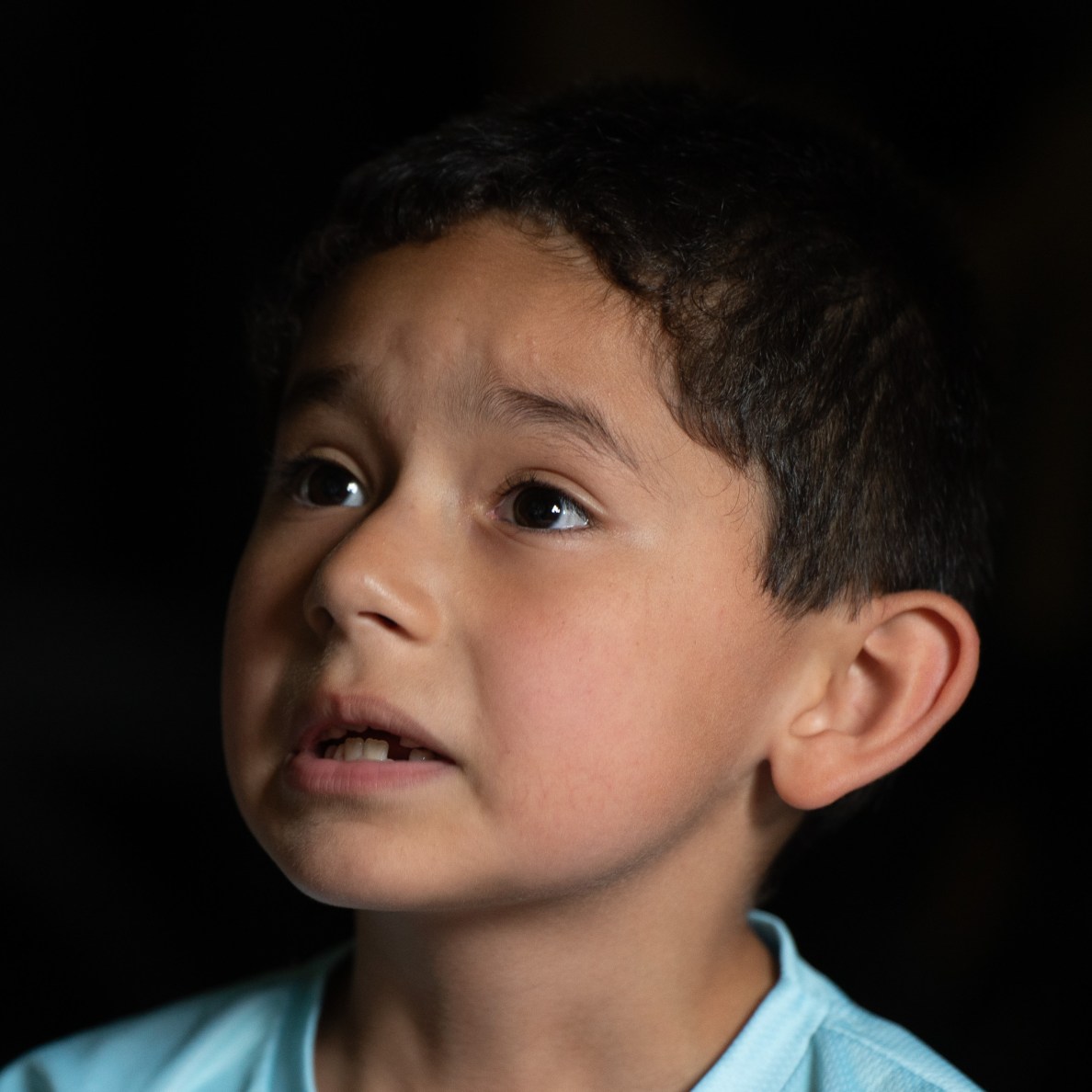
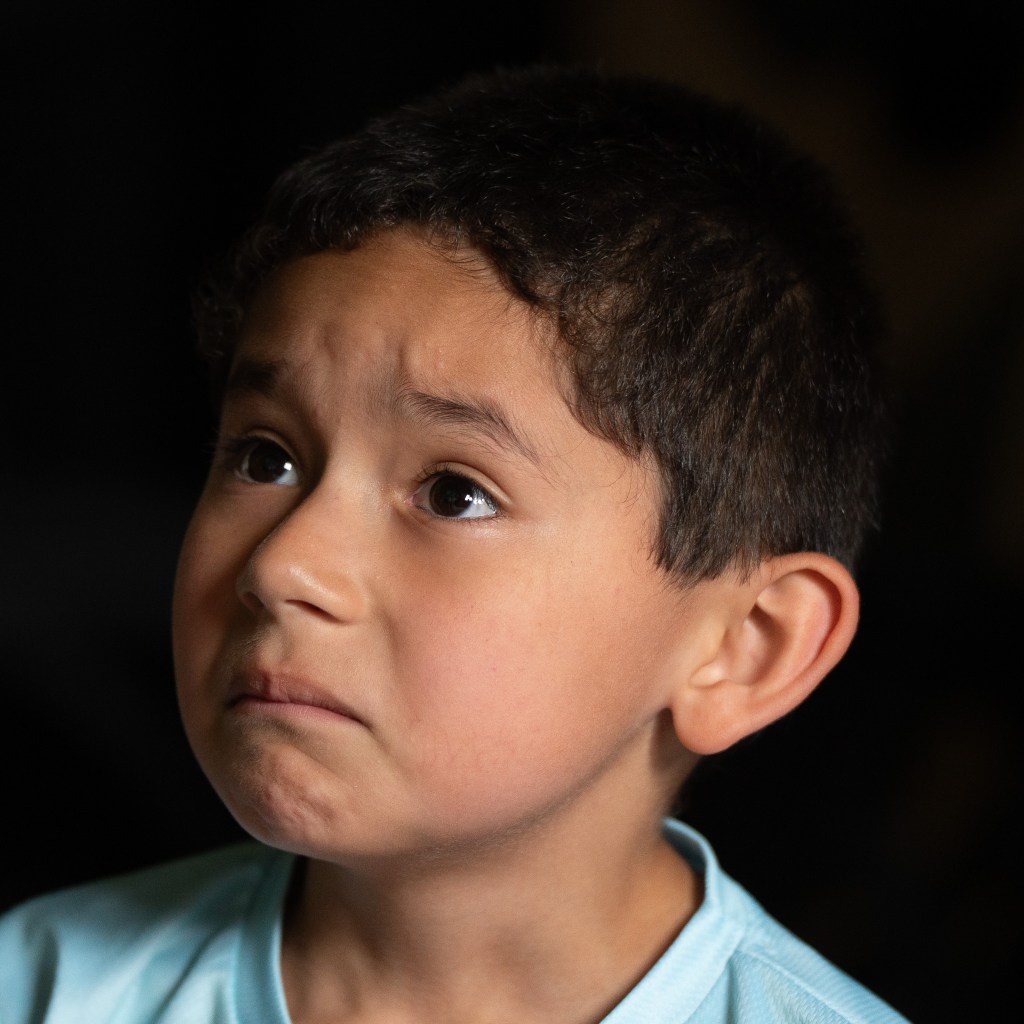

Hazen Pauline, 6, was traumatized by the appointment with Choy, his grandmother said. She said she always told Choy to be firm with Hazen, but she said the way the dentist treated her grandson in the video crossed a line. (Craig Fujii/Civil Beat/2026)
Later, she got a call from Choy, who told her that someone had recorded Hazen’s appointment and posted it online. He apologized for the fact that the video had been taken because it was a HIPAA violation, but he didn’t apologize for the way he treated Hazen. HIPAA is a federal law that protects patient privacy by strictly prohibiting patients’ medical information from being disclosed without explicit consent.
At that point, Dedrick still hadn’t seen the video. She knew Choy was usually firm with Hazen, and in fact, she liked that about the dentist. Her grandson, who has oppositional defiant disorder and attention-deficit/hyperactivity disorder, sometimes can benefit from discipline, she said.
But when a copy of the video finally landed in her inbox, she watched it in horror.
“It wasn’t firm,” she said. “It crossed a line.”
Choy can be heard in the video telling Hazen “knock it off” as he struggles and cries beneath the grip of an assistant.
“You’re hurting me,” the boy whimpers.
“If you weren’t moving around, I wouldn’t have to hold your head,” Choy snaps back. “You better listen.”
“I have to spit,” Hazen pleads.
“Swallow your spit,” Choy commands.
The exam continues as Hazen gags and cries. At the end, the boy sits up slowly, weeping and coughing.
“Swallow it,” Choy snaps again. “You are being a horrible listener right now. That is gross, stop spitting.”
Hazen coughs again and croaks that his throat hurts.
“It’s because you were screaming and you were fighting everybody,” Choy says. One of the assistants quips, “There’s nothing wrong with your throat.”
As Hazen sulks out the door, he’s still coughing and crying.
“Stop that,” Choy says as the boy exits the doorway.
Dedrick was furious when she saw the video. It was nothing like the firm yet respectful tone Choy had taken with her grandson during previous appointments.
“What really disturbed me was clearly (Hazen) was asking for help because he felt like he was choking,” she said, “and he clearly stated that he needed to spit.”
The words Choy used were hurtful, too, she said.
“Like cutting him down,” she said. “Like he disappointed him so terribly. By telling him what? ‘I’m choking. I need to spit?’”
Dedrick called Hazen’s therapist for an urgent appointment. She remembers him reenacting the dental visit with dolls — one to represent himself, two for the assistants and one for Choy.
“You’re bad! You’re bad!” Hazen yelled, shaking the Choy doll during the reenactment, Dedrick recalled. “Don’t move!”
Hazen has been suffering with the trauma ever since, Dedrick said. He has nightmares and acts out in school. He’s also had a difficult time trusting caretaking figures, such as his pediatrician and barber.
“You take your child to a medical professional in the mindset that you’re doing what’s best for your child,” she said. “You don’t expect him to get traumatized.”
Choy, though, says he did nothing wrong. He said Dedrick had always told him to be firm with Hazen. When asked if he thought the way he spoke to Hazen was appropriate for children, he replied, “If they’re not listening. He was given multiple opportunities.”
He also said the video only shows the end of the appointment and doesn’t depict the part where Hazen was severely acting out.
“He was spitting at people, he was kicking people, he was being violent, and he was not being cooperative,” Choy said. “That is not acceptable.”
He continued, “It is not okay to physically strike people or spit in their face. Would you like to be spit in your face at your job? Is that a reasonable thing to have happen? No.”
But Dedrick said Choy should have called her back to the treatment area to help calm Hazen down.
“My role is his protector,” she said, “and I wasn’t there to protect him.”
Paul Casamassimo, chief policy officer with the American Academy of Pediatric Dentistry and attending dentist at Nationwide Children’s Hospital in Columbus, Ohio, said the decision to have a parent or guardian in the treatment room depends on each situation, but it is becoming much more common, especially if the child is going to be restrained, either with a device such as a papoose board or by assistants. A papoose board is a restraint with overlapping canvas flaps that can wrap securely around a patient’s body to temporarily immobilize them.
“Our goal is to develop somebody who’s not afraid to go to the dentist, who actually likes to go to the dentist.”
Paul Casamassimo, chief policy officer with the American Academy of Pediatric Dentistry
Casamassimo said he would not comment on the video because he wasn’t in the room. But he said in general, pediatric dentists are trained in multiple strategies to try to make children comfortable so that restraints are used as a last resort. Dentists can use distractions, like playing with puppets or showing cartoons on a TV above the dental chair. While some use firm tones of voice, they’re also trained to use positive reinforcement and have lots of communication with both the child and the parents to ensure everyone knows what to expect from the appointment.
“What I’m explaining is typical. It is much more typical than screaming at a child, or yelling at a child or berating a child,” he said. “Our goal is to develop somebody who’s not afraid to go to the dentist, who actually likes to go to the dentist.”
Ultimately, if a child is distressed, acting out or otherwise making treatment difficult, pediatric dentists are trained to stop and reassess, unless they’re in the middle of an emergency procedure. Even in those situations, they will often have “decision trees” on hand that lay out alternative treatment options if a child suddenly becomes uncooperative.
Using restraints during routine procedures, like teeth cleaning, is unusual, he said, and not recommended unless a parent or guardian is present. For children with developmental or behavioral challenges, common strategies include having a parent or assistant gently hold a child’s arm while stroking their shoulder and consoling them or in some cases, using a weighted blanket, with a parent’s permission, if that is found to help calm a child down.
The focus of pediatric dentistry, he said, is on education, preventative care and conditioning children and families to be comfortable with treatment so that they’re cooperative if an intervention is needed.
“It’s not unusual for kids not to want to leave a pediatric dental office at the end of their visit,” he said, “because they have so much fun, they get rewards.”
Dentist: Medicaid Patients Are ‘Entitled’
Kylie Kepaʻa looks up at the sky, tears welling in her eyes, as the sound of her little brother’s cries plays from her mother’s cellphone.
The sound is from a video Kepaʻa took of an appointment she brought her then-3-year-old brother to at Keiki Dental Specialists in 2022. The boy can be heard screaming, coughing and crying, while Choy says, “Stop crying. You want to go? Stop. That’s the only way you’re going to go.”

Kepaʻa, who was 18 at the time, said she knew something was wrong the moment the appointment started. Choy entered with a few assistants who held the boy down while Choy injected a local anesthetic into his gums. The anesthetic was supposed to numb him, but as Choy started the procedure to put crowns on his cavities, the child screamed in apparent pain. His older sister went over to comfort him.
“I get yelled at and told to go back to the chair,” she said. “And the whole time he’s just screaming, screaming, screaming.”
Unsure what to do, Kepaʻa started discretely recording. The video she took only shows her tearful eyes over a blue surgical face mask, but the sounds of her brother’s distress are clear.
It still upsets her to this day. She plugged her ears as her mother played the video for a Civil Beat reporter last Wednesday.
“My little brother’s screaming, and I can’t help him,” she said, her voice cracking through tears. “I’m just sitting in the corner, just recording, because I didn’t know what else to do.”
After the appointment, their mother, J-Lynn Vinson Gourd, picked them up. Kepaʻa showed her the video. She heard her son’s cries and was furious.
Vinson Gourd and one of her older sons returned to the office to confront Choy about the way he’d treated her 3-year-old son.
Choy immediately blamed her for her son having cavities in the first place, she said.
“That’s why your child had to come to me because you ruined his teeth,” she said he told her.
She said the interaction escalated from there and her older son got angry.
“He’s like, ‘Brah, I watched the videos, you hurt my little brother,” Vinson Gourd said.
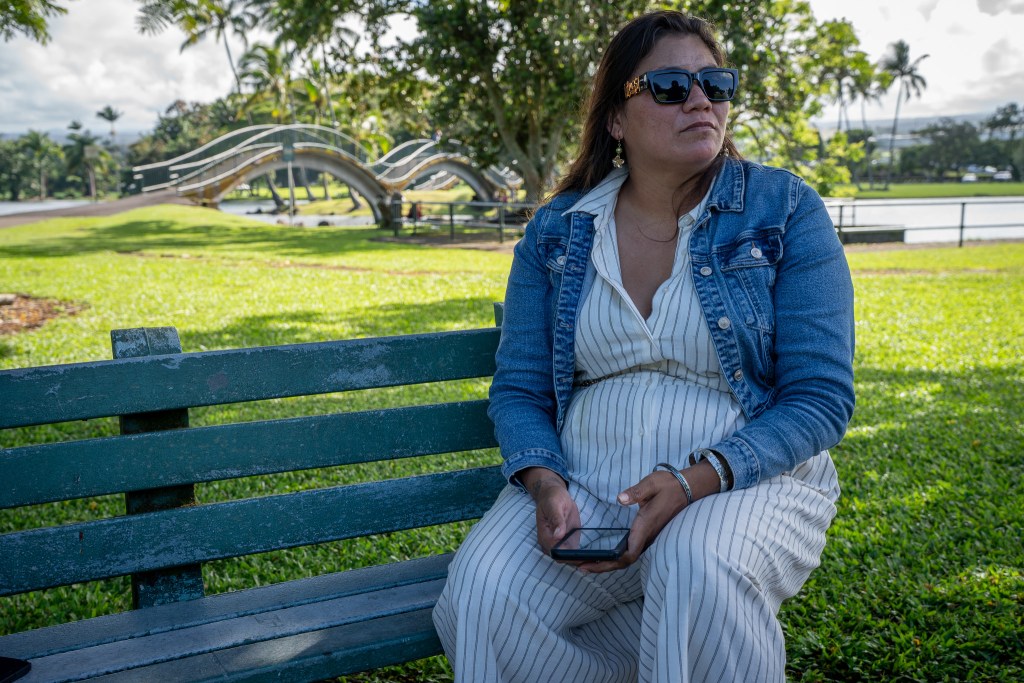
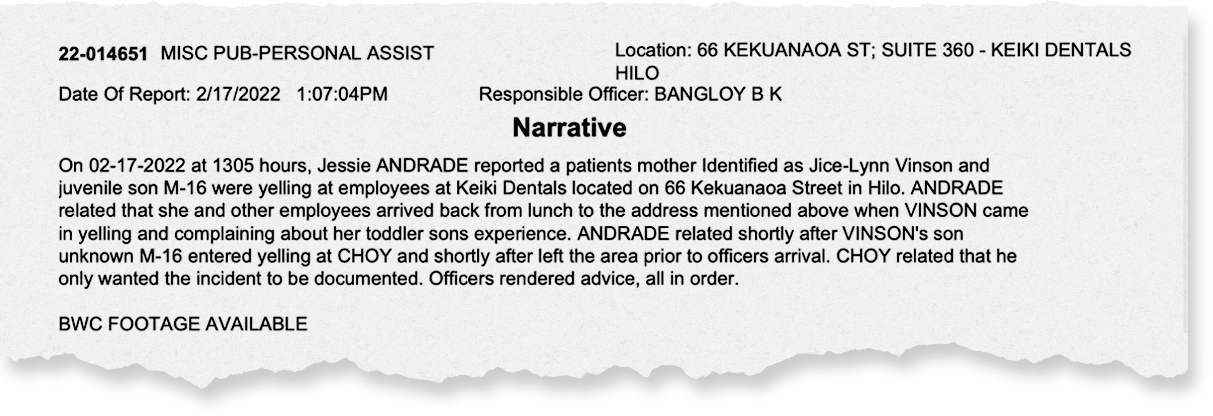
Choy yelled at them to leave. He then called the police and filed a report against Vinson Gourd. The report, obtained by Civil Beat through a public records request, says Vinson Gourd and her 16-year-old son yelled at Keiki Dental employees about her toddler son’s experience and left the premises before officers arrived. Choy told officers he wanted to document the incident, the report says.
Vinson Gourd says no officers ever called her and she didn’t know a report had been filed until a reporter asked her about it. She said she filed her own complaint against Choy with the Department of Commerce and Consumer Affairs Regulated Industries Complaints Office. She provided Civil Beat a letter she got back from the office notifying her that her complaint had been received and would be reviewed.
Vinson Gourd said her family has HMSA-QUEST, and she went to Keiki Dental Specialists because it’s one of the few providers in the Hilo area that works with Medicaid patients.
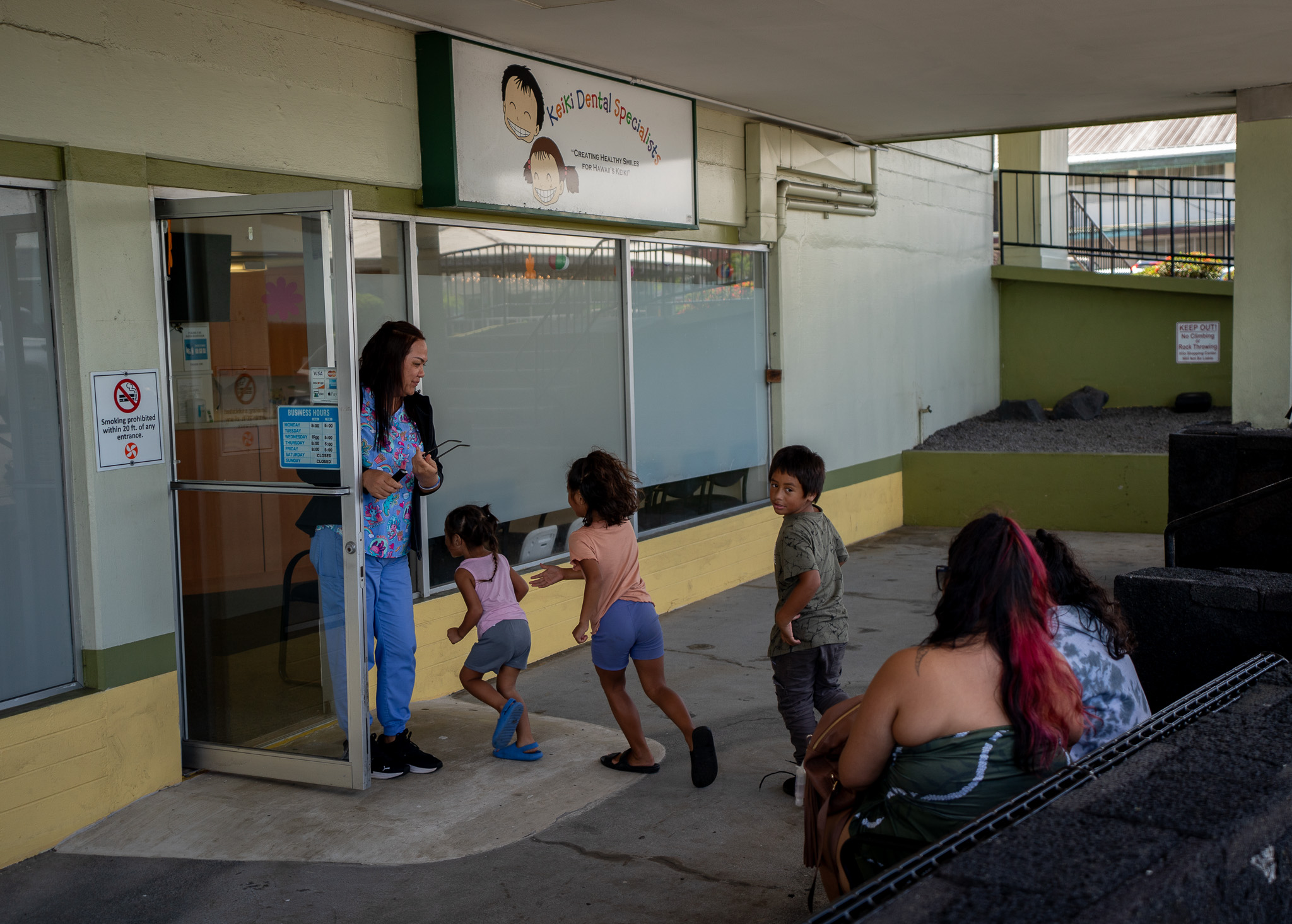
After the video of Hazen’s appointment went viral in March, Choy said business was slow for a couple weeks, but has returned to normal. He had already seen 25 patients by the time he closed his office for lunch last Wednesday.
Choy, who commutes from Oʻahu three times a week to work at his practice in Hilo, said he’s filling an essential need for an underserved population. He said he does it because he cares and wants to help the community.
“There’s a reason why a lot of people don’t want to see Medicaid patients.”
Dr. Andrew Choy, Hilo dentist
But at the same time, he blamed his patients for being difficult to work with.
“There’s a reason why a lot of people don’t want to see Medicaid patients,” he said. “The patient population is very hard to work with. They’re entitled, they’re rude, they have a chip on their shoulder about things and because of that, they’re not, I guess, the patient you want to see in your office normally.”
He also said providers get lower reimbursements from Medicaid than other commercial insurance companies.
“It’s not worth my time to do a filling on someone for $50 when the normal price is $150 to $200 and at the same time they’re going to be rude and disrespectful,” he said. “It’s very simple, if you don’t respect us, you know, respect our time, you’re rude, get out.”
Dedrick, who also has HMSA-QUEST, took issue with Choy’s assessment of Medicaid patients. She isn’t entitled, she said, she’s grateful to have insurance that lets her afford necessary medical care.
“In this day and age, everything is expensive,” said Dedrick, who works cleaning houses. “It’s a blessing that I have the government’s help, but I don’t take it for granted.”
Complaints, But No Discipline
Amber Seber had never been so afraid in her life.
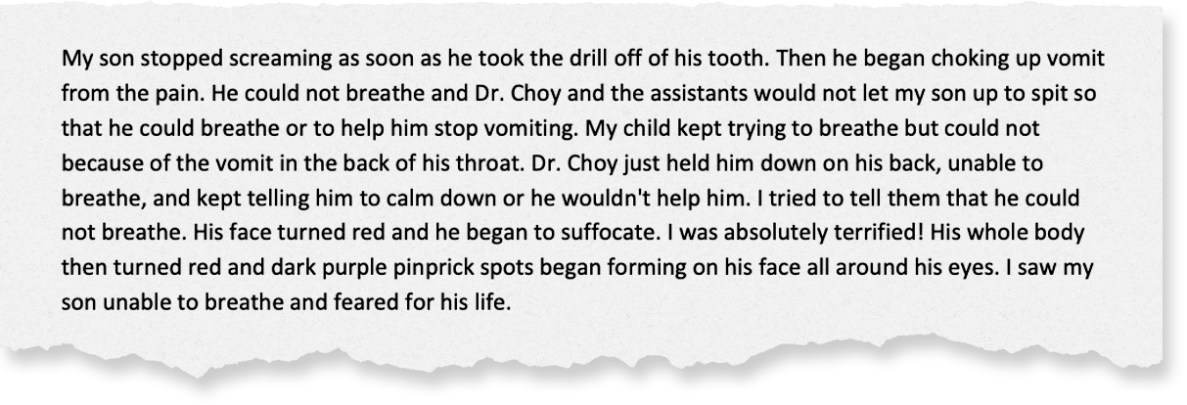
Her 5-year-old son had just been screaming, crying and gagging during a cavity filling in Choy’s dental chair. Choy refused to stop drilling despite Seber’s pleas and refused to loosen the device that was holding the boy’s mouth open as wide as it could go.
After writhing in pain for a few minutes, the 5-year-old began to choke on his own vomit, his body turned red and dark purple spots began to form on his skin. Suddenly, he went limp, “as if he had been put into a trance,” Seber wrote in a complaint she filed with the Department of Commerce and Consumer Affairs after the appointment in 2017.
When the temporary filling was finally in place, the boy sat up and Seber whisked him out of the office. They were both shaking as she drove him home. The local anesthesia Choy had injected into the boy’s mouth never took effect, according to Seber, and he felt every moment of the drill as Choy’s assistants pinned his arms to the chair.
Seber had been begging Choy to stop, but he repeatedly insisted that the boy was not in pain and that Choy wasn’t “even touching him.”
“He falsely told me that my son could not feel it, to my face, when I begged him to stop,” she wrote in the complaint. “My son is too terrified to see another dentist to have the temporary filling fixed. We have not been sleeping well and we have cried the past two days. My son has nightmares.”
Seber filed a police report as well, accusing Choy of assaulting her son.
Both of her reports resulted in no action.
Two years later, in 2019, she received a letter from the DCCA’s Regulated Industries Complaints Office, which is charged with investigating complaints against licensed providers, such as doctors and dentists.
The investigation, the letter says, showed that Choy did not violate any provisions of Chapter 448 of Hawaiʻi Revised Statutes, which covers dentistry. Gregg Morimoto, who is listed as the investigator on the case, could not be reached for comment.
“I was really devastated,” Seber said of when she got the letter back. “I didn’t know what else to do after that.”
She said she’s spoken to many other parents since who’ve said they’ve also filed complaints with the DCCA.
But it’s next to impossible to know how many complaints have been filed.
When a reporter asked the agency about complaints against Choy, spokesman William Nhieu replied that “no formal complaints have been received at this time.”
But when a reporter pointed to Seber’s case and provided a case number, Nhieu acknowledged the complaint had been filed. But he said because it was closed with no disciplinary action, the case file was “no longer available.” The DCCA’s website says complaints that are closed with no legal action are only available for up to two years from the date they are closed.

He also said the agency’s Regulated Industries Complaints Office, or RICO, recently received several tips regarding Choy that are being reviewed by investigators. Tips differ from complaints because they are informal, not confirmed by a complaining witness and do not have supporting documents or evidence, he said. He would not disclose the nature of the tips and said the review is ongoing.
Christopher Woo, who sits on the state’s Board of Dentistry, said he has not heard of complaints against Choy and was not aware of the video that went viral in March. Typically, complaints need to be investigated and substantiated by RICO staff before they are brought before the board, he said. The board then determines if any discipline is necessary.
The board’s next meeting is July 13, so if any complaints are substantiated before then, it could come before the board, he said.
Choy says he hasn’t done anything that would constitute a license violation. It’s common for children to become upset and distressed during dental procedures, and it’s something every dentist deals with, he said. If some parents don’t like him, it’s simply because their personalities clash with his, he said, or they have differing views on how children should be disciplined.
“I’m a little more old school,” he said. “We’re firm. If you’re not listening, we’re going to tell you, ‘Hey, stop moving around and listen.’ Some people like that, some people don’t.
“It’s just a philosophy difference,” he said. “If you don’t like it, then find another provider that suits what you’re looking for.”
But for many families in the Hilo area, it’s not that simple.
It’s difficult to find a provider who will take HMSA-QUEST and is accepting new patients. Some parents are referred to Keiki Dental Specialists by their health insurance company or their family dentist and don’t necessarily think to check reviews.
Keohokapu-Dutton, whose sons had a bad experience with Choy in 2018, was a young mom when she was referred to Keiki Dental Specialists by HMSA-QUEST.
“I trusted the insurance company, I trusted where they sent us,” she said. “I trusted the name Keiki Dental.”
She remembers calling HMSA-QUEST to complain after the appointment and asked them to stop referring families to Choy. But years later, after having her third son, they tried to refer her there again.
“I was like, ‘No, please. Anywhere else,’” she said. “And I let them know, I don’t feel like he should be working on children.”

As Hazen played in the grass in his front yard last week, his grandmother said she feels terrible about what happened to him, but she hopes that speaking about it will inform other parents.
Hazen still has a follow-up appointment scheduled with Keiki Dental Specialists, but Dedrick said she doesn’t even want to speak to them to cancel it. She’s found a new dentist in Kona and has an appointment scheduled for September. Getting there will require her to miss work and Hazen to miss school. She’s already starting to mentally prepare him for being back in a dentist’s chair.
“We’re preparing him, letting him know that not every dentist is a bad dentist, not every doctor is a bad doctor,” she said. “We’re already starting the process of getting him comfortable and working on trust, because the trust is broken.”
Civil Beat’s health access reporting is supported in part by the Atherton Family Foundation.