Why Hawaiʻi Should Take Advantage Of This Maritime Moment
Under Trump plans, the state could be a hub for ship building, logistics, ocean energy, marine research, artificial intelligence and advanced manufacturing.
June 29, 2026 · 4 min read

About the Author

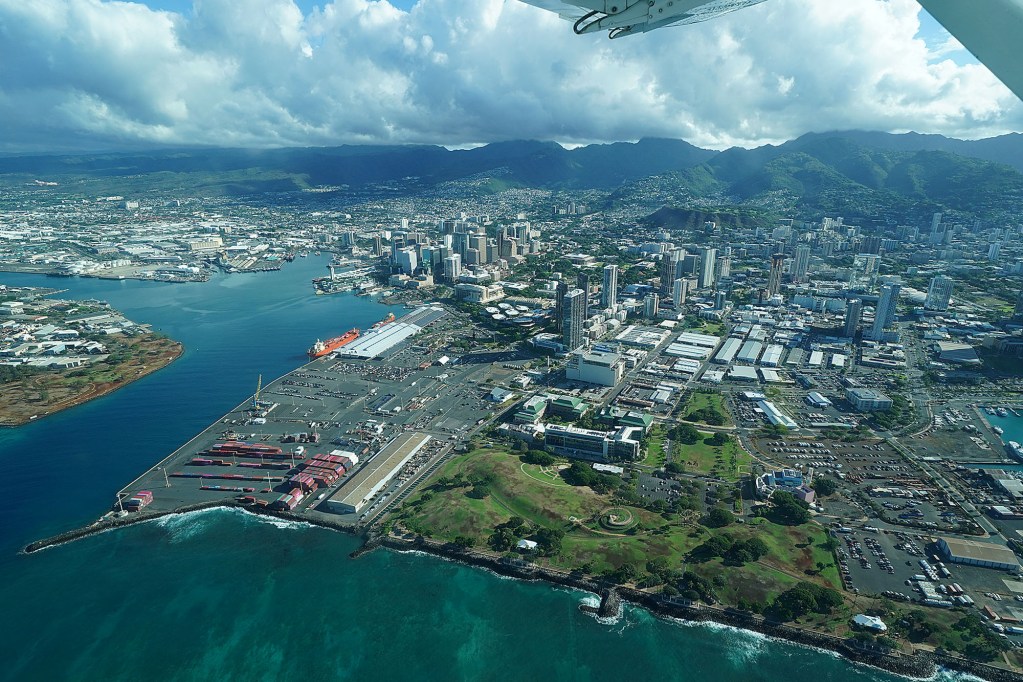
Hawaiʻi has always been a maritime state. Long before statehood, the islands sat at the crossroads of Pacific trade routes. Today, most of Hawaiʻi’s goods arrive by sea, making maritime commerce essential to the state’s economy and daily life.
At the same time, the maritime sector has long been central to Hawaiʻi’s identity. Pearl Harbor remains one of the most strategically important naval locations in the world and home to the U.S. Pacific Fleet. Pearl Harbor Naval Shipyard, one of the largest industrial employers in Hawaiʻi, supports thousands of civilian, military, and contractor personnel and generates significant economic activity for the state.
Hawaiʻi has also developed world-class expertise in ocean science and marine technology through the University of Hawaiʻi, the School of Ocean and Earth Science and Technology, federal laboratories, and a growing community of innovators working on autonomous systems, ocean robotics, and maritime domain awareness.

Ideas showcases stories, opinion and analysis about Hawaiʻi, from the state’s sharpest thinkers, to stretch our collective thinking about a problem or an issue. Email news@civilbeat.org to submit an idea or an essay.
Yet despite these advantages, Hawaiʻi has often been viewed as a consumer of maritime services rather than a center of maritime production and innovation. That should change.
Under the Trump administration’s Maritime Action Plan, which seeks to revitalize America’s maritime sector through investments in shipbuilding, ship repair, ports, workforce development, maritime education, and commercial shipping, there’s a unique opportunity for Hawaiʻi.
The plan proposes the creation of Maritime Prosperity Zones, which are special investment districts designed to attract private capital, strengthen maritime industries, and accelerate workforce opportunities while building the economic ecosystem to support strong communities surrounding it.
Hawaiʻi is identified as an eligible location by the federal government, and this investment, in conjunction with the opportunity zones identified by the state of Hawaiʻi, can offer an influx of capital for the state.
Across the country, states are already positioning themselves to capture maritime investment. Virginia, Mississippi, Alabama, Louisiana, Pennsylvania, and Texas are expanding shipyards, workforce training programs, and maritime industrial infrastructure. The Maritime Action Plan specifically identifies workforce development, shipyard modernization, and industrial capacity as national priorities.
The question now is whether Hawaiʻi will build an ecosystem around these investments.
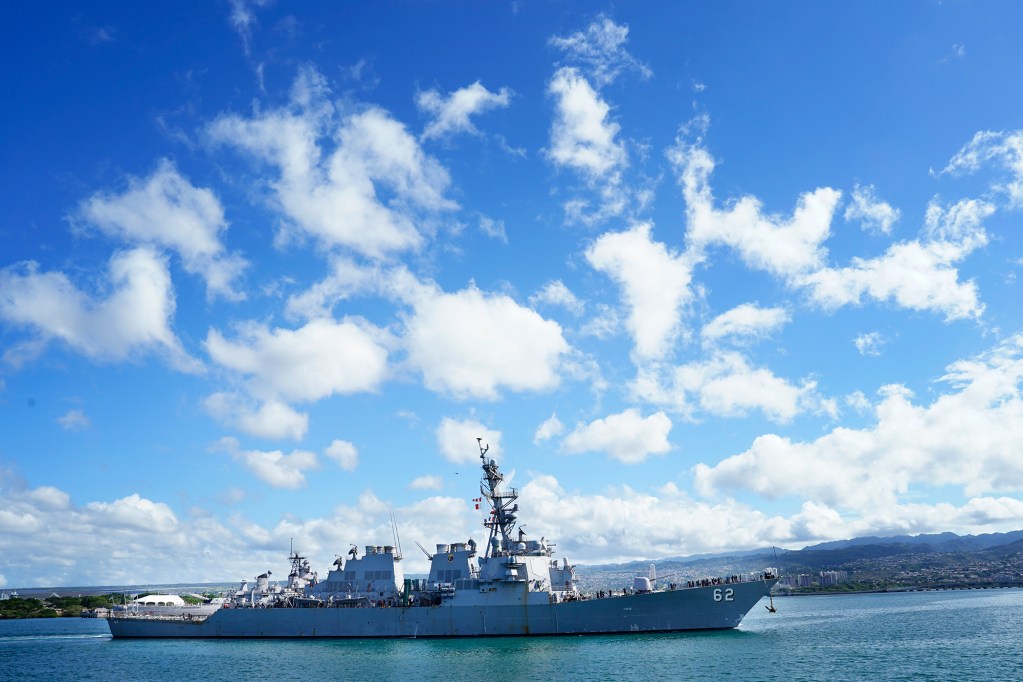
Hawaiʻi could become a hub for ship building and sustainment, maritime technology, autonomous maritime systems, logistics, ocean energy, marine research, artificial intelligence, logistics, energy, and advanced manufacturing.
Partnerships among industry, labor unions, community colleges, and the universities in Hawaiʻi could further create pathways into high-paying careers for welders, electricians, engineers, mariners, technicians, software developers, and data specialists. A stronger maritime sector would create benefits that extend far beyond the waterfront, supporting local schools, hospitals, small businesses, and communities across Hawaiʻi.
Such jobs are particularly important for a state that continues to struggle with the loss of young talent to the mainland. A stronger maritime sector would create opportunities for local residents to build rewarding careers in Hawaiʻi rather than leave it.
This will require the state of Hawaii to be designated as one of the Maritime Prosperity Zone that the administration will select. It’s also an opportunity for state leaders to launch a Hawaii maritime innovation and workforce initiative that aligns government, industry, academia, labor, and the defense community. The goal would be to build a maritime ecosystem tailored to Hawaiʻi’s unique strengths as America’s gateway to the Indo-Pacific.
Hawaiʻi already possesses the geography, infrastructure, expertise, and strategic relevance needed to lead; it just now needs to seize the opportunity. For a state defined by the ocean, the maritime future should not be something that happens elsewhere. It should happen here.
Editor’s note: All statements of fact, opinion, or analysis expressed are those of the author and do not reflect the official positions or views of the U.S. Government. Nothing in the contents should be construed as asserting or implying U.S. government authentication of information or endorsement of the author’s views.
 Sign up for our FREE morning newsletter and face each day more informed.
Community Voices aims to encourage broad discussion on many topics of community interest. It’s kind of a cross between Letters to the Editor and op-eds. This is your space to talk about important issues or interesting people who are making a difference in our world. Column lengths should be no more than 800 words and we need a photo of the author and a bio. We welcome video commentary and other multimedia formats. Send to news@civilbeat.org. The opinions and information expressed in Community Voices are solely those of the authors and not Civil Beat.
Read this next:

Local reporting when you need it most
Support timely, accurate, independent journalism.
Honolulu Civil Beat is a nonprofit organization, and your donation helps us produce local reporting that serves all of Hawaii.
ContributeAbout the Author