

Hawaiʻi Bets Millions That Students Will Eat Way More Eggs
The Agribusiness Development Corp. is closing in on a $4.7 million land purchase in Wahiawā for a highly specialized facility to crack eggs.
Despite myriad questions and misgivings, state officials are forging ahead with plans to build a multimillion-dollar facility in Wahiawā with a simple function: cracking eggs. Thousands and thousands of eggs.
Driven by Sen. Donovan Dela Cruz and state Agribusiness Development Corp. leaders, the facility is intended to crack low-grade eggs to supply an explosive increase in demand the Department of Education anticipates in the next few years. But without a clear plan for how to make the operation viable, there are concerns about the significant taxpayer investment, starting with the purchase of the $4.7 million property.
Proponents of the facility say the investment is needed to help boost local food production while mitigating waste. They say it will help satisfy Hawai‘i’s current daily demand for 1.2 million eggs, which is expected to increase substantially as more eggs are incorporated into school meals. But questions remain over who really stands to benefit from the egg-cracking facility, how it will be run and whether it will help Hawai‘i produce more food locally.
For Dane Wicker, an ADC board member and Dela Cruz’s former chief of staff, spending years planning and deliberating rather than taking tangible action will only result in further delays. The facility could serve schools statewide as well as hotels, hospitals and food manufacturers, he said.
“Everything we’re experiencing now is chicken and egg,” Wicker said. “If we wait for the perfect plan, we’re going to continue to lose businesses.”
The project is just one of several within a grander scheme to build centralized agricultural and food facilities in Wahiawā to become a hub for the island’s food system and the statewide school district. The entire plan – spearheaded by Dela Cruz – hinges on a range of facilities in Whitmore and, eventually, every island. “It begins and ends with DOE,” the plan says, noting the education department’s goal of purchasing 30% of its food locally by 2030.
Investing in infrastructure to support Hawaiʻi’s food security is valuable, said Rep. Amy Perruso, a former educator who represents parts of Wahiawā and Whitmore Village. But she’s worried the state’s largest egg producer will be the main beneficiary.
“I would just urge us to be cognizant of two things,” she said. “One is the impact on the community, and two is to make sure that we are not even indirectly or unintentionally benefiting private interests with public monies.”
The factory is a critical piece of the Wahiawā project because the education department cannot buy eggs still in their shells. The department must buy frozen, liquid eggs, which currently account for less than 1% of its $77 million annual food budget.
Food and farming advocates say smaller farmers are being left out of the discussion as the state focuses on the few large local operations.
The project has powerful backers in Dela Cruz, the Senate money committee chair, and Wicker, deputy director of the Department of Economic Development, Business and Tourism, and public school system superintendent Keith Hayashi.
“You got to take some risk, you’ve got to have some movement,” Dela Cruz said of the state’s food planning. “If not, you just go backwards. We’ve been so conservative in how we’re going to achieve these goals. We haven’t done shit.”
Penciling Out
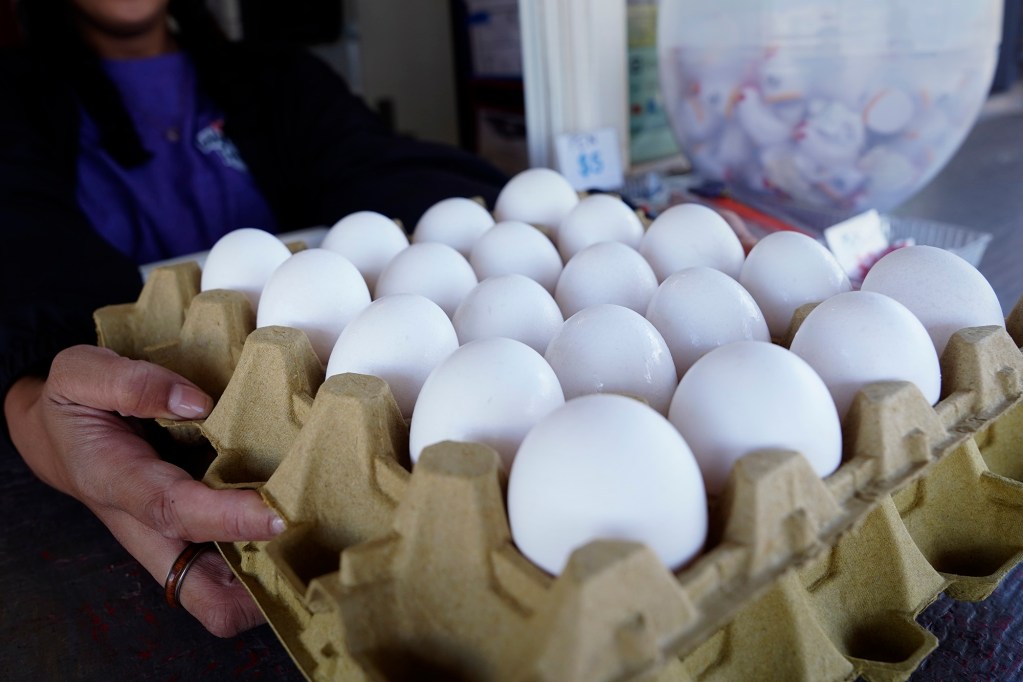
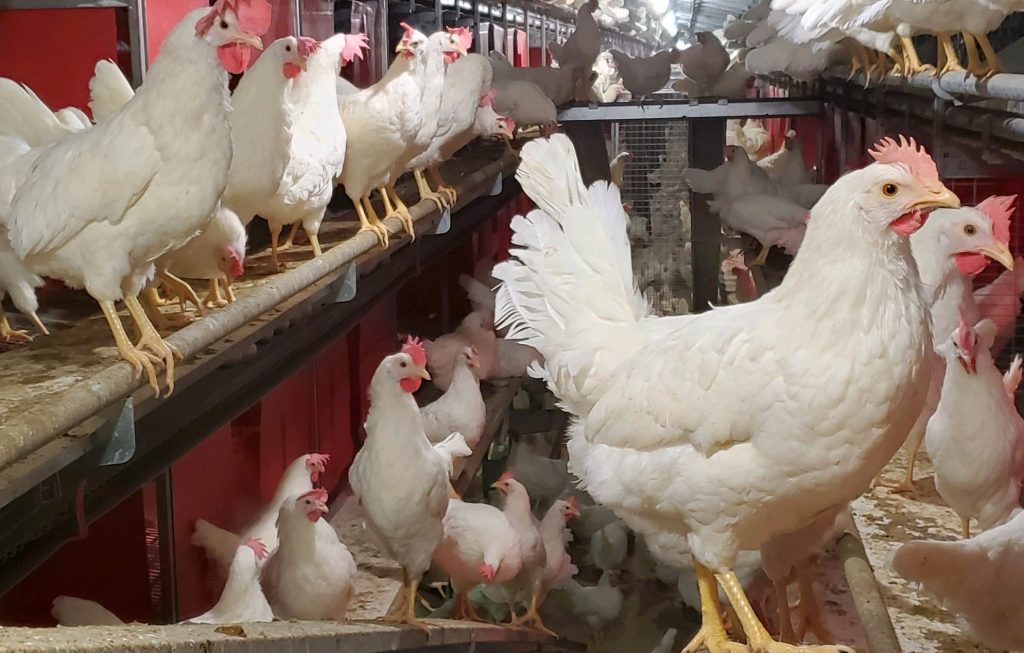
The state’s largest egg producer has said building its own facility to crack eggs doesn’t make financial sense, despite producing 30,000 unsellable, low-grade eggs daily.
Dela Cruz sees an opportunity for those eggs, which are perfectly safe to eat despite aesthetic imperfections, in the school meal system. He said the facility will help divert a waste stream from the Waialua operation while providing a potential income stream for smaller egg-laying operations.
The state gave the Agribusiness Development Corp. several million dollars last year to buy property in Wahiawā, including the 1.5-acre Kilani Avenue property on which an egg-cracking facility is being proposed. But certain members of the corporation’s board, which has ultimate say in the factory’s development, are skeptical about the hefty investment.
ADC board members Glenn Hong, Nathan Trump and Jason Okuhama expressed their reservations in recent meetings before ultimately signing off on the land acquisition. The Wahiawā community has meanwhile bemoaned the potential traffic issues that the facility will bring.
Hong, former president of interisland shipper Young Brothers, raised concerns about the long-term viability of the property. Big Island farmer Trump said the property pricing gave him sticker shock. Okuhama, a longtime agricultural loan adviser, felt the board was signing off on a deal with little insight into its minutiae.
“The community is up in arms about this particular project,” Wahiawā resident TJ Cuaresma told Civil Beat. “The community is always the last to know what’s going on.”
Corporation staff say any future action beyond the land purchase would require further legislative action and funding. But given design work is underway for an egg-cracking facility, the project appears to be a foregone conclusion.
Similarly sized operations on the mainland can cost millions to construct, which would be on top of the $4.7 million land acquisition the board approved on June 18.

“It could be a very substantial investment for the egg-cracking facility,” Okuhama said during the board’s June 18 meeting, “and we don’t know how it pencils out.”
Dela Cruz acknowledged the ADC board’s concerns. He told Civil Beat it “has to do what it has to do” to vet the plans. But when asked how a rejection might influence his grander plans for the food system statewide, he said, “I don’t speak in hypotheticals.”
He instead compared the Wahiawā food system investments to the state’s decade-long solar subsidy program. People didn’t complain about money pumped into that program, he said.
“If we had put a billion dollars into ag,” he said, “what do you think would happen?”
‘This Isn’t A Bailout’
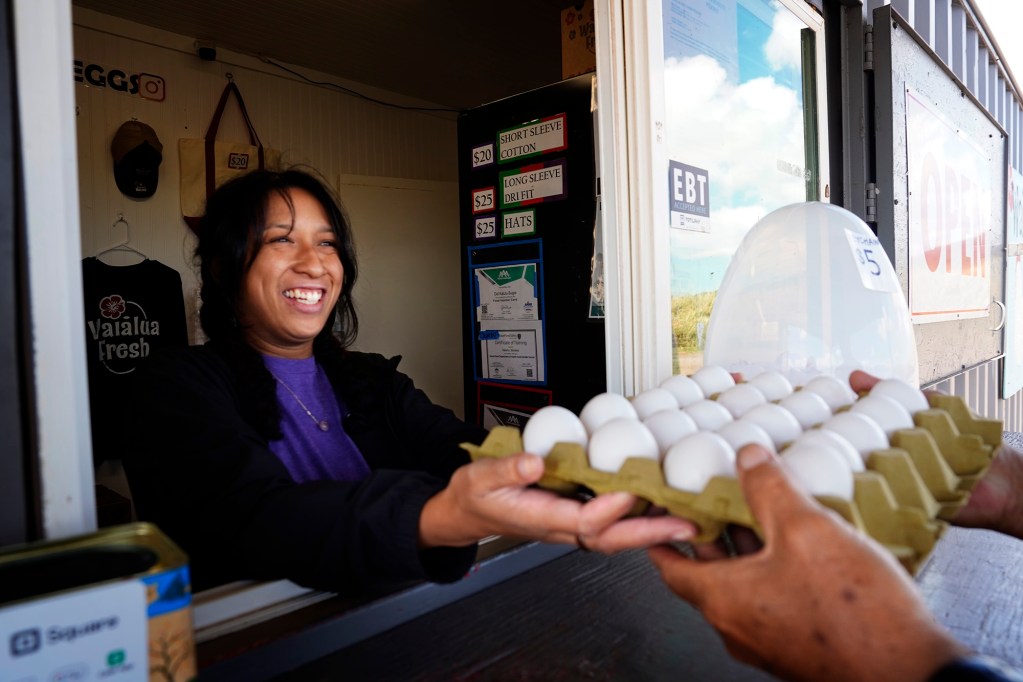
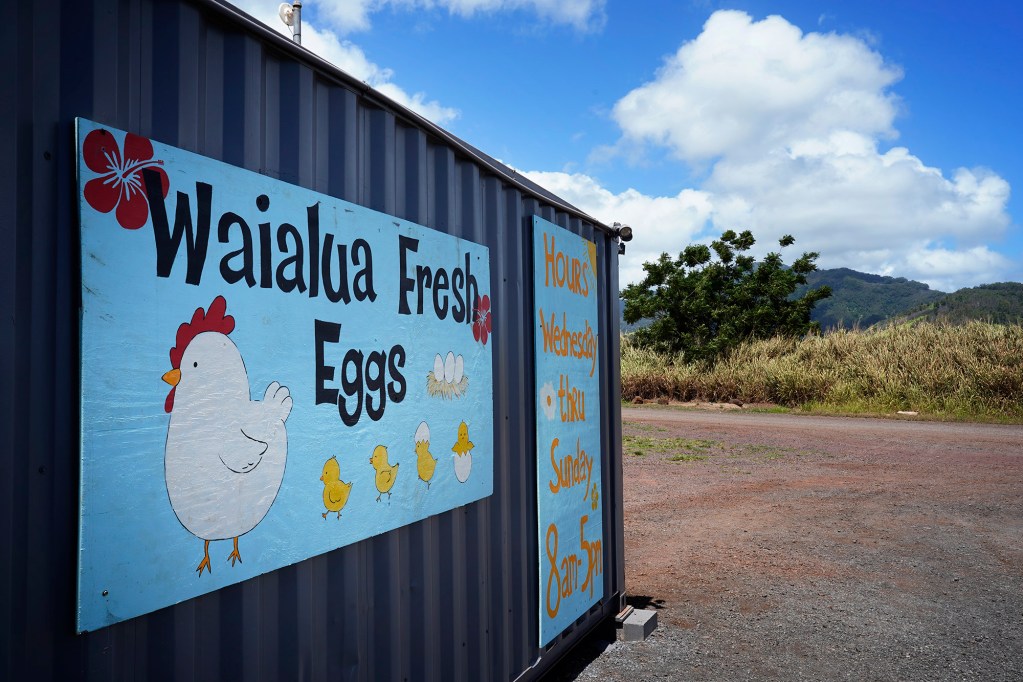
For Waialua Fresh Eggs, a partnership between two of the country’s biggest poultry operations, building an egg-cracking facility doesn’t make financial sense. The cost of shipping in expensive machinery doesn’t match what it could make by selling its off-grade products. Instead, it sells the eggs at a heavy discount on its Central Oʻahu property, where it is legal to do so.
On the mainland, where egg production is far higher, cracking facilities take b-grade eggs – imperfect eggs which cannot be sold in grocery stores – and process them into shelf-ready products like egg whites, yolks, scrambled egg mixes or boiled eggs. Anywhere from 3% to 10% of laying operations’ eggs would go to waste if it weren’t for these factories, reducing profits.
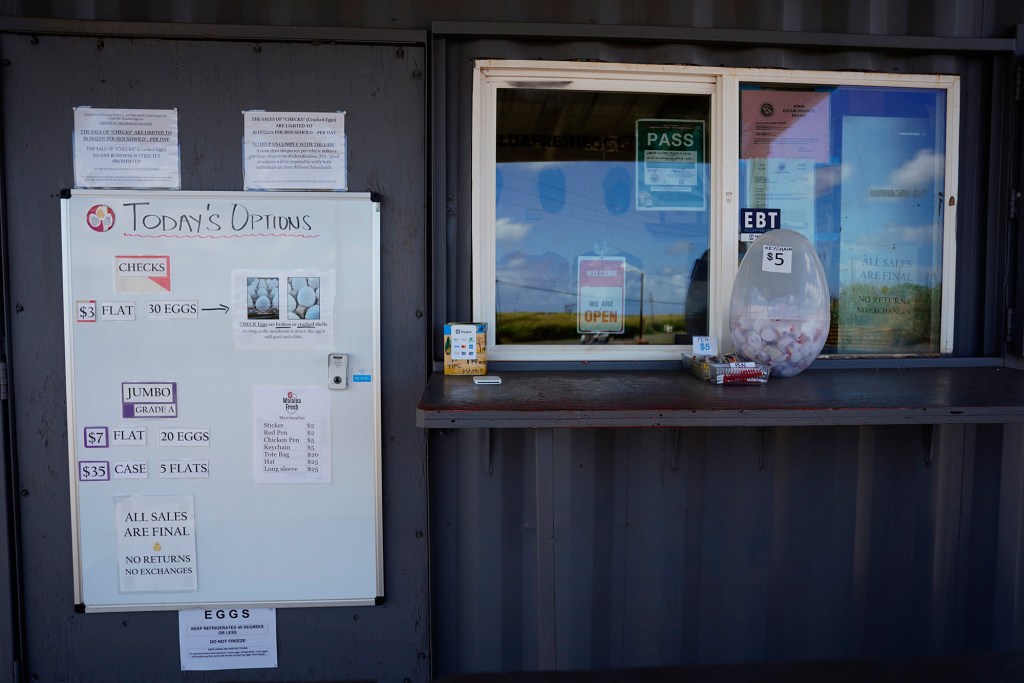
At Waialua, aside from the farm gate where it sells 30 lower-grade eggs for $3, it’s a loss the business swallows instead of building its own facility — a “whole new monster of equipment and wastewater” that it couldn’t deal with, farm manager Avery Barry said.
Waialua will be the main beneficiary of the facility as the state’s largest egg producer, which raises questions among advocates, especially considering the financial power of the companies that own it.
The egg farm would supply about 90% of the facility’s needs, Barry said, as the main beneficiary.
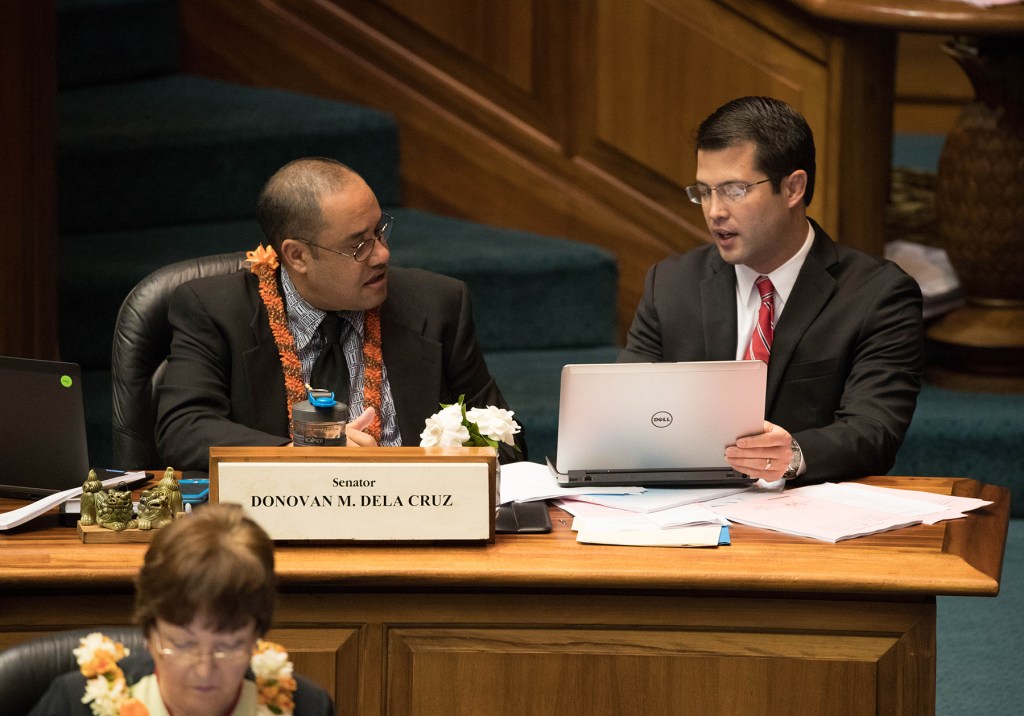
Wicker says the state isn’t shelling out for the facility purely out of goodwill for Waialua Fresh. It’s an investment into the state’s food system, he said, which will help attract smaller and medium-sized operations.
“This isn’t a bailout,” Wicker said. He and Dela Cruz said they hope the facility will spur others to start their own poultry and egg operations.
Hunter Heaivilin, advocacy director for the Hawaiʻi Farmers Union, said the “build it and they will come” approach to spending state money on agricultural and food projects has proven faulty at best.
The facility, if built, would provide Waialua Fresh a sweetheart deal, he said. Rather than supporting smaller farmers, who make up the majority of Hawaiʻi’s industry, recent years’ investments have shown the state is favoring a few larger producers.
More Eggs For Schools?
State leaders say the education department could significantly benefit from the egg-cracking facility, arguing local eggs will help schools meet their mandate to spend 30% of their food budgets locally by 2030. In March, the education department estimated 8% of its purchases went toward local ingredients.
School Food Program Administrator Anneliese Tanner said the education department is still determining how much local eggs will impact its ability to meet its 2030 goals. But it is forecasting a massive uptick in schools’ demand.
Eggs make up a relatively small part of the education department’s current menu cycle. The department spent roughly $369,700 on liquid eggs this year, accounting for less than half a percent of its $77 million food budget.
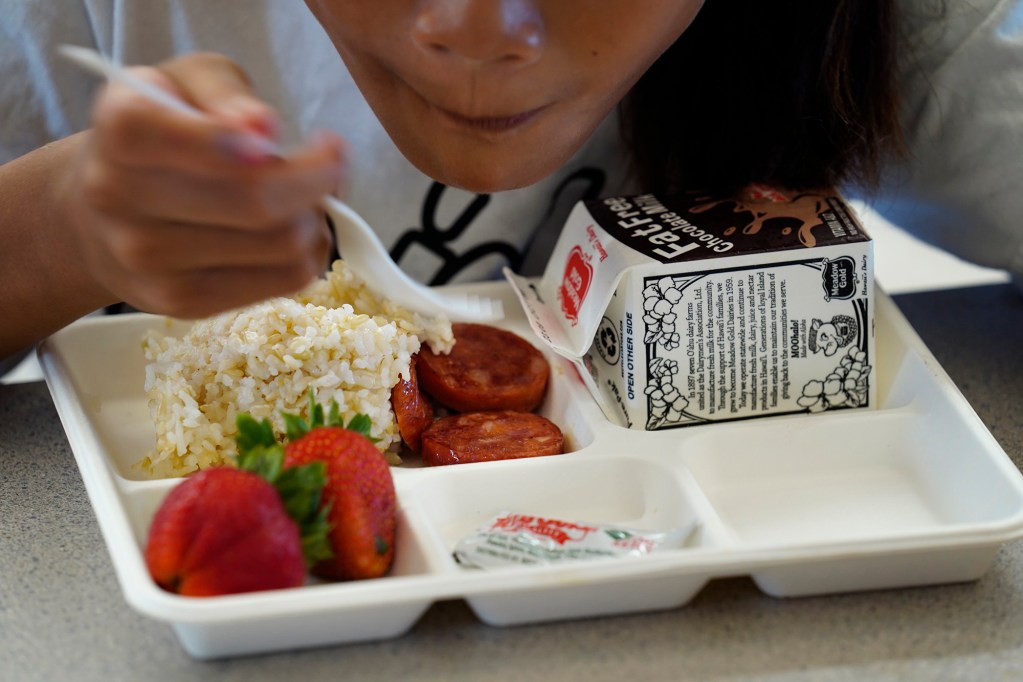
The education department purchased 62,000 pounds of liquid eggs last school year, none of it from local producers. One pound equals nine to 10 eggs.
By 2030, the department forecasts its regional kitchen will require more than 143,000 pounds of liquid egg every year – roughly 1.3 million eggs annually. Those eggs will cater to the 84 schools that will receive meals from the kitchen, a facility which will prepare meals in bulk to be transported to West and Central Oʻahu campuses. Those children will each consume about 20 eggs per year, more than five times their current consumption rate.
Projecting future egg consumption “is not an exact science,” Tanner said in an emailed statement.
To increase its demand for eggs, the education department plans on introducing new menu items such as local style fried rice, egg sandwiches and loco moco with scrambled eggs, Tanner said. The regional kitchen will also allow the department to bake items like muffins from scratch that incorporate eggs, she said.
It’s important for schools to use alternative proteins like eggs and source a variety of local ingredients, Tanner said, adding that the department can’t reach its goals solely by purchasing expensive items like beef and pork.
“It’s these smaller purchases that all together, in aggregate, will get us to the 30%,” Tanner said.
But others are questioning how the department will ramp up its egg consumption so quickly – and if students will appreciate the influx of eggs in their meals.

Marlow DeRego, treasurer of the Hawaiʻi School Nutrition Association, said new menu items will help to increase cafeterias’ use of local eggs, especially when they’re used as protein substitutes in vegetarian meals. The former school food worker still thinks the forecasted demand is a stretch, especially when students are often looking for meat in their lunch.
“It’s just a means to justify this enormous expense,” she said.
Perruso said she’s worried that such a significant increase in eggs will cater to large producers like Waialua Fresh, since smaller farms won’t be able to ramp up their production to meet the centralized kitchen’s demands. She’s also doubtful if smaller producers will have the infrastructure they need to benefit from the egg-cracking facility.
“It honestly sounds like they are asking one particular provider to really ramp up production, and that provider will have a captured market,” she said. “This is the beginning of a pattern that we should be paying attention to.”
Dela Cruz pushed back against the idea that the education department is ramping up its demand in response to the state’s push for an egg-cracking facility. The education department has been working with other state agencies to develop new menus and find ways to scale up local ingredients, he said.
Civil Beat’s education reporting is supported by a grant from Chamberlin Family Philanthropy. “Hawai‘i Grown” is funded in part by grants from the Stupski Foundation, Ulupono Fund at the Hawai‘i Community Foundation and the Frost Family Foundation.


