

Robotics Teams Are Shrinking. Students Say They’re More Important Than Ever
Robotics programs are struggling to find the coaching and funding they need to survive as students and lawmakers search for unique solutions to sustain schools’ teams.
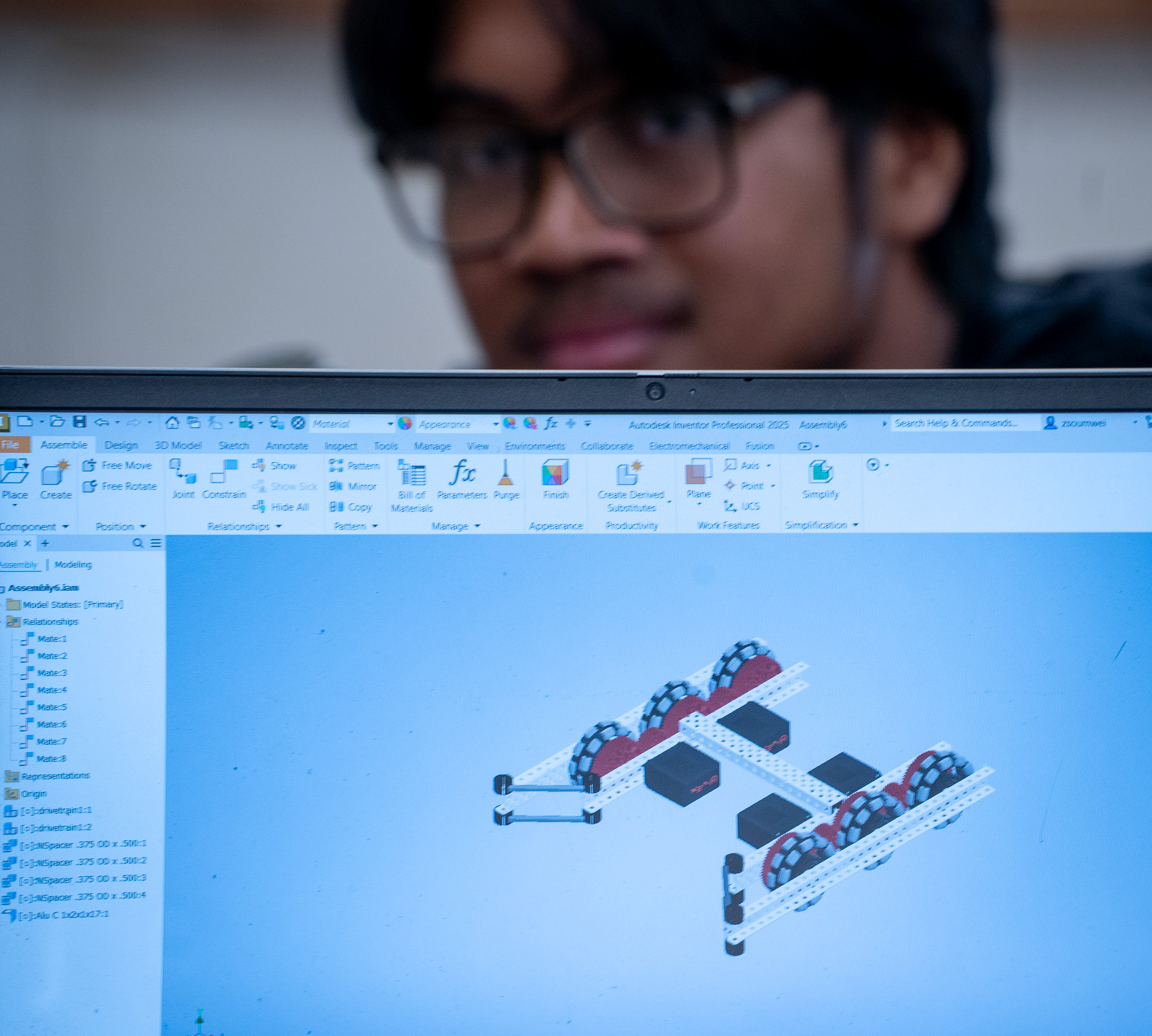
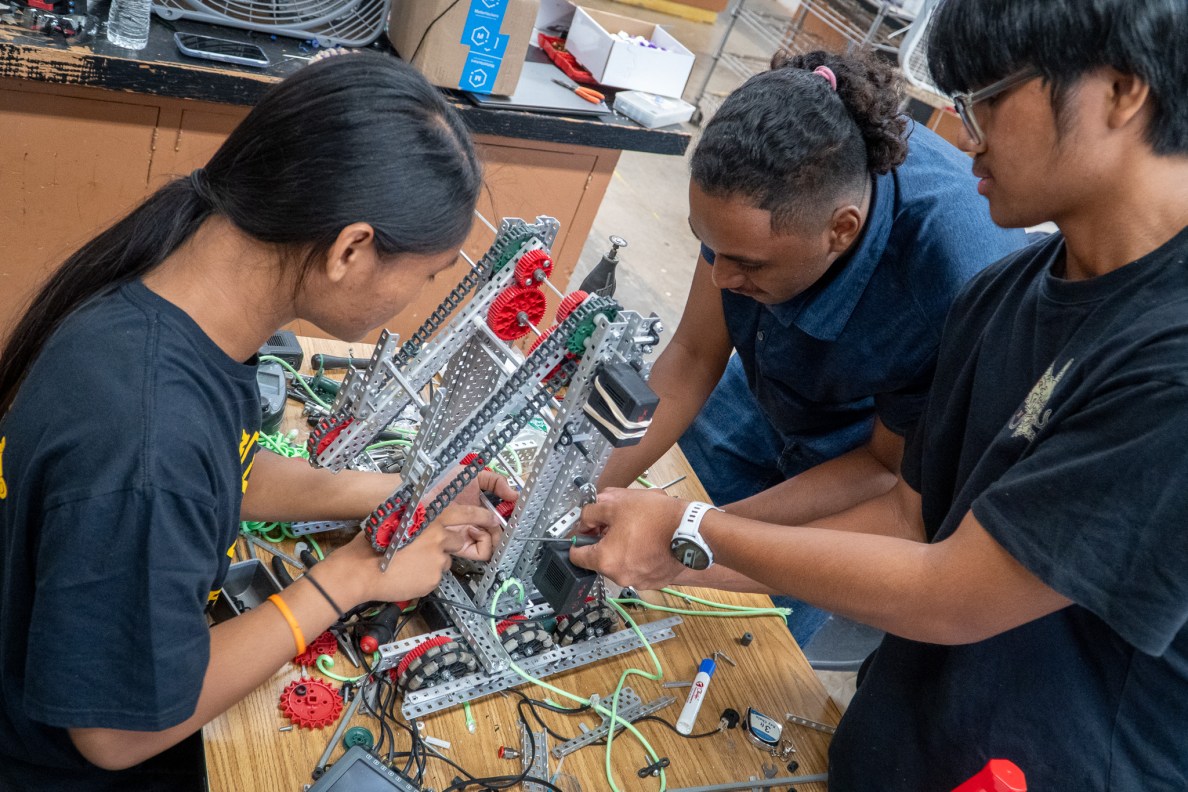
On a recent Monday morning during summer break, students were already hard at work in Nānākuli High and Intermediate School’s robotics room. Eighth grade students hunched over a table littered with screwdrivers, wheels and metal spacers, debating where to place the “brain” – a small device operating their robot.
On another table, rising senior Zion Soumwei used a tool to cut a piece of metal on his team’s robot, filling the room with a slightly burnt smell as orange sparks filled the air.
“Fireworks!” rising eighth grader Seiji Nakata joked.
For students at Nānākuli High and Intermediate, robotics is a year-long commitment. Over the past 20 years, the program has participated in national and international competitions, traveled across the United States and inspired students to pursue careers in engineering and computer science.
It has also required thousands of dollars: Teacher Richard Enright estimates the program spent roughly $54,000 on travel, equipment, registration fees and other expenses last year. Enright himself volunteers hours of his time after school, on the weekends and during the summer to run the program.
High costs and a heavy reliance on volunteer coaches are making it harder for Hawaiʻi robotics programs to survive, particularly at the elementary and middle school levels. The number of robotics teams has fallen even as the field’s popularity has grown over time and schools search for more ways to engage students in science and engineering.

In VEX Robotics — a popular competition for students of all grade levels — the total number of Hawaiʻi teams fell by more than 130 over the past seven years. A different robotics competition for elementary and middle schools saw the number of local teams fall from 147 to just under 70 in the past decade.
The drop in robotics teams comes as national research predicts that Hawaiʻi will see an increase in STEM jobs in the coming years and agencies like the state education department and the City and County of Honolulu are trying to entice more engineers with higher pay.
Teachers say offering robotics to kids from a young age not only strengthens the pipeline of teens joining teams in high school, but also helps students understand the value of science and math outside of the classroom.
“When I started doing robotics, I began to grow more and more passionate about it,” said Erixon Fulgencio, a rising senior at Nānākuli who plans to pursue a career in mechanical engineering. “Every day, if you’re going to have to do it, you might as well love it.”
Where Did The Teams Go?
Lance Riveral developed a love for robotics in the fourth grade. He joined his elementary school’s team with encouragement from his teacher and planned to pursue his passion through middle school. But he was disappointed when ʻIlima Intermediate’s program paused during his seventh grade year.
When Riveral joined Campbell High School’s team, he needed to adjust to the competitions and rebuild some of his knowledge of robotics.
“I wanted to keep that rhythm going, but since there was no program for me to work with, it kind of set me back a little bit once we got back to high school,” said Riveral, who is now entering his junior year at Campbell.
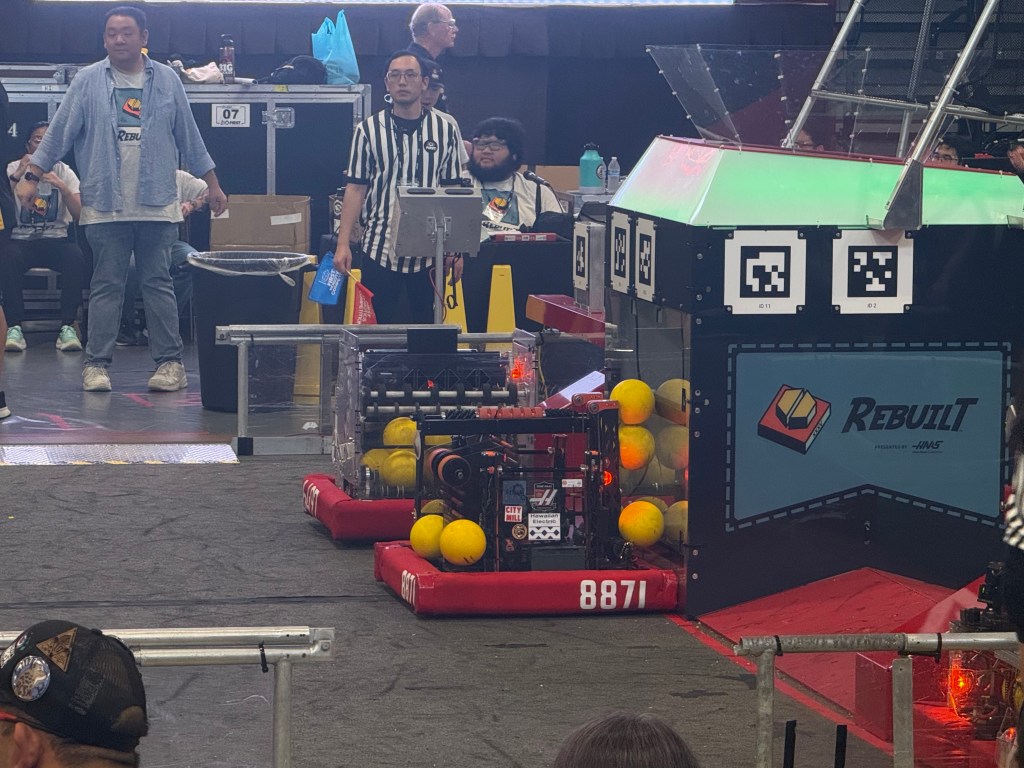
More students face limited access to robotics programs as the number of teams shrink, especially at the elementary and middle school level.
Running a robotics team can be an expensive venture, said Luana Viveiros, a board member at Hawaiʻi FIRST Robotics, a nonprofit that runs local tournaments. It can cost high schools tens of thousands of dollars to participate in out-of-state tournaments that involve larger robots and higher registration fees, she said.
Teams need to be creative with their fundraising efforts since many schools don’t fully cover travel or other major expenses, said Bryan Silver, a robotics coach at Kalani High School. Even aside from travel, a team’s costs can run between $2,500 and $25,000, he said, including tournament fees, software and equipment, shirts and other expenses.
Costs vary widely based on what type of competition teams participate in, how often they travel and how large their robots are.
Funding challenges can be more pronounced on the neighbor islands, where teams may have fewer opportunities for local competitions and require more frequent travel.
Last year, Waiheʻe Elementary School was one of the few teams on Maui participating in the FIRST LEGO League Challenge, a type of competition for elementary and middle school students, teacher Kari Park Toyama said. When the school first started its program a decade ago, Park Toyama said, Maui had over 10 teams, enough to run its own competitions under the FIRST LEGO League.
Over the years, Park Toyama said, some schools may have shifted to participating in other types of robotics competitions or phased out their teams as coaches leave. Now, Waiheʻe needs to travel to Oʻahu to compete in any competitions. The school limits the team size to five students to keep travel costs manageable, Park Toyama said, but she would like to accommodate more kids, since 25 to 40 students express interest in joining robotics each year.
Funding hasn’t always been such a barrier.
In the early 2000s, the state heavily invested in robotics under former Gov. Linda Lingle, who argued that Hawaiʻi students needed a robust education in science and technology. In 2007, the state set aside more than $2.8 million to develop STEM teacher training and programs for students, including robotics. Teams at all levels expanded rapidly, with the assistant dean of the University of Hawaiʻi Mānoa’s College of Engineering estimating that at least 1,700 students were participating in robotics in 2009.
“All that money made a big difference,” Silver said, adding that the state also had an influx of outside funders eager to support robotics at the time. But the state funding was short-lived, Silver said, leaving teams to fundraise and seek out grants themselves.
More than 2,000 students are now involved in robotics across the state. Local students’ participation in FIRST Robotics competitions has actually grown since the Covid-19 pandemic, even as the total number of teams shrink, said Michael Collat, president of Hawaiʻi FIRST Robotics. Existing programs may be doing a better job of recruiting students and increasing public awareness of robotics, he said.
Apart from funding, it’s challenging for teams to find coaches willing to sustain the program, especially when the job requires long hours and unpaid work, Enright of Nānākuli’s program said. It can be especially difficult at the elementary and middle school levels, where schools are less likely to hire teachers with backgrounds in engineering or advanced manufacturing, he said.
Enright himself is considering retiring in the next few years, but he’s unsure who could take his place coaching the robotics team. His students are worried about the future of the program, he said.
“They like doing these robots after school,” Enright said, “but when I leave, who’s taking over?”
A New Type Of Sport
This year, lawmakers and students introduced a bold proposal to increase funding for robotics: Turn the extracurricular into a high school sport.
The bill would have set aside funding for teams and salaries for coaches, said Rep. Julie Reyes Oda, who introduced the legislation. The bill passed through the House but died in the Senate Education Committee, chaired by Sen. Donna Kim.
Legislation expanding the state’s collection of high school sports has seen success in recent years. In 2025, lawmakers made surfing an official high school sport, setting aside nearly $1.4 million to support teams in the first two seasons. The same year, the education department received nearly $1.5 million to establish girls flag football as an interscholastic sport.
But while well intentioned, establishing robotics as a sport could subject teams to more restrictions, Silver said.
For example, high school athletic teams can only practice for three hours a day, and coaches are prohibited from contacting players during certain parts of the year. On the other hand, robotics teams often meet year-round and can practice for multiple hours a day, with students sometimes staying into the evenings to perfect their robots leading up to competitions.
Reyes Oda said she doesn’t plan on reintroducing the bill next year, but she’s still searching for other ways to solidify state support for robotics. The state needs to invest in opportunities that can prepare students for jobs in math and science, she said, and robotics teams deserve to receive regular funding like high school athletics.
“They need to justify they exist year after year,” she said.
Students also say robotics has exposed them to new career paths and inspired them to pursue jobs they hope will lead to high pay and local opportunities.
Engineering ranks among one of the top college majors in Hawaiʻi for high career earnings, according to the University of Hawaiʻi Economic Research Organization. While the state has fewer jobs in fields like computer science and technology, construction is a promising area of growth, especially as the state deals with the aftermath of natural disasters like the Maui wildfires and recent storms, said Rachel Inafuku, a research economist at UHERO.
Joshua Tom, a rising senior at Campbell who has been advocating for more state funding for robotics, said it’s important for students of all ages to have access to these programs. It’s frustrating for students when programs start and stop because of funding or coaching changes, he said, and Campbell’s team tends to see more interest from freshmen who come from middle schools with their own robotics programs.
“It’s changed my life,” he said. “I really didn’t want to see students not being afforded an opportunity based on circumstances out of their control.”
Civil Beat’s education reporting is supported by a grant from Chamberlin Family Philanthropy.
