

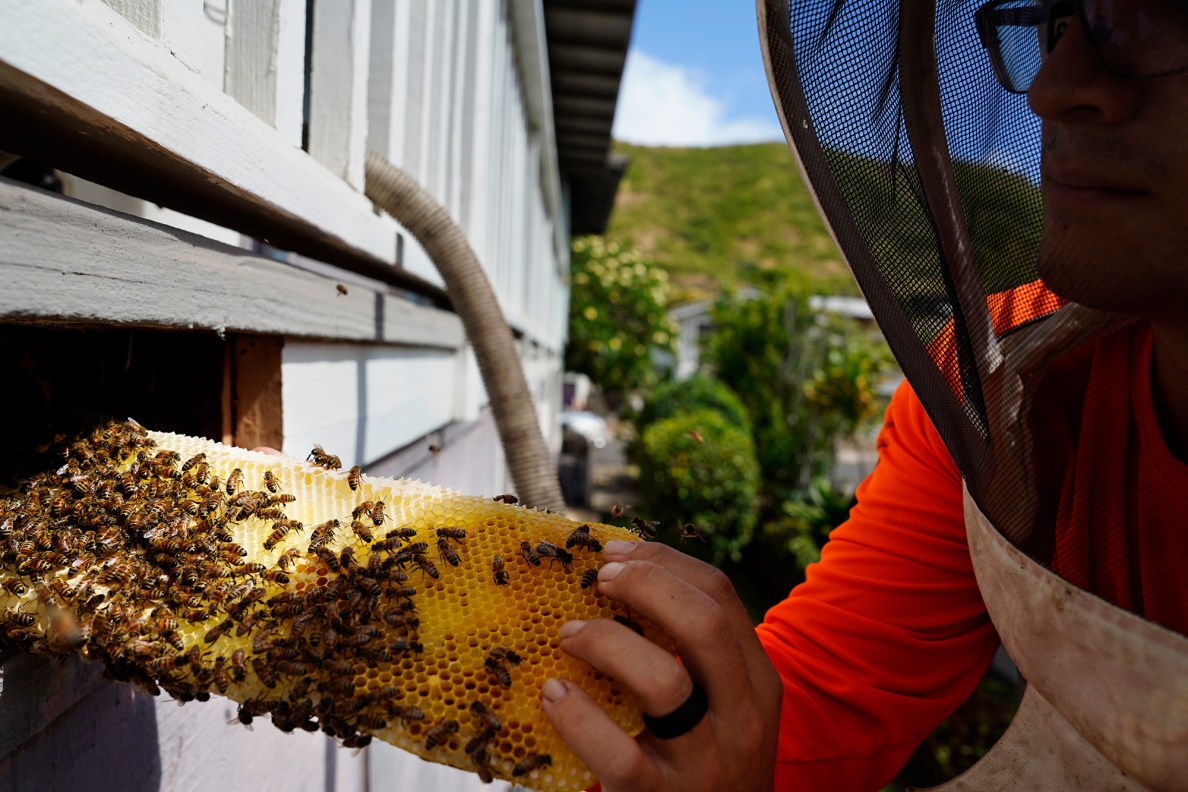
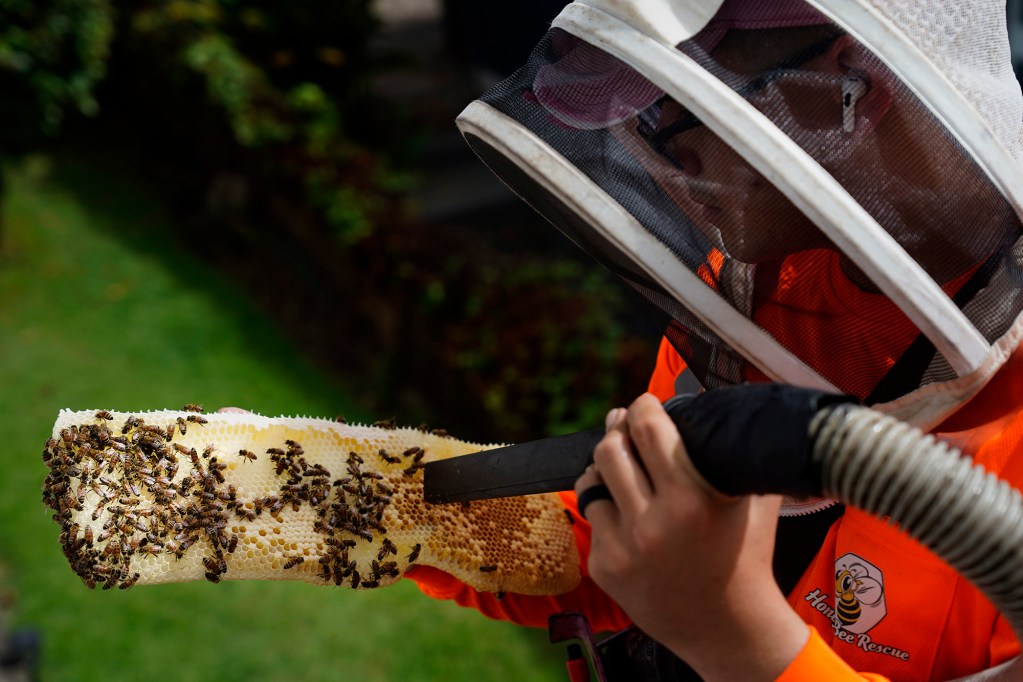
It takes less than five minutes for Jason Morrow to uncover slates of waxy honeycomb, each teeming with its wild producers who, thanks to a good dose of smoke, are unfazed by his presence.
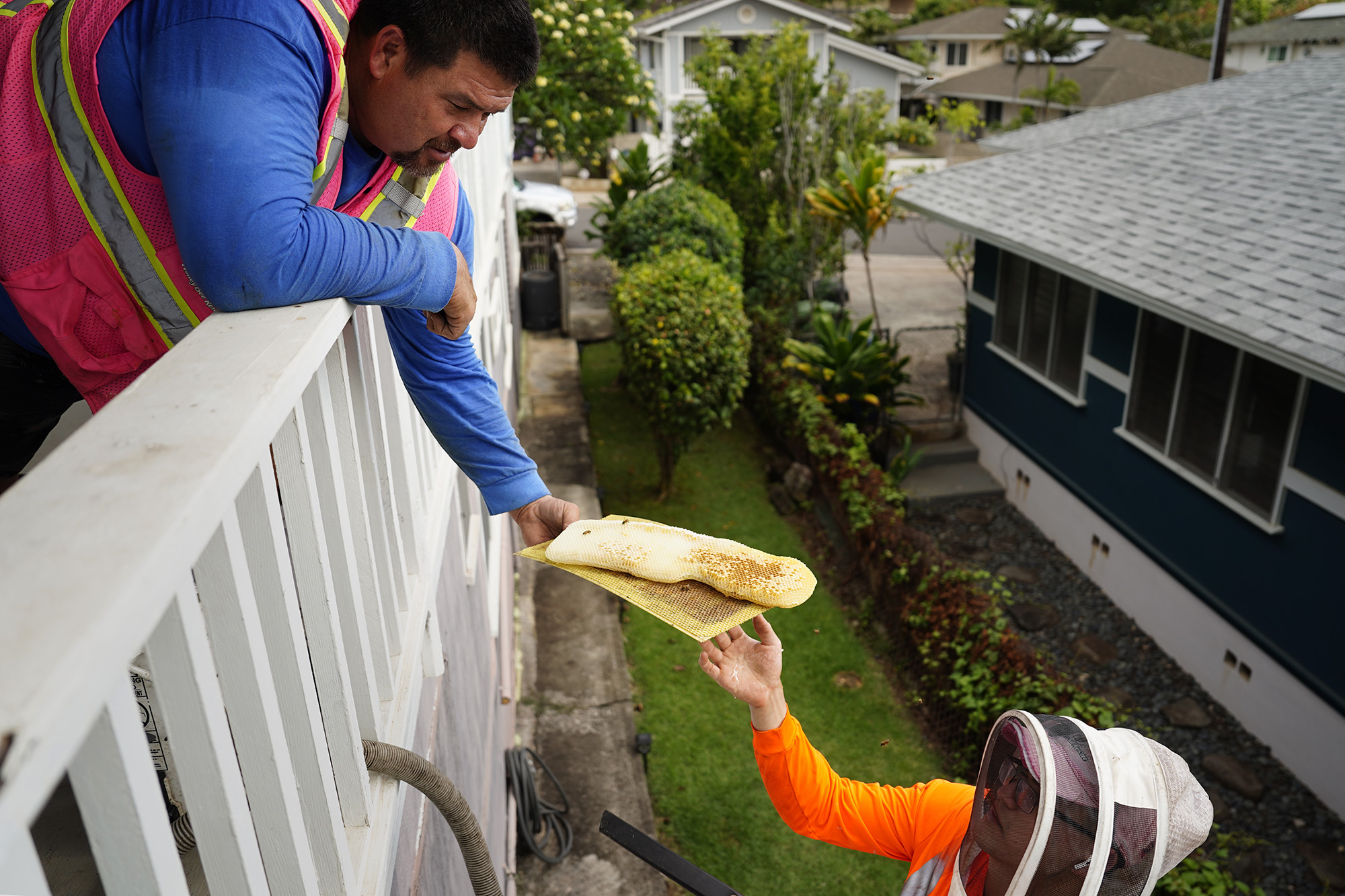
He stands atop a ladder, cutting planks of yellow, brown and white comb from the building’s frame before sucking them up with a Ghostbusters-like vacuum. He tosses each chunk of comb into a black trash bag with honey-coated hands, keeping some to sample during a quick break.
It tastes like the landscape, including nearby Diamond Head.
“All the kiawe and haole koa, that’s probably why it’s real light honey,” he says, looking at the trees around the property. “Tones of kiawe… noni. They travel 2 to 3 miles to forage, so whatever’s blooming, they’re taking the nectar. The honey around here is absolutely amazing.”
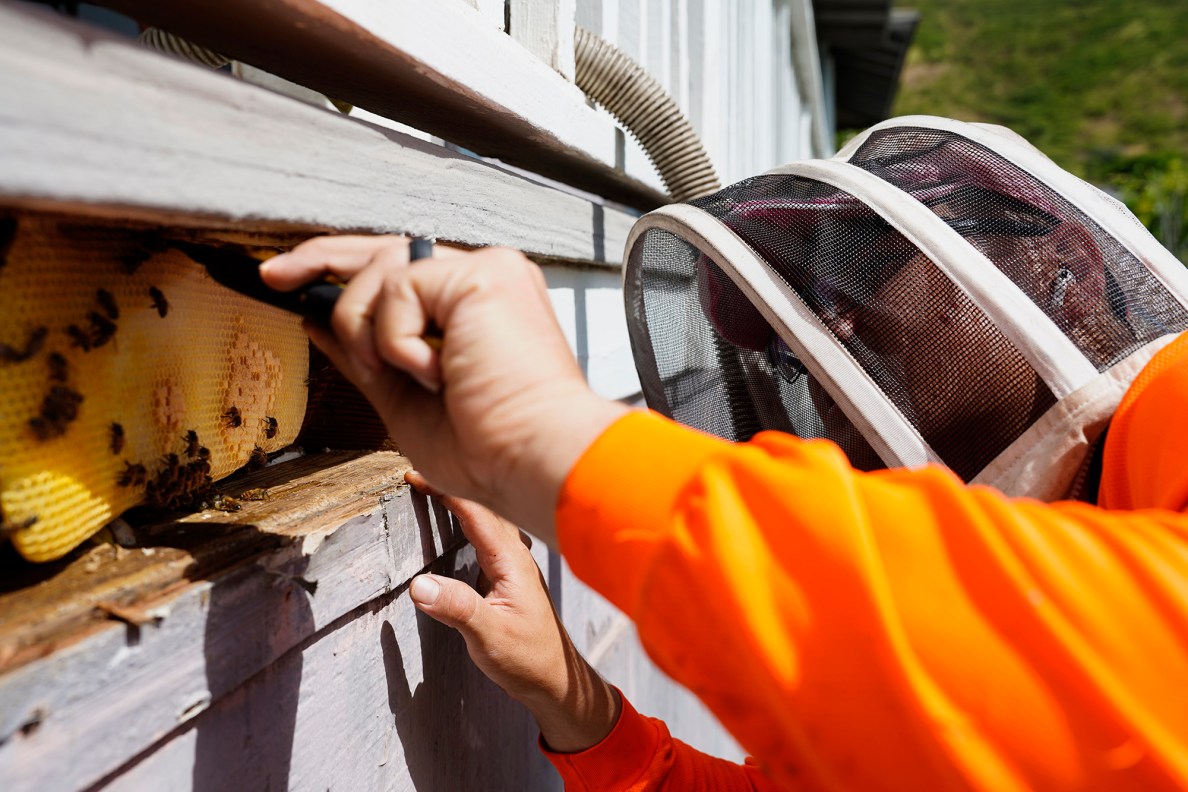
Morrow is especially busy at the moment, fielding up to a dozen calls for help and capturing and relocating up to eight colonies per day as honeybee swarming season gets into full swing. That’s an especially good sign, according to experts, who say that the need to rescue wild swarms from people’s homes means the Oʻahu population is in good health despite the previous months’ turbulent weather.
The swarms are also a sign that the bees have recovered from years of parasitic and bacterial pressure, harking back to the early 2000s, when managed honeybee populations dropped by more than half and wild populations took a massive hit. That downturn reflected wider concerns about the global decline in pollinating insect populations, which has a direct impact on environmental health and global food systems.
Bee health is more than just an environmental concern, given the state’s multimillion-dollar queen bee industry supplies roughly 25% of the queen bees used on the U.S. mainland and about 75% of queens used in Canada. Wild populations harvested and rescued by operations like Morrow’s help the industry stay afloat, according to Ethel Villalobos of the University of Hawaiʻi Honeybee Project, because more colonies means more queens. It also means greater resilience to disease and parasites.
Businesses like Morrows exist on every island, a network of wild colony rescuers, said Stacey Chun, who manages the Department of Agriculture and Biosecurity’s beekeeping program. On Hawaiʻi island, where most queen bees are produced, bee rescue is especially popular given the potential commercial value of wild swarms.
“Now that we have a network,” Chun said. “We don’t even get calls.”
During the peak swarming season – between March and September – Morrow and his father do up to eight jobs daily, working from dawn until dusk.
‘Tis The Season
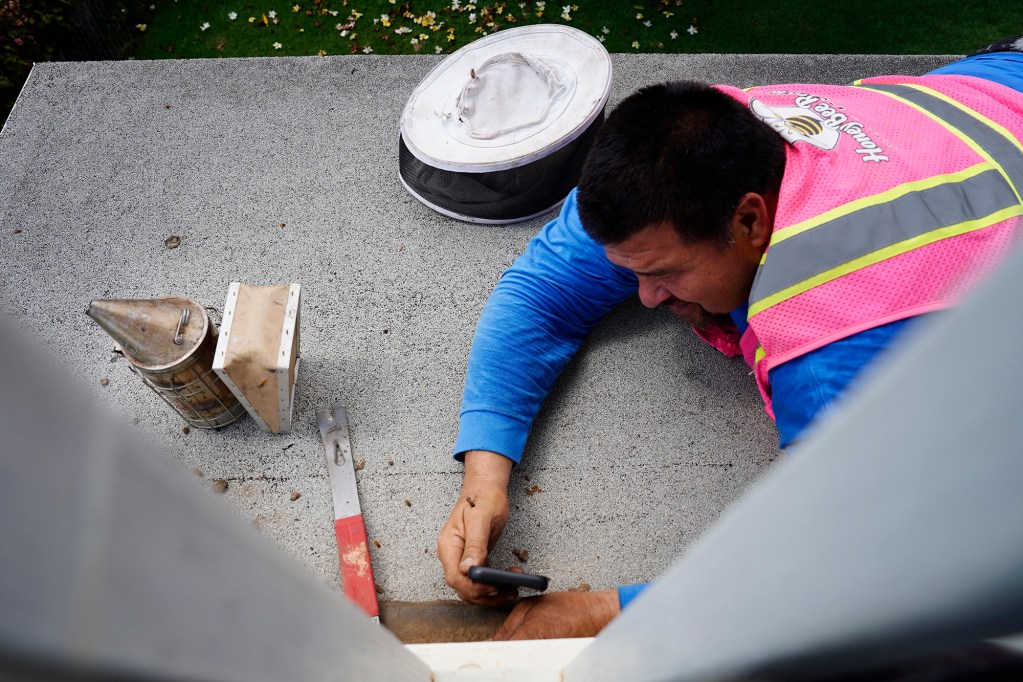
On the same mid-May day, as Jason works in Kaimukī, Peter Morrow stands atop a ladder and saws into the outside of a home, his reciprocating saw cutting an envelope-sized chunk out of the wall. With his index finger, he swipes the slate of honey comb and brings it to his lips.

The day’s heat and the hive’s location made it almost impossible to find in the wall with his infrared camera. But by the time Jason arrived 30 minutes later, having finished his job in Kaimukī, all that needed to be done was the vacuuming.
Before he gets to work, he starts filming for the business’s social media channels, to show off their work.
“We got some nice light honey coming in here, as well as some fresh incoming nectar,” Jason said while filming. “So we’re gonna start sorting and sifting through this, look for our queen. We’ll keep you guys all posted. Another one for the honey bee rescue – thanks for saving the bees.”
Social media is just one facet of the family business that spawned out of a pandemic-era hobby of his father’s.
“I just wanted to have a hive at my house for giggles,” Peter Morrow said. “I needed that adrenaline rush.”
They spent their weeks constructing playgrounds for his father’s business and the weekends learning about beekeeping from some retiring honey producers on the island.
Eventually for Jason, once an aspiring professional dancer, it became a full-time job and even a family business that employs his wife and sister, who sell their honey products at Kāneʻohe Farmers’ Market.
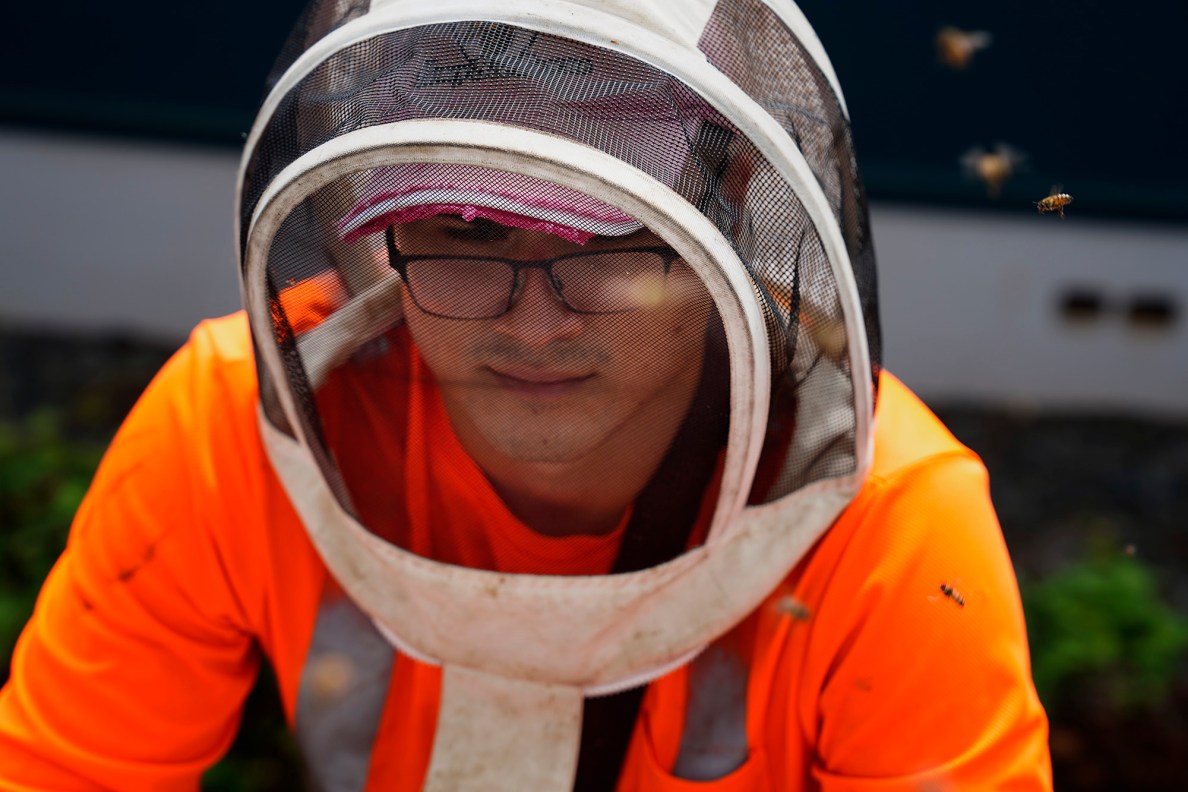
They’re comfortable with bees now, seldom wearing full protective regalia. That, Jason Morrow says, comes with about 20-30 stings per job.
He takes them in his stride, mostly, as does his father.
Colonies On Colonies
European honey bees, Apis mellifera, have been swarming around Oʻahu for more than 150 years since famed botanist Dr. William Hillebrand imported three hives to Nuʻuanu Valley. Colonies are now found across the islands, both wild and managed.
The state’s at-least multi-million dollar industry officially produced more than two million pounds of honey in 2022, according to the latest U.S. Department of Agriculture census, but the state’s queen bees are the main profit driver, bringing in about $20 million in revenue every year.
Hawaiʻi has “naive and sweet” native bee populations, which are in trouble due to their preference for native flora, a loss of habitat and competition and predation from other insects. But, she adds, that’s not necessarily from the European honeybees.
For the money-making European bees, pathogens and pests are still a concern. Hawaiʻi contended with varroa mites, parasites that were first detected in 2007 and in one year led to a 65% decline in managed bee colonies. And about 79% of wild colonies monitored by researchers were also in decline.
At the time, the interplay of wild pollinators and farmers became clear. Squash, melon and pumpkin farmers were forced to self-pollinate their plants, by transferring pollen from male to female flowers by hand. They had taken the honey bees for granted for years. The same goes for other crops, such as tropical fruit trees and macadamia trees, which are highly reliant on bees to pollinate them.

Beekeepers recovered following the years of suffering with varroa mites by integrating wild populations into their operations. Wild honeybees were forced to adapt through natural selection and, when bred with captive populations, helped make the whole population stronger.
“Bees are preadapted to deal with disease in their hives,” Villalobos said, “as a super organism.”
Things are better now, but vigilance is still needed, she added, even if the populations – wild and managed – are recovering. Climate change is part of that, such as increasingly treacherous floods, which happened earlier this year during the Kona low storms.
Winds denuded trees of their flowers, leaving colonies with nothing to feed their young. The Morrows, for one, were forced to supplement their colonies’ diets with sugar water, a typical off-season diet for bees when trees aren’t blooming.
But the fact that the Morrows are so busy in swarm season, even following those heavy rains and high winds, is an especially good sign of the honeybees’ strength, Villalobos said.
“The continental US probably has the highest mortality in honey bee colonies in the world. The funny thing is the beekeepers on Hawaiʻi and Oʻahu report less than 20%,” UH researcher Villalobos said. “It’s actually pretty cool.”
Do Or Die
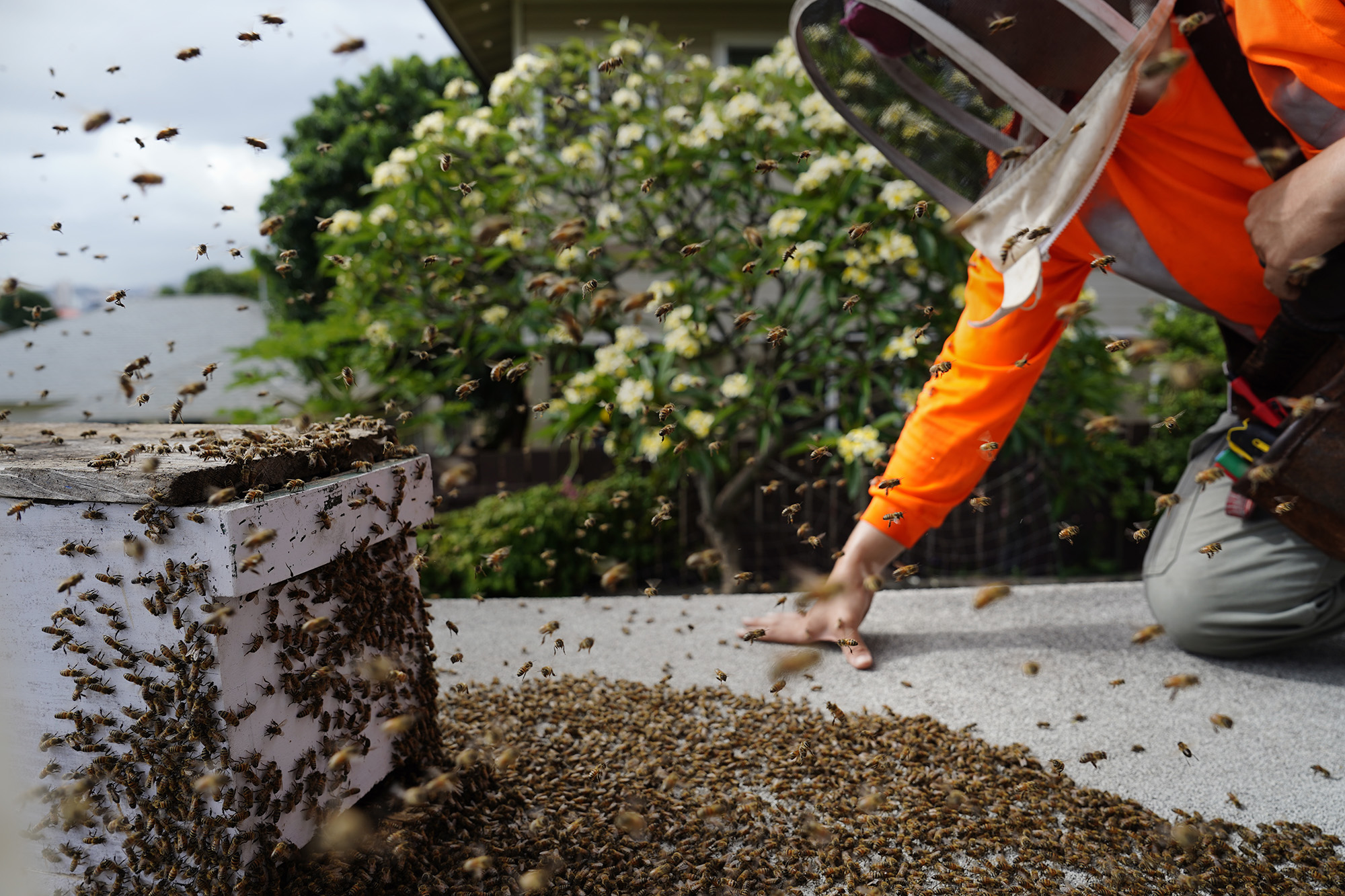
While Peter and Jason Morrow remove sheets of honeycomb and thousands of bees from the walls of the Diamond Head home, they are constantly on the look-out for the queen.
“It’s like playing the hardest game of Where’s Waldo,” Jason Morrow said.
Once they locate the queen, they transfer it into a new transportable wooden hive, and pour the colony out around it. The queen’s pheromones will help the bees find their new home, including those out foraging for nectar. That takes hours, at least, as worker bees return to their queen after their days foraging.
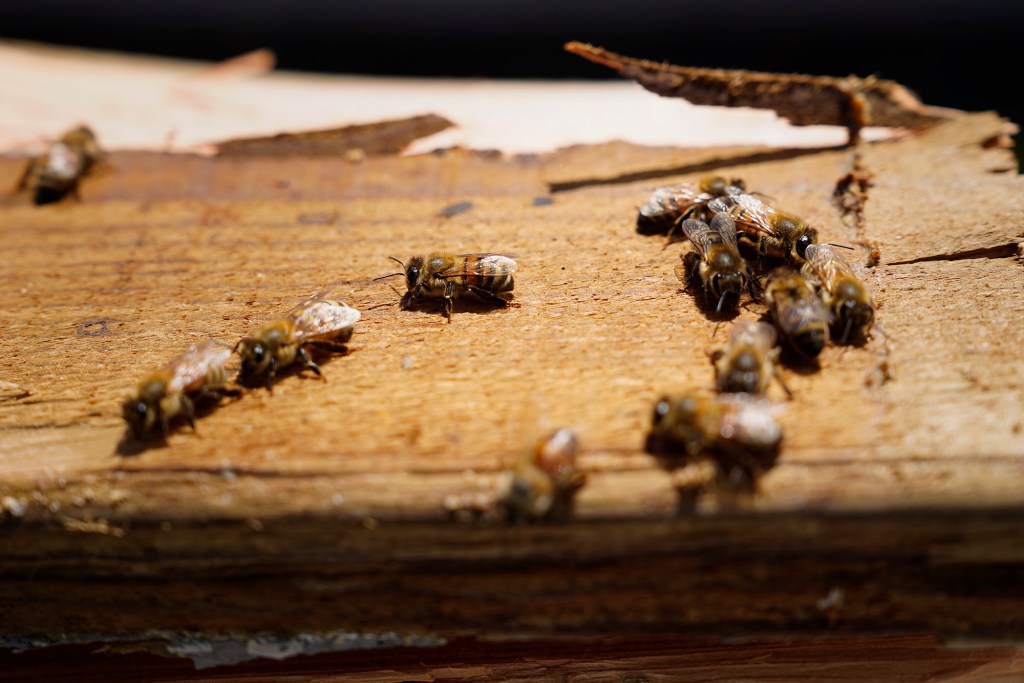

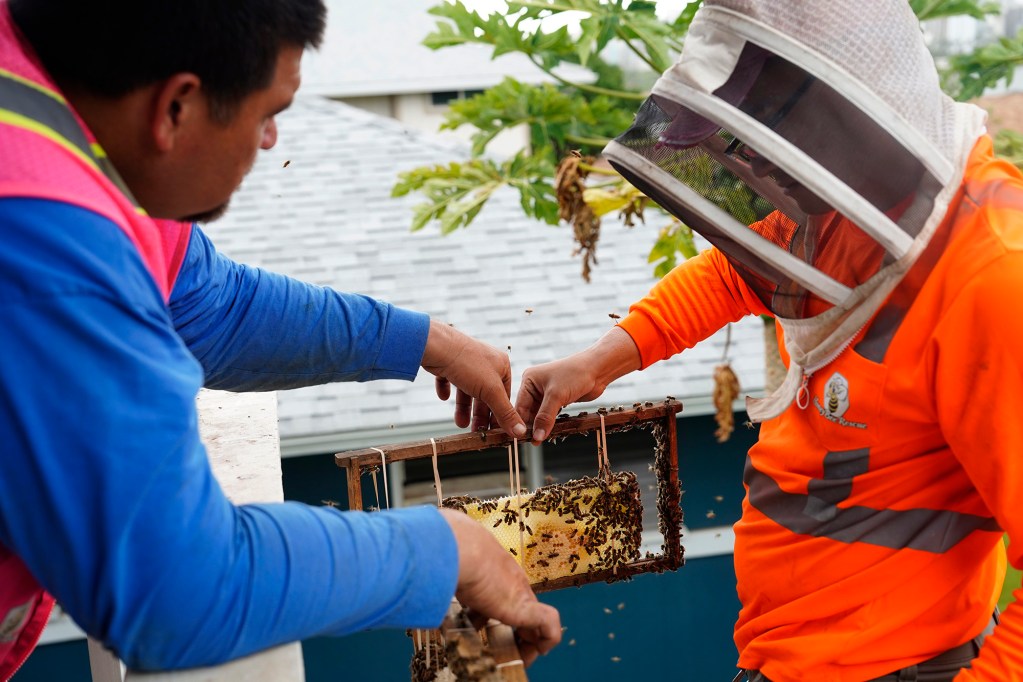
Jason returns to the house later in the evening, generally after dark, to collect this and all the other colonies they’ve transferred into portable boxes.
The alternative to bee removal outfits like the Morrow’s 808 Honeybee Rescue are pest control companies, whose methods typically involve killing the bees, an unsavory alternative for many in light of increased awareness of their importance. For the Morrows, it’s the nuclear option, one that’s been used only twice in six years.
They’ve extracted hives from trees, school sewers and even abandoned vehicles. They’ve removed entire sheets of drywall to find years-old hives and continue to field up to a dozen calls per day to relocate swarms.
They have rarely turned down a job, which Peter Morrow attributes to his son’s work ethic.
“He’s taking us to the next level,” Peter said of his son. “He’s willing to just do any job we get.”
“Hawai‘i Grown” is funded in part by grants from the Stupski Foundation, Ulupono Fund at the Hawai‘i Community Foundation and the Frost Family Foundation.
